Side-by-Side IQ Profile: Beagle vs. Irish Wolfhound
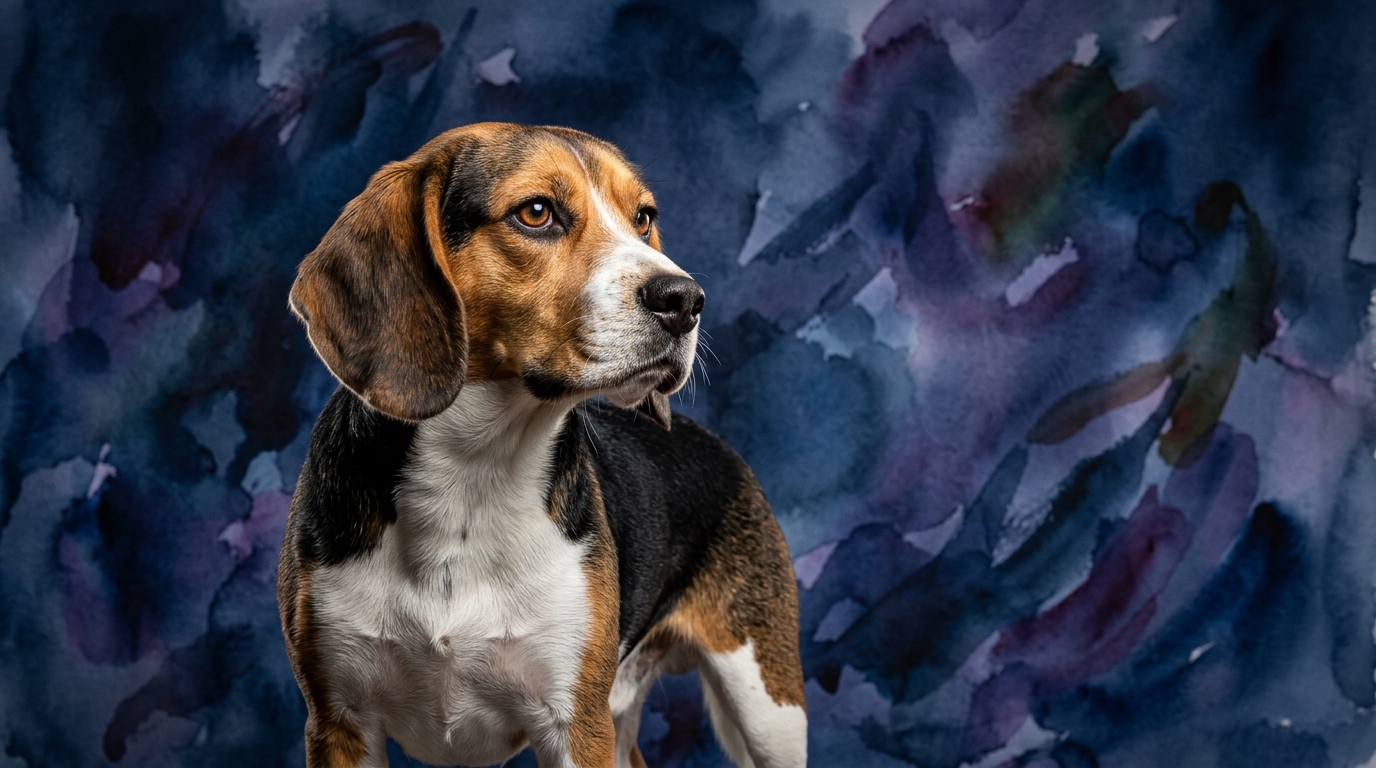
The Beagle, a Coren-ranked #72 breed, demonstrates exceptional cognitive strengths rooted in its scenting heritage. Its problem-solving ability scores a strong 4/5, primarily manifested in untangling complex scent trails and navigating obstacles to reach a desired smell. Training speed is rated 2/5, reflecting a deep focus on independent scent work that often overshadows human directives. Social intelligence sits at 3/5, indicating responsiveness within its familiar human 'pack' but a strong individual agenda when on a scent. An instinctive drive of 5/5 highlights an unparalleled urge to track, while memory, at 4/5, allows them to recall intricate scent paths and locations of interest with remarkable accuracy.
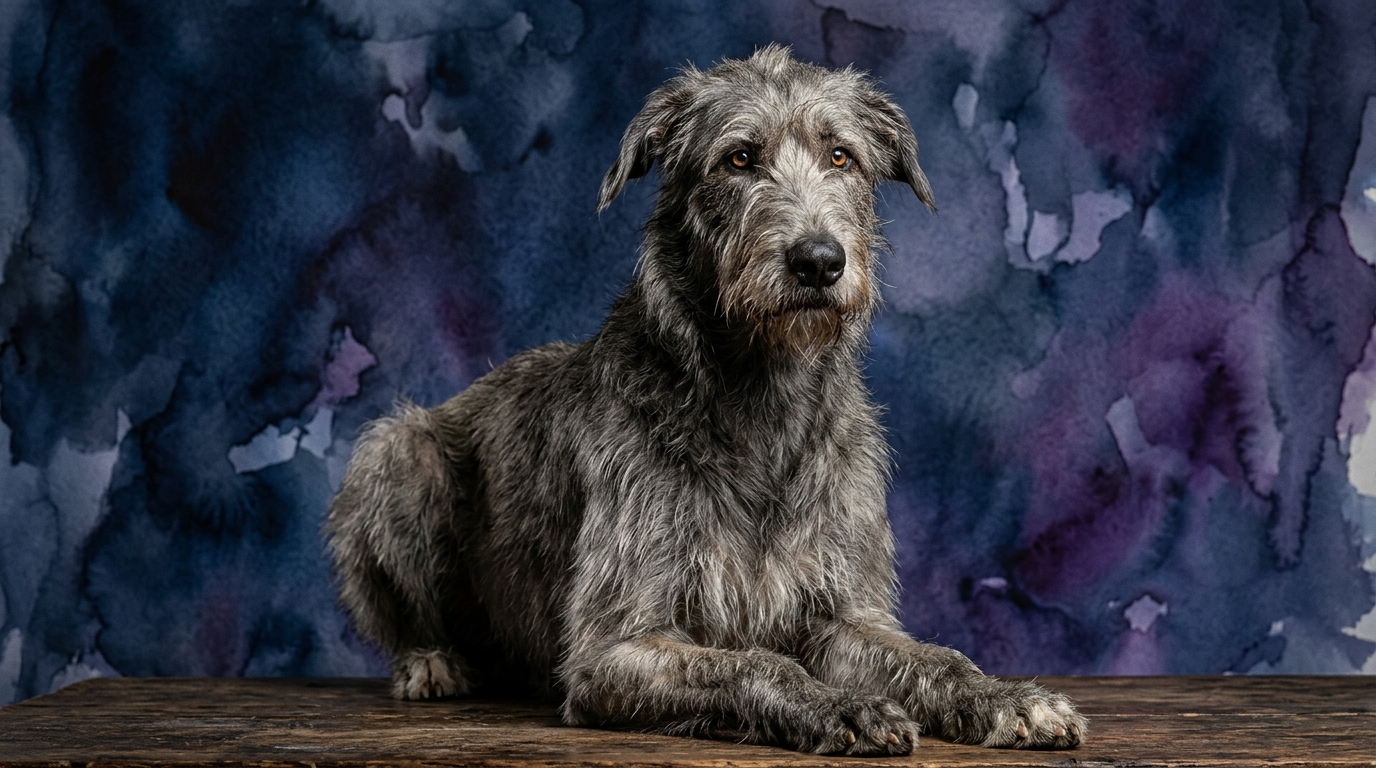
The Irish Wolfhound, though not Coren-ranked, presents a balanced yet distinct cognitive profile. Its problem-solving capability is rated 3/5, suggesting a practical intelligence for tasks but less inclination for intricate, self-initiated puzzles. Training speed is a moderate 3/5, indicating a capacity for learning commands at a consistent pace. Social intelligence is also 3/5, showing a gentle, companionable nature with family, though they can be reserved with strangers. Instinctive drive is 3/5, primarily focused on sight-based pursuit rather than relentless scent tracking. Memory scores 3/5, allowing them to retain routines and learned behaviors effectively.
Where the Beagle Wins Cognitively
The Beagle's problem-solving score of 4/5, compared to the Irish Wolfhound's 3/5, is a clear victory in the realm of intricate environmental navigation and deduction. Beagles excel at deciphering complex scent puzzles, using their keen olfactory senses to track, locate, and overcome physical barriers in pursuit of a hidden target. This isn't just about following a line; it involves making choices, remembering past scent markers, and strategizing the most efficient path, showcasing a highly specialized form of cognitive agility that the Irish Wolfhound, with its sight-hound instincts, simply doesn't prioritize to the same degree.
With an instinctive drive of 5/5 versus the Irish Wolfhound's 3/5, the Beagle possesses an unyielding determination to follow a scent, a primal cognitive function at the core of its being. This intense drive fuels their persistence and allows them to maintain focus on a single objective for extended periods. Complementing this is their memory score of 4/5 (compared to 3/5 for the Wolfhound), which is particularly powerful for recalling complex scent patterns and spatial information. A Beagle can remember a specific squirrel's trail from yesterday or the exact location of a buried treat months later, demonstrating a specialized form of long-term memory intricately linked to their olfactory world.
Where the Irish Wolfhound Wins Cognitively
The Irish Wolfhound nudges ahead with a training speed of 3/5, surpassing the Beagle's 2/5. While neither breed is known for lightning-fast obedience, the Wolfhound generally exhibits a slightly greater willingness to engage with human directives and less single-minded distraction. Their instinctive drive, while present, is less overwhelming than a Beagle's intense scent focus, making them somewhat more receptive to commands during training sessions. This means that while repetition is still key, an Irish Wolfhound is often quicker to grasp and consistently perform basic obedience cues, making the initial stages of training potentially less arduous for the owner.
While the Beagle's intense instinctive drive is a strength in its specific domain, the Irish Wolfhound's more moderate 3/5 instinctive drive offers a different cognitive advantage for companion life. Their less overwhelming drive for relentless pursuit or tracking means they are less prone to being 'ear-deaf' to their owners when an enticing stimulus appears. This balance allows them to be more present and responsive in general interactions, making them less likely to bolt after a fleeting scent or sight, and generally more adaptable to various environments without their instincts constantly overriding other cognitive functions.
Which is Easier to Train and Why
The Irish Wolfhound, despite its massive size, proves to be the comparatively easier breed to train, primarily due to its slightly higher training speed (3/5) and a less all-consuming instinctive drive (3/5). While they are not known for immediate compliance, their patience and desire to please their family mean they are more receptive to consistent, positive reinforcement. They are less likely to become completely engrossed in a scent or sight, allowing for more focused training sessions. Early and consistent training is crucial given their imposing stature, and owners often find their gentle nature translates into a cooperative learning attitude, even if the pace is steady rather than swift.
Training a Beagle presents a more significant challenge, stemming from their lower training speed (2/5) and an exceptionally potent instinctive drive (5/5). Their world is primarily governed by their nose, and a captivating scent can render them temporarily deaf to all human commands. This deep-seated drive means that even when they understand a command, their instinct to follow a trail often overrides their learned obedience. Owners must be incredibly patient, use high-value rewards to compete with environmental stimuli, and understand that consistency over years, not just months, is required to achieve reliable recall and manners. Their Coren rank of #72 reflects this inherent difficulty in traditional obedience training, contrasting sharply with their remarkable problem-solving abilities when it comes to scent work.
Which Suits Active Owners vs. Relaxed Owners
Both Beagles and Irish Wolfhounds require active engagement, but their ideal activities diverge significantly based on their cognitive strengths. An active owner for a Beagle is one who relishes engaging with their dog's profound scenting abilities. This means long, meandering 'sniff walks' where the dog is allowed to explore its olfactory world, participation in scent work or tracking sports, and secure off-leash areas for energetic bursts. Their stamina, fueled by their instinctive drive, means they can go for hours. For the Irish Wolfhound, an active owner provides consistent, moderate exercise. This includes long, steady walks, opportunities to trot alongside a bicycle, or supervised play in a large, fenced area where they can stretch their immense limbs. While they enjoy activity, they are not built for relentless, high-intensity endurance like a Beagle. Their activity is more about maintaining physical condition and mental contentment than satisfying an insatiable drive.
Neither breed is suited for a truly 'relaxed' owner who prefers minimal dog interaction or exercise, but the Irish Wolfhound can offer a calmer presence indoors. Once adequately exercised and past their boisterous puppy stage, Wolfhounds are renowned for their serene demeanor within the home, often content to lounge gracefully near their family. Their moderate instinctive drive means they are less prone to constant searching or restlessness indoors. The Beagle, conversely, with its powerful instinctive drive and curiosity, can become destructive or excessively vocal if not sufficiently stimulated. Their cognitive need to explore and problem-solve through scent means they are rarely truly 'relaxed' in the same sense as a mature Wolfhound, making them a less fitting choice for owners seeking a consistently low-key canine companion.
The Verdict
Choose a Beagle if you are captivated by a dog with an extraordinary sense of smell, dedicated to engaging in scent work, and prepared for the patient, persistent training required for a breed driven by ancient instincts.
Opt for an Irish Wolfhound if you seek a gentle giant companion, appreciate a moderate approach to exercise and training, and desire a calm, affectionate presence in your home.
🧠 Find Your Pet's IQ Score
Our Pet IQ Lab assessment covers 25+ tests across 5 cognitive dimensions — personalized to your breed.
Take the Full IQ Test →Frequently Asked Questions
Is a Beagle difficult to train for recall?
Yes, Beagles are notoriously challenging for recall due to their supreme instinctive drive (5/5) to follow scents. Once on a trail, their focus on the smell often overrides all commands, requiring consistent, high-value reward training and a secure environment.
Do Irish Wolfhounds need a lot of mental stimulation?
Irish Wolfhounds benefit from moderate mental stimulation, such as puzzle toys and consistent training, but their needs are less intense than a breed with a 5/5 instinctive drive. They appreciate routines and family interaction more than complex cognitive challenges.
Which breed is better with children, based on their social intelligence?
Both breeds score 3/5 in social intelligence, indicating good family integration. Beagles are generally robust and playful, while Irish Wolfhounds are known for their gentle, patient nature with children, making both suitable with proper socialization and supervision.