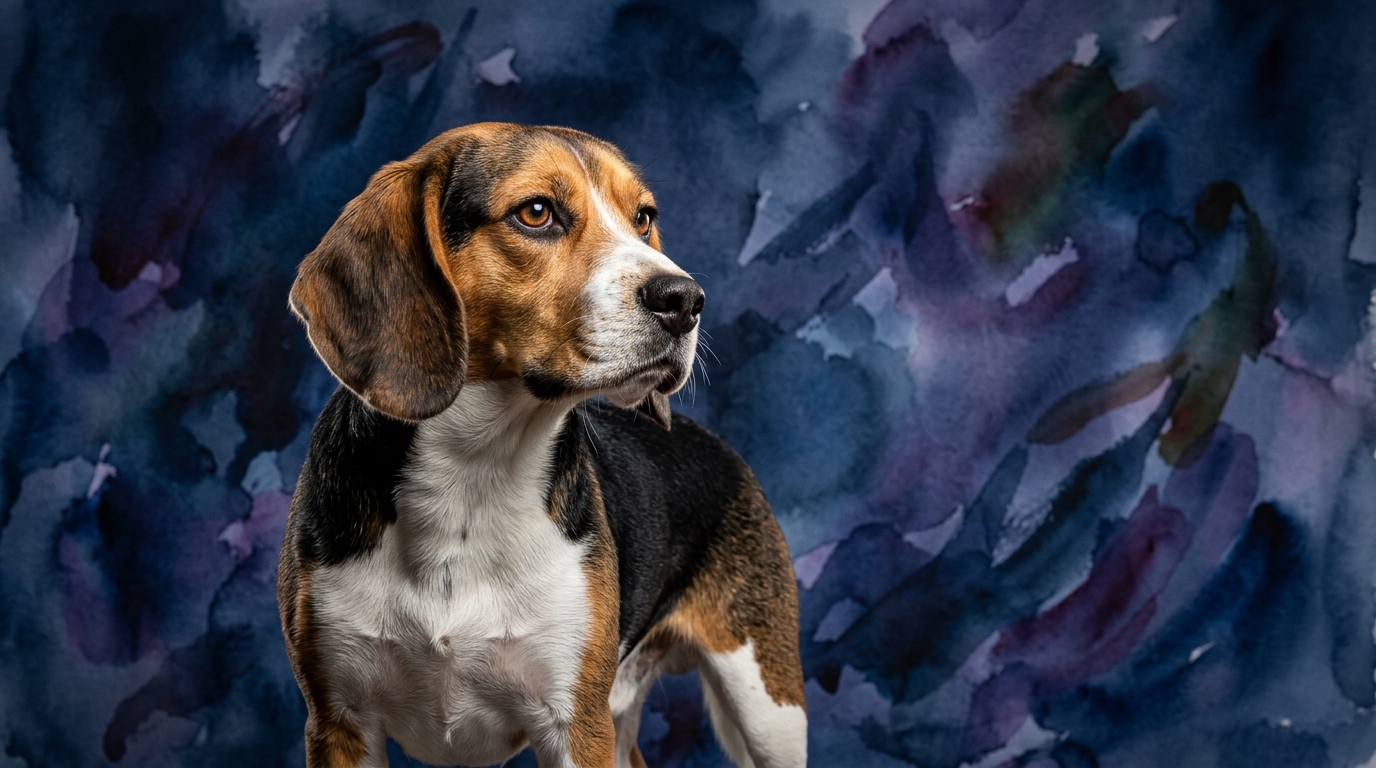
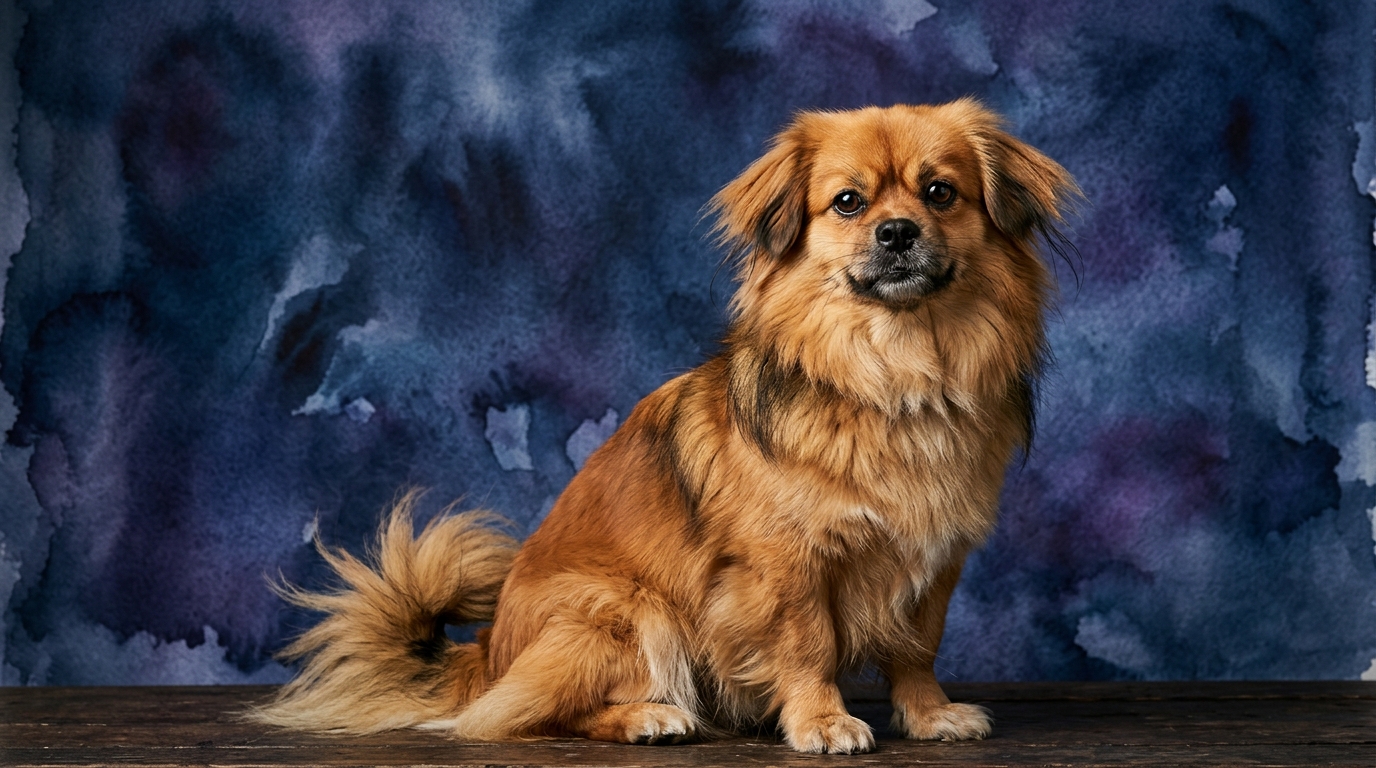
Side-by-Side IQ Profile: Scent Hunter vs. Watchful Companion
The Beagle, a scenthound with a rich history, exhibits a cognitive profile deeply specialized for its original purpose. Its problem-solving capacity is rated at 4/5, particularly evident in its ability to untangle complex scent trails, often requiring intricate deduction to locate a quarry. However, its training speed scores 2/5; their independent nature and powerful instinctive drive can sometimes prioritize a compelling scent over human commands. Social intelligence sits at 3/5, reflecting their pack mentality but also their task-oriented focus. The breed's instinctive drive is a formidable 5/5, almost exclusively dedicated to scenting, while memory, especially for routes and scent patterns, is a strong 4/5. While not an obedience champion in the traditional sense, the Beagle's cognitive architecture is a masterclass in specialized sensory processing.
In contrast, the Tibetan Spaniel presents a more balanced, all-around cognitive profile, fitting its historical role as a companion and watchdog in Tibetan monasteries. Its problem-solving capacity is 3/5, suggesting a practical intelligence for navigating its environment and understanding routines, rather than highly specialized tasks. Training speed is a moderate 3/5; they are often willing to learn but possess an independent streak, preferring to cooperate rather than blindly obey. Social intelligence is also 3/5, indicating a good understanding of human dynamics and a strong bond with their family, often expressed through their watchful nature. Their instinctive drive is 3/5, manifesting as alertness and a desire to observe rather than a strong urge to hunt or herd. Memory is similarly rated at 3/5, sufficient for learning routines and remembering people and places, without the intense specificity of a scenthound.
Where the Beagle Wins Cognitively
The Beagle's cognitive strengths are undeniably rooted in its olfactory prowess. With an instinctive drive rated at 5/5, their noses are not merely sensory organs but complex data processors. This drive fuels their superior problem-solving (4/5) when it comes to scent-based challenges. They excel at following faint, broken, or convoluted scent trails, demonstrating an ability to piece together environmental cues that would confound many other breeds. This isn't just sniffing; it's a form of deduction, where they must assess wind direction, ground disturbance, and scent degradation to reconstruct a path.
Their memory (4/5) is particularly impressive in the context of their work. A Beagle can recall complex routes and the location of specific scents, even after long periods. This spatial and olfactory memory allows them to return to a starting point or pick up a trail where they left off, showcasing a sophisticated internal mapping system tied directly to their primary sensory input. This cognitive specialization makes them invaluable in fields like detection work, where their focus and persistence are unmatched.
Furthermore, the Beagle's persistence, driven by its powerful instinct, can be seen as a form of cognitive endurance. Once locked onto a scent, their mental focus is unwavering, allowing them to overcome physical obstacles and distractions. This single-minded dedication, while sometimes challenging for owners seeking quick obedience, is a testament to a highly evolved cognitive pathway designed for sustained, independent pursuit of a goal.
Where the Tibetan Spaniel Wins Cognitively
The Tibetan Spaniel's cognitive advantages lie in its balanced adaptability and keen observational intelligence. While its problem-solving (3/5) may not involve complex scent work, it excels at understanding its human environment and adapting to various living situations. They are adept at figuring out household routines, predicting human actions, and finding comfortable, strategic perching spots from which to survey their domain. This practical intelligence is geared towards harmonious living and effective companionship.
Their social intelligence (3/5), while matching the Beagle's rating numerically, manifests differently. Tibetan Spaniels often display a nuanced understanding of family dynamics, recognizing moods and subtle cues. They are not as driven by an external task as Beagles are, allowing them to be more present and responsive to their human companions. This makes them excellent at providing comfort and companionship, often seeming to anticipate needs without being explicitly told.
Moreover, the Tibetan Spaniel's moderate instinctive drive (3/5) allows for a greater flexibility in focus. Unlike the Beagle, whose mind can be singularly captivated by a scent, the Tibbie can shift its attention more readily. This means they are less prone to being 'in their own world' and more available for interaction and learning in a domestic setting. Their cognitive profile supports a more interactive, albeit still independent, relationship with their owners, making them highly perceptive companions.
Which is Easier to Train and Why
When it comes to ease of training, the Tibetan Spaniel (training speed 3/5) generally presents a more amenable experience than the Beagle (training speed 2/5). The primary reason for this difference lies in their respective instinctive drives and problem-solving approaches. Beagles are driven by their powerful olfactory instinct (5/5); when a compelling scent presents itself, their cognitive focus shifts entirely to that stimulus. This means that even with established commands, a Beagle's brain is often hardwired to prioritize the scent trail, making consistent obedience challenging in distracting environments.
A Beagle's problem-solving (4/5) is geared towards independent deduction of scent puzzles, not necessarily towards following human instructions for the sake of it. This independence, coupled with their lower training speed, means that training requires immense patience, consistency, and creative methods to compete with their natural inclination. They learn, but often on their own terms, and their memory for past training might be overridden by the immediate sensory input of a novel scent.
In contrast, the Tibetan Spaniel's moderate instinctive drive (3/5) and balanced problem-solving (3/5) make them more receptive to human guidance. While they possess an independent spirit and may not always respond with lightning speed, they are generally more inclined to engage with their owners in training sessions. Their social intelligence (3/5) means they understand the value of cooperation within their social unit. They learn at a steady pace, and while they might require motivation, they are less likely to become completely deaf to commands due to an overwhelming external stimulus like a scent. Their training success often hinges on positive reinforcement and making the learning process engaging and rewarding for them.
Which Suits Active Owners vs. Relaxed Owners
The choice between a Beagle and a Tibetan Spaniel significantly depends on an owner's lifestyle and their willingness to engage with their dog's specific cognitive needs. Active owners, or those seeking a partner for structured outdoor activities, will find the Beagle a compelling choice. Their intense instinctive drive (5/5) and need for mental stimulation through scent work means they thrive with owners who can provide regular, vigorous exercise that engages their nose. Long walks, scent games, or even participation in dog sports like K9 Nose Work are essential to satisfy their cognitive and physical demands. An owner who understands and embraces the Beagle's independent, scent-driven mind will find a rewarding companion, but one that requires consistent management and engagement.
Conversely, relaxed owners, or those seeking a perceptive, observant companion for a more tranquil home environment, will likely find the Tibetan Spaniel a better fit. Their balanced cognitive profile, with moderate instinctive drive (3/5) and problem-solving (3/5), means they are content with regular, but not necessarily intense, exercise. They enjoy being part of family activities, observing from a comfortable perch, and engaging in social interactions (3/5) with their humans. While they still benefit from mental enrichment through toys and short training sessions, their primary cognitive need is often for companionship and a secure, predictable environment. They are well-suited to apartment living or homes where their role is more as a watchful, affectionate presence rather than an active working partner.
The Verdict
Choose a Beagle if you are an active, patient owner prepared to channel a powerful scent drive into structured activities, appreciating their independent, problem-solving mind.
Opt for a Tibetan Spaniel if you desire a perceptive, adaptable companion for a more relaxed lifestyle, valuing their watchful nature and moderate, balanced intelligence.
🧠 Find Your Pet's IQ Score
Our Pet IQ Lab assessment covers 25+ tests across 5 cognitive dimensions — personalized to your breed.
Take the Full IQ Test →Frequently Asked Questions
Are Beagles truly difficult to train?
Beagles are not inherently 'difficult' to train, but their training speed is rated lower (2/5) due to their powerful, independent scent drive. This means they can be easily distracted by compelling odors, often prioritizing a scent over human commands, requiring extra patience and consistent, engaging methods.
What kind of problem-solving is a Tibetan Spaniel good at?
Tibetan Spaniels exhibit a practical problem-solving capacity (3/5), excelling at understanding household routines, navigating their environment, and adapting to various situations. They are adept at observing and interpreting human behavior to fit harmoniously into their family unit.
How does instinctive drive differ between the two breeds?
The Beagle possesses an extreme instinctive drive (5/5), almost exclusively focused on scent detection and trailing, making them highly persistent. The Tibetan Spaniel has a moderate instinctive drive (3/5), manifesting more as alertness, observation, and a desire to be a watchful companion rather than a pursuit-oriented drive.