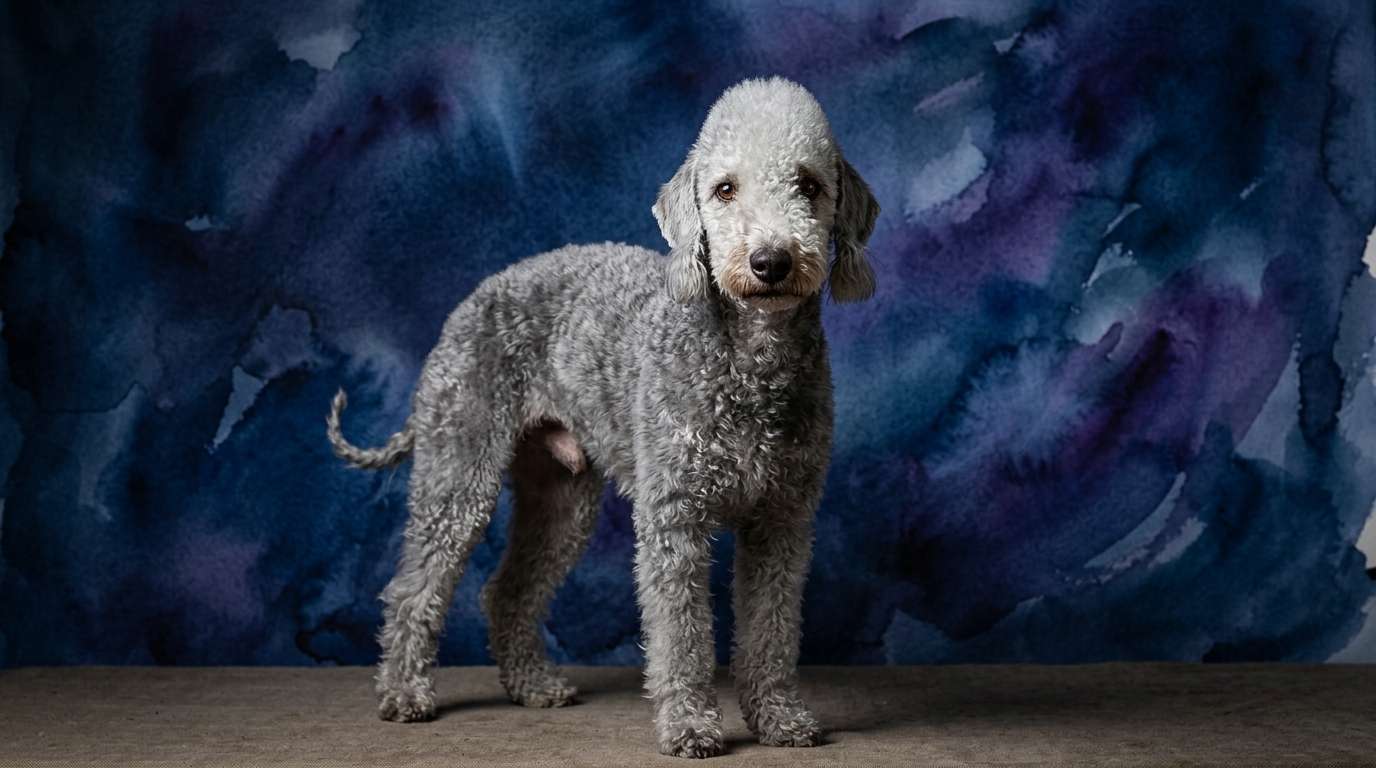
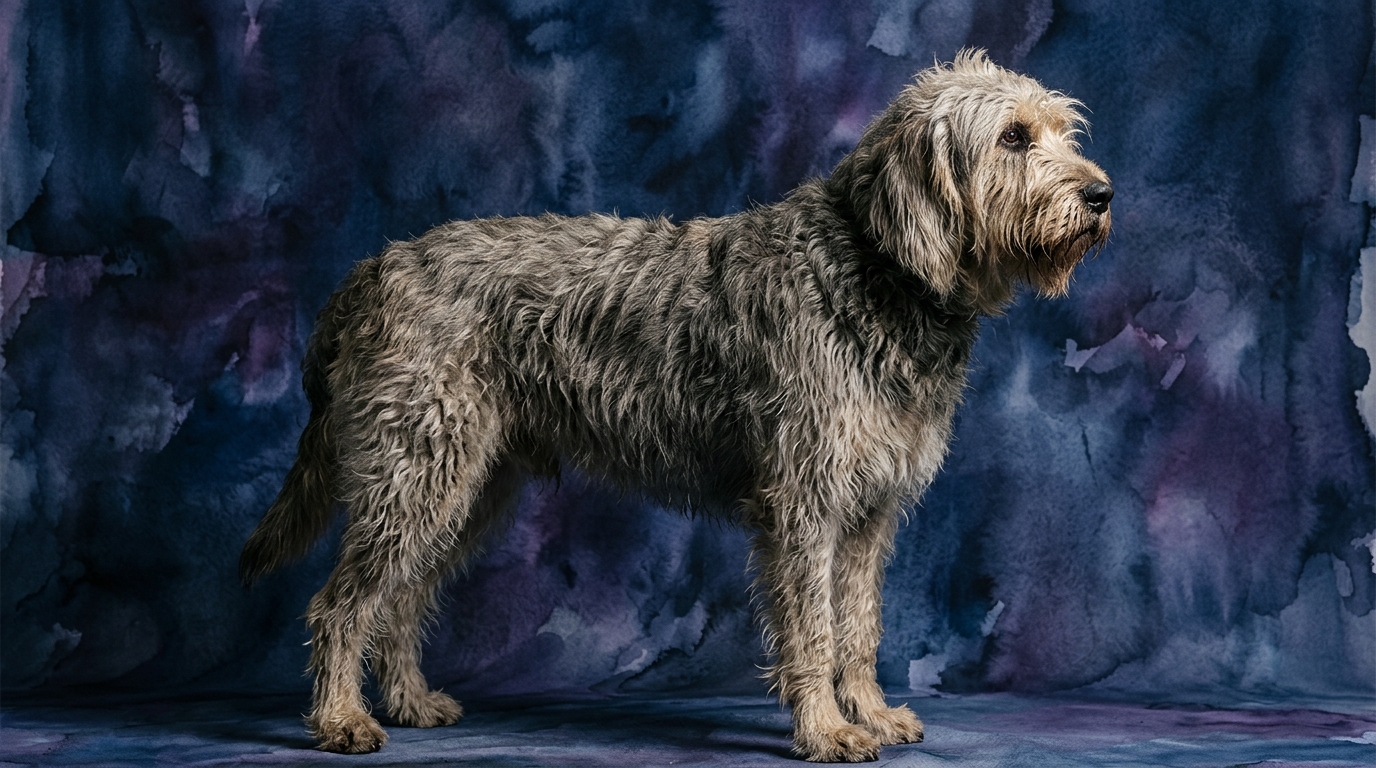
Side-by-Side IQ Profile: Bedlington Terrier vs. Otterhound
Despite both breeds scoring 3/5 across all five dimensions in The Cosmic Pet IQ Lab, their unique histories and breed types mean these scores manifest differently in their day-to-day cognitive functioning. Understanding these nuances is key to appreciating their individual intellectual contributions.
For Problem Solving (3/5), the Bedlington Terrier typically demonstrates a capacity for moderate independent thought and strategy, often applied to tasks requiring quick assessment and action. A Bedlington might figure out how to navigate a tricky obstacle to reach a desired toy or employ varied tactics to 'dig out' a perceived 'prey' item, leaning towards resourcefulness in immediate, often physical, challenges. The Otterhound's 3/5 in problem-solving often manifests in their keen ability to follow complex scent trails, piecing together disparate olfactory information to achieve a goal. Their cognitive approach tends to be more about sustained, methodical investigation rather than rapid, reactive solutions, excelling at untangling difficult tracking puzzles.
In Training Speed (3/5), a Bedlington Terrier's score indicates they can learn new commands and routines at a respectable pace, but their independent Terrier spirit means they might require consistent motivation and varied training approaches to maintain engagement. They grasp concepts well but can choose when to apply them, often testing boundaries. Similarly, an Otterhound's 3/5 means they are capable learners, though their strong scent drive can be a significant distraction, potentially slowing down initial command acquisition in stimulating environments. Once they focus, they can absorb information, but their primary interest might often lie elsewhere, requiring patient and engaging methods.
Social Intelligence (3/5) for the Bedlington Terrier suggests they are moderately adept at reading human cues and interacting appropriately within a social structure. They can form strong bonds and understand household dynamics, but their inherent independence might mean they don't always seek constant human direction or social interaction, preferring a balanced approach to companionship. An Otterhound's 3/5 in social intelligence points to a capacity for cooperative behavior, especially within a 'pack' setting, whether human or canine. They are generally amiable and can understand social hierarchies and expectations, though their boisterous nature and single-minded pursuit of scent can sometimes override subtle social signals in highly stimulating contexts.
Regarding Instinctive Drive (3/5), the Bedlington Terrier's score reflects a moderate but persistent drive rooted in their hunting heritage, particularly for small vermin. This manifests as a strong prey drive, an inclination to chase, and a certain tenacity when focused on a task; they are motivated by the thrill of the chase and the satisfaction of 'working.' For the Otterhound, a 3/5 in instinctive drive is profoundly linked to their olfactory capabilities and historical role in tracking. Their drive is primarily expressed through an unwavering commitment to scent work, often overriding other stimuli; this isn't just a chase, but a deep, sustained engagement with their primary sense.
Finally, for Memory (3/5), the Bedlington Terrier's score suggests a good capacity for remembering commands, routines, and experiences. They recall past training sessions and the consequences of their actions, contributing to their ability to adapt, with their memory being reliable for day-to-day interactions and learned behaviors. An Otterhound's 3/5 in memory is particularly notable for its application to scent recall and complex trail patterns. They can remember specific scents and the routes associated with them over time, which is crucial for their original purpose, and also retain learned behaviors, though their independent nature means recall might be selective if a more enticing scent is present.
Where the Bedlington Terrier Wins Cognitively
Despite identical overall scores, the Bedlington Terrier subtly edges out the Otterhound in areas demanding more agile, independent, and quick-thinking application of intellect. Their problem-solving, while rated 3/5, often manifests as a rapid assessment of immediate surroundings to achieve a goal, such as creatively navigating a complex indoor environment or outwitting a puzzle toy with swift, varied approaches. This is distinct from the Otterhound's more methodical, sensory-driven problem-solving. A Bedlington’s inherent terrier tenacity translates into a cognitive persistence that allows them to stick with a challenge, adapting their strategy on the fly rather than relying on a singular, sustained sensory input. For instance, if a desired item is out of reach, a Bedlington is more likely to try multiple angles, pushes, or nudges, demonstrating a practical, hands-on form of cognitive flexibility. Their memory, also a 3/5, is particularly adept at recalling the successful outcomes of these varied strategies, allowing them to refine their approach in similar future scenarios. This quick recall of action-outcome relationships, combined with their readiness to innovate, gives them a cognitive edge in dynamic, varied environments where swift, individual initiative is paramount.
Where the Otterhound Wins Cognitively
Conversely, the Otterhound's cognitive strengths, while sharing the same 3/5 scores, truly shine in domains requiring profound sensory processing, sustained focus, and a methodical, almost meditative approach to problem-solving. Their instinctive drive, rated 3/5, is overwhelmingly directed towards olfaction, making their cognitive application of this sense exceptionally refined. An Otterhound's memory, also a 3/5, is particularly robust for recalling intricate scent patterns and complex geographical trails, allowing them to retrace steps or pick up a cold scent with impressive accuracy. This isn't just remembering a command; it's remembering a nuanced tapestry of odors over time and distance. Their problem-solving ability, while a 3/5, is less about quick, physical maneuvers and more about the intricate cognitive process of piecing together a 'scent story,' demonstrating a deep analytical capacity within their sensory world. They excel at tasks requiring prolonged, unwavering concentration on a singular, abstract input – the scent – to reach a conclusion. For example, in a tracking exercise, an Otterhound will meticulously work through distractions, relying on their internal map of odors, a testament to their specialized cognitive prowess in an area where the Bedlington Terrier, though capable, would not typically dominate.
Which is Easier to Train and Why
Determining which breed is 'easier' to train is nuanced, as both the Bedlington Terrier and Otterhound hold a 3/5 in training speed, yet their inherent behavioral traits present different challenges. The Bedlington Terrier's independent spirit, characteristic of its terrier lineage, means they can grasp commands quickly but might choose when to perform them. Their problem-solving inclination can sometimes manifest as finding 'loopholes' or alternative, often self-serving, solutions to a request. This requires a trainer to be highly engaging, consistent, and patient, making training feel like a negotiation rather than a simple instruction. Their moderate prey drive can also make focus challenging in environments with small, scurrying creatures. In contrast, the Otterhound's primary training hurdle stems from its profound instinctive drive for scent. While they possess good memory and social intelligence, a compelling scent can completely override any learned command, making recall particularly challenging outdoors. Their methodical problem-solving translates into a deliberate pace, meaning they might not react with the same alacrity as a Bedlington, especially if their nose is engaged. Training an Otterhound demands immense patience, environmental control, and finding ways to integrate their scent drive positively into training, rather than fighting against it. Therefore, while both require dedication, the Bedlington's training challenge lies in their selective cooperation and quick-witted independence, whereas the Otterhound's challenge is primarily its powerful, often overwhelming, sensory focus.
Which Suits Active Owners vs. Relaxed Owners
Both the Bedlington Terrier and Otterhound are generally better suited for active owners, though their activity needs differ in quality. The Bedlington Terrier, with its moderate instinctive drive and agile problem-solving, thrives on varied physical activity combined with mental engagement. They enjoy brisk walks, playful games, and opportunities to use their quick wits, such as agility courses or puzzle toys. A relaxed owner might find a Bedlington creating their own 'fun' through undesirable behaviors if their physical and mental energy isn't adequately channeled. Their bursts of energy require consistent outlets. The Otterhound, on the other hand, demands activity that caters to its deep-seated scent drive and physical endurance. Long, meandering walks where they can explore scents, or participation in tracking sports, are paramount for their well-being. Their 'relaxed' state often means a large, sprawling dog whose nose is constantly at work, even indoors. A truly relaxed owner who prefers minimal engagement might struggle with the Otterhound's need for sustained, purposeful outings and the potential for a bored, vocal hound. Neither breed is content with being a sedentary couch potato; both require owners who are prepared to actively engage with their specific breed characteristics and energy levels, albeit in different ways – the Bedlington with quick, varied activities, and the Otterhound with long, scent-driven explorations.
The Verdict
Choose the Bedlington Terrier if you appreciate a dog with independent thought, quick problem-solving in varied scenarios, and a desire for interactive play that challenges their agility and wit. They thrive with consistent, engaging training and owners who can channel their terrier tenacity into productive activities.
Opt for the Otterhound if you are drawn to a dog with an unparalleled dedication to scent work, methodical problem-solving, and a need for sustained, exploratory outdoor adventures. They flourish with patient owners who understand their powerful olfactory drive and can integrate it into their daily lives and training.
🧠 Find Your Pet's IQ Score
Our Pet IQ Lab assessment covers 25+ tests across 5 cognitive dimensions — personalized to your breed.
Take the Full IQ Test →Frequently Asked Questions
Do Bedlington Terriers make good family pets?
Yes, Bedlington Terriers can be wonderful family pets, especially with early socialization and consistent training. Their social intelligence (3/5) allows them to bond closely with their family, though their independent streak means they appreciate respectful interaction and clear boundaries. They are generally good with children who understand how to interact gently with dogs.
Are Otterhounds easy to house train?
Otterhounds can be house trained effectively, but their training speed (3/5) and strong scent drive can present challenges. Consistency, positive reinforcement, and frequent outdoor access for sniffing and elimination are key. Their memory (3/5) helps them retain routines, but distractions can sometimes lead to setbacks if not managed.
What are the primary exercise needs for an Otterhound?
Otterhounds require substantial exercise that caters to their instinctive drive (3/5) for scent and their endurance. Daily long walks or hikes where they can follow scents are essential, ideally for an hour or more. They also benefit greatly from activities like tracking, scent work, or swimming, which engage both their body and their powerful nose.