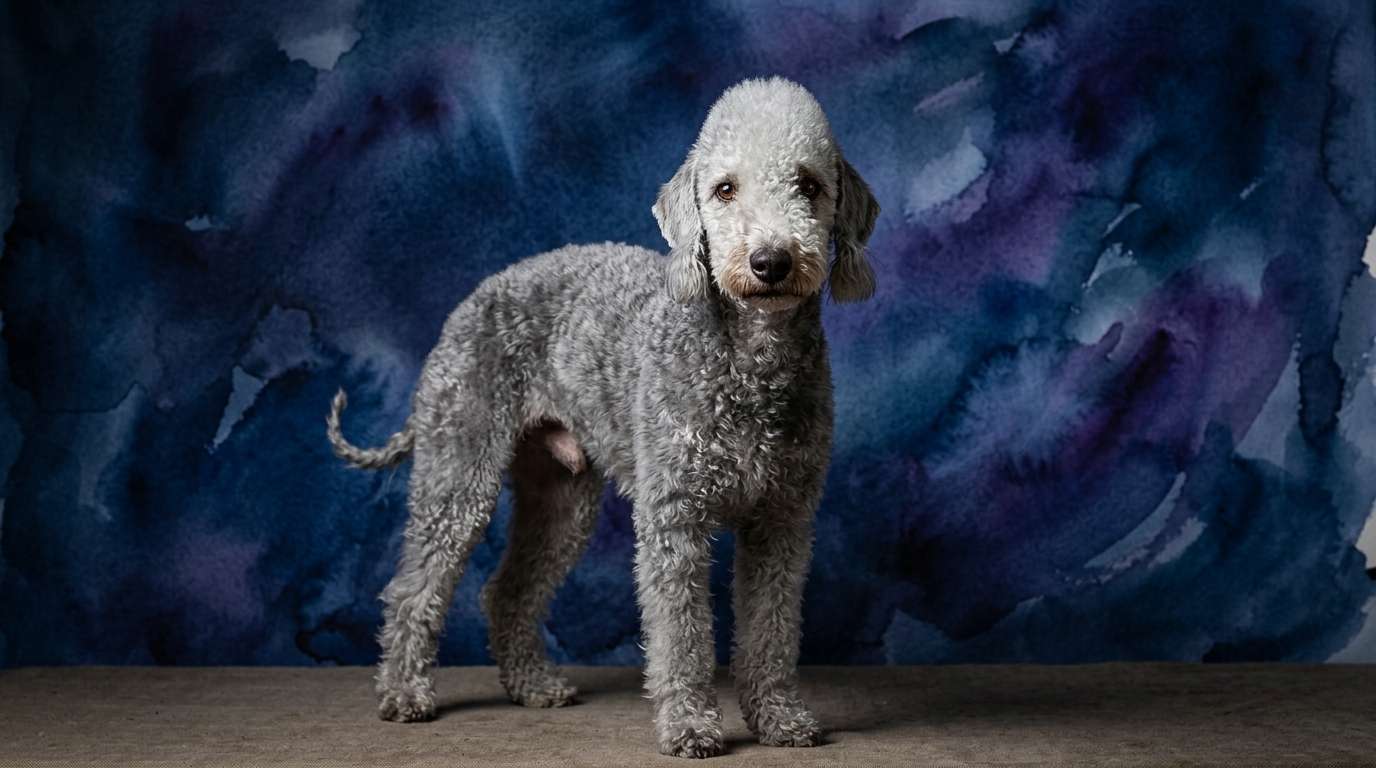
Side-by-Side Cognitive Profiles: Bedlington Terrier
The Bedlington Terrier presents a balanced cognitive profile, scoring 3/5 in every Pet IQ Lab dimension. Their problem-solving at 3/5 often manifests in a clever, sometimes mischievous, ability to navigate their environment, figuring out how to access forbidden areas or dismantle toys to their satisfaction; this isn't about complex abstract reasoning, but practical, goal-oriented solutions with a terrier's tenacity. Training speed, also at 3/5, indicates they are capable learners, but their independent spirit means consistency and engaging methods are crucial to maintain their focus, preventing their strong will from overshadowing their capacity to absorb commands.
Social intelligence for the Bedlington, rated 3/5, highlights their discerning nature; they form deep bonds with their immediate family, often displaying a reserved politeness with strangers rather than universal effusiveness, adept at reading familiar human cues. Their instinctive drive, a 3/5, is powerfully geared towards their terrier heritage, encompassing a strong prey drive, a keen desire to dig, and an inclination to chase small, fast-moving objects. Finally, their memory, also 3/5, allows them to retain training, recall specific locations of interest, and remember routines, contributing to their generally predictable and reliable behavior within their established household.
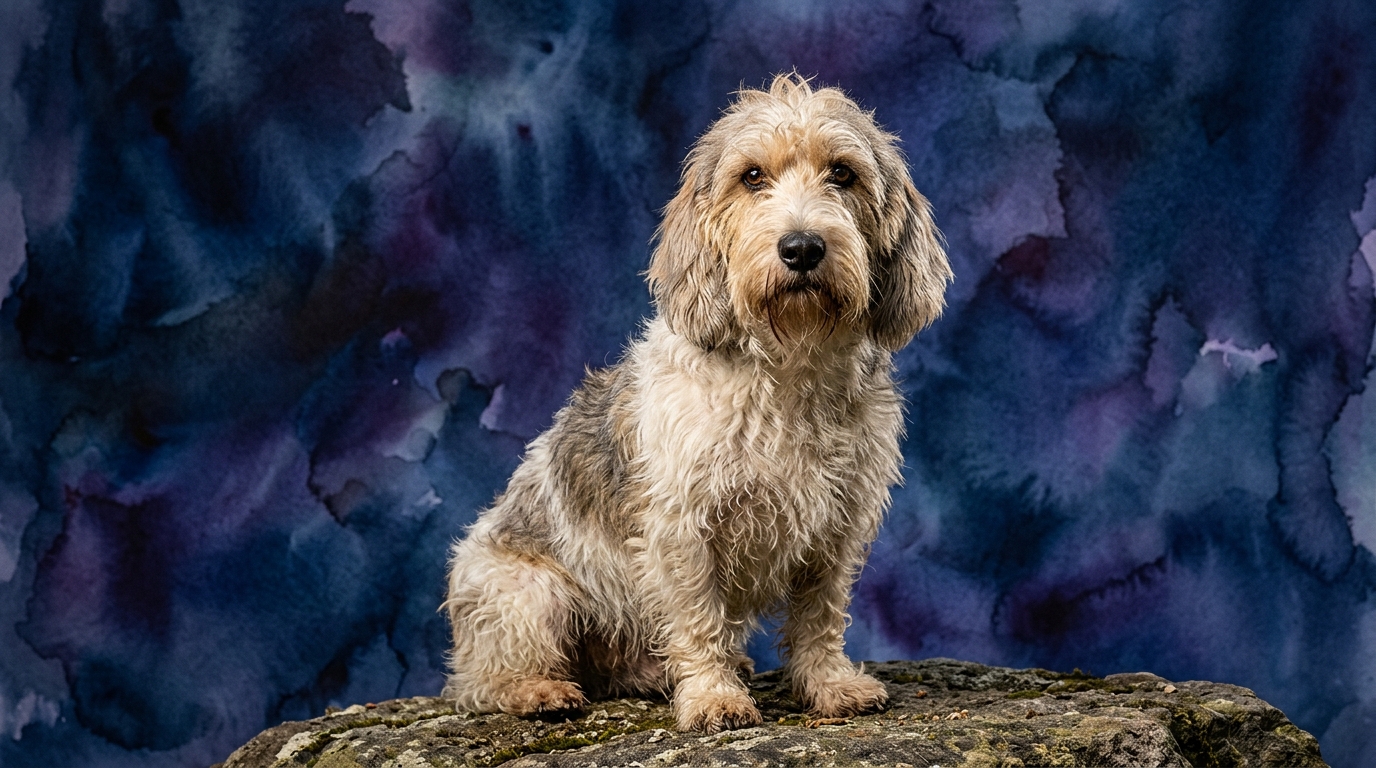
Side-by-Side Cognitive Profiles: Petit Basset Griffon Vendéen
The Petit Basset Griffon Vendéen (PBGV), mirroring the Bedlington with 3/5 across all cognitive dimensions, expresses these abilities through a distinct hound lens. Their problem-solving at 3/5 is primarily scent-driven, excelling at unraveling complex olfactory puzzles to locate hidden objects or follow intricate trails, demonstrating a persistent, methodical approach rooted in their historical role as trackers. Training speed, rated 3/5, indicates they are receptive to learning, particularly when positive reinforcement involves food or engaging games, but their powerful nose can frequently divert their attention, making sustained focus a consistent training challenge.
The PBGV's social intelligence, also 3/5, is characterized by a generally outgoing and jovial disposition, often readily engaging with new people and other dogs, thriving on interaction and contributing a cheerful energy to their surroundings. Their instinctive drive, a robust 3/5, is overwhelmingly focused on scent work; they possess an unwavering desire to explore with their nose, bay loudly when excited by a trail, and follow compelling smells wherever they lead, sometimes to the detriment of human-set boundaries. Their memory, also 3/5, is particularly strong for scent associations, remembering favorable sniffing spots, previous trails, and the locations of interesting outdoor stimuli, which can sometimes override obedience in the face of an enticing smell.
Where the Bedlington Terrier Excels Cognitively
While sharing identical scores, the Bedlington Terrier often demonstrates a particular cognitive edge in applying problem-solving to physical manipulation and strategic navigation within a domestic setting. Their 3/5 problem-solving often manifests as an ingenious ability to 'outsmart' household barriers, such as figuring out how to open latches or scale low fences to reach a desired location, showcasing a persistent, goal-oriented approach that is less about abstract thought and more about practical, physical solutions. This ingenuity is often coupled with their memory (3/5) for past successes, allowing them to refine these tactics over time.
Furthermore, the Bedlington's social intelligence (3/5), while not universally demonstrative, excels in its nuanced understanding of their specific human companions. They are adept at reading subtle shifts in family dynamics and individual moods, often anticipating needs or reacting appropriately to specific vocal tones, indicating a finely tuned perception of their inner circle. This distinct blend of independent problem-solving and selective social awareness gives them a unique cognitive advantage in a tight-knit family environment where their specific cues are understood and respected.
Where the Petit Basset Griffon Vendéen Excels Cognitively
The Petit Basset Griffon Vendéen shines brightest in cognitive tasks directly related to their profound olfactory capabilities, an extension of their 3/5 problem-solving and instinctive drive. Their ability to process and interpret a complex tapestry of scents is unparalleled, allowing them to follow trails that would be imperceptible to most other breeds, or to locate objects purely by smell with remarkable precision. This isn't just a strong nose; it's a sophisticated cognitive process of data interpretation and persistent pursuit, making them exceptional at scent work and detection games.
Moreover, the PBGV's social intelligence (3/5) often presents as a more universally adaptable and effervescent charm. They possess an inherent ability to engage and lighten the mood in various social settings, readily making new acquaintances and diffusing tension with their cheerful, outgoing demeanor. This makes them particularly adept at navigating diverse social situations, often winning over strangers with their friendly approach, a distinct advantage when frequent interactions with new people or animals are a part of their routine.
Which Breed is Easier to Train and Why?
Despite both breeds scoring 3/5 in training speed, the practical experience of training each can differ significantly due to their primary motivators and inherent drives. The Bedlington Terrier, with its independent terrier spirit, requires a trainer who understands the art of motivation and consistency. They learn commands efficiently, but their willingness to perform them reliably often depends on their assessment of the situation and the perceived value of the reward, meaning training needs to be engaging and prevent boredom to maintain compliance.
The Petit Basset Griffon Vendéen, while equally capable of learning, presents a different kind of training challenge due to its powerful instinctive drive for scent. A fascinating smell can instantly override any learned command, making recall and focus in outdoor environments particularly demanding. While they are often eager to please and respond well to positive reinforcement, especially food-based rewards, managing their strong olfactory distractions is paramount; success hinges on a trainer's ability to compete with the allure of the natural world and integrate scent-based activities into their training regimen.
Suitability for Active vs. Relaxed Owners
For owners seeking an active companion, both breeds offer engaging possibilities, though their preferred activities diverge. The Bedlington Terrier, with its agile build and terrier energy, thrives with owners who enjoy structured play, brisk walks, and activities that engage their problem-solving, such as agility or earthdog trials where their digging and chasing instincts can be safely channeled. They benefit from consistent mental and physical challenges that prevent boredom and redirect their innate drives into productive outlets, making them suitable for owners who are prepared to be active participants in their dog's daily mental and physical stimulation.
The Petit Basset Griffon Vendéen is also an active breed, but their activity preferences lean heavily towards scent-based exploration. They are ideal for owners who enjoy long, rambling walks where the dog can follow interesting smells, or participate in scent work, tracking, and even competitive nose work. While they enjoy active play, their primary outlet for energy and cognitive engagement is often through their nose. Relaxed owners might find both breeds challenging due to their moderate but persistent energy levels and strong instinctive drives that require management and outlets, though a PBGV might be slightly more content with a less structured sniff-filled walk versus a Bedlington's need for more directed engagement.
The Verdict: When to Choose Each Breed
The Verdict
Choose the Bedlington Terrier if you appreciate a clever, discerning companion who forms deep family bonds and excels at practical problem-solving within a structured home, and you are prepared to channel their independent spirit with consistent, engaging training. They are ideal for owners who value a dog with a unique personality and are ready for moderate physical activity and mental games.
Opt for the Petit Basset Griffon Vendéen if you seek a cheerful, outgoing companion who thrives on scent-driven exploration and universal social engagement, and you are prepared to embrace their boisterous nature and manage their strong tracking instincts. They are perfect for owners who enjoy long, sniff-filled walks and are willing to incorporate scent work into their daily routine.
🧠 Find Your Pet's IQ Score
Our Pet IQ Lab assessment covers 25+ tests across 5 cognitive dimensions — personalized to your breed.
Take the Full IQ Test →Frequently Asked Questions
Do Bedlington Terriers make good family pets?
Yes, Bedlington Terriers can be wonderful family pets, forming strong, affectionate bonds with their immediate family members. They are generally good with children when properly socialized, though their terrier tenacity means they benefit from consistent training and clear boundaries.
Are Petit Basset Griffon Vendéens prone to barking?
Petit Basset Griffon Vendéens are known for their distinctive baying, which they use to communicate excitement, alert to new scents, or express their presence. While not incessant, their vocal nature is a characteristic trait, and owners should be prepared for their cheerful, sometimes loud, expressions.
How much exercise do these breeds require daily?
Both breeds require moderate daily exercise to stay healthy and mentally stimulated, typically 45-60 minutes of active engagement. For the Bedlington, this might include brisk walks and interactive play, while for the PBGV, it often involves longer, scent-focused walks where they can explore their environment with their nose.