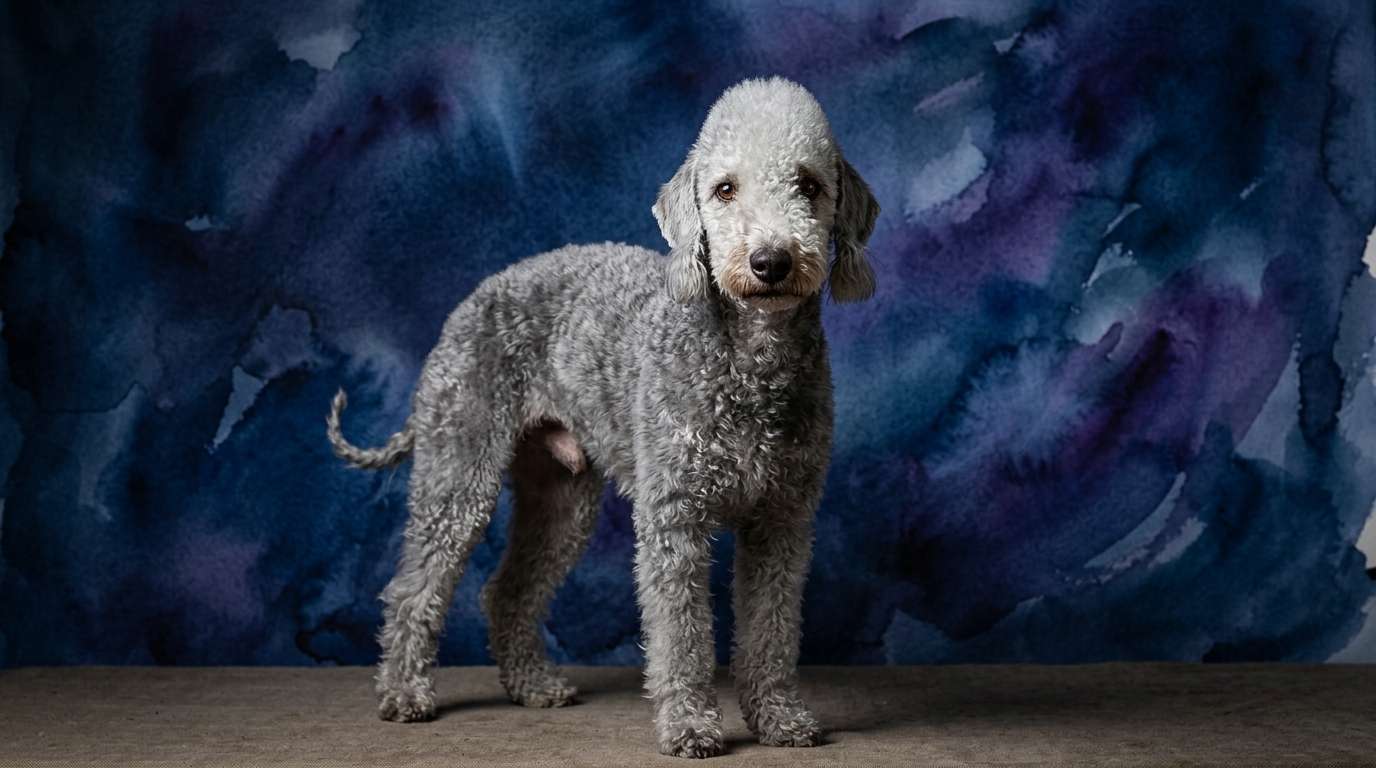
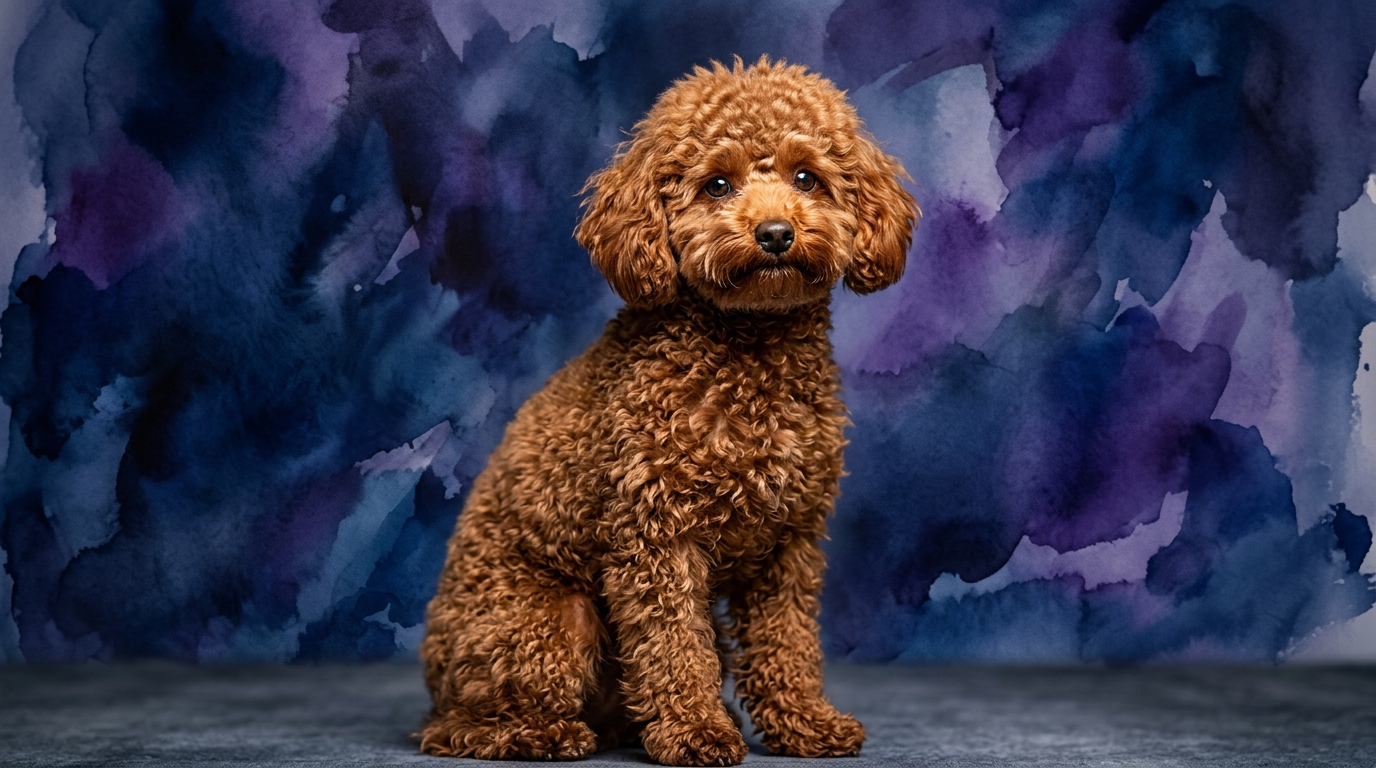
Side-by-Side IQ Profile: Bedlington Terrier vs. Toy Poodle
To understand the cognitive differences between these two breeds, The Cosmic Pet Pet IQ Lab evaluates five key dimensions of canine intelligence. Examining these scores provides a nuanced view of how Bedlington Terriers and Toy Poodles perceive the world and interact with it.
**Problem Solving:** The Bedlington Terrier scores 3/5 here, indicating a resourceful, often independent approach to challenges. They might not always choose the most obvious path but will persistently experiment to achieve their goals, whether it's outsmarting a critter or figuring out how to access a forbidden treat. This score reflects their practical, self-directed ingenuity rather than a desire for human-led complex puzzles. In stark contrast, the Toy Poodle earns a perfect 5/5, demonstrating exceptional aptitude for understanding complex sequences and cause-and-effect relationships. They quickly grasp new concepts, excel at multi-step tasks, and can generalize learned solutions to novel situations, making them adept at navigating intricate training scenarios or household puzzles.
**Training Speed:** The Bedlington Terrier's 3/5 in Training Speed means they are certainly capable of learning, but their progress is moderated by their strong independent streak and inherent terrier tenacity. They require consistent, engaging methods and a trainer who understands how to motivate a breed that prefers to think for itself, sometimes needing more repetitions to solidify commands. The Toy Poodle, with a 5/5, is renowned for its rapid acquisition of new commands and behaviors. Their eagerness to please, coupled with their superior cognitive capacity, allows them to pick up new cues almost instantaneously, often requiring minimal repetition before a concept is understood and reliably performed.
**Social Intelligence:** Both breeds score 3/5 in Social Intelligence, yet manifest it differently. Bedlington Terriers possess a discerning social acumen, forming deep bonds with their chosen family members and often being reserved with strangers. They are attuned to the nuances of their human companions' moods and routines, offering quiet companionship and loyalty, though their social circle might be smaller. Toy Poodles also display a keen social awareness, often mirroring their owners' emotions and thriving on close human interaction. They are perceptive to changes in their environment and family dynamics, adapting readily and seeking connection, making them highly responsive companions within their social group.
**Instinctive Drive:** Again, both breeds land at 3/5, but their drives stem from different historical roles. The Bedlington Terrier's instinctive drive is rooted in its heritage as a working terrier, manifesting as a strong prey drive, a propensity for digging, and an alert watchfulness. While rated 3/5, this drive is a significant aspect of their personality, requiring mindful management and appropriate outlets to prevent unwanted behaviors. The Toy Poodle retains a moderate instinctive drive, often expressed through retrieving games and a curiosity for their surroundings. While not possessing the intense predatory focus of a terrier, they can exhibit a chase instinct for small, fast-moving objects and and enjoy engaging in mentally stimulating activities that tap into their natural curiosity.
**Memory:** The Bedlington Terrier scores 3/5 for Memory, indicating a solid ability to retain commands, routines, and experiences. Once a behavior is learned through consistent reinforcement, they typically retain it well. However, they might require more frequent refreshers or structured practice compared to breeds with a higher memory score, especially for less frequently used cues. The Toy Poodle, with an exceptional 5/5, possesses a remarkable memory, allowing them to recall a vast repertoire of commands, complex sequences, and past experiences with impressive accuracy. This strong memory contributes significantly to their training efficiency and their ability to perform intricate routines, even after long breaks.
Where the Bedlington Terrier Excels Cognitively
The Bedlington Terrier's cognitive strengths shine in their self-sufficiency and tenacious problem-solving. While their approach might not always be the quickest or most compliant, their independent thinking allows them to navigate challenges with a unique blend of persistence and cunning. This breed excels at figuring things out on their own terms, often demonstrating a resourcefulness that comes from their terrier lineage, making them adept at tasks requiring individual initiative rather than constant human direction. Their moderate instinctive drive, while needing management, also contributes to a focused determination when pursuing a goal, whether it's tracking a scent or solving a spatial puzzle to reach a desired object.
Where the Toy Poodle Excels Cognitively
The Toy Poodle's cognitive advantages are evident in their superior problem-solving, rapid training acquisition, and exceptional memory. They quickly analyze situations, understand complex instructions, and retain information with remarkable efficiency, making them highly adaptable to various learning environments and disciplines. Their capacity for multi-step commands and their ability to generalize learned behaviors to new contexts positions them as outstanding candidates for advanced obedience, agility, and even specialized assistance work where intricate cognitive processing is paramount. This breed thrives on mental challenges, readily engaging in complex games and learning new skills with impressive speed and retention.
Training Dynamics: Bedlington Terrier vs. Toy Poodle
Based on the IQ profiles, the Toy Poodle is demonstrably easier to train for most owners. Their 5/5 scores in both Training Speed and Memory mean they pick up new commands with minimal repetition and retain them over extended periods. Their eagerness to engage with their handlers and their capacity for complex understanding make them highly responsive to positive reinforcement methods, allowing for quick progress in various training disciplines, from basic obedience to intricate dog sports. Their ability to remember long sequences of commands simplifies advanced training considerably.
In contrast, the Bedlington Terrier, with 3/5 ratings in Training Speed and Memory, requires a more patient and creative approach. Their independent nature and instinctive drive mean trainers must be consistent, make sessions engaging, and understand how to channel their natural terrier tendencies rather than expecting immediate, compliant obedience. They can be prone to 'selective hearing' if not properly motivated or if the training isn't stimulating enough. Owners will find success by leveraging the Bedlington's resourcefulness and drive, perhaps through scent work or agility courses that tap into their natural athleticism and problem-solving skills, rather than solely relying on rote repetition.
Matching Breeds to Owner Lifestyles
For truly active owners who enjoy dynamic engagement and channeling a dog's natural drive, the Bedlington Terrier can be an excellent fit. Their terrier energy and zest for life mean they thrive with owners who provide consistent mental and physical stimulation, including opportunities for exploration, scent work, or even earthdog trials, which align with their instinctive drives. However, their independence means "active" also implies active training and management to ensure their energy and instincts are directed constructively. They enjoy being part of outdoor adventures and require an owner who appreciates their spirited nature.
For owners seeking a companion that can adapt to a more relaxed pace while still enjoying significant mental challenges, the Toy Poodle is often more suitable. While they absolutely require mental stimulation to prevent boredom and destructive behaviors, their physical exercise needs can be met with regular walks and indoor play, making them adaptable to apartment living or quieter households. Their cognitive capacity means they excel in activities like trick training, puzzle toys, or even just engaging in mentally stimulating games, fulfilling their need for interaction and intellectual engagement without demanding constant high-impact physical exertion. They are content with a variety of activity levels as long as their minds are kept busy and they receive ample companionship.
The Verdict
Choose a Bedlington Terrier if you appreciate an independent, resourceful companion with a distinctive personality and are prepared to engage their unique terrier drives with consistent, creative training and an active lifestyle.
Opt for a Toy Poodle if you seek a highly trainable, cognitively versatile companion eager to learn and excel in various disciplines, thriving on mental engagement and close human interaction in a more adaptable lifestyle.
🧠 Find Your Pet's IQ Score
Our Pet IQ Lab assessment covers 25+ tests across 5 cognitive dimensions — personalized to your breed.
Take the Full IQ Test →Frequently Asked Questions
Are Bedlington Terriers difficult to train?
Bedlington Terriers are not inherently difficult, but they require a different approach due to their independent nature and moderate training speed. Consistent, positive reinforcement, engaging methods, and patience are key to successfully training a Bedlington, channeling their natural curiosity and drive rather than expecting passive obedience.
Do Toy Poodles need a lot of exercise?
Toy Poodles need regular physical exercise, but their primary requirement is significant mental stimulation. While daily walks and playtime are essential, their high cognitive capacity means they thrive on puzzle toys, trick training, and interactive games that challenge their minds more than their bodies, preventing boredom and promoting well-being.
Which breed is better for first-time dog owners?
Given its higher training speed, exceptional memory, and eagerness to please, the Toy Poodle is generally a more forgiving and adaptable choice for first-time dog owners. The Bedlington Terrier's independent streak and specific terrier needs might present more challenges for those new to dog ownership, requiring more experience in managing strong drives.