
Side-by-Side IQ Profile
The Cosmic Pet Pet IQ Lab categorizes canine intelligence across five critical dimensions, providing a nuanced view beyond simple obedience. For the Belgian Sheepdog (Groenendael), a breed ranked #15 by Coren, we see a cognitive architecture optimized for complex, collaborative tasks.
The Groenendael excels with a perfect 5/5 in Problem Solving, indicating an exceptional capacity for navigating novel situations and devising solutions. Its Training Speed is also rated 5/5, suggesting a rapid acquisition of new commands and routines. Memory is equally impressive at 5/5, allowing for retention of learned behaviors and experiences over extended periods. Social Intelligence stands at 3/5, reflecting a solid but not overwhelming focus on human interaction, while Instinctive Drive is 3/5, demonstrating a balanced innate predisposition, likely oriented towards its herding heritage.
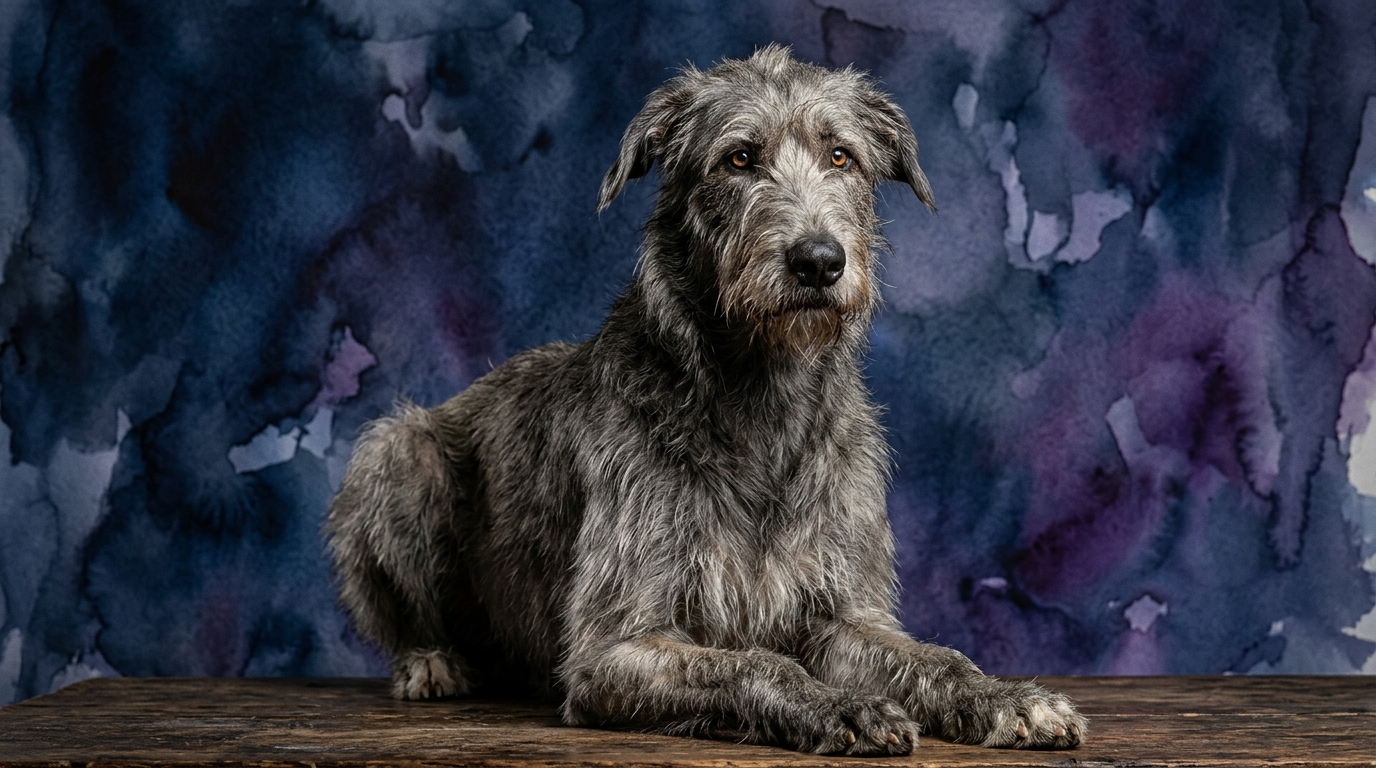
In contrast, the Irish Wolfhound, a breed not ranked by Coren, presents a profile more aligned with its ancestral role as a formidable hunter of large game. Its cognitive scores, while not as high as the Groenendael's in specific areas, paint a picture of a capable and independent thinker.
The Irish Wolfhound receives a 3/5 in Problem Solving, indicating a functional ability to address challenges, though perhaps with less spontaneous innovation than the Groenendael. Its Training Speed is also 3/5, suggesting a steady but not lightning-fast learning curve. Social Intelligence is 3/5, similar to the Groenendael, reflecting a stable relationship with its human companions. Instinctive Drive is 3/5, underscoring its inherent predispositions for observation and pursuit. Memory is rated 3/5, meaning it retains information adequately for its needs, but perhaps with less long-term detail recall compared to its sheepdog counterpart.
Where Belgian Sheepdog (Groenendael) Wins Cognitively
The Groenendael's cognitive strengths are undeniably geared towards active partnership and intricate task execution. Its stellar 5/5 Problem Solving score means it doesn't just follow commands; it understands the objective and can adapt its approach when obstacles arise, making it adept at complex obedience, agility, and protection work. For instance, if a gate is unexpectedly closed during a retrieve exercise, a Groenendael is more likely to assess the situation and find an alternative path or method to complete the task, rather than simply stopping.
Its 5/5 Training Speed is a significant advantage, allowing these dogs to grasp new concepts and cues with remarkable alacrity. This means fewer repetitions are needed for skill acquisition, enabling a broader and more sophisticated repertoire of behaviors. This rapid learning extends beyond basic commands to nuanced tasks like scent discrimination or intricate herding patterns. Coupled with its 5/5 Memory, the Groenendael can build upon past lessons effortlessly, retaining complex sequences and rarely forgetting a learned skill, even after long breaks. This cognitive profile makes them exceptional candidates for demanding roles requiring precise, consistent performance.
Where Irish Wolfhound Wins Cognitively
While the Irish Wolfhound's numerical scores are generally lower or equal, its cognitive strengths lie in areas distinct from the Groenendael's cooperative brilliance, reflecting its heritage as a sight hound. Its 3/5 Instinctive Drive, combined with its profound physical presence, translates into a specialized cognitive focus on observation, independent judgment, and a powerful, sustained pursuit when triggered. This means it excels in scenarios requiring autonomous decision-making in vast, open spaces, where a handler might not be immediately present to direct.
Its 3/5 Problem Solving, though not as high, is sufficient for its original purpose: identifying, tracking, and engaging large game. This involves a different kind of problem-solving—one focused on spatial awareness, sensory interpretation, and tactical execution within a hunting context. The Wolfhound's memory and training speed, both at 3/5, support a functional understanding of its environment and routines, allowing it to navigate its world with a quiet confidence and independent resolve. Its cognitive framework allows for self-reliance and a measured approach, rather than seeking constant directives, which can be a unique strength in a companion.
Which is Easier to Train and Why
Based on their respective scores, the Belgian Sheepdog (Groenendael) is demonstrably easier to train than the Irish Wolfhound. The Groenendael's 5/5 Training Speed means it picks up new commands and routines with exceptional swiftness, often requiring fewer repetitions and responding eagerly to cues. This rapid acquisition is further bolstered by its 5/5 Memory and 5/5 Problem Solving, allowing it to generalize learned behaviors to new contexts and remember complex sequences without difficulty. They possess a natural eagerness to work alongside their human, making the training process highly rewarding and efficient.
Conversely, the Irish Wolfhound's 3/5 Training Speed indicates a more deliberate learning pace. While certainly capable of learning, they may require more patience and consistency in training sessions. Their 3/5 Problem Solving and Memory suggest they grasp concepts at a moderate rate and retain them, but perhaps without the same immediate recall or flexible application as the Groenendael. Their independent hound nature means they may require more motivation beyond simply pleasing their handler; understanding 'why' a command is relevant or finding intrinsic reward can be crucial. This isn't a deficit in intelligence, but rather a different style of cognitive processing that demands a tailored training approach.
Which Suits Active Owners vs Relaxed Owners
The Belgian Sheepdog (Groenendael) is an ideal match for active owners who thrive on engagement and purpose. Their high scores in Problem Solving, Training Speed, and Memory signify a deep need for mental stimulation, consistent training, and physical activity. These dogs flourish when given a 'job' to do, whether it's advanced obedience, agility, protection sports, or even complex puzzle toys. Owners who enjoy frequent, structured activities and can dedicate significant time to training and interactive play will find the Groenendael a highly fulfilling companion, as their cognitive capacity demands an outlet.
The Irish Wolfhound, while requiring considerable space due to its size and needing regular exercise, particularly during its growth phase, can be a surprisingly good fit for owners who appreciate a more relaxed, yet still active, lifestyle. While they possess a 3/5 Instinctive Drive that necessitates opportunities for bursts of running and exploration in secure areas, they are also known for their calm demeanor indoors and their preference for lounging once their exercise needs are met. Owners who enjoy long, leisurely walks or occasional romps in a large yard, but don't necessarily seek a canine partner for intense daily training or competitive sports, may find the Wolfhound's dignified companionship highly appealing. Their cognitive profile suggests a more self-contained nature, less reliant on constant handler direction for stimulation.
The Verdict
Choose the Belgian Sheepdog (Groenendael) if you are an active, dedicated owner seeking a highly trainable, cognitively agile partner for advanced training, sports, or a 'working' role. You must be prepared to provide consistent mental and physical challenges to satisfy its sharp intellect.
Opt for the Irish Wolfhound if you appreciate a dignified, independent companion with a calm indoor presence, but who also requires ample space and opportunities for powerful, expansive exercise. You should be patient with training and value a dog that makes its own judgments when appropriate.
🧠 Find Your Pet's IQ Score
Our Pet IQ Lab assessment covers 25+ tests across 5 cognitive dimensions — personalized to your breed.
Take the Full IQ Test →Frequently Asked Questions
Does the Irish Wolfhound's lower IQ score mean it's less capable?
Not at all; the Irish Wolfhound's cognitive profile is simply optimized for different tasks. Its scores reflect a functional intelligence suited for independent hunting and observation, requiring a different set of mental strengths than the cooperative problem-solving of a herding breed.
Can a Belgian Sheepdog (Groenendael) live in a less active household?
While adaptable, a Groenendael in a less active household may develop behavioral issues due to unmet cognitive and physical needs. Their high problem-solving and memory scores mean they require consistent mental engagement to prevent boredom and destructive tendencies.
Do both breeds get along well with children?
Both breeds can be good with children, but their approaches differ. Groenendaels, with their social intelligence, are often protective and watchful, while Irish Wolfhounds tend to be gentle giants, often tolerant and patient, though their sheer size necessitates supervision with very young children.