
Side-by-Side Cognitive Profiles: Groenendael vs. Min Pin
At The Cosmic Pet Pet IQ Lab, we analyze canine intelligence across five key dimensions: problem solving, training speed, social intelligence, instinctive drive, and memory. These metrics provide a nuanced understanding of how different breeds process information, learn new behaviors, and engage with their environment and companions.
The Belgian Sheepdog (Groenendael), a breed forged for herding, presents a formidable cognitive profile. They score an exceptional 5/5 in both Problem Solving and Training Speed, showcasing their capacity for complex thought and rapid learning. Their Memory also stands at a perfect 5/5, indicating an impressive ability to retain information. Social Intelligence and Instinctive Drive are rated at a balanced 3/5, suggesting a focused but not overly compliant social interaction style and a moderate, purposeful drive rooted in their working heritage.
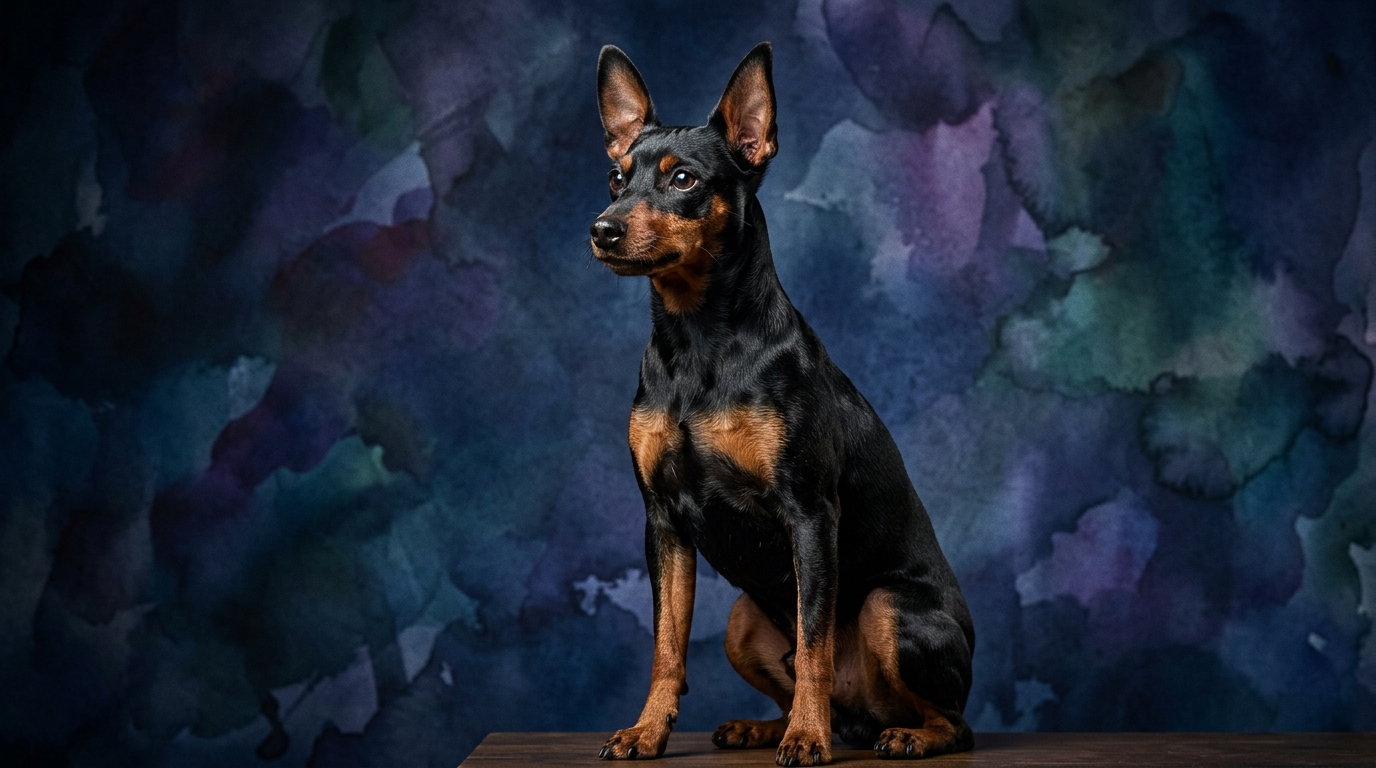
In contrast, the Miniature Pinscher, a spirited toy breed, exhibits a consistent and well-rounded cognitive architecture. Across all five dimensions – Problem Solving, Training Speed, Social Intelligence, Instinctive Drive, and Memory – they consistently achieve a score of 3/5. This profile points to a dog that is capable and adaptable, possessing a moderate ability to tackle challenges, learn commands, understand social cues, and recall information, all while maintaining a characteristic independent streak often associated with their tenacious spirit.
Where the Groenendael Excels Cognitively
The Groenendael's exceptional scores in Problem Solving (5/5) and Memory (5/5) are the cornerstones of their cognitive prowess. This breed can not only grasp complex sequences of commands but can also devise multi-step solutions to novel challenges, adapting their approach based on previous experiences. Their capacity to remember intricate routines, handler cues, and spatial layouts over extended periods allows them to excel in demanding roles requiring foresight and precise execution, such as advanced obedience or agility courses where recalling a long series of obstacles is crucial.
Coupled with their top-tier Training Speed (5/5), Groenendaels absorb new concepts with remarkable alacrity. They often require fewer repetitions to master a new skill, quickly associating actions with commands and consequences. This rapid acquisition of knowledge means they are not just capable of learning, but eager and efficient learners, making them highly responsive partners for trainers who enjoy developing sophisticated behavioral repertoires. Their cognitive framework supports a deep engagement with structured learning, transforming training into a dynamic, collaborative process.
Cognitive Strengths of the Miniature Pinscher
While the Miniature Pinscher's 3/5 scores across the board might seem modest compared to the Groenendael's peaks, this consistent rating signifies a robust and adaptable intellect. Their 3/5 in Problem Solving indicates they are perfectly capable of navigating daily challenges, perhaps not with the complex strategic depth of a herding breed, but with a practical, often tenacious, approach. This means they can figure out how to access a favored toy or bypass an obstacle, relying on quick thinking and a bold spirit rather than intricate planning.
The Min Pin's 3/5 in Instinctive Drive fuels their energetic exploration and often contributes to their self-assured persona. This drive, combined with their moderate Social Intelligence (3/5), allows them to form strong, though often on-their-own-terms, bonds while maintaining a keen awareness of their surroundings. Their moderate memory (3/5) ensures they learn from experiences, remember routines, and recall people, even if not with the encyclopedic recall of a Groenendael. These balanced cognitive traits contribute to a resilient and independent companion who approaches the world with confident curiosity.
Training Dynamics: Groenendael's Eagerness vs. Min Pin's Independence
Training a Belgian Sheepdog (Groenendael) is often described as a rewarding experience due to their exceptional Training Speed (5/5) and eagerness to engage. These dogs absorb commands rapidly, often anticipating the next step in a sequence, and possess an inherent desire to work collaboratively with their handler. Their excellent memory and problem-solving abilities mean they not only learn *what* to do but also *why* it matters within the context of the task. They thrive on precision and consistency, exhibiting focused attention and a strong work ethic during training sessions, making them ideal candidates for advanced obedience, protection work, or competitive dog sports.
The Miniature Pinscher, with a Training Speed of 3/5, presents a different kind of training challenge. While capable of learning, their spirited independence and strong will can sometimes translate into a selective approach to compliance. They might understand a command perfectly but choose to execute it only if sufficiently motivated or if it aligns with their immediate interests. This breed requires an owner with patience, consistency, and a knack for making training engaging and fun, often through play-based methods and high-value rewards. Their behavioral differences manifest as a tendency to test boundaries and a preference for self-directed exploration over constant handler-focused attention, demanding creative and persistent training strategies.
Matching Breed to Lifestyle: Active vs. Relaxed Owners
For owners seeking an active, cognitively demanding partner, the Belgian Sheepdog (Groenendael) is an excellent match. Their 5/5 problem-solving and memory, combined with a strong working heritage, mean they require significant mental and physical stimulation to thrive. These dogs are best suited for individuals or families committed to daily exercise that goes beyond a simple walk, such as agility, flyball, advanced obedience, or even practical herding work. Without adequate outlets for their sharp minds and energetic bodies, Groenendaels can become bored, potentially leading to undesirable behaviors as they invent their own 'jobs' to do.
Conversely, the Miniature Pinscher, while energetic, is a better fit for owners who appreciate a spirited companion but might not be looking for an intense, highly structured training regimen. Their balanced 3/5 scores across all cognitive dimensions mean they are adaptable and can be content with regular, but not necessarily extensive, exercise and mental engagement. They enjoy walks, playtime, and being involved in family activities, thriving on companionship and exploring their immediate environment. Owners who value an independent, bold personality and are prepared for a moderate but consistent need for engagement will find a fulfilling partnership with a Min Pin.
The Verdict
Choose the Belgian Sheepdog (Groenendael) if you seek a highly trainable, cognitively demanding partner for advanced training, dog sports, or a working role. Their exceptional problem-solving and memory require an owner committed to consistent mental stimulation and activity.
Opt for the Miniature Pinscher if you desire a spirited, self-assured companion who offers lively interaction and independent thought without the constant need for complex cognitive challenges. They thrive with owners who appreciate their bold personality and provide consistent, engaging, but not necessarily intensive, training.
🧠 Find Your Pet's IQ Score
Our Pet IQ Lab assessment covers 25+ tests across 5 cognitive dimensions — personalized to your breed.
Take the Full IQ Test →Frequently Asked Questions
Do Groenendaels get bored easily?
Yes, with a problem-solving score of 5/5 and high training speed, Groenendaels require significant mental engagement. Lack of stimulating activities can lead to boredom and potentially destructive behaviors, underscoring their need for consistent cognitive work and purposeful activity.
Is a Miniature Pinscher a good first dog for training?
A Miniature Pinscher can be a rewarding first dog, but their independent nature and 3/5 training speed mean they require a patient and consistent owner. Success comes from positive reinforcement, making training fun, and understanding their spirited, often self-directed, approach to learning.
How do their instinctive drives differ in daily life?
The Groenendael's 3/5 instinctive drive, rooted in herding, manifests as a desire to organize or control, sometimes playfully nipping at heels or 'gathering' family members. The Min Pin's 3/5 drive often appears as a tenacious curiosity, a strong prey drive for small critters, or a protective alertness, reflecting their historical role as vermin hunters and bold companions.