
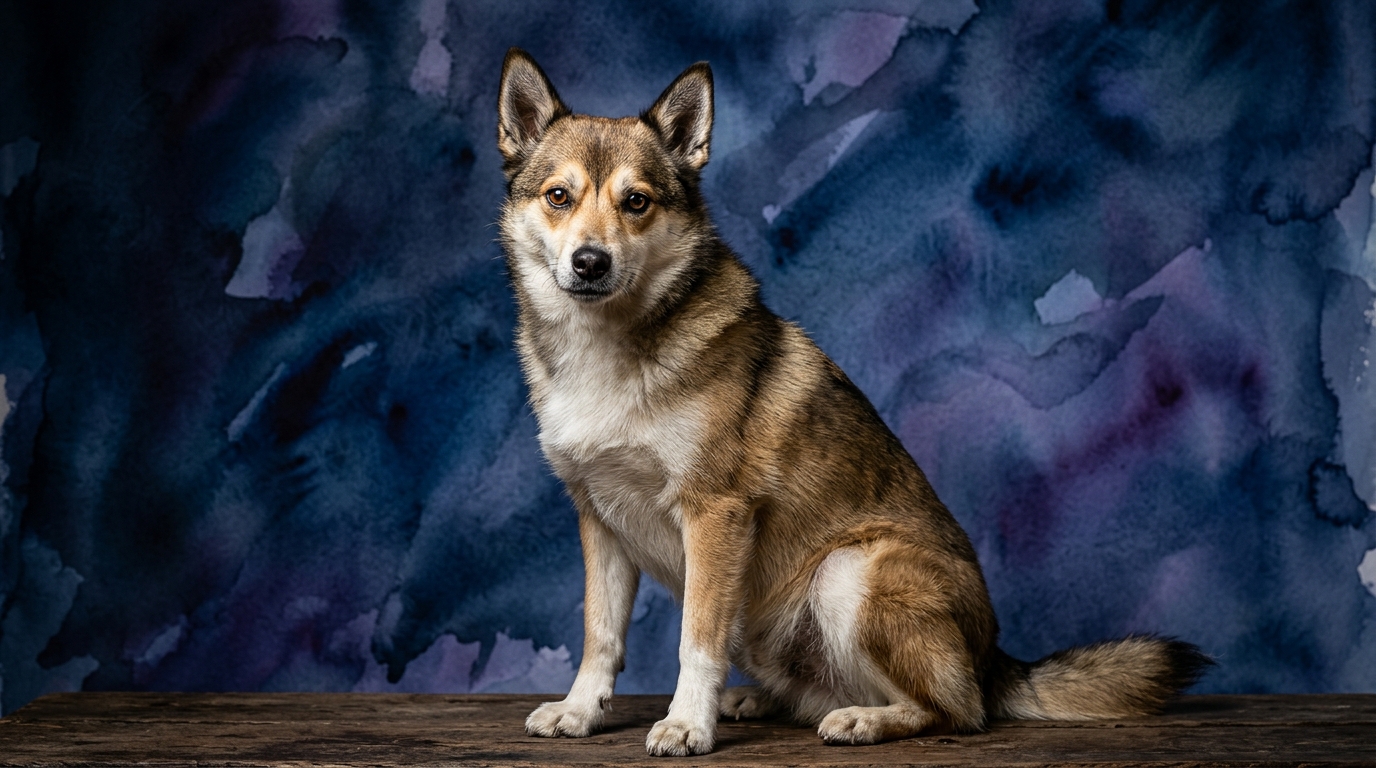
Side-by-Side IQ Profile: Groenendael vs. Lundehund
To understand the cognitive makeup of these breeds, The Cosmic Pet Pet IQ Lab assesses five key dimensions:
**Belgian Sheepdog (Groenendael) (Herding Group, Coren rank #15):**
**Problem Solving (5/5):** This breed excels at complex tasks, quickly assessing situations and devising solutions, evident in their aptitude for intricate work like navigating obstacle courses or managing livestock.
**Training Speed (5/5):** Groenendaels grasp new commands and routines with remarkable rapidity, often in very few repetitions, a hallmark of their working dog heritage and responsiveness to instruction.
**Social Intelligence (3/5):** While forming deep handler bonds, their social intelligence is more about understanding primary cues than broad adaptability with strangers or other animals, often leading to reserved behavior.
**Instinctive Drive (3/5):** Possessing a directed prey drive and strong herding instincts, their innate urges are channeled towards specific tasks and a desire for purpose, rather than unfocused exploration.
**Memory (5/5):** Their recall for learned commands, routines, and past experiences is outstanding, retaining complex sequences and information over extended periods.
**Norwegian Lundehund (Non-Sporting Group, Not Coren-ranked):**
**Problem Solving (3/5):** The Lundehund exhibits a practical, independent problem-solving style, particularly in navigating tight spaces or finding hidden objects, reflecting their historical role in puffin hunting.
**Training Speed (3/5):** This breed learns at a moderate pace, requiring patience and consistent positive reinforcement. They can be independent thinkers, sometimes evaluating the 'why' before complying.
**Social Intelligence (3/5):** Lundehunds are generally friendly and adaptable, though they may retain an aloofness characteristic of their independent nature, typically good with familiar people.
**Instinctive Drive (3/5):** Their drive is geared towards exploration, climbing, and burrowing, reflecting their unique physical adaptations and historical work, manifesting as curiosity and environmental investigation.
**Memory (3/5):** Lundehunds possess functional memory for routines and commands, but may not retain complex sequences with the same precision, remembering what's relevant to their daily lives and comfort.
Where the Groenendael Excels Cognitively
The Groenendael's cognitive strengths are rooted in their working heritage, particularly their capacity for advanced learning and execution. Their 5/5 Problem Solving reflects an ability to interpret dynamic situations and adapt, not just follow commands. For instance, in agility, a Groenendael anticipates the next obstacle, adjusts its stride, and navigates complex sequences with fluidity, often without micro-management. This breed's 5/5 Training Speed means they acquire new skills with remarkable efficiency, often generalizing concepts. A Groenendael might learn "retrieve" for a ball and quickly apply it to a leash, showcasing rapid conceptual comprehension. Their 5/5 Memory further solidifies this, allowing retention of vast repertoires of commands and routines, making them reliable partners in competitive sports or service roles where consistent, long-term performance is crucial.
Where the Lundehund Shines Cognitively
The Norwegian Lundehund's cognitive profile reveals a distinct set of abilities tailored to their unique niche. Their 3/5 Problem Solving reflects a particular ingenuity in navigating their physical environment. Imagine a Lundehund needing to reach a high shelf; they might methodically assess objects, perhaps pushing a stool or finding books to create a climbable path, showcasing self-directed persistence. Their 3/5 Instinctive Drive is a testament to their innate curiosity and physical prowess, driving them to climb, burrow, and explore tight spaces – behaviors essential for their historical role in retrieving puffins. This drive isn't about herding, but engaging with surroundings tactilely. While their Training Speed and Memory are moderately rated at 3/5, this indicates a preference for tasks aligning with their independent, inquisitive nature. They remember routes, favored digging spots, and interesting smells with impressive accuracy, showcasing a memory attuned to spatial and sensory details.
Training Dynamics: Which is Easier and Why?
When considering ease of training, the Belgian Sheepdog (Groenendael) generally presents a more straightforward path due to its exceptional Training Speed (5/5) and Memory (5/5). These dogs desire to work collaboratively and please their handler, making them highly receptive. Their aptitude for rapid learning means mastering complex commands in fewer repetitions, and robust memory ensures retention. A Groenendael can learn a multi-part obedience routine in a single session and consistently perform it days later. Their herding background instills natural focus and responsiveness, translating into a dog that actively seeks to understand and execute tasks.
Conversely, the Norwegian Lundehund, with 3/5 ratings in both Training Speed and Memory, requires a more patient approach. Their historical role as independent hunters fostered a self-reliant mindset; they might not immediately comply if a command doesn't align with their current interest. They possess a strong will and evaluate situations from their own perspective. Training a Lundehund involves making learning engaging and rewarding, focusing on positive reinforcement. Teaching recall might take longer, requiring consistent, high-value rewards to make 'come' the most exciting option. Their independent nature demands more repetition and creative methods for consistency, especially in distracting environments.
Matching Breeds to Lifestyles: Active vs. Relaxed Owners
For owners seeking a highly engaged and active partnership, the Belgian Sheepdog (Groenendael) is an ideal match. Their robust cognitive abilities, particularly 5/5 Problem Solving and 5/5 Training Speed, mean they thrive on mental stimulation and physical activity. These dogs require consistent outlets for their energy and intellect, excelling in dog sports like agility, obedience, or protection work. An active owner who enjoys structured training, long hikes, or competitive activities will find a Groenendael an eager, capable companion. Their instinctive drive (3/5) is channeled towards purposeful activity. A Groenendael without sufficient engagement can become bored and destructive, so a relaxed owner preferring minimal interaction would find this breed challenging.
The Norwegian Lundehund suits an owner who appreciates a unique, independent companion, enjoying unstructured exploration over rigorous training. While not sedentary, their activity needs are less intense work and more curious investigation and moderate exercise. Their 3/5 instinctive drive leans towards climbing, exploring, and burrowing, making them good companions for owners who enjoy varied terrains or can provide secure outdoor spaces for safe digging. A relaxed owner who enjoys casual walks, puzzle toys, and doesn't demand constant performance might find the Lundehund's independent charm appealing. They can adapt to apartment living if exercise and mental stimulation are met through daily walks and interactive play, but enjoy outdoors time to satisfy exploratory instincts.
The Verdict
Choose Belgian Sheepdog (Groenendael) if: You are an active, experienced owner ready to commit to consistent, advanced training and provide abundant mental and physical exercise, seeking a highly responsive and capable partner for dog sports or working roles.
Choose Norwegian Lundehund if: You appreciate an independent, inquisitive companion with unique physical traits, are patient with training, and can provide opportunities for exploration and moderate activity without the expectation of constant, precise obedience.
🧠 Find Your Pet's IQ Score
Our Pet IQ Lab assessment covers 25+ tests across 5 cognitive dimensions — personalized to your breed.
Take the Full IQ Test →Frequently Asked Questions
Are Groenendaels good family dogs?
Groenendaels can be excellent family dogs, forming strong bonds with their immediate family members. However, their 3/5 social intelligence means they can be reserved with strangers and may require early, consistent socialization to ensure they are comfortable around new people and children. They thrive in active households.
Do Lundehunds have any unique physical traits related to their intelligence?
Yes, Lundehunds possess extraordinary physical adaptations, such as six toes on each foot and ears that can fold shut, directly related to their historical role in puffin hunting. These traits enabled them to navigate complex environments, showcasing a physical ingenuity complementing their problem-solving ability in their natural habitat.
Which breed is better for a first-time dog owner?
Neither breed is typically recommended for a completely novice owner without prior research and commitment. The Groenendael's intense needs for training and exercise can be overwhelming, while the Lundehund's independent nature demands patience and understanding. Both benefit from prepared owners.