Side-by-Side IQ Profile: Bengal vs. Munchkin
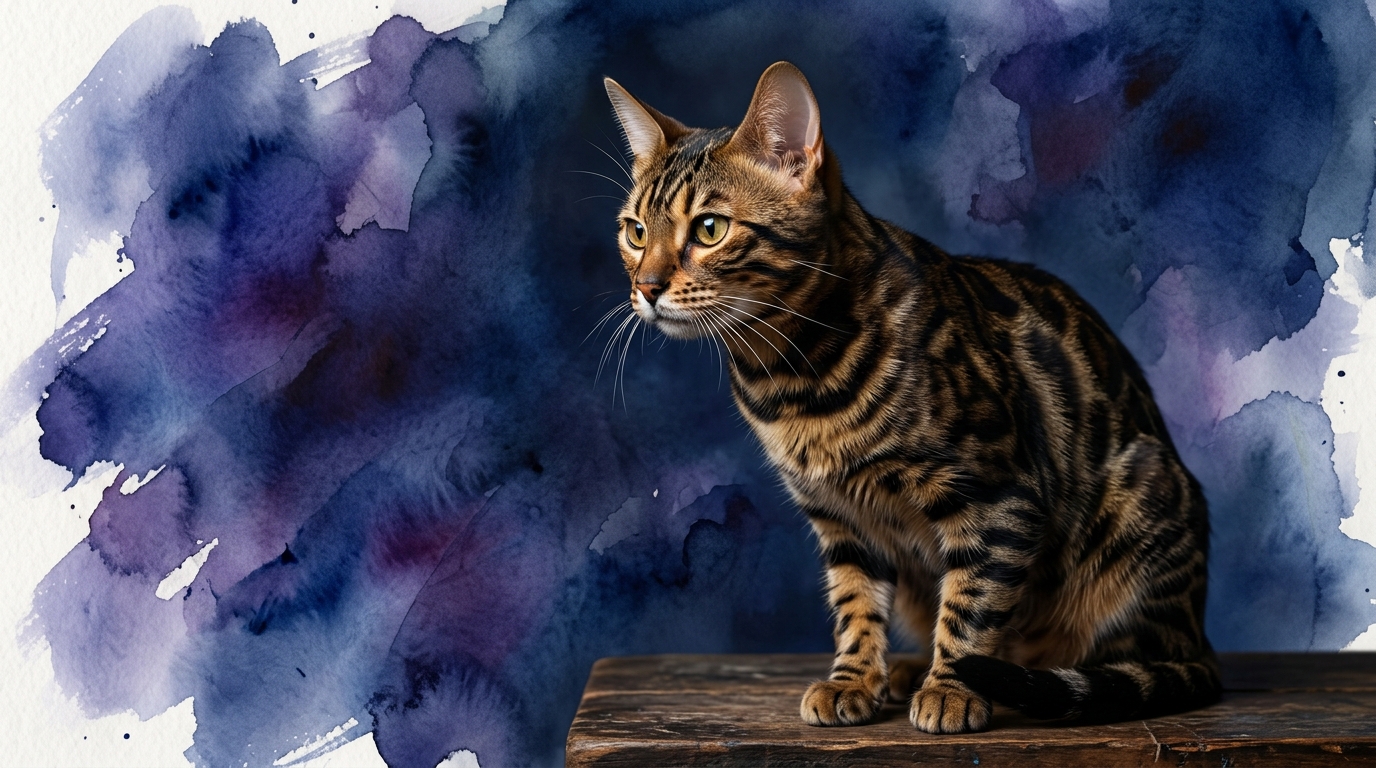
The Cosmic Pet Pet IQ Lab employs a five-dimensional framework to assess feline cognitive abilities, providing a clear picture of each breed's mental landscape. For the Bengal, a breed celebrated for its sharp intellect, we observe a Problem Solving score of 5/5, indicating an exceptional capacity to navigate complex challenges and strategize solutions. Their Training Speed registers at 4/5, reflecting a quick grasp of commands and routines, while Social Intelligence, also at 4/5, suggests a nuanced understanding of interactions and cues within their environment. An Instinctive Drive of 5/5 highlights their deep-seated predatory and exploratory urges, and a Memory score of 5/5 confirms a remarkable ability to recall information and experiences over extended periods.
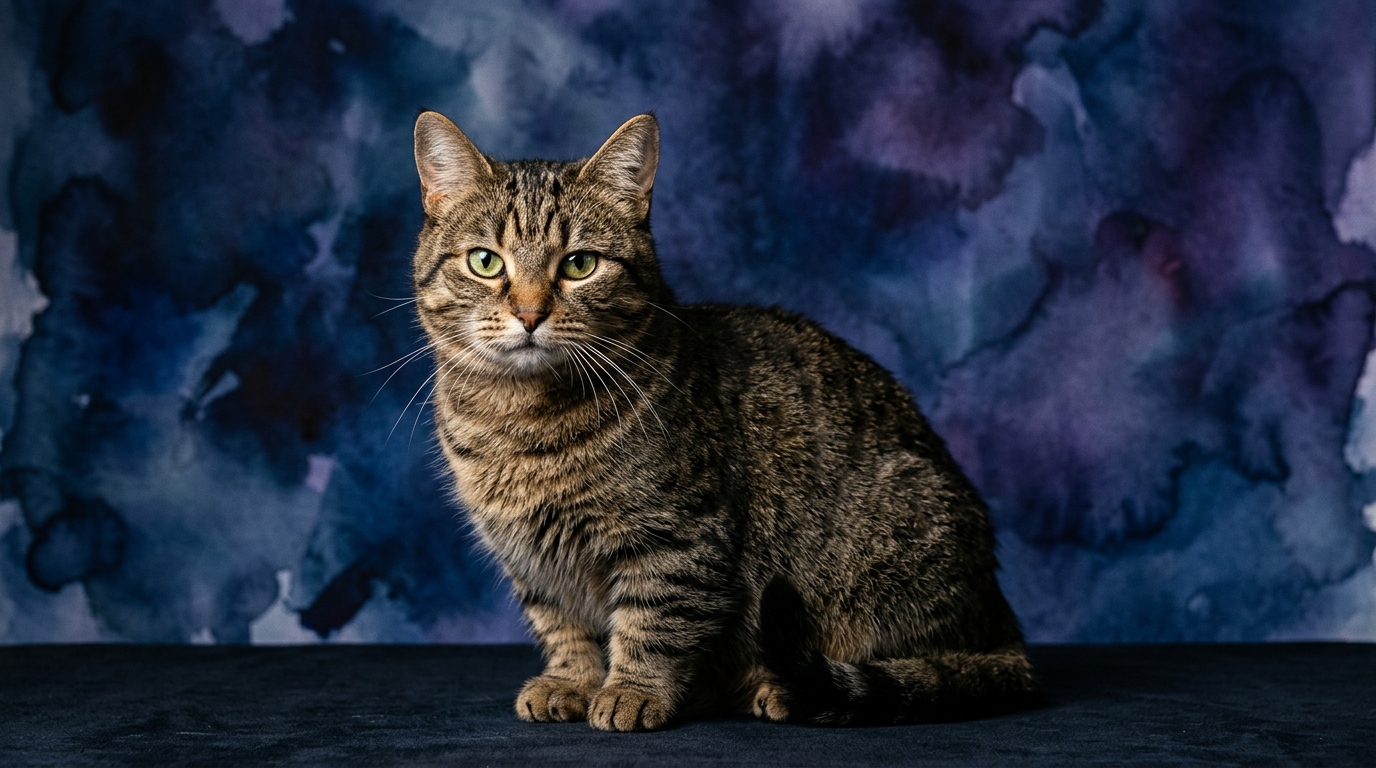
In contrast, the Munchkin presents a more balanced, moderate cognitive profile across all dimensions. Their Problem Solving ability is rated at 3/5, meaning they possess a functional capacity to overcome obstacles but may not actively seek out or excel at highly complex puzzles. A Training Speed of 3/5 indicates they are certainly trainable, albeit at a more deliberate pace, requiring consistent repetition to solidify learned behaviors. Their Social Intelligence, also at 3/5, suggests they engage with their human companions and other pets in a straightforward manner, processing social cues adequately without the intense sensitivity seen in some breeds. Similarly, their Instinctive Drive at 3/5 points to a healthy but not overwhelming natural curiosity and hunting instinct, while a Memory score of 3/5 suggests they retain information sufficiently for daily routines and basic learning, though perhaps not with the same depth or longevity as their Bengal counterparts.
Where Bengal Wins Cognitively
The Bengal's cognitive strengths are evident across multiple dimensions, particularly in their Problem Solving and Instinctive Drive, both rated at 5/5. This means a Bengal isn't just capable of figuring things out; they actively enjoy the process of deciphering puzzles, whether it's opening a child-proof cabinet, manipulating a complex feeder toy, or devising an escape route from a seemingly secure room. Their minds are constantly seeking engagement, making them adept at tasks that require sequential thought and creative solutions. This intense drive to understand and manipulate their environment is a direct manifestation of their wild ancestry, leading them to explore every nook and cranny, often with a clear purpose in mind.
Furthermore, the Bengal's 5/5 Memory contributes significantly to their cognitive prowess. They don't just learn a trick; they remember it, often for years, and can apply past experiences to new situations. This robust memory, combined with their 4/5 Training Speed, allows them to master intricate command sequences and routines with impressive efficiency, building upon previously acquired knowledge. Their 4/5 Social Intelligence also enables them to quickly pick up on human moods and intentions, fostering deep, interactive bonds where they can anticipate and respond to owner cues with remarkable precision. These combined attributes paint a picture of a cat that is not merely observant but actively engaged in interpreting and interacting with its world at a profound cognitive level.
Where Munchkin Wins Cognitively
While the Munchkin's cognitive scores are consistently moderate at 3/5, this profile presents a distinct advantage for owners seeking a companion with a more predictable and less demanding mental landscape. A Munchkin's moderate Problem Solving ability means they are less likely to constantly test boundaries by attempting to open doors, dismantle household items, or outwit complex security measures. This can translate into a calmer, less 'clever' household where the cat's curiosity is satisfied with simpler forms of enrichment, reducing the need for constant owner intervention to manage sophisticated feline antics.
Their 3/5 Instinctive Drive, while present, means a Munchkin typically exhibits a more manageable level of predatory behavior and exploratory zeal compared to breeds with higher scores. This can be a 'win' for owners who prefer a cat that is less inclined to scale curtains, hunt imaginary prey with relentless intensity, or incessantly explore every hidden corner. The Munchkin's balanced cognitive profile across all areas suggests a cat that is content with a more straightforward routine and interaction, offering a consistent and amiable presence without the intense mental stimulation requirements of a more cognitively demanding breed. Their strengths lie in their amiable temperament and their ability to thrive in a less mentally challenging environment, which for many owners, is precisely what they seek in a companion.
Which is Easier to Train and Why
When considering ease of training, the Bengal, with a Training Speed of 4/5, generally proves to be a more enthusiastic and quicker learner than the Munchkin, rated at 3/5. Bengals often approach training as a stimulating activity, relishing the challenge and interaction. Their high Problem Solving (5/5) and Memory (5/5) capabilities mean they can quickly grasp complex commands, connect actions with rewards, and retain information over long periods, allowing for the teaching of advanced tricks, leash walking, or even agility courses. Their strong Instinctive Drive (5/5) can also be channeled into productive training, making them eager participants in games that mimic hunting or exploration.
Munchkins, on the other hand, learn at a more moderate pace. While perfectly capable of learning basic commands like 'sit' or coming when called, their 3/5 Training Speed means they may require more consistent repetition and patience. They are less likely to actively seek out training sessions for the mental challenge alone. Their 3/5 Social Intelligence means they respond to human interaction but might not be as intensely driven by the collaborative aspect of training as a Bengal. Training a Munchkin is certainly achievable and rewarding, but owners should expect a more gradual progression and focus on positive reinforcement to maintain their interest, rather than expecting them to quickly pick up intricate routines.
Which Suits Active Owners vs. Relaxed Owners
The cognitive profiles of these two breeds clearly delineate which might be a better fit for active versus relaxed owners. Active owners, or those seeking a highly interactive and mentally engaging companion, will find the Bengal an ideal match. Their 5/5 Problem Solving, 5/5 Instinctive Drive, and 5/5 Memory mean they require constant mental and physical enrichment. A Bengal thrives on puzzle toys that challenge their intellect, interactive play sessions that simulate hunting, and opportunities to learn new tricks or explore novel environments. Owners must be prepared to dedicate significant time to mental stimulation and provide outlets for their boundless energy and curiosity, or they risk the Bengal finding their own, potentially destructive, forms of entertainment.
Conversely, relaxed owners, or those who appreciate a more laid-back feline companion, will likely find the Munchkin's cognitive profile more suitable. With 3/5 scores across Problem Solving, Instinctive Drive, and Memory, the Munchkin is content with a more predictable and less demanding environment. While they still benefit from play and basic enrichment, they won't be constantly seeking out complex mental challenges or high-intensity physical activities. Their moderate drive means they are less prone to elaborate mischief born of boredom, making them a good choice for individuals or families who prefer a gentle, affectionate cat that integrates smoothly into a quieter home life without requiring extensive daily intellectual engagement.
The Verdict
Choose a Bengal if you are an active owner prepared to provide extensive mental challenges and physical engagement for a highly interactive and problem-solving companion.
Opt for a Munchkin if you seek a moderately independent and affectionate cat, content with a more predictable environment and less demanding in terms of constant mental stimulation.
🧠 Find Your Pet's IQ Score
Our Pet IQ Lab assessment covers 25+ tests across 5 cognitive dimensions — personalized to your breed.
Take the Full IQ Test →Frequently Asked Questions
Do Bengals need specific types of toys to stay mentally stimulated?
Yes, Bengals benefit greatly from interactive puzzle feeders, complex climbing structures, and toys that mimic prey to satisfy their 5/5 Problem Solving and Instinctive Drive. Regular rotation of these items helps maintain their interest and prevents boredom.
Can Munchkins learn tricks despite their moderate Training Speed?
Absolutely. Munchkins, with a 3/5 Training Speed, can learn a variety of tricks and commands, especially with consistent positive reinforcement and patience. They may take longer to master new behaviors compared to a Bengal, but they are certainly capable learners.
How does a Munchkin's 3/5 Instinctive Drive impact their behavior at home?
A 3/5 Instinctive Drive means Munchkins possess a healthy curiosity and playfulness without the overwhelming predatory urges of some breeds. They enjoy playing and exploring but are less likely to exhibit intense hunting behaviors or scale heights with the same relentless drive as a Bengal, making them generally easier to manage indoors.