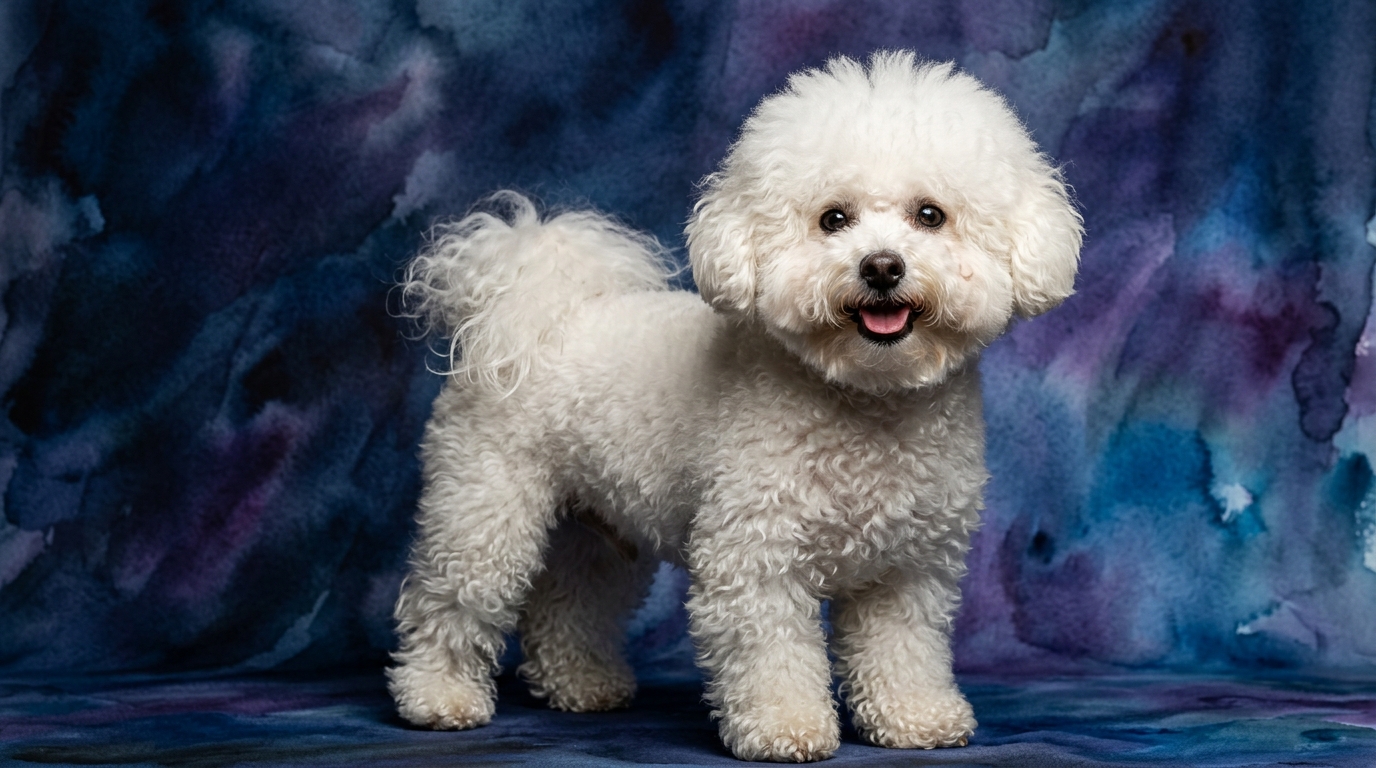
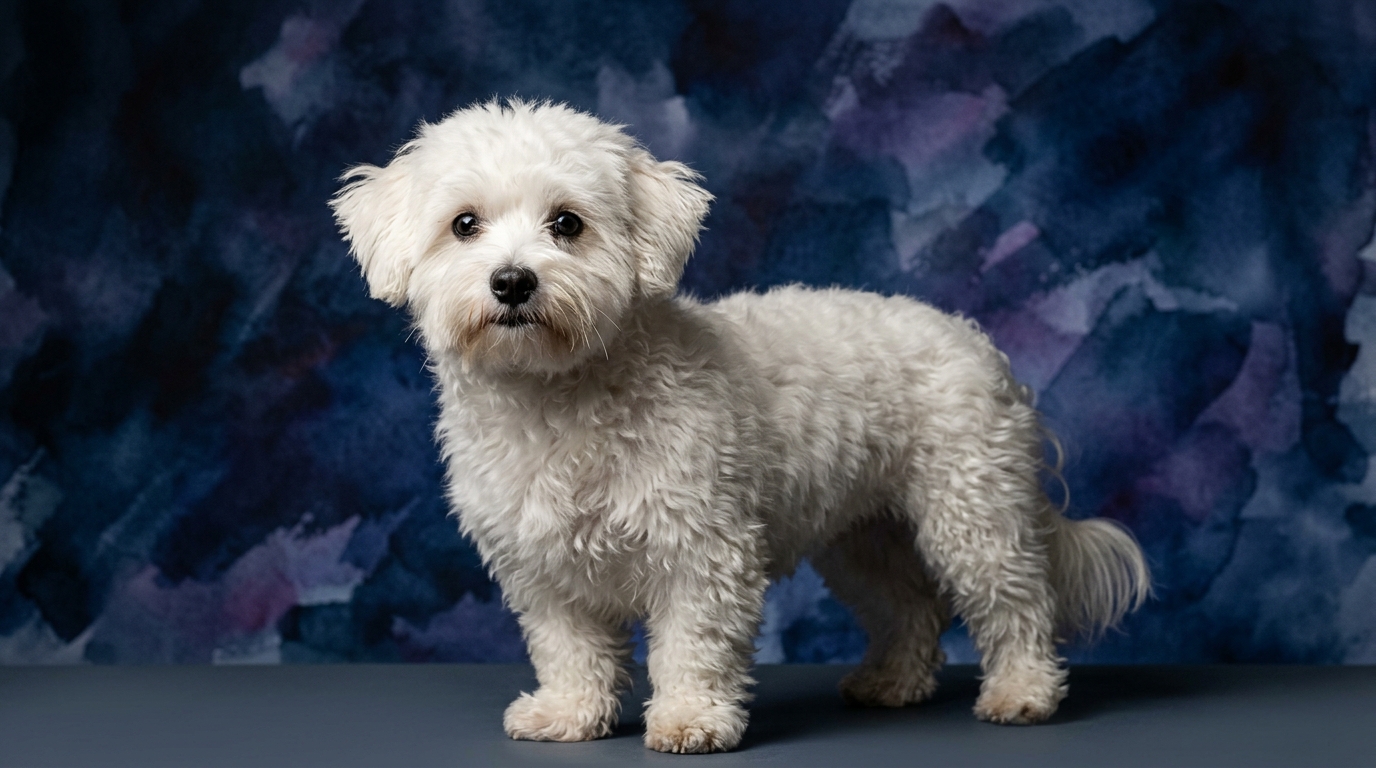
Side-by-Side Cognitive Profile: Bichon Frisé vs Coton de Tuléar
To truly understand these delightful breeds, The Cosmic Pet Pet IQ Lab breaks down their cognitive abilities into five key dimensions. Let's examine how the Bichon Frisé, a Non-Sporting dog with a Coren rank of #45, stacks up against the Coton de Tuléar, also a Non-Sporting dog.
For the Bichon Frisé:
Problem Solving (3/5): This score indicates an average capacity for navigating novel situations or figuring out solutions to simple environmental challenges. Bichons are competent at learning established routines and simple puzzles but may not independently devise complex strategies.
Training Speed (3/5): Reflecting a moderate pace for acquiring new commands and behaviors, this suggests that consistent effort and positive reinforcement will yield steady progress in their training journey.
Social Intelligence (5/5): This is a standout trait, showcasing an exceptional ability to interpret human cues, understand social dynamics, and form profound, nuanced bonds. Bichons are remarkably attuned to their family's emotional states and intentions.
Instinctive Drive (2/5): A low score here suggests minimal inherent urges for activities like hunting, herding, or guarding. Their focus is less on primal tasks and more on companionship and social engagement.
Memory (3/5): An average memory capacity implies they adequately retain learned information, remembering routines, past interactions, and commands without extraordinary recall.
Now, for the Coton de Tuléar (Not Coren-ranked):
Problem Solving (3/5): Similar to the Bichon, Cotons demonstrate an average aptitude for tackling new problems or understanding cause-and-effect in their environment. They are capable learners but typically not innovators in complex scenarios.
Training Speed (3/5): Also mirroring the Bichon, Cotons learn at a moderate rate, meaning patience and consistent methods are key to effectively embedding new behaviors.
Social Intelligence (3/5): This score suggests a solid, but not exceptional, ability to connect with humans and understand social signals. They are affectionate and responsive but perhaps less acutely intuitive than some breeds.
Instinctive Drive (3/5): A moderate score here indicates they possess some natural drives, potentially including mild prey drive or curiosity. This makes them slightly more engaged with their environment through instinctual exploration.
Memory (3/5): Consistent with the Bichon, Cotons exhibit an average memory, allowing them to recall training, routines, and familiar faces without being outstanding in this cognitive domain.
Where the Bichon Frisé Excels Cognitively
The Bichon Frisé truly shines in the realm of social intelligence, scoring a perfect 5/5. This remarkable capacity means they possess an exceptional aptitude for reading human emotions, understanding subtle social cues, and adapting their behavior to fit the family dynamic. They are masters of emotional attunement, often anticipating their owner's moods and responding with comforting affection or playful antics, fostering incredibly strong bonds. This deep understanding makes them extraordinarily responsive companions, often feeling like they truly 'get' their human counterparts. Furthermore, their lower instinctive drive (2/5) means they are less preoccupied with primal urges like chasing small animals or territorial guarding. This cognitive characteristic allows them to focus more intently on social interaction and companionship, making them less distracted by environmental stimuli that might trigger instinctual behaviors in other breeds. Their cognitive energy is largely directed towards social cohesion and maintaining harmony within their human pack, offering a unique brand of empathetic companionship that is deeply rewarding for owners seeking a highly connected pet.
Where the Coton de Tuléar Holds a Cognitive Advantage
While the Coton de Tuléar doesn't boast a standout 5/5 score in any single cognitive domain, its balanced profile presents a distinct advantage in certain contexts. With an instinctive drive of 3/5, the Coton possesses a slightly more pronounced natural curiosity and engagement with its surroundings compared to the Bichon. This moderate drive can translate into a greater interest in exploring new scents, investigating novel objects, or engaging in playful 'hunts' for toys, making them perhaps more independently curious about their environment. This isn't to say they are overly driven, but rather that their cognitive landscape includes a healthy allocation towards interacting with the physical world beyond just human connection. Their balanced scores across problem-solving, training speed, social intelligence, and memory suggest a well-rounded cognitive architecture. This lack of extreme highs or lows means they are generally adaptable and capable across various mental tasks without exhibiting strong predispositions that might require specific management. They offer a steady, reliable cognitive presence that can be appealing to owners seeking a dog with a broad range of mental capabilities rather than a singular cognitive superpower.
Training Ease: Bichon Frisé vs Coton de Tuléar
Comparing training ease between these two breeds reveals subtle nuances despite their identical 3/5 training speed scores. While both learn at a moderate pace, the Bichon Frisé's exceptional social intelligence (5/5) gives it an edge in responsiveness to human direction. A Bichon's acute ability to read its owner's intentions, understand verbal and non-verbal cues, and desire to please makes them highly motivated by positive human interaction. They are often eager to comply because they are so attuned to their owner's approval and emotional state. This social attunement means they are more likely to respond quickly to corrections or praise, making the training process feel more like a cooperative dance. Conversely, the Coton de Tuléar, with its 3/5 social intelligence, is certainly affectionate and trainable but might not possess the same intuitive grasp of human desires. Their slightly higher instinctive drive (3/5) could also mean they are occasionally more distracted by environmental stimuli during training sessions, requiring a bit more effort to maintain focus. Therefore, while both breeds require consistent, positive reinforcement, a Bichon might appear 'easier' to train due to its profound social engagement and lower propensity for instinct-driven distractions, making them exceptionally rewarding for owners who appreciate a dog that is deeply connected to their guidance.
Lifestyle Match: Active vs. Relaxed Owners
For active owners seeking a canine partner for adventures, the Coton de Tuléar, with its moderate instinctive drive (3/5), might be a slightly more suitable match. This inherent curiosity and interest in the physical world can translate into a greater willingness to explore new environments, engage in varied activities, and maintain enthusiasm for longer walks or light hikes. Their balanced cognitive profile suggests they are adaptable enough to enjoy a range of mental and physical stimulation without becoming overly stressed or bored. They are sturdy, playful companions who appreciate novel experiences. Conversely, the Bichon Frisé, with its lower instinctive drive (2/5) and supreme social intelligence (5/5), often thrives best with owners who prioritize companionship and consistent social interaction over rigorous outdoor activities. While they enjoy play and walks, their cognitive focus is less on independent exploration and more on being an integral, emotionally connected part of their human's daily life. They are perfectly content with a relaxed owner who offers plenty of lap time, indoor games, and social outings where they can be the center of attention, flourishing when their social needs are met with consistent affection and interaction. They are not built for endurance or independent tasks, but rather for being cherished, interactive companions within a domestic setting.
The Verdict
The Bichon Frisé is an excellent choice for owners who prioritize unparalleled social connection, emotional attunement, and a deep desire for an integrated, responsive family member. They thrive on human interaction and offer empathetic companionship.
Conversely, if an owner is drawn to a dog with a well-rounded cognitive profile, slightly more independent curiosity, and balanced engagement with both people and their environment, the Coton de Tuléar could be the perfect fit. They provide a steady, adaptable presence, enjoying varied activities while remaining affectionate and trainable companions.
🧠 Find Your Pet's IQ Score
Our Pet IQ Lab assessment covers 25+ tests across 5 cognitive dimensions — personalized to your breed.
Take the Full IQ Test →Frequently Asked Questions
Do Bichon Frisés bark a lot due to their social intelligence?
While Bichons are very socially aware, their barking isn't directly tied to social intelligence but often stems from their desire for attention or anxiety if left alone. Consistent training and addressing separation concerns can manage excessive vocalization, leveraging their responsiveness to human cues.
Are Coton de Tuléars good with children, given their social intelligence score?
Coton de Tuléars, with a 3/5 social intelligence, are generally good with children, especially when socialized from a young age. Their balanced temperament means they can adapt well to family life, though supervision is always key to ensure respectful interactions from both dog and child.
Does the Coren rank for Bichon Frisé (#45) indicate it's significantly smarter than a Coton de Tuléar (unranked)?
Coren's ranking primarily assesses 'working and obedience intelligence,' focusing on trainability for commands. While the Bichon's rank suggests good obedience, the Coton being unranked doesn't mean it lacks intelligence, but rather that its specific cognitive strengths might lie outside the parameters of that particular obedience-focused assessment, or it hasn't been widely studied in that context.