Side-by-Side Cognitive Profiles
The Cosmic Pet Pet IQ Lab's framework allows us to dissect the distinct cognitive strengths and nuances of the Bichon Frisé and the Norwegian Buhund across five critical dimensions.
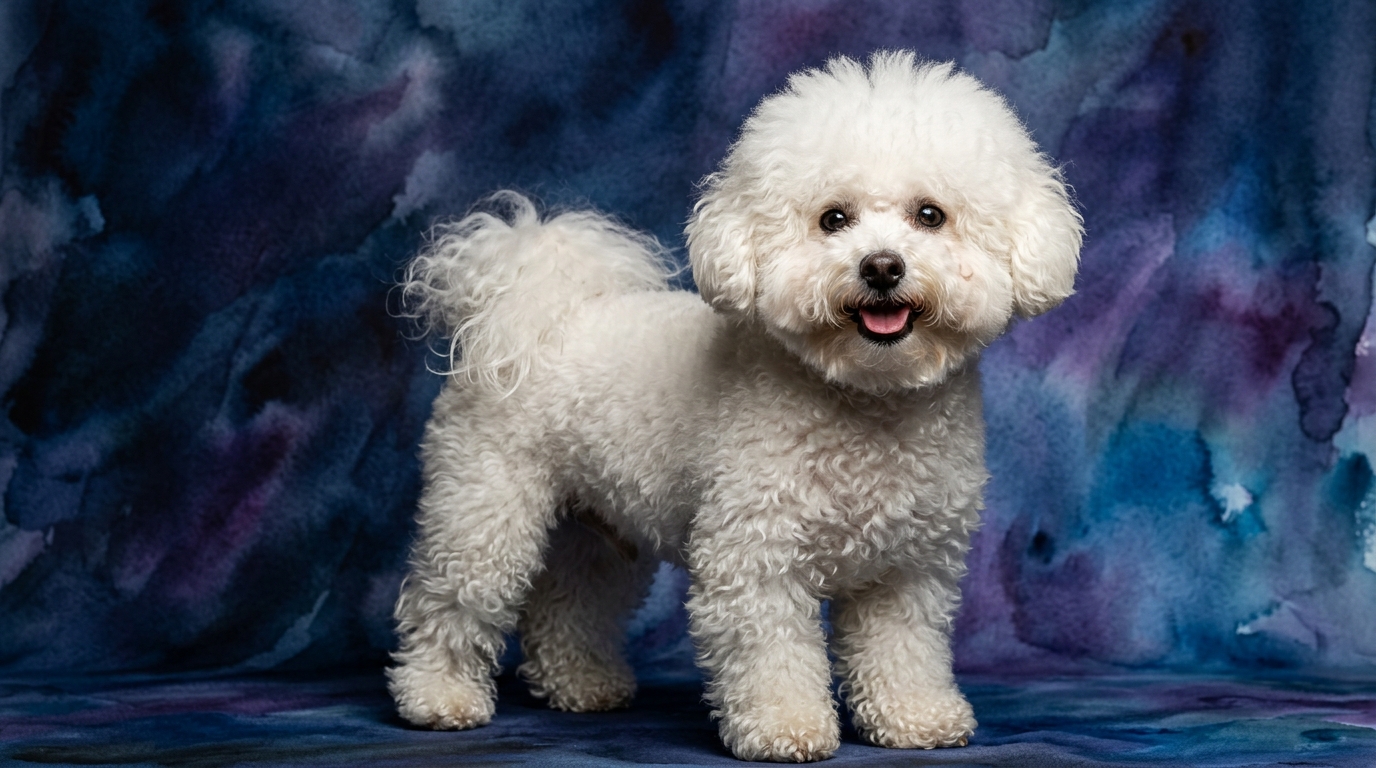
The **Bichon Frisé**, a Non-Sporting breed, registers a Problem Solving score of 3/5, indicating a competent ability to navigate everyday challenges and learn cause-and-effect relationships within their environment. Their Training Speed is also 3/5, suggesting they absorb new commands at a moderate, steady pace with consistent reinforcement. Where the Bichon truly shines is in Social Intelligence, scoring an exceptional 5/5; this reflects an unparalleled aptitude for reading human emotions, forming deep bonds, and understanding social cues. Their Instinctive Drive is a low 2/5, meaning they possess minimal inherent urges for activities like chasing or herding, preferring human company. Finally, their Memory sits at a solid 3/5, enabling them to reliably recall learned behaviors and routines.
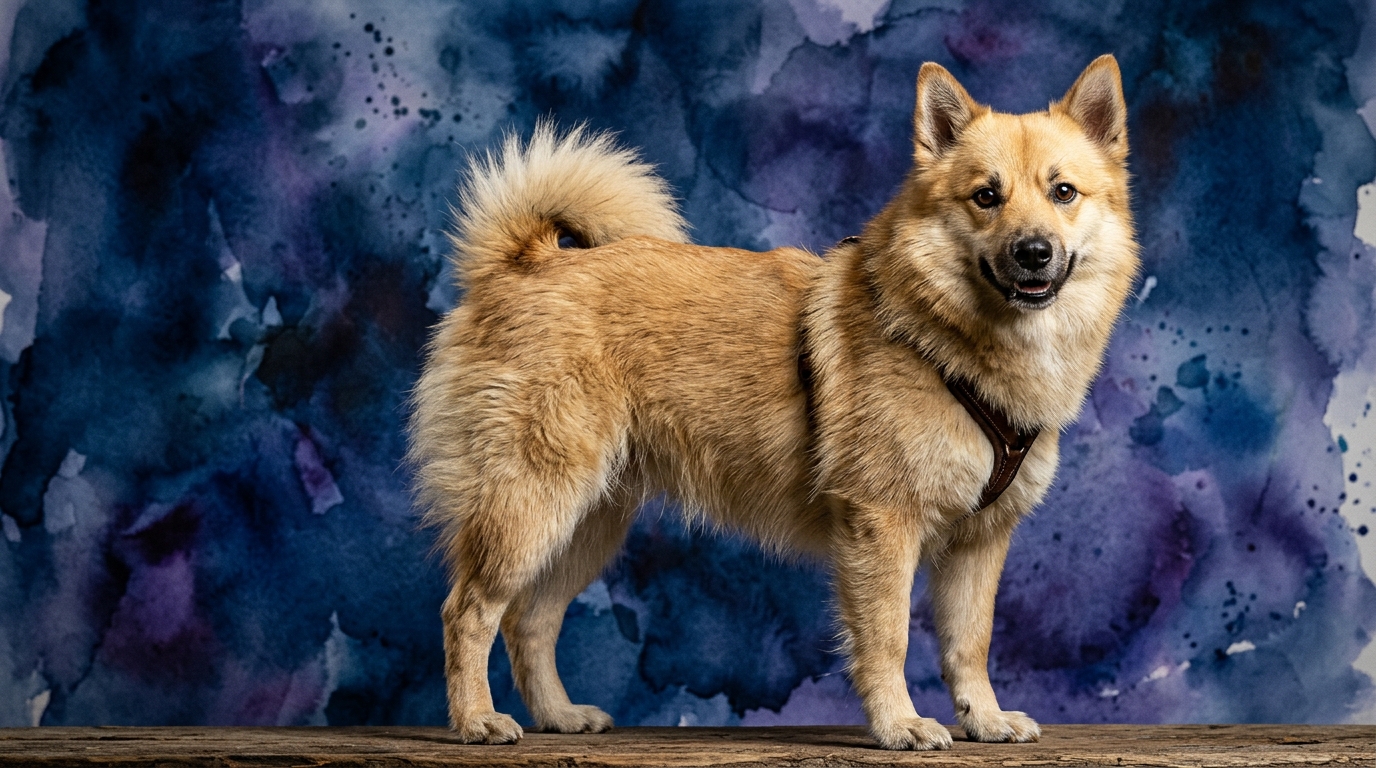
In contrast, the **Norwegian Buhund**, a Herding breed, presents a profile more aligned with its working heritage. Its Problem Solving score matches the Bichon at 3/5, indicating similar practical problem-solving capabilities, such as figuring out how to access a desired object or location. Their Training Speed is also 3/5, signifying a moderate learning curve for new commands, though their motivation might stem from different sources. The Buhund's Social Intelligence is 3/5, showing a good capacity for interaction and bonding, but without the extreme human-centric focus of the Bichon. A key differentiator is its Instinctive Drive, rated 3/5, which points to a moderate but distinct inclination for activities rooted in its herding lineage, such as patrolling or managing its environment. Their Memory is 3/5, providing a reliable foundation for retaining complex tasks and experiences, crucial for a working breed.
Where the Bichon Frisé Cognitively Excels
The Bichon Frisé's most pronounced cognitive advantage lies squarely in its Social Intelligence, scoring an impressive 5/5 compared to the Buhund's 3/5. This isn't merely about friendliness; it signifies a profound ability to interpret and respond to human emotional states and subtle social cues. A Bichon can often sense when an owner is feeling down, offering comfort without explicit instruction, or adjust its behavior based on the mood in a room. This acute social awareness makes them exceptionally adept at integrating into family dynamics, understanding household routines, and becoming deeply attuned emotional companions. Their low Instinctive Drive (2/5) further enhances this social focus, as they are less distracted by independent urges to hunt or patrol, instead dedicating their mental energy to interaction and connection with their human family. This exceptional social acumen is the cornerstone of their companionability, allowing them to thrive in environments where human interaction is paramount.
Where the Norwegian Buhund Cognitively Excels
While sharing similar scores in Problem Solving, Training Speed, and Memory, the Norwegian Buhund's cognitive edge emerges from its higher Instinctive Drive, rated 3/5 against the Bichon's 2/5. This difference, rooted in its herding ancestry, translates into a greater inherent motivation for purposeful activity and engagement. A Buhund is more inclined to seek out tasks, participate in structured games, or engage in activities that tap into its innate desire to work, manage, or patrol. This drive often manifests as a keen awareness of its surroundings and a readiness to respond to perceived 'jobs,' whether it's gathering family members or investigating a new sound. This higher drive means they can sustain mental and physical effort over longer periods, making them particularly well-suited for canine sports like agility, obedience, or even herding trials where their cognitive capacity is channeled into performance and problem-solving within a task-oriented framework. Their moderate social intelligence (3/5) ensures they are receptive to human guidance in these endeavors, but their primary satisfaction often comes from the accomplishment of the task itself.
Training: Which is Easier and Why
Both the Bichon Frisé and the Norwegian Buhund share a Training Speed score of 3/5, suggesting they learn new commands at a comparable moderate pace. However, the 'ease' of training often depends on the handler's approach and the breed's underlying motivational structure, which varies significantly between these two. The Bichon's exceptional 5/5 Social Intelligence means they are profoundly motivated by human approval, praise, and affection. They thrive on positive reinforcement that strengthens their bond with their owner, making them highly responsive to training methods that emphasize connection and gentle guidance. Their low 2/5 Instinctive Drive means fewer internal distractions from strong prey or herding urges, allowing them to focus more intently on the trainer in a typical home environment.
The Norwegian Buhund, while also having a 3/5 Training Speed, requires a different motivational strategy. Their 3/5 Instinctive Drive means they are often more driven by purpose, activity, and engaging their working instincts. While they appreciate human interaction (3/5 Social Intelligence), their focus during training might need to incorporate more stimulating tasks, problem-solving challenges, or activities that channel their herding energy. A Buhund might be easily distracted by environmental stimuli that trigger their innate drives, requiring a trainer to be more creative in maintaining engagement and incorporating mental and physical outlets. For a novice owner, the Bichon might feel 'easier' to train due to its intense desire to please and its lower propensity for independent, instinct-driven behaviors, making it more pliable in a purely companion context. The Buhund, though equally capable of learning, benefits from an owner who understands how to harness its working intelligence and provide structured engagement.
Matching Breeds to Lifestyles: Active vs. Relaxed Owners
The divergent IQ profiles of the Bichon Frisé and Norwegian Buhund make them suitable for distinctly different owner lifestyles. For individuals seeking a more relaxed, deeply integrated companion, the Bichon Frisé is often the ideal choice. Their high social intelligence and low instinctive drive mean they thrive on proximity and interaction with their human family, requiring moderate daily exercise like gentle walks and indoor play. They are content to be a devoted lap dog, finding their greatest joy in shared quiet moments and consistent social engagement, making them perfect for owners who prioritize emotional connection over strenuous physical activity.
Conversely, the Norwegian Buhund is a better match for active owners who enjoy a more dynamic and purpose-driven relationship with their canine. Its herding background and 3/5 instinctive drive necessitate regular, vigorous exercise and consistent mental stimulation. Owners who enjoy hiking, running, or participating in dog sports like agility, obedience, or even mock herding trials will find the Buhund a willing and capable partner. They need a 'job' – whether structured training, puzzle toys, or extensive outdoor adventures – to prevent boredom and channel their innate working intelligence, making them less suitable for purely sedentary lifestyles.
The Verdict
Choose the Bichon Frisé if you prioritize an exceptionally socially attuned, affectionate companion content with moderate activity and deep integration into family life as an emotional anchor.
Opt for the Norwegian Buhund if you seek an active, purpose-driven canine partner who thrives on mental and physical challenges, enjoys outdoor adventures, and can channel their innate working drive.
🧠 Find Your Pet's IQ Score
Our Pet IQ Lab assessment covers 25+ tests across 5 cognitive dimensions — personalized to your breed.
Take the Full IQ Test →Frequently Asked Questions
Is the Bichon Frisé generally easier to live with for first-time dog owners?
The Bichon Frisé's exceptional social intelligence and low instinctive drive often make them a more straightforward choice for first-time owners. They are highly responsive to human interaction and generally less prone to independent working behaviors that require specific management, making their integration into a family setting quite smooth.
How does the Norwegian Buhund's herding background influence its everyday behavior?
The Norwegian Buhund's herding background translates into a keen awareness of its surroundings, a tendency to 'gather' family members, and a need for physical and mental engagement. This can manifest as patrolling the yard, a strong desire to play games that mimic herding, or a need for a structured routine to satisfy their innate drive.
Do both breeds require similar levels of mental stimulation?
While both breeds benefit from mental engagement, the type of stimulation differs. The Bichon Frisé thrives on social interaction, puzzle toys, and learning new tricks for human approval. The Norwegian Buhund, with its higher instinctive drive, often requires more structured tasks, training for dog sports, or activities that tap into its working intelligence to prevent boredom.