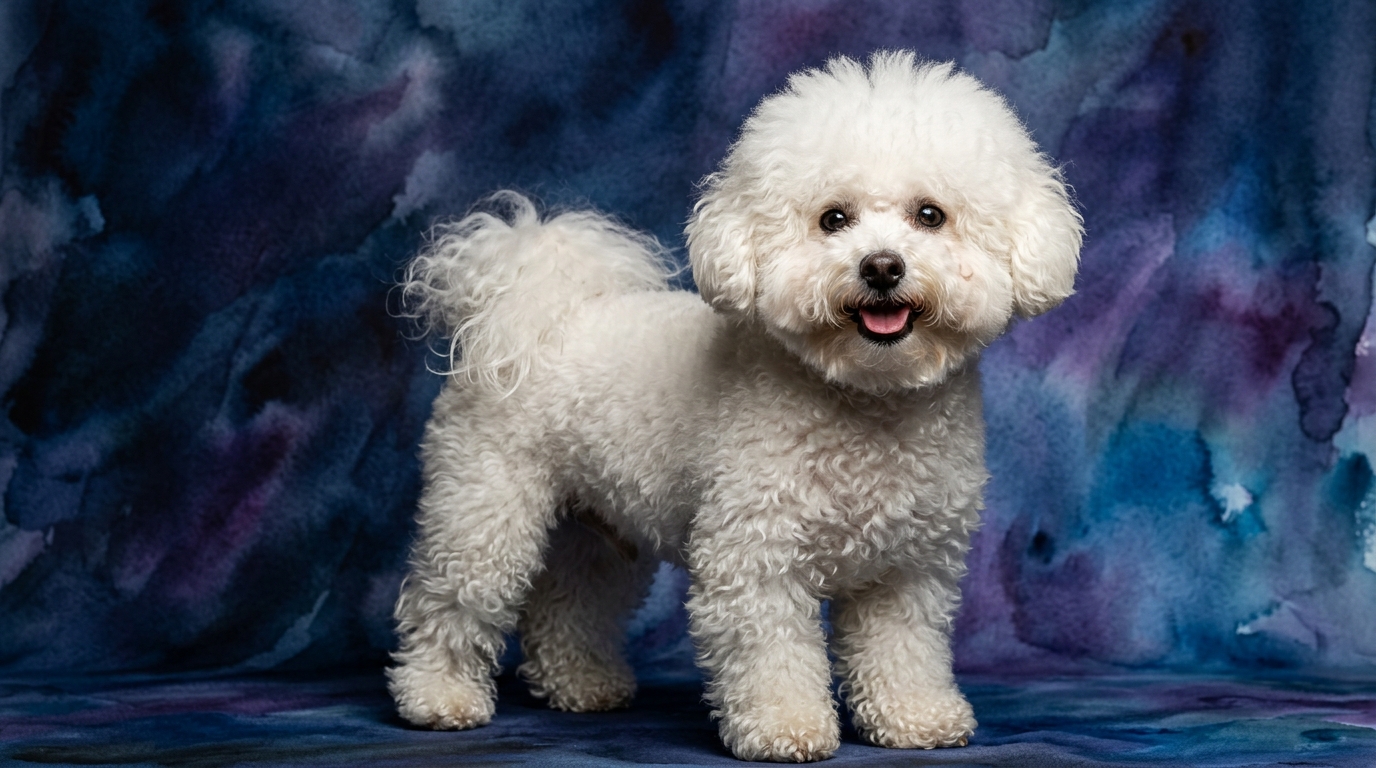
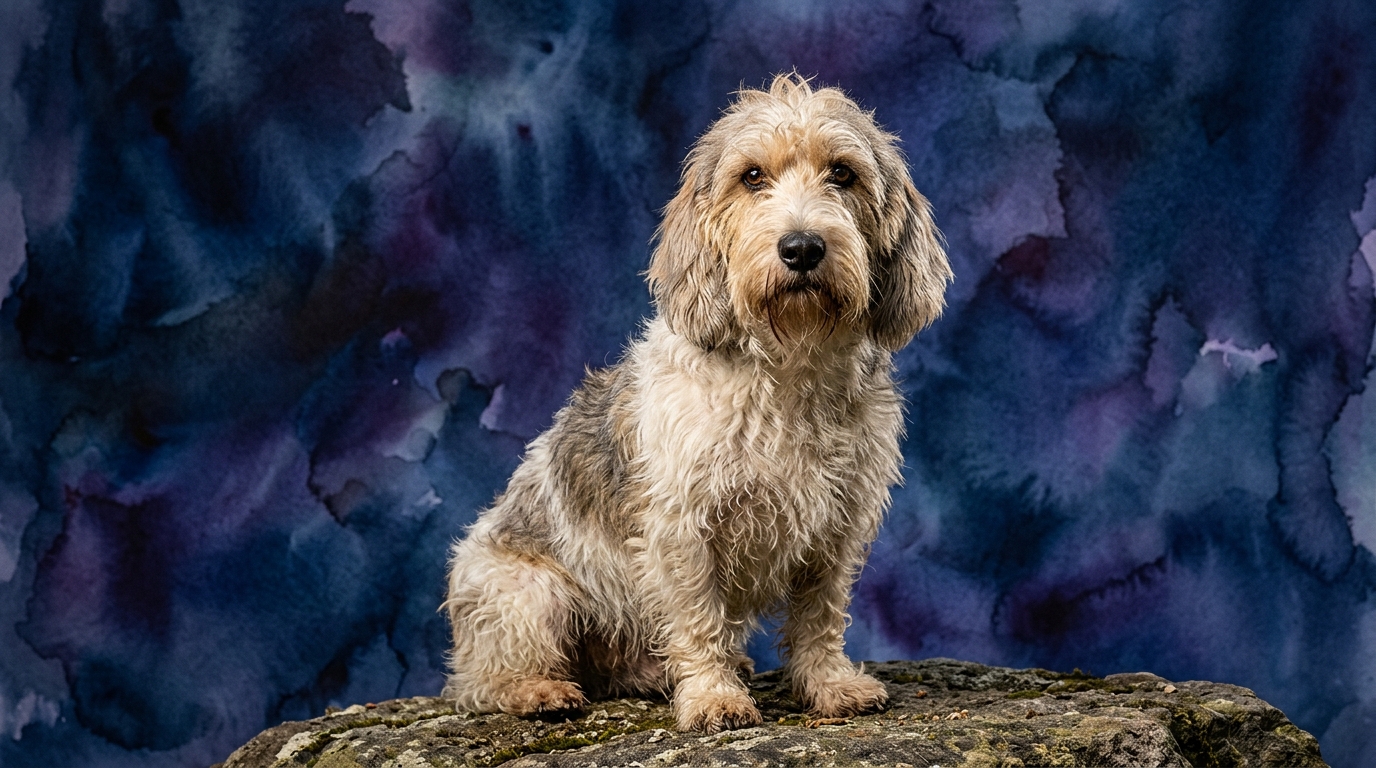
Side-by-Side IQ Profile: Bichon Frisé vs. PBGV
The Cosmic Pet Pet IQ Lab employs five dimensions to paint a nuanced picture of a dog's cognitive makeup, moving beyond simplistic notions of 'smart' or 'not smart.' For the Bichon Frisé, ranked #45 by Coren for working and obedience intelligence, and the Petit Basset Griffon Vendéen (PBGV), a breed whose specific cognitive strengths are less widely documented, this detailed breakdown is particularly illuminating. Let's examine how each breed scores across the five key dimensions: Problem Solving, Training Speed, Social Intelligence, Instinctive Drive, and Memory.
The Bichon Frisé presents a profile emphasizing companionship and social attunement. Their Problem Solving is rated 3/5, indicating a moderate capacity to navigate novel situations or figure out simple puzzles, often relying on learned associations or social cues. Training Speed is also 3/5, meaning they learn new commands at a steady pace, responding well to positive reinforcement and consistent methods. Where the Bichon truly shines is in Social Intelligence, scoring an exceptional 5/5. This allows them to keenly read human emotions, adapt to various social settings, and form deep, responsive bonds. Their Instinctive Drive is notably low at 2/5, making them primarily focused on interaction rather than independent tasks. Finally, their Memory is 3/5, signifying a solid, average recall for routines, commands, and familiar faces.
The Petit Basset Griffon Vendéen, a hound breed, offers a balanced cognitive profile with a distinct lean towards sensory exploration. Their Problem Solving is 3/5, showing a moderate ability to tackle new challenges, often employing their senses, particularly scent, to understand their environment rather than abstract reasoning. Training Speed is also 3/5, meaning learning new behaviors progresses at an average rate, though they may require patience and engaging methods to maintain focus. Their Social Intelligence is 3/5; while affectionate, they enjoy human interaction but often retain a degree of independence, not always seeking constant human validation. The PBGV's Instinctive Drive is 3/5, primarily channeled into tracking and exploration, manifesting as a strong inclination to follow interesting odors. Their Memory, like the Bichon's, is 3/5, capable of remembering learned behaviors and routes, though strong scent drives can sometimes override recall in stimulating environments.
Where the Bichon Frisé Wins Cognitively
The Bichon Frisé's clear cognitive advantage lies in its stellar 5/5 Social Intelligence. This isn't merely about being friendly; it signifies an acute ability to interpret human body language, vocal inflections, and emotional states with remarkable precision. A Bichon often anticipates its owner's needs or moods, offering comfort or playful engagement precisely when appropriate, making them extraordinarily empathetic and responsive companions. This high social attunement means they are highly motivated by human interaction and praise, which translates into a dog eager to please and integrate seamlessly into family dynamics. Their capacity to form such deep, nuanced social connections is a defining cognitive strength, allowing them to thrive in human-centric environments where subtle communication and mutual understanding are highly valued.
Where the Petit Basset Griffon Vendéen Wins Cognitively
The Petit Basset Griffon Vendéen distinguishes itself with a slightly higher 3/5 Instinctive Drive compared to the Bichon's 2/5. While neither breed is defined by extreme working drives, the PBGV's hound heritage means this drive is primarily channeled into scent-related exploration and pursuit. This cognitive strength translates into an impressive ability to track odors, persist in investigation, and navigate environments through scent. Their world is often defined by the rich tapestry of smells, and their cognitive processing is adept at unraveling these olfactory mysteries. Owners who appreciate a dog with a natural curiosity about the world, a desire to follow a trail, or who enjoy engaging in scent-based activities will find the PBGV's inherent drive a distinct advantage. Their cognitive processing is often geared towards environmental discovery, making them adept at independent exploration within a secure setting.
Which is Easier to Train and Why
Both breeds share a 3/5 Training Speed, suggesting they learn new commands at a comparable fundamental pace. However, the *ease* of training can differ significantly due to their other cognitive dimensions and behavioral tendencies. The Bichon Frisé, with its exceptional 5/5 Social Intelligence and notably low 2/5 Instinctive Drive, is often perceived as easier to train for general obedience and household manners. Their strong desire to interact with and please their human companions means they are highly motivated by praise, attention, and positive reinforcement, making them receptive to cues and less prone to independent distractions. They are more likely to focus on the handler, eager to understand what is being asked of them because the social reward is so compelling.
Conversely, the PBGV's 3/5 Social Intelligence and 3/5 Instinctive Drive can present a different training dynamic. While they are capable learners, their moderate independent streak and inherent drive to follow scents mean they might be more easily distracted, especially in stimulating outdoor environments. A compelling scent trail can easily override a handler's command for a PBGV, as their cognitive focus shifts to their primary instinctive drive. Training a PBGV often requires more consistent, engaging methods to keep their attention, a higher tolerance for their independent decision-making, and often requires training in varied environments to generalize commands. While both learn at the same speed, the Bichon's intrinsic social motivation often makes the training process feel more cooperative and less challenging in terms of maintaining focus.
Which Suits Active Owners vs. Relaxed Owners
The cognitive profiles of these two breeds suggest clear preferences for different owner lifestyles. The Bichon Frisé, with its low 2/5 Instinctive Drive and high 5/5 Social Intelligence, is an excellent fit for more relaxed owners. Their primary cognitive need is often social engagement and companionship, rather than extensive physical exertion or independent tasks. They thrive on interaction, cuddle sessions, and gentle play, making them content with moderate daily walks and indoor activities that provide mental stimulation through social games. For owners seeking a constant, empathetic presence that is less prone to wanderlust or intense outdoor demands, and who can fulfill their need for close human connection, the Bichon is a natural choice.
The Petit Basset Griffon Vendéen, however, with its 3/5 Instinctive Drive, particularly for scent, leans towards suiting more active owners. While not requiring marathon runs, their cognitive wiring for exploration means they genuinely benefit from regular opportunities to engage their nose and legs. Long, sniffy walks in varied environments, secure off-leash areas for exploration, or even participation in scent work games will fulfill their innate cognitive desires. This breed's moderate independence means they appreciate having 'jobs' to do, even if it's just following a fascinating trail. Owners who enjoy outdoor adventures, a dog with an independent streak, and who can provide consistent mental and physical stimulation related to their hound instincts will find the PBGV a rewarding and engaging companion.
The Verdict
Choose the Bichon Frisé if you seek an exceptionally socially attuned companion who thrives on close interaction and is highly responsive to human cues, fitting seamlessly into a less demanding, companionship-focused lifestyle.
Opt for the Petit Basset Griffon Vendéen if you appreciate a spirited, curious dog with a moderate independent streak and a natural inclination for scent-driven exploration, ideal for owners who enjoy engaging in active outdoor adventures.
🧠 Find Your Pet's IQ Score
Our Pet IQ Lab assessment covers 25+ tests across 5 cognitive dimensions — personalized to your breed.
Take the Full IQ Test →Frequently Asked Questions
Is a Bichon Frisé difficult to house train?
While their Training Speed is 3/5, their high Social Intelligence often means Bichons are eager to please and respond well to consistent, positive house training routines. Early and diligent training, combined with regular potty breaks, typically yields good results for these socially motivated dogs, as they value their human's approval.
Do PBGVs bark a lot due to their instinctive drive?
PBGVs can be vocal, and their 3/5 Instinctive Drive, particularly when following a scent, can lead to their characteristic 'happy hound' baying or barking. This vocalization is often part of their natural communication and tracking behavior, which owners should be prepared to manage through training and consistent environmental enrichment to redirect their focus.
How do their memory scores impact daily life?
Both breeds score 3/5 for Memory, indicating a solid, average capacity to remember commands, routines, and experiences. This means they will recall training effectively, but neither breed possesses an extraordinary memory that would drastically simplify or complicate daily learning beyond consistent reinforcement and engaging practice sessions.