A Side-by-Side Look at Cognitive Profiles
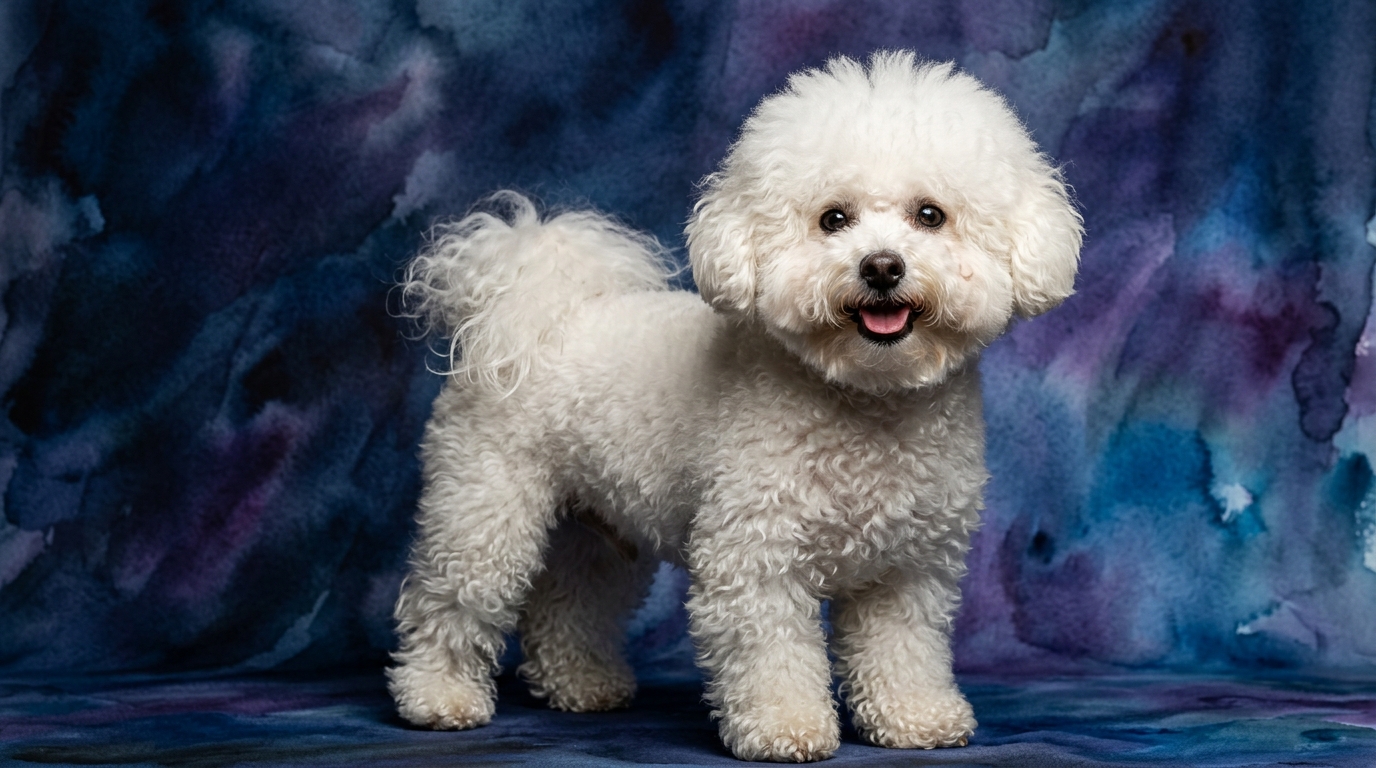
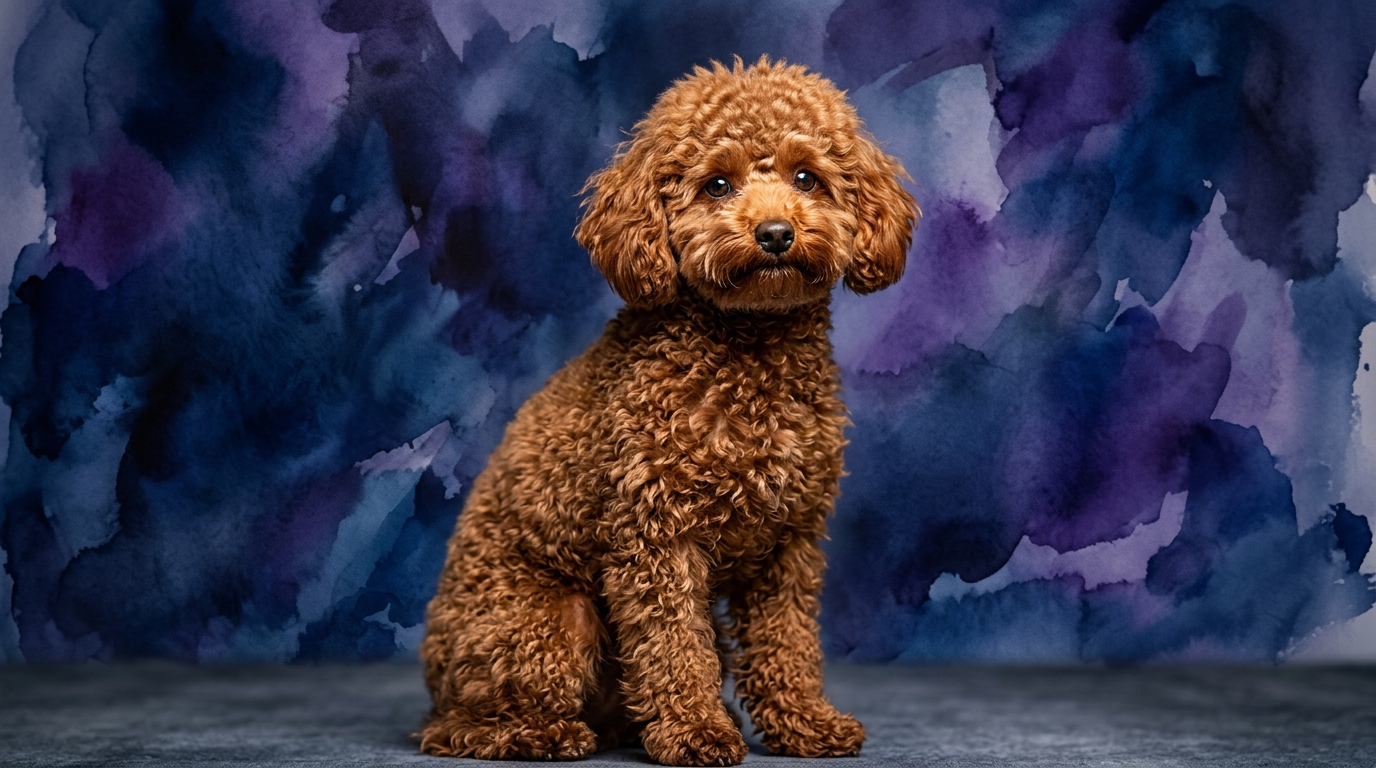
While both the Bichon Frisé and the Toy Poodle are cherished for their affectionate natures and charming appearances, their internal processing capabilities, as revealed by our Cosmic Pet Pet IQ Lab metrics, paint a picture of significant cognitive contrast. The Bichon Frisé, from the Non-Sporting Group, holds a Coren rank of #45, indicating a solid capacity for understanding. In contrast, the Toy Poodle, from the Toy Group, commands an impressive Coren rank of #2, placing it among the most responsive and adaptable breeds.
The Bichon Frisé’s cognitive profile is particularly strong in areas related to companionship. Their Problem Solving is rated 3/5, suggesting they can navigate straightforward challenges but might struggle with intricate, multi-step puzzles. Training Speed also sits at 3/5, meaning they learn commands at an average pace, benefiting from consistent, positive reinforcement. Where they truly excel is Social Intelligence, scoring a perfect 5/5, indicating an exceptional ability to read and respond to human emotions and social cues. Their Instinctive Drive is lower at 2/5, reflecting a primary focus on interaction rather than specific tasks, and their Memory is rated 3/5, meaning information retention is adequate but may require periodic refreshers.
Conversely, the Toy Poodle’s profile demonstrates a powerful aptitude for learning and mental agility. They achieve a remarkable 5/5 in Problem Solving, showcasing a capacity for complex thought and strategic adaptation. Their Training Speed is also 5/5, indicating a rapid grasp of new commands and routines with minimal repetition. Social Intelligence is a solid 3/5; they understand social dynamics sufficiently for harmonious living but aren't as intuitively empathetic as the Bichon. Instinctive Drive is moderate at 3/5, often manifesting as enthusiasm for focused activities, and their Memory is an outstanding 5/5, allowing for excellent long-term retention of learned behaviors and experiences.
Where the Bichon Frisé Shines Cognitively
The Bichon Frisé's undisputed cognitive strength lies in its unparalleled Social Intelligence, scoring a perfect 5/5. This isn't merely about enjoying human company; it's about a profound, intuitive understanding of emotional states and social nuances. A Bichon Frisé can often sense when their human is sad, anxious, or joyful, adjusting their behavior accordingly—offering a gentle nudge, a quiet presence, or an invitation to play. This deep empathy fosters an exceptionally strong bond, making them highly attuned and responsive companions in a way that goes beyond mere obedience.
This exceptional social acumen means Bichons are masters of emotional connection. They don't necessarily need complex tasks for fulfillment; their satisfaction often comes from shared moments and harmonious interaction. This makes them particularly suited for roles where emotional support is paramount, as they naturally integrate into family life by understanding and mirroring their household's emotional landscape. Their cognitive architecture prioritizes relational intelligence, making them comforting and perceptive partners.
Unpacking the Toy Poodle's Mental Edge
The Toy Poodle's cognitive prowess is evident across multiple dimensions, particularly in Problem Solving (5/5), Training Speed (5/5), and Memory (5/5). These attributes combine to create a highly adaptable and capable learner. A Toy Poodle can quickly assess novel situations, devise solutions to open a tricky puzzle toy, or understand multi-step commands. Their ability to rapidly acquire and retain new information means they can master an impressive repertoire of tricks and behaviors, often surprising owners with their capacity for abstract thought and quick learning.
This mental agility allows Toy Poodles to excel in structured learning environments and various dog sports. They thrive on the mental engagement provided by agility courses, advanced obedience trials, or even complex trick training, where their ability to remember sequences and adapt to changing conditions is a significant asset. Their sharp minds mean they are not merely repeating actions but often understanding the underlying concepts of a task, making them truly collaborative partners in training.
Furthermore, their moderate Instinctive Drive (3/5), combined with superior cognitive skills, means they often enjoy having a 'job' or focused activity. This capacity channels their mental energy into productive tasks, which their problem-solving and training speed readily support. They find satisfaction in purposeful activity and mental stimulation.
Training Dynamics: Effort and Engagement
When it comes to training, the differences between these two breeds become strikingly apparent. The Toy Poodle, with its 5/5 Training Speed and Memory, is a dream for trainers. They grasp new commands, house-training protocols, and complex sequences with remarkable speed, often requiring only a few repetitions before a behavior is solidified. This makes them highly responsive to consistent training, allowing for rapid progression through various levels of obedience and trick learning. Their capacity to connect cause and effect quickly means they learn from both successes and corrections efficiently.
The Bichon Frisé, with a 3/5 in both Training Speed and Memory, requires a different approach. While certainly trainable, they will need more patience, consistency, and repetition to master commands. Owners should be prepared for a slightly slower learning curve and understand that periodic refreshers are beneficial to maintain learned behaviors. Their strong social intelligence, however, can be leveraged; they are often eager to please and respond well to positive reinforcement and the joy of shared activity with their human companions, making the training process a bonding experience.
Behaviorally, the Toy Poodle's active mind means they can become bored or restless if not adequately stimulated, potentially leading to undesirable behaviors. They thrive on consistent mental engagement; an owner providing this will find a well-adjusted companion. The Bichon, while needing attention, is less prone to complex 'boredom behaviors' stemming from a lack of intense mental challenge; their primary needs are often met through affectionate interaction and moderate physical activity.
Matching Mentalities: Active vs. Relaxed Lifestyles
For owners seeking an active, mentally engaged partner, the Toy Poodle is an exceptional match. Their cognitive architecture thrives on continuous learning, structured activities, and consistent mental challenges. Owners who enjoy dog sports like agility, rally obedience, or advanced trick training will find the Toy Poodle an enthusiastic and highly capable collaborator. They are not merely physically active but mentally 'on,' requiring regular opportunities to exercise their problem-solving and learning capabilities for true contentment.
Conversely, for individuals or families preferring a more relaxed pace, the Bichon Frisé often proves to be an ideal companion. Their primary cognitive strength lies in fostering deep social bonds and providing emotional support, rather than demanding complex mental tasks. While they enjoy walks and playful interactions, their contentment stems more from affectionate companionship and harmonious living than from mastering new skills daily. Owners seeking a dog deeply attuned to their emotional state, content with less intense mental stimulation, and focused on intuitive interaction will find the Bichon Frisé a perfectly suited, loving presence.
The Verdict
Choose a Bichon Frisé if your priority is a deeply empathetic companion who excels at emotional connection and thrives in a home prioritizing affectionate interaction over demanding mental exercises.
Opt for a Toy Poodle if you seek an agile-minded partner eager for continuous learning, capable of mastering complex tasks, and requiring consistent mental engagement to prevent boredom.
🧠 Find Your Pet's IQ Score
Our Pet IQ Lab assessment covers 25+ tests across 5 cognitive dimensions — personalized to your breed.
Take the Full IQ Test →Frequently Asked Questions
Does a Toy Poodle require more daily mental exercise than a Bichon Frisé?
Yes, a Toy Poodle's superior problem-solving and memory capabilities mean they genuinely benefit from more consistent and varied mental challenges. This could involve puzzle toys, new trick training, or structured play sessions to keep their active minds engaged.
How does the Bichon Frisé's social intelligence manifest in daily interactions?
The Bichon Frisé's high social intelligence means they are exceptionally perceptive of human moods and non-verbal cues. They often provide comfort instinctively, seek closeness when sensing distress, and generally integrate seamlessly into family dynamics through their intuitive understanding of social situations.
Can a Bichon Frisé still learn complex tricks or commands?
While their training speed is moderate, a Bichon Frisé can certainly learn complex tricks and commands with consistent, positive reinforcement and patience. Their social intelligence can be a strong motivator, as they often enjoy the shared activity and praise from their human companions, even if it takes more repetition.