Side-by-Side IQ Profile: A Cognitive Blueprint
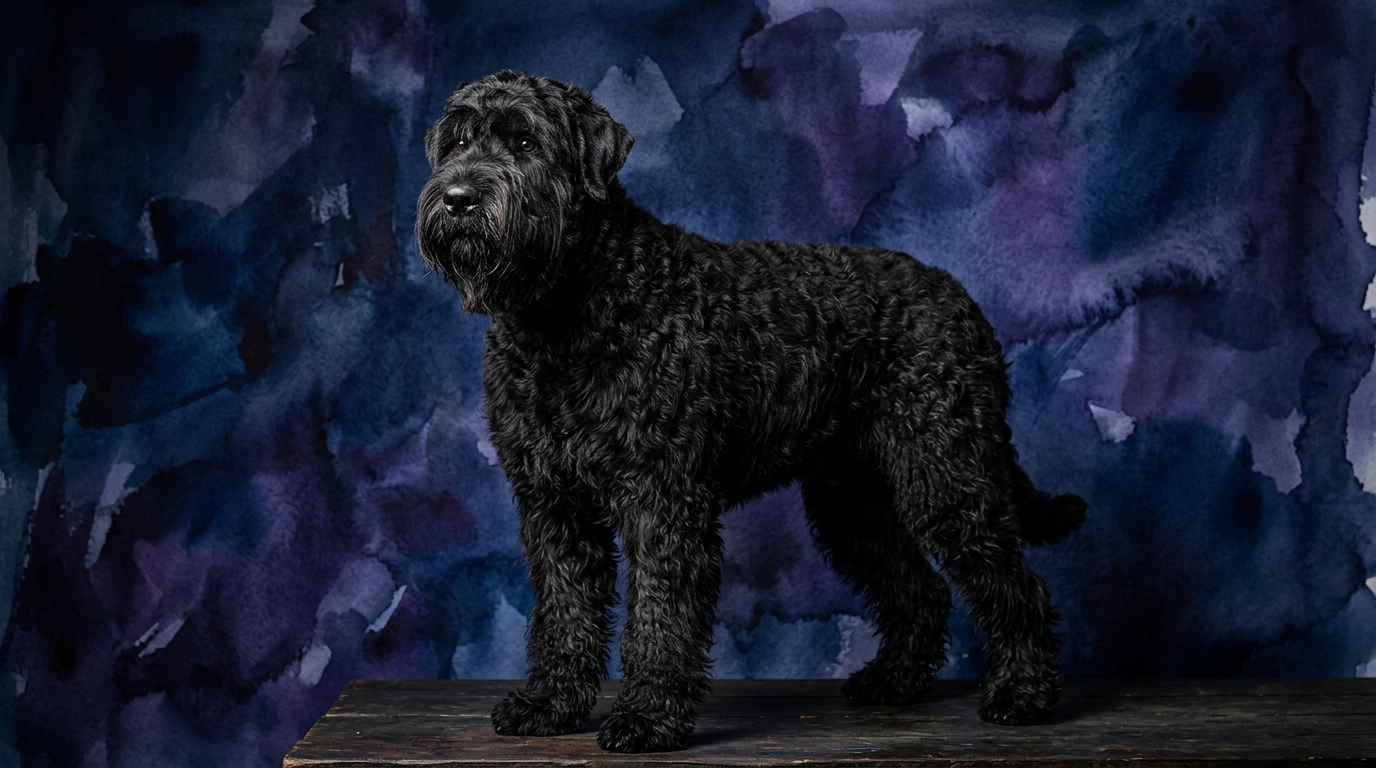
**Black Russian Terrier (Working Group):** Originating as military dogs, their cognitive profile reflects a need for robust, independent thought within a structured framework. Their **Problem Solving (3/5)** involves deliberate consideration, often relying on physical presence and learned responses, excelling at tasks requiring strength and endurance rather than novel solutions. **Training Speed (3/5)** requires consistent, clear communication and patience due to their strong-willed nature, with repetition and positive reinforcement being key. **Social Intelligence (3/5)** is geared towards deep bonding with family and a discerning, protective approach to strangers. Their **Instinctive Drive (3/5)** is rooted in protection and territoriality, a legacy requiring appropriate outlets. Finally, their **Memory (3/5)** is solid for routines, commands, and familiar faces, retaining learned behaviors well, though less frequent recall might need reinforcement.
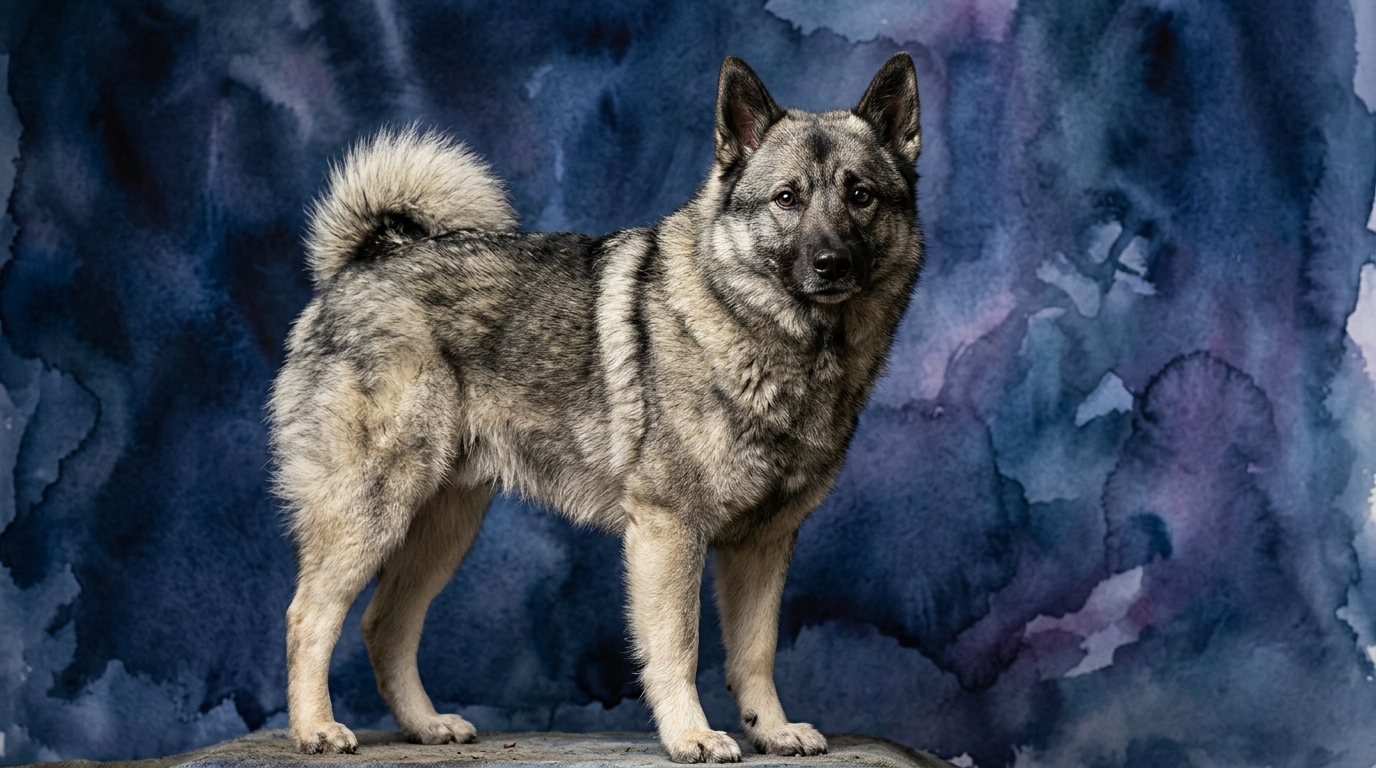
**Norwegian Elkhound (Hound Group, Coren Rank #36):** Bred for hunting large game in challenging terrain, their intelligence is finely tuned for independent decision-making and tracking. Their **Problem Solving (4/5)** displays a higher aptitude for independent thought, essential for navigating complex hunting scenarios and showing ingenuity in overcoming obstacles. **Training Speed (4/5)** means they typically pick up new commands and routines with greater alacrity, their eagerness and keen observation making them generally responsive. **Social Intelligence (3/5)** is characterized by a friendly and adaptable nature within their family and with familiar individuals, demonstrating balanced social understanding. Their **Instinctive Drive (3/5)** primarily revolves around scent-tracking and endurance, a direct inheritance from hunting, manifesting as a strong desire to explore with their nose. Their **Memory (4/5)** is excellent, particularly for routes, scents, and learned tasks, supporting their hunting prowess and ensuring reliable command recall.
Where Black Russian Terrier Wins Cognitively
The Black Russian Terrier’s cognitive architecture shines in areas demanding robust decision-making and unwavering commitment to a perceived duty. Their strength lies in applying learned protocols with immense physical and mental fortitude, particularly in tasks requiring strength, endurance, and adherence to a specific order. While their social intelligence is rated similarly to the Elkhound, it provides a distinct advantage in discernment; they are inherently cautious and evaluate new people or situations with a critical eye, making them exceptional guardians. This thoughtful, protective social approach means they excel when a clear ‘us vs. them’ dynamic is present, offering a cognitive edge in assessing and responding to potential threats. Their instinctive drive, focused on territoriality and protection, is a profound cognitive asset when a dog needs to act as a dedicated sentinel, mentally ready to assess and react to perceived intrusions.
Where Norwegian Elkhound Wins Cognitively
The Norwegian Elkhound consistently demonstrates higher scores in problem-solving, training speed, and memory, pointing to a more agile and adaptable cognitive style. Their superior problem-solving (4/5) indicates a greater capacity for independent thought and finding creative solutions, a trait honed by centuries of working autonomously in the wild. This means they are more likely to "figure things out" on their own, whether navigating a complex scent trail or overcoming obstacles. Their enhanced training speed (4/5) reflects a keen observational intelligence and a willingness to quickly integrate new information, making them generally more responsive to novel commands. Furthermore, their superior memory (4/5) is a significant advantage, allowing them to recall a wider array of commands, locations, and experiences with less reinforcement, contributing to their perceived trainability.
Which is Easier to Train and Why
Based on their IQ profiles, the Norwegian Elkhound is generally easier to train compared to the Black Russian Terrier. The Elkhound's higher training speed (4/5) indicates a quicker grasp of new commands and a greater eagerness to cooperate in learning sessions. Their independent problem-solving nature means they often engage with training as a mental puzzle, processing information and responding to cues with greater alacrity. This contrasts with the Black Russian Terrier's more deliberate approach (3/5 training speed), which can be perceived as strong-willed. BRTs require more consistent reinforcement and patience to embed behaviors, as their decision-making process is often more internal. The Elkhound's quicker cognitive processing and stronger memory retention mean fewer repetitions are typically needed, making the training journey smoother for the average owner.
Which Suits Active Owners vs Relaxed Owners
Considering their cognitive profiles and inherent drives, the Norwegian Elkhound is a better fit for active owners. Their strong instinctive drive (3/5) for scent-tracking and endurance, combined with agile problem-solving (4/5) and quick training speed (4/5), means they thrive with consistent mental and physical engagement. Owners who enjoy hiking, running, or dog sports like agility or tracking will find the Elkhound a willing and capable companion. In contrast, the Black Russian Terrier, with its powerful build and protective instincts (3/5 instinctive drive), requires significant physical exercise but also a strong emphasis on structured mental work. While they need activity, their true contentment often comes from fulfilling a perceived role within the family unit and having clear boundaries. A "relaxed" owner for a BRT provides consistent routine, firm leadership, and understands the BRT's need for security and purpose, even if daily activities are more routine walks and guardian duties rather than high-octane sports.
The Verdict
Opt for the Black Russian Terrier if you seek a vigilant, protective companion with a steady temperament, appreciating their deliberate problem-solving and deep loyalty within a structured home environment. They thrive with owners who provide clear leadership and value a discerning, steadfast guardian.
Select the Norwegian Elkhound if you desire an agile, quick-witted partner for outdoor adventures and mental challenges, valuing their independent problem-solving, faster training uptake, and excellent memory. They excel with active owners who enjoy engaging their dog in varied physical and cognitive pursuits.
🧠 Find Your Pet's IQ Score
Our Pet IQ Lab assessment covers 25+ tests across 5 cognitive dimensions — personalized to your breed.
Take the Full IQ Test →Frequently Asked Questions
Are Black Russian Terriers difficult to train due to their strong will?
While Black Russian Terriers have a training speed rating of 3/5, indicating they require consistent, clear instruction and patience, "difficult" is too strong. Their strong will stems from their deliberate nature and independent thought, meaning owners need to establish firm leadership and utilize positive reinforcement to successfully embed behaviors.
Do Norwegian Elkhounds have a strong prey drive that impacts their social intelligence?
Norwegian Elkhounds possess an instinctive drive for tracking and hunting, but their social intelligence (3/5) is generally balanced. While their prey drive means off-leash excursions might require caution around small animals, it doesn't inherently diminish their ability to be friendly and adaptable with people or other dogs they are familiar with.
How does the Coren ranking impact the perceived intelligence of these breeds?
The Coren ranking (Norwegian Elkhound #36, BRT not ranked) primarily measures "working and obedience intelligence," reflecting how quickly a dog learns and obeys known commands. While Elkhounds score higher in this specific metric, the Black Russian Terrier's unranked status doesn't mean a lack of intelligence, but rather that their cognitive strengths might lie more in independent problem-solving, protective instincts, and discerning social intelligence, which aren't fully captured by Coren's framework.