Side-by-Side IQ Profile: Unpacking Identical Scores
At first glance, the cognitive scores for both the Black Russian Terrier and the Scottish Deerhound appear identical across all five dimensions: Problem Solving (3/5), Training Speed (3/5), Social Intelligence (3/5), Instinctive Drive (3/5), and Memory (3/5). However, these numerical ratings are merely starting points, as the manifestation of these cognitive traits differs significantly based on each breed's historical purpose and inherent temperament. Understanding these nuances is key to appreciating their individual brilliance.
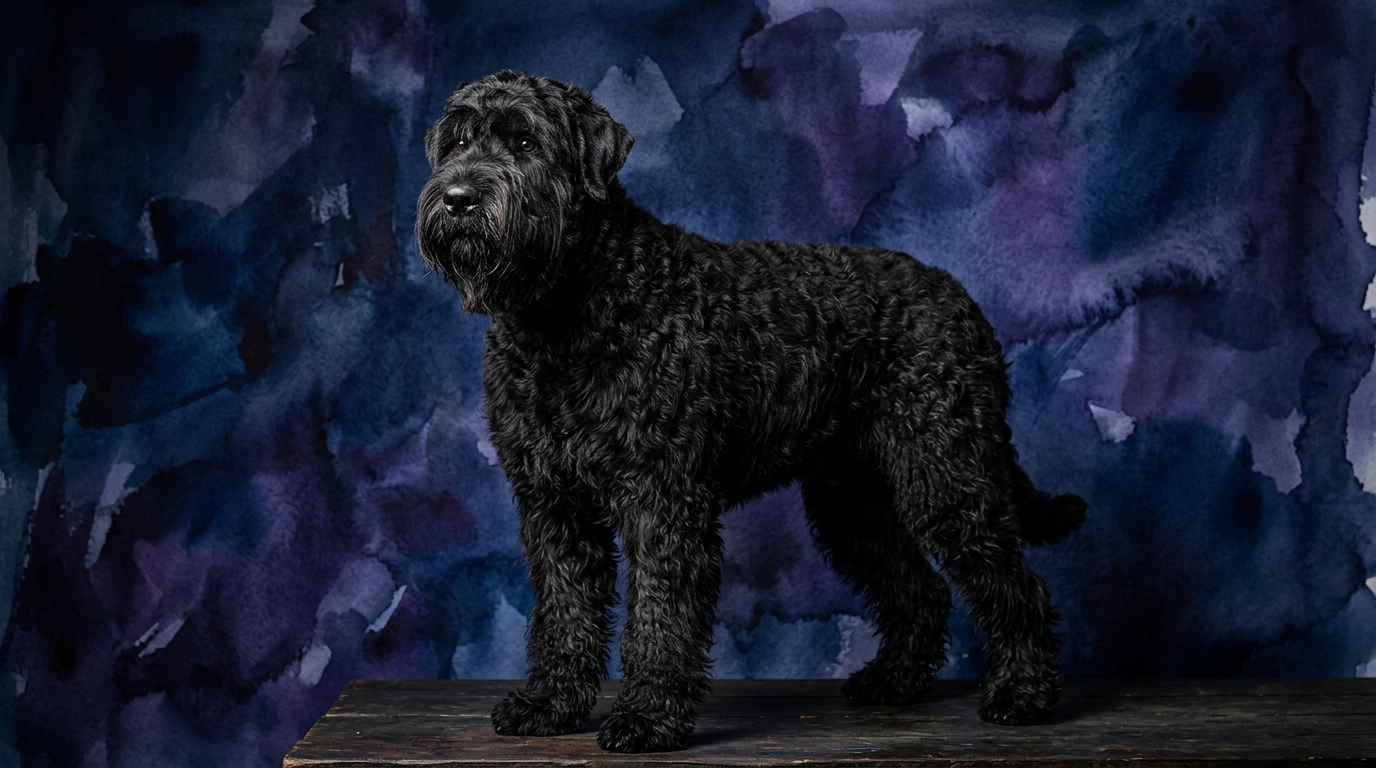
The Black Russian Terrier, forged in the Soviet Union as a military and guard dog, interprets these scores through a lens of duty and protection. Their Problem Solving at 3/5 often translates to practical discernment – assessing potential threats or figuring out how to achieve a protective goal. Training Speed at 3/5 reflects a capacity for consistent learning when given clear direction and purpose, rather than instant obedience. Social Intelligence at 3/5 means a deep bond with their immediate family and a watchful, often reserved, demeanor towards outsiders, accurately reading their intentions. Their Instinctive Drive at 3/5 is primarily geared towards guarding, vigilance, and territorial defense, with a moderate prey drive. Memory at 3/5 ensures they retain complex commands, routines, and experiences, crucial for their roles.
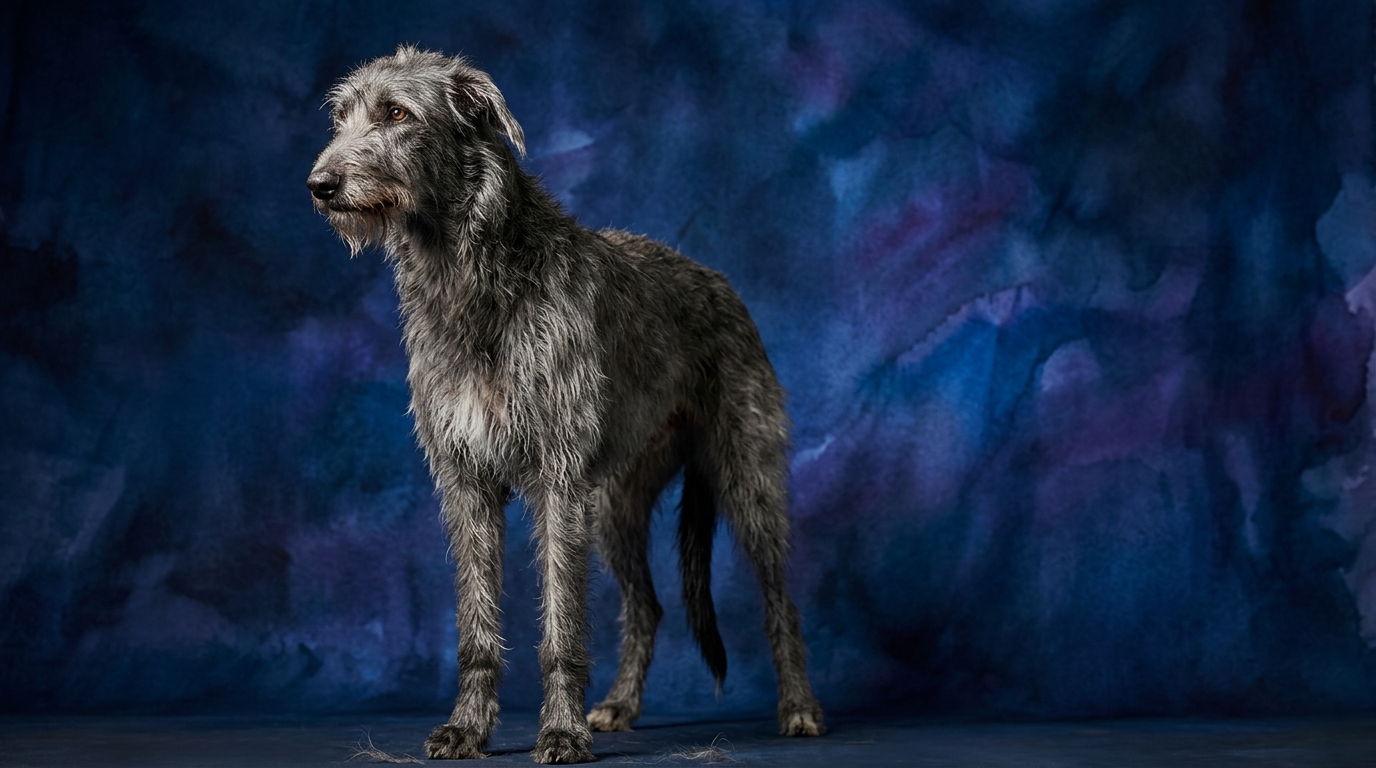
Conversely, the Scottish Deerhound, a sighthound developed for coursing large game, expresses these same 3/5 scores in a distinctly different manner. Their Problem Solving at 3/5 is less about manipulation or complex tasks and more about strategic pursuit – navigating terrain, anticipating prey movement, or finding the most comfortable spot on the sofa. Training Speed at 3/5 indicates they are capable learners, but their sighthound independence means they often require engaging methods and may prioritize an interesting scent or visual stimulus over a command. Social Intelligence at 3/5 manifests as a gentle, sensitive nature, deeply attuned to their family's moods, though they are often reserved and dignified with strangers. Their Instinctive Drive at 3/5 is overwhelmingly focused on visual prey pursuit, a powerful, ancient urge. Memory at 3/5 allows them to recall training, but also to remember successful chases or intriguing outdoor excursions with remarkable clarity.
Where the Black Russian Terrier's Cognition Shines
Despite the shared numerical ratings, the Black Russian Terrier exhibits cognitive strengths that are a direct reflection of their specialized development. One significant area where the BRT's cognition shines is in their capacity for structured vigilance and threat assessment. Their Problem Solving (3/5) is inherently linked to their role as a protector; they are adept at evaluating situations, distinguishing routine from potential danger, and making decisions that prioritize the safety of their family. This isn't about solving abstract puzzles, but rather about practical, real-world discernment in dynamic environments.
Furthermore, the BRT's combination of Training Speed (3/5) and Instinctive Drive (3/5 for protection) makes them particularly effective in roles requiring consistent adherence to multi-step commands and maintaining focus on a specific 'job.' Unlike breeds whose drives might scatter their attention, a well-trained BRT can channel their inherent protective instincts into reliable, purposeful action. Their Memory (3/5) reinforces this, allowing them to recall complex sequences of commands and adapt their responses based on previous experiences, making them suitable for advanced obedience, protection sports, or service work where sustained cognitive effort is required.
Where the Scottish Deerhound's Cognition Excels
The Scottish Deerhound's cognitive strengths, while equally robust, are tailored to a vastly different ancestral purpose. Their Problem Solving (3/5) truly excels in scenarios demanding independent, rapid decision-making during a chase. When coursing deer, they must instantaneously analyze terrain, calculate trajectory, and anticipate the prey's next move, all without direct human instruction. This form of cognitive agility, rooted in their powerful Instinctive Drive (3/5 for prey pursuit), is a testament to a different kind of intellectual prowess—one focused on fluid, dynamic problem-solving in high-stakes, fast-moving situations, rather than deliberate, planned action.
Another distinct area of Deerhound cognitive advantage lies in their nuanced Social Intelligence (3/5). While often reserved, their sensitivity allows them to develop an exceptionally deep, quiet understanding of their primary caregivers' emotional states. They possess a subtle empathy, often picking up on unspoken cues or changes in mood with remarkable accuracy. This emotional attunement, combined with their Memory (3/5) for positive interactions and routines, fosters a profound, though often understated, bond. They may not be overtly demonstrative, but their ability to sense and respond to human feelings is a hallmark of their gentle, perceptive nature.
Training Dynamics: BRT's Purpose vs. SD's Independence
When considering ease of training, the identical 3/5 Training Speed scores belie significant differences in approach and owner experience. The Black Russian Terrier, with their working dog heritage, generally presents as more biddable and eager to please, particularly when training aligns with their innate desire for purpose and structure. Their Instinctive Drive (3/5 for protection) can be harnessed effectively in obedience and protection work, where they find satisfaction in fulfilling a role. They learn commands efficiently and retain them due to their solid Memory (3/5), provided the training is consistent, firm, and fair. However, their sheer physical strength and potential for independent thought mean that an owner must establish clear leadership from day one, lest the BRT decide their way is better.
The Scottish Deerhound's training journey is shaped by their sighthound independence. While their Training Speed (3/5) indicates they are capable of learning, their primary motivation often isn't human approval in the same way a working dog's might be. Their powerful Instinctive Drive (3/5 for prey) means that a sudden visual stimulus can easily override a learned command, making recall training a lifelong, critical endeavor. Owners must employ patient, positive reinforcement methods, making training sessions engaging and rewarding. They are not difficult to train out of malice, but rather out of a deep-seated instinct to pursue. Their Memory (3/5) ensures they remember lessons, but their decision to act on them can depend heavily on environmental distractions and their own independent assessment of the situation.
Lifestyle Suitability: Active Engagement vs. Serene Companionship
Both the Black Russian Terrier and the Scottish Deerhound demand active engagement from their owners, though the nature of this activity varies considerably. The BRT thrives with owners who can provide structured physical exercise and consistent mental stimulation. This might involve long, purposeful walks, advanced obedience classes, agility, or even protection sports. Their Problem Solving (3/5) and Instinctive Drive (3/5) necessitate outlets that challenge their minds and bodies, preventing boredom and potential destructiveness. An 'active owner' for a BRT means someone committed to daily, purposeful interaction and training, providing a clear 'job' for their vigilant companion.
The Scottish Deerhound, while requiring bursts of intense activity, is generally more suited to owners who appreciate a serene presence indoors after their exercise needs are met. They need opportunities for vigorous, high-speed running in a vast, securely fenced area to satisfy their potent Instinctive Drive (3/5 for coursing). However, once these bursts of energy are expended, they transform into quiet, often surprisingly lazy, house companions. An 'active owner' for a Deerhound is someone who can facilitate these crucial running opportunities safely, understanding that a long, slow walk might not fully satisfy their sighthound instincts. They are less about constant mental 'work' and more about fulfilling their primal need for a good run, then settling into quiet companionship.
The Verdict
Choose the Black Russian Terrier if you seek a formidable guardian and dedicated working companion who thrives on purpose and structured activity, and if you are prepared to provide consistent leadership, extensive socialization, and ongoing mental stimulation to channel their powerful drives effectively.
Opt for the Scottish Deerhound if you appreciate a gentle, independent giant with a quiet, dignified presence indoors, and if you can provide safe, expansive spaces for them to satisfy their profound sighthound instinct for running, understanding their unique blend of elegance and primal drive.
🧠 Find Your Pet's IQ Score
Our Pet IQ Lab assessment covers 25+ tests across 5 cognitive dimensions — personalized to your breed.
Take the Full IQ Test →Frequently Asked Questions
Are Black Russian Terriers good family dogs?
Black Russian Terriers can be devoted family protectors, especially with children they've been raised with. Their social intelligence (3/5) allows them to bond deeply with their inner circle, but early and extensive socialization is crucial to manage their protective instincts towards strangers. They thrive in a home with clear rules and consistent leadership.
How much exercise does a Scottish Deerhound need?
Scottish Deerhounds require regular opportunities for intense, short bursts of running in a securely fenced area to satisfy their instinctive drive (3/5). Beyond these sprints, they are content with moderate daily walks and are generally calm indoors. Insufficient exercise can lead to restlessness, but they are not typically high-strung.
Do Black Russian Terriers or Scottish Deerhounds bark a lot?
Black Russian Terriers tend to be more vocal, using their bark for alerting and guarding, aligning with their problem-solving and instinctive drives. Scottish Deerhounds are generally quieter, barking infrequently unless deeply startled or excited. Their vocalizations are often more subtle, like sighs or grumbles.