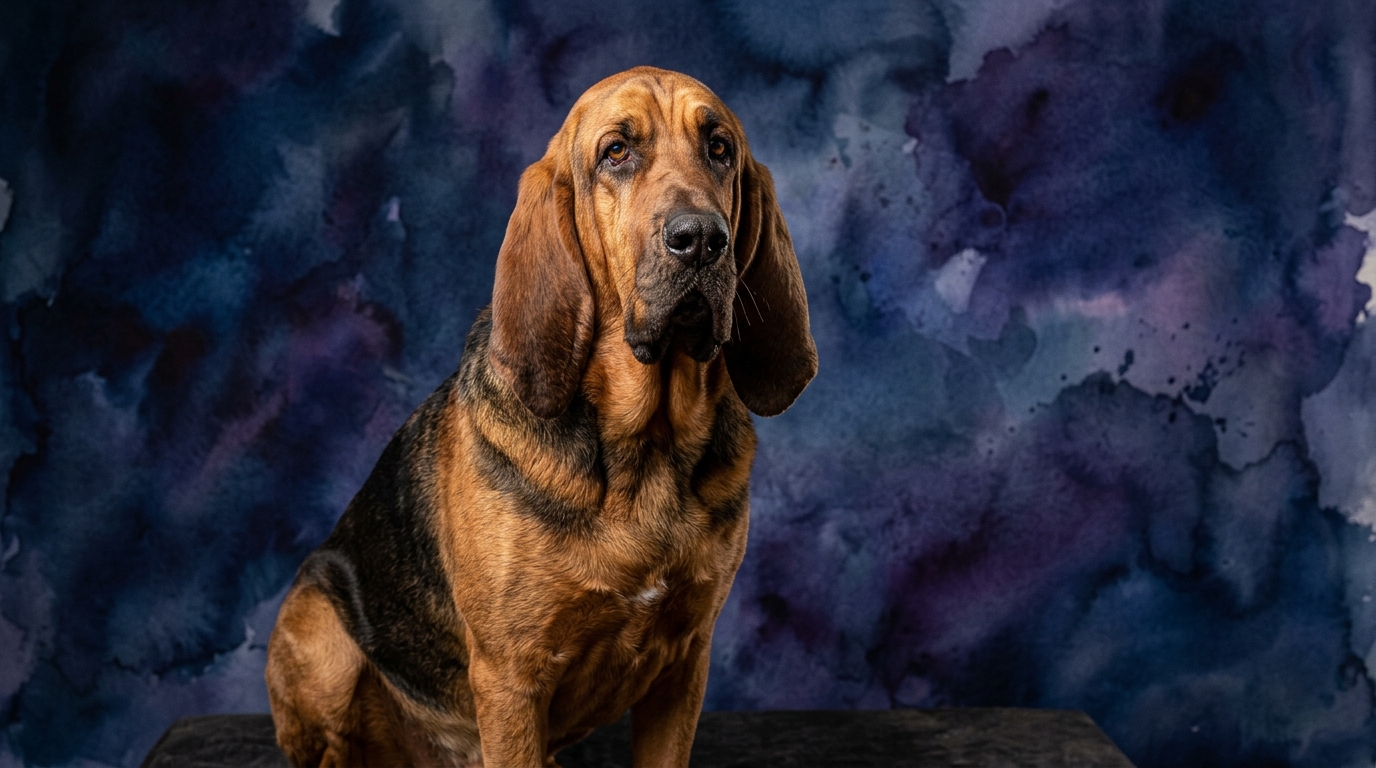
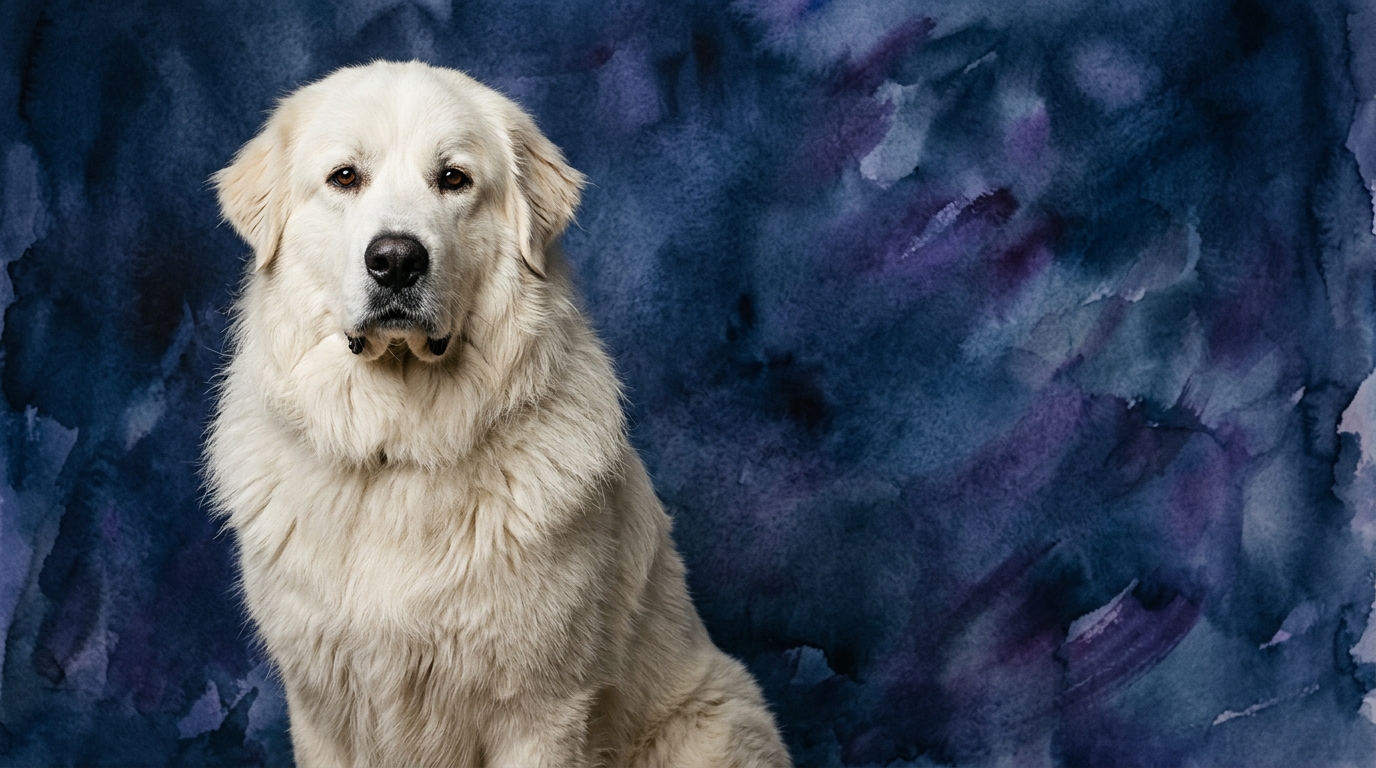
Side-by-Side IQ Profile: Bloodhound vs. Great Pyrenees
The Cosmic Pet Pet IQ Lab provides a multi-faceted view of canine cognition, moving beyond singular measures like Stanley Coren's obedience-based ranking (where the Great Pyrenees ranks higher at #64 compared to the Bloodhound at #74). Instead, our profile delves into five distinct dimensions, revealing the unique mental architectures of these two fascinating breeds.
**Problem Solving:** The Bloodhound earns a perfect 5/5 here, demonstrating an unparalleled aptitude for unraveling complex olfactory puzzles. This score reflects their ability to logically follow and interpret scent trails, even those days old or heavily contaminated, making intricate deductions from minute data. The Great Pyrenees, with a 3/5 in Problem Solving, shows a more generalized, independent problem-solving capacity, particularly in assessing threats and making autonomous decisions within their guardian role, rather than specialized tracking.
**Training Speed:** This dimension highlights how quickly a breed grasps and consistently executes new commands. The Bloodhound scores a challenging 1/5, indicating a strong independent streak and a profound difficulty in focusing on human-initiated tasks when their primary instinct is engaged. The Great Pyrenees, scoring a balanced 3/5, is capable of learning at an average pace, responsive to consistent training, though their self-reliant nature means they aren't always eager to please.
**Social Intelligence:** Bloodhounds receive a 2/5, suggesting they are generally amiable but often more invested in their olfactory world than in nuanced social interactions with humans or other dogs. Their engagement is often task-oriented. The Great Pyrenees, at 3/5, exhibits a more rounded social intelligence, capable of strong family bonds and understanding social hierarchies, while remaining appropriately reserved or wary with strangers as befits their guardian role.
**Instinctive Drive:** A perfect 5/5 for the Bloodhound underscores its overwhelming, almost uncontrollable, drive to track once a scent is detected. This isn't just a preference; it's a profound biological imperative. The Great Pyrenees' 3/5 indicates a strong, yet more manageable, instinctive drive primarily focused on guarding and protecting its territory and family. This drive is purposeful but less obsessive than the Bloodhound's scent addiction.
**Memory:** The Bloodhound's 5/5 in Memory is directly tied to its exceptional ability to recall and differentiate countless scent patterns, remembering specific trails and their nuances over long periods. The Great Pyrenees, with a 3/5, possesses a good, functional memory for routines, familiar people, places, and learned behaviors, sufficient for their roles but not specialized in the same extraordinary way as the Bloodhound's olfactory recall.
Where the Bloodhound Wins Cognitively
The Bloodhound's cognitive superiority shines brightest in its unparalleled ability to process and retain olfactory information, earning a perfect 5/5 in both Problem Solving and Memory. This isn't just about following a trail; it's about discerning minute scent particles, differentiating between individuals, and reconstructing a narrative purely from odor. Their instinctive drive, also a perfect 5/5, fuels an almost obsessive dedication to a task once a scent is engaged, allowing them to overcome environmental distractions and physical obstacles that would deter most other breeds. For a Bloodhound, problem-solving is intrinsically linked to scent work; their entire mental architecture seems designed to unravel complex olfactory puzzles, demonstrating a specialized form of intelligence that few, if any, other breeds can match.
Where the Great Pyrenees Wins Cognitively
While the Bloodhound excels in a niche, the Great Pyrenees demonstrates a more generalized, adaptable cognitive profile, particularly evident in its balanced 3/5 scores across Training Speed, Social Intelligence, Instinctive Drive, and Memory. Their social intelligence is particularly noteworthy, allowing them to effectively integrate into a family unit while maintaining a watchful wariness towards potential threats. This isn't the task-focused social interaction of a retriever; it's a nuanced understanding of their flock's safety and dynamics. Their problem-solving, though not as specialized as the Bloodhound's, allows for independent decision-making in their traditional role as livestock guardians, assessing threats and acting autonomously without constant human direction. This self-reliance, coupled with a moderate training speed, means they can learn and adapt to various situations, making them versatile companions compared to the Bloodhound's single-minded focus.
Which is Easier to Train and Why
When it comes to conventional obedience training, the Great Pyrenees presents a more amenable student than the Bloodhound. The Pyrenees' moderate Training Speed (3/5) suggests they are capable of learning commands and routines with consistent effort, though their independent nature, a hallmark of their guarding heritage, means they may question commands rather than blindly obey. Their balanced social intelligence (3/5) allows them to form strong bonds and understand human cues, making them receptive to guidance from a trusted owner. This does not mean they are pushovers; their innate self-reliance means training requires patience and mutual respect, not just rote commands.
In stark contrast, the Bloodhound's dismal Training Speed (1/5) is a direct reflection of its overwhelming Instinctive Drive (5/5) and lower Social Intelligence (2/5). Once a Bloodhound catches a scent, its world narrows to that singular pursuit, rendering it virtually deaf to commands. Their stubbornness isn't a lack of cognitive capacity, but rather an intense, specialized focus that overrides typical human-centric training motivations. Training a Bloodhound requires immense patience, creativity, and an understanding that their primary drive is not to please their human, but to follow their nose. Harnessing this drive through scent work is often more successful than attempting to suppress it with traditional obedience.
Which Suits Active vs. Relaxed Owners
The ideal owner for a Bloodhound is undoubtedly an active individual or family deeply committed to channeling the breed's extraordinary cognitive and physical energies. Their perfect 5/5 Instinctive Drive for tracking translates into an insatiable need for mental stimulation and physical exertion through scent work, whether it's formal tracking, search and rescue, or extensive 'nose work' games. Owners must be prepared for long walks, engaging their dog's formidable olfactory system, and understanding that a bored Bloodhound is a destructive or escapist Bloodhound. They thrive with consistent engagement that respects their primary cognitive function.
Conversely, the Great Pyrenees, while requiring consistent exercise and mental engagement, suits owners who appreciate a more independently minded companion. Their role as guardians means they are often content surveying their domain, requiring less intense, but regular, physical activity. They are watchful rather than constantly 'on the go,' making them a better fit for owners who enjoy a relaxed pace but can provide a secure environment and understand the need for space and a job to do, even if that job is simply supervising the family. Their balanced cognitive profile allows them to adapt to a more varied, less single-focused lifestyle.
The Verdict
Choose a Bloodhound if you are a dedicated enthusiast of scent work, prepared to embrace and channel their unparalleled olfactory intelligence and single-minded drive into purposeful activities.
Choose a Great Pyrenees if you seek a watchful, independent, family-oriented guardian with a balanced temperament, capable of autonomous decision-making and a nuanced understanding of its social environment.
🧠 Find Your Pet's IQ Score
Our Pet IQ Lab assessment covers 25+ tests across 5 cognitive dimensions — personalized to your breed.
Take the Full IQ Test →Frequently Asked Questions
Are Bloodhounds difficult to live with due to their stubbornness?
Bloodhounds aren't stubborn in a disobedient sense, but their overwhelming instinctive drive for scent work (5/5) means they prioritize following a trail above all else. This can make them challenging without consistent, specialized training that harnesses their natural abilities rather than fighting them.
Do Great Pyrenees need a lot of exercise?
Generally no, Great Pyrenees thrive with space, ideally a securely fenced yard, due to their guarding instincts and moderate energy levels (Instinctive Drive 3/5). While they are not hyperactive, their need to survey their territory and protect their 'flock' makes a small enclosed space unsuitable for their cognitive and physical needs.
How do these breeds typically interact with children?
The Great Pyrenees, with its balanced social intelligence (3/5), is generally gentle and protective with children within its family, viewing them as part of its flock. Bloodhounds, with lower social intelligence (2/5) and a strong task focus, can be tolerant but may be less engaged or attentive to children, especially if a scent is present, and their size requires supervision.