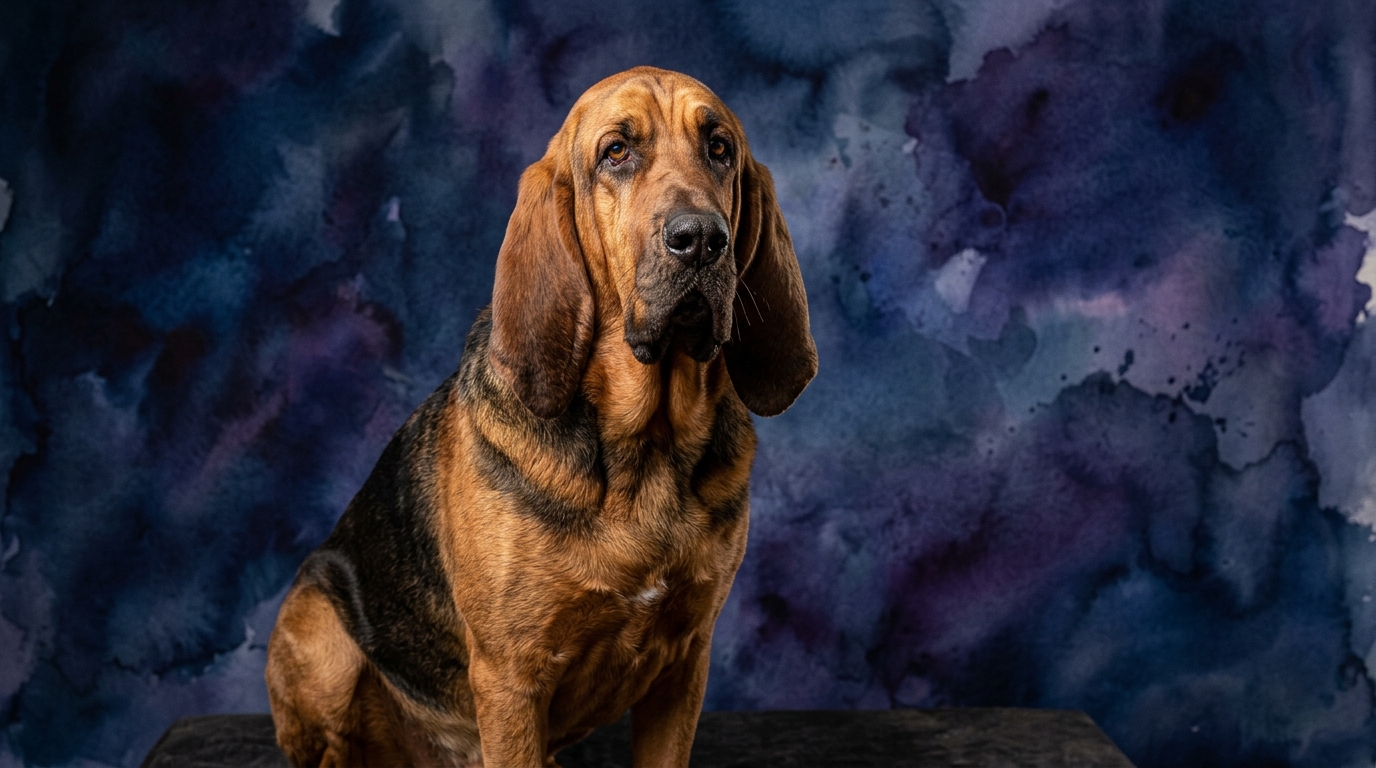
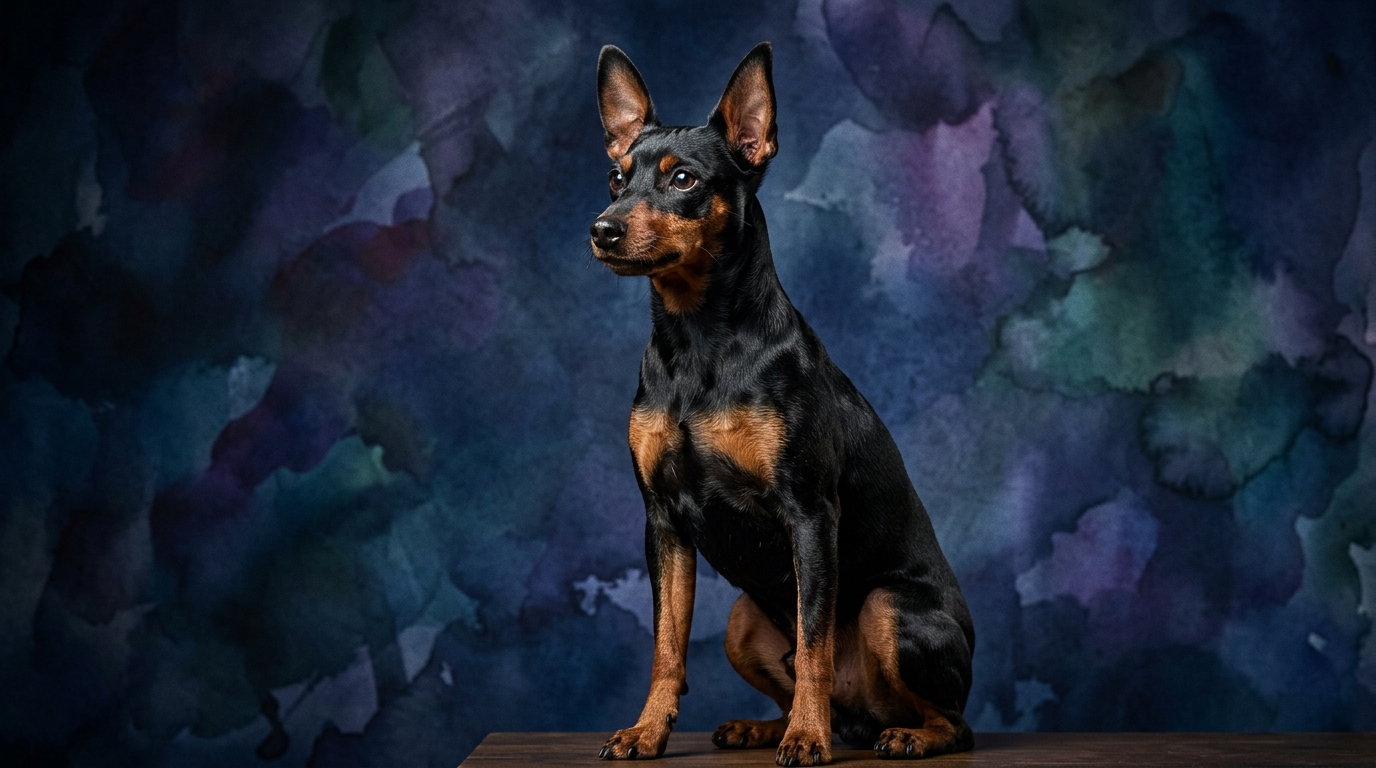
Side-by-Side IQ Profile: Bloodhound vs. Miniature Pinscher
The Cosmic Pet Pet IQ Lab provides a detailed breakdown of five key cognitive dimensions, allowing for a nuanced understanding of each breed's mental landscape.
Bloodhound (Hound, Coren rank #74): Problem Solving (5/5): This breed excels at intricate sequential problem-solving, particularly when tracking a scent trail over varied terrain and through distractions. Their persistence in following a fading scent, often requiring complex mental mapping and elimination strategies, showcases a profound capacity for sustained cognitive effort towards a singular goal. Training Speed (1/5): Bloodhounds are deliberate learners, not quick to adopt new commands or behaviors simply for compliance. Their powerful instinctive drive often overshadows the desire to comply, making repetition and highly motivating rewards essential for even basic obedience. Their independent nature means they process information and decide on actions at their own pace. Social Intelligence (2/5): While generally amiable, Bloodhounds are not primarily focused on intricate social cues from humans beyond what directly relates to their task or comfort. Their attention is often directed outwards, towards environmental scents, rather than inwards, towards subtle changes in human emotion or expectation. They are cooperative partners in a hunt but less attuned to nuanced social dynamics. Instinctive Drive (5/5): This is the Bloodhound's paramount cognitive strength. Their olfactory system and the drive to use it are unparalleled, guiding their entire mental framework. This drive involves intense focus, pattern recognition within scent molecules, and an unwavering determination to follow a trail to its conclusion, overriding almost all other stimuli. Memory (5/5): Bloodhounds possess exceptional memory, particularly for scent patterns and spatial information related to tracking. They can recall complex scent trails, remember areas where specific scents were detected, and retain detailed mental maps of large territories, enabling them to navigate and re-engage with previous tracking challenges effectively.
Miniature Pinscher (Toy, Not Coren-ranked): Problem Solving (3/5): Miniature Pinschers demonstrate moderate problem-solving skills, often employing cleverness to achieve immediate goals, such as finding a way to access forbidden treats or navigating obstacles to reach a desired toy. Their solutions tend to be more immediate and less sustained than those requiring deep focus on abstract concepts, reflecting their opportunistic nature. Training Speed (3/5): Min Pins are moderately receptive to training, capable of learning new commands at an average pace. They respond well to consistent, positive reinforcement, but their independent streak and occasional stubbornness can slow progress. They are neither exceptionally quick nor remarkably slow, falling squarely in the middle for trainability. Social Intelligence (3/5): Miniature Pinschers exhibit a reasonable degree of social intelligence, capable of reading human moods and responding to social cues. They can form strong bonds and understand household dynamics, often using their understanding of human behavior to their advantage, such as soliciting attention or navigating social hierarchies within the home. Instinctive Drive (3/5): While not possessing the specialized drive of a working breed, Min Pins retain a moderate prey drive and territorial instinct. They may chase small animals, alert to perceived intruders, and exhibit a determined self-preservation instinct, all contributing to a balanced, but not overwhelming, innate behavioral repertoire. Memory (3/5): Miniature Pinschers have a solid average memory, capable of remembering routines, commands, and familiar people and places. They can recall past experiences and learn from them, though their memory may not extend to the highly specialized, detailed recall seen in breeds with specific working roles.
Where the Bloodhound Excels Cognitively
The Bloodhound's cognitive superiority undeniably lies in its unparalleled olfactory processing and sustained tracking ability. Their Problem Solving at 5/5 specifically refers to the intricate mental algorithms involved in disentangling a complex scent trail from environmental noise, a task demanding immense focus and sequential logic unique to their breed. Coupled with a 5/5 Memory, they retain and reference vast libraries of scent profiles and geographical data, allowing them to re-engage with a trail or discern subtle differences in scent decay over time. This specialized intelligence is an evolutionary masterpiece of sensory interpretation and persistent deduction.
Where the Miniature Pinscher Holds the Cognitive Edge
The Miniature Pinscher exhibits a more generalized, adaptable cognitive profile compared to the Bloodhound's specialized prowess. Their consistent 3/5 ratings across Problem Solving, Training Speed, Social Intelligence, Instinctive Drive, and Memory signify a balanced cognitive versatility. While the Bloodhound is driven by a singular, overwhelming instinct, the Min Pin navigates its world with a more distributed set of cognitive tools, allowing it to adapt more readily to varied domestic situations and social interactions without being singularly fixated. This breed's cognitive strength is its robust, all-around functionality, making it capable across a wider array of daily challenges rather than excelling in one specific, intense domain.
Ease of Training: Behavioral Differences Unpacked
When evaluating ease of training, the Miniature Pinscher (Training Speed 3/5) generally presents a more straightforward experience than the Bloodhound (Training Speed 1/5). Min Pins, with their moderate social intelligence, are more inclined to engage and grasp new commands with reasonable consistency, often motivated by praise or treats. Their moderate instinctive drive means less distraction during sessions. In contrast, the Bloodhound's profound instinctive drive (5/5) and lower social intelligence (2/5) mean their attention is perpetually drawn to scents, making redirection challenging. Their deliberate processing speed necessitates immense patience, high-value rewards, and a deep understanding of their scent-driven nature to achieve even basic obedience, often requiring extensive, consistent effort.
Matching Canine Cognition to Owner Lifestyle
For active owners seeking a canine partner for intense, focused activities, the Bloodhound, despite its seemingly relaxed demeanor, demands specific engagement aligning with its 5/5 Instinctive Drive. These dogs thrive when utilizing their unparalleled scenting abilities through tracking sports, scent work, or extensive walks where trails can be followed. An owner unable to commit to fulfilling this profound cognitive and physical need will likely find themselves with a frustrated Bloodhound. Conversely, the Miniature Pinscher, with its balanced 3/5 Instinctive Drive and moderate energy, adapts comfortably to both active and more relaxed households. They enjoy regular walks and playtime but are equally content to cuddle. Their adaptability makes them suitable for owners who appreciate a dog capable of keeping up with varied routines without requiring highly specialized activities.
The Verdict
Choose a Bloodhound if you are a dedicated individual prepared to channel a profound, specialized intelligence centered on scent work, understanding that their deliberate nature and intense focus require immense patience and specific enrichment activities.
Opt for a Miniature Pinscher if you desire a versatile, moderately trainable companion who offers a balanced cognitive profile, adapting well to a variety of domestic settings and social interactions without demanding highly specialized engagement.
🧠 Find Your Pet's IQ Score
Our Pet IQ Lab assessment covers 25+ tests across 5 cognitive dimensions — personalized to your breed.
Take the Full IQ Test →Frequently Asked Questions
Is a Bloodhound difficult to live with due to its low training speed?
While Bloodhounds have a 1/5 training speed, their "difficulty" stems from their intense instinctive drive and independent nature. Owners must embrace their scent-driven world and use highly motivating, consistent methods, understanding that conventional obedience requires significant time and effort.
Do Miniature Pinschers make good apartment dogs given their size?
Miniature Pinschers can thrive in apartments due to their compact size and moderate exercise needs. However, their 3/5 instinctive drive means they still require regular mental and physical stimulation, including walks and playtime, to prevent boredom and potential behavioral issues.
How does the Coren rank apply to these breeds?
The Coren rank primarily assesses "working and obedience intelligence," focusing on a dog's speed in learning and obeying commands. The Bloodhound's rank of #74 reflects its lower training speed (1/5). The Miniature Pinscher, not Coren-ranked, would likely fall in the mid-range, given its 3/5 training speed, suggesting average obedience trainability.