Side-by-Side Cognitive Profile: Bloodhound vs. Scottish Deerhound
The Cosmic Pet Pet IQ Lab provides a unique lens through which to examine the cognitive strengths of these two impressive hound breeds. Understanding their individual scores across five dimensions reveals profound differences in how they perceive and interact with their world.
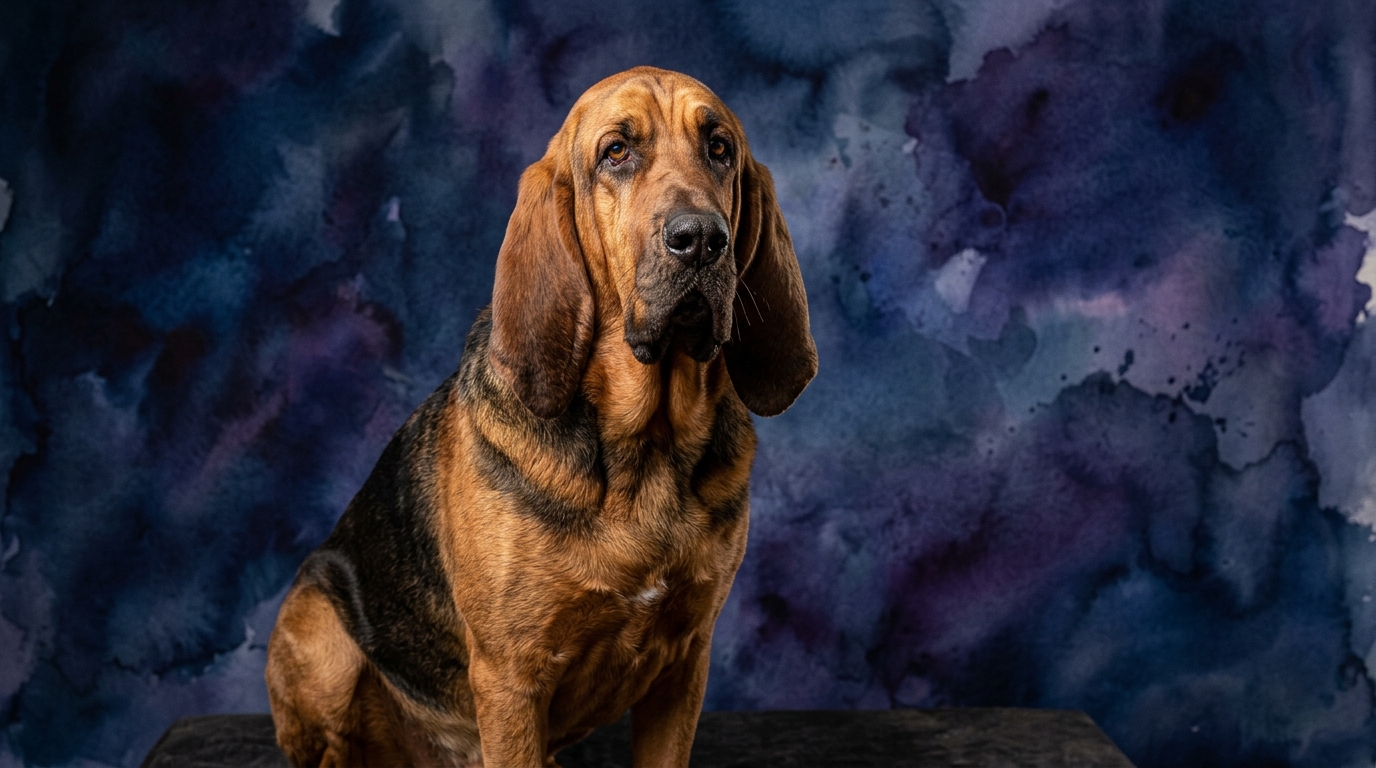
**Bloodhound (Coren rank #74)**
**Problem Solving (5/5):** This reflects their exceptional ability to methodically unravel complex scent trails, navigating obstacles and diversions with unwavering focus to locate a target. Their intelligence here is a highly refined, persistent application of their primary sense. **Training Speed (1/5):** Bloodhounds learn obedience commands very slowly. Their profound focus on scent work frequently overshadows any desire for human-directed compliance, demanding immense patience and consistent, repetitive instruction. **Social Intelligence (2/5):** While generally amiable, a Bloodhound's deep concentration on a scent path often makes them appear aloof or less engaged with typical social cues, even with familiar humans or other dogs. **Instinctive Drive (5/5):** This is the Bloodhound's defining trait: an unparalleled, all-consuming drive to follow scent. This primal urge dictates much of their cognitive function and behavior, making them exceptional trackers. **Memory (5/5):** Their memory, especially for scent, is extraordinary. They can recall and differentiate countless scent profiles over extended periods, enabling them to follow old trails or recognize specific odors with remarkable accuracy.
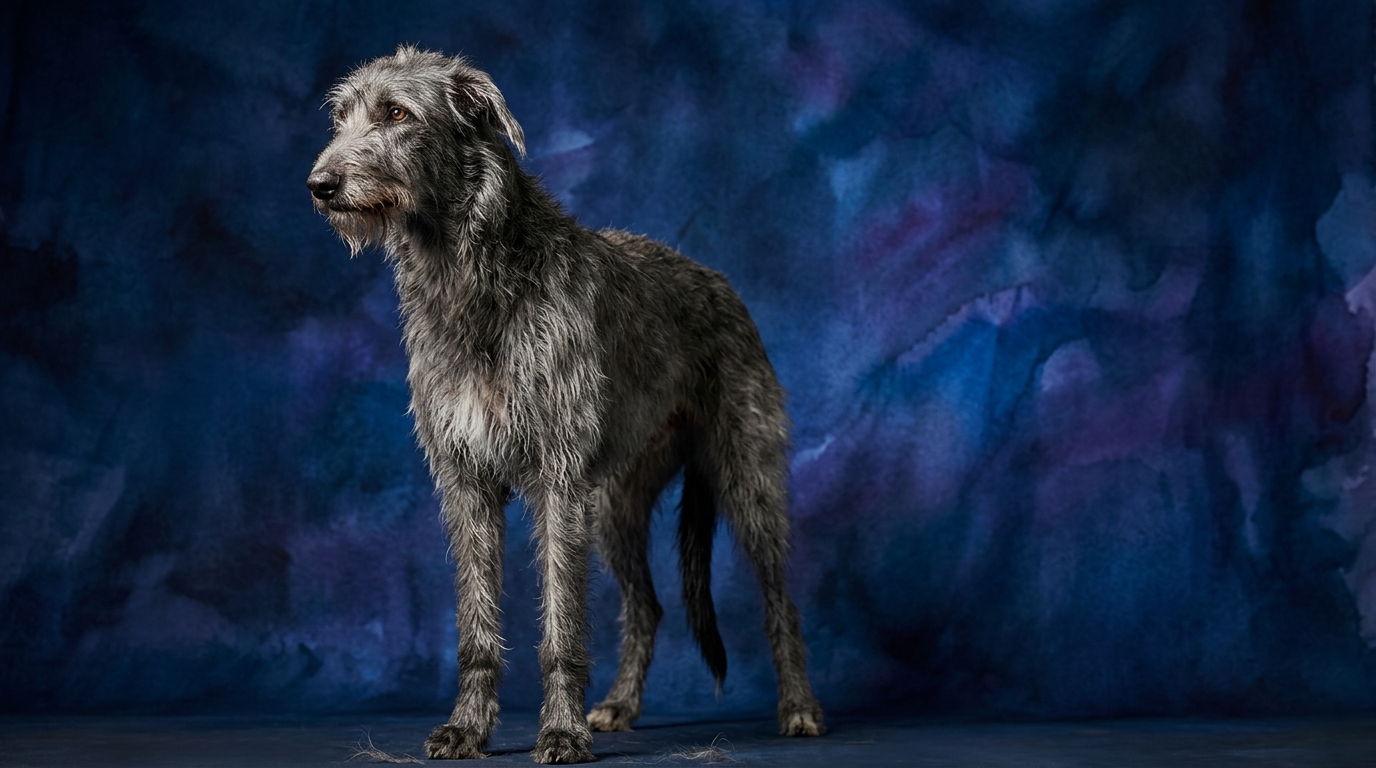
**Scottish Deerhound (Not Coren-ranked)**
**Problem Solving (3/5):** Scottish Deerhounds show moderate problem-solving, often applied in sighthound contexts like navigating terrain during a chase or identifying the most direct route to a visual target. Their solutions are typically practical rather than intricate. **Training Speed (3/5):** These sighthounds are moderately trainable, capable of learning commands with consistent positive reinforcement. They possess a degree of willingness to engage, though their independent nature means immediate, precise execution isn't always guaranteed. **Social Intelligence (3/5):** Scottish Deerhounds are generally gentle and polite, displaying moderate social awareness. They interact comfortably with familiar people and animals, maintaining a calm demeanor without being overly demonstrative or intensely socially driven. **Instinctive Drive (3/5):** Their instinctive drive centers on sight hunting, a strong urge to pursue moving objects. This drive, while powerful, is less all-consuming than a Bloodhound's scent drive, allowing for more balanced interaction with their environment and owners. **Memory (3/5):** Scottish Deerhounds have a functional memory for routines, commands, and familiar individuals. Their memory adequately supports daily learning and interactions, but does not exhibit the specialized, intense sensory recall seen in a Bloodhound.
Where the Bloodhound's Cognition Excels
The Bloodhound's cognitive strengths are undeniably rooted in its specialized sensory world. Its Problem Solving score of 5/5 highlights an unmatched ability to deconstruct and follow complex scent puzzles, a form of intelligence that manifests as relentless, focused deduction rather than abstract reasoning. This is coupled with a perfect 5/5 in Instinctive Drive, an all-consuming commitment to tracking that drives their cognitive resources entirely towards deciphering odor molecules. Furthermore, their 5/5 Memory is a testament to their capacity to store and recall an immense library of scent profiles, allowing them to differentiate subtle nuances and persist on trails days old, a feat few other breeds can replicate. This specialized memory is not just about recall, but about a deep, analytical processing of olfactory data that underpins their entire existence.
Where the Scottish Deerhound's Cognition Shines
The Scottish Deerhound's cognitive advantages lie in its more balanced and adaptable approach to interaction and learning. With a Training Speed of 3/5, they are generally more receptive to human instruction and quicker to grasp new commands than a Bloodhound, indicating a greater willingness to work cooperatively. Their Social Intelligence, also rated 3/5, suggests a more moderate engagement with their social environment, making them more attuned to human cues and less likely to be completely consumed by a singular sensory input. This allows for a smoother integration into family life and a more straightforward pathway for general obedience training, as their cognitive focus isn't perpetually hijacked by an overwhelming primary drive.
Training Dynamics: Which is Easier and Why
Based on The Cosmic Pet Pet IQ Lab metrics, the Scottish Deerhound is unequivocally easier to train for general obedience and household manners. Their Training Speed of 3/5 significantly surpasses the Bloodhound's 1/5, indicating a greater inherent receptiveness to learning human-directed tasks. This difference stems from the Bloodhound's overwhelming Instinctive Drive (5/5), which prioritizes following a scent trail above all else. A Bloodhound's brain is wired to process olfactory information, making it extremely difficult to redirect its focus towards abstract commands when a compelling scent is present, often leading to a perceived stubbornness.
In contrast, the Scottish Deerhound's more moderate Instinctive Drive (3/5) allows for periods where their focus isn't entirely consumed by a chase, making them more available and willing to engage with training exercises. Their Social Intelligence (3/5) also contributes, as they are generally more attuned to human interactions and social cues, which aids in building a cooperative training relationship. While still possessing a hound's independent streak, the Deerhound's cognitive profile makes them more amenable to conventional training methods and achieving reliable recall.
Owner Suitability: Active Pursuits vs. Relaxed Companionship
The choice between these two breeds largely depends on the owner's lifestyle and what 'active' truly means to them. Bloodhounds, with their paramount Instinctive Drive (5/5) and Problem Solving (5/5) in tracking, demand owners who are prepared for highly focused, extensive scent work or long, meandering walks where they can follow their nose. Their energy isn't necessarily about speed but about endurance and mental engagement in a specific task, making them suitable for owners dedicated to 'working' their dog's nose, even if it's just for recreation. A relaxed owner might find a Bloodhound's persistence and single-mindedness challenging, as their cognitive demands for scent exploration are constant.
Scottish Deerhounds, while sighthounds, possess a more moderate Instinctive Drive (3/5) and are known for their '80 mph couch potato' tendency. They require bursts of intense exercise – a good run or chase in a secure area – but are equally content to lounge for extended periods. This makes them suitable for owners who enjoy brisk, focused activity but also value calm indoor companionship, fitting a broader range of 'relaxed active' lifestyles than the intensely driven Bloodhound. Their cognitive needs are met by occasional physical exertion coupled with social interaction, rather than a continuous sensory quest.
The Verdict
Opt for a Bloodhound if you are an experienced, patient owner dedicated to harnessing an unparalleled scenting ability, prepared for extensive, focused tracking activities, and understand their independent, single-minded nature.
Select a Scottish Deerhound if you appreciate a graceful, generally calm companion who enjoys bursts of spirited exercise, is moderately receptive to training, and integrates smoothly into a family environment with a balanced social demeanor.
🧠 Find Your Pet's IQ Score
Our Pet IQ Lab assessment covers 25+ tests across 5 cognitive dimensions — personalized to your breed.
Take the Full IQ Test →Frequently Asked Questions
Are Bloodhounds difficult to live with due to their strong scent drive?
Bloodhounds can be challenging if their powerful 5/5 Instinctive Drive isn't appropriately channeled. Their relentless pursuit of scent means they require secure environments, consistent leash training, and owners willing to engage them in scent work to prevent them from becoming frustrated or following their nose into trouble.
Do Scottish Deerhounds require a lot of exercise despite their calm indoor demeanor?
Yes, despite their 'couch potato' reputation indoors, Scottish Deerhounds do need regular, vigorous exercise to satisfy their 3/5 Instinctive Drive for chasing. Short bursts of intense running or playtime in a safe, fenced area are crucial for their physical and mental well-being, complementing their relaxed home life.
How does a Bloodhound's memory differ from a Scottish Deerhound's?
A Bloodhound's 5/5 Memory is specialized for scent, allowing them to recall complex odor profiles over long periods with incredible accuracy. A Scottish Deerhound's 3/5 Memory is more general, serving everyday learning and routines, but lacks the Bloodhound's unique, highly detailed olfactory recall.