Side-by-Side IQ Profile: Specialization vs. Balance
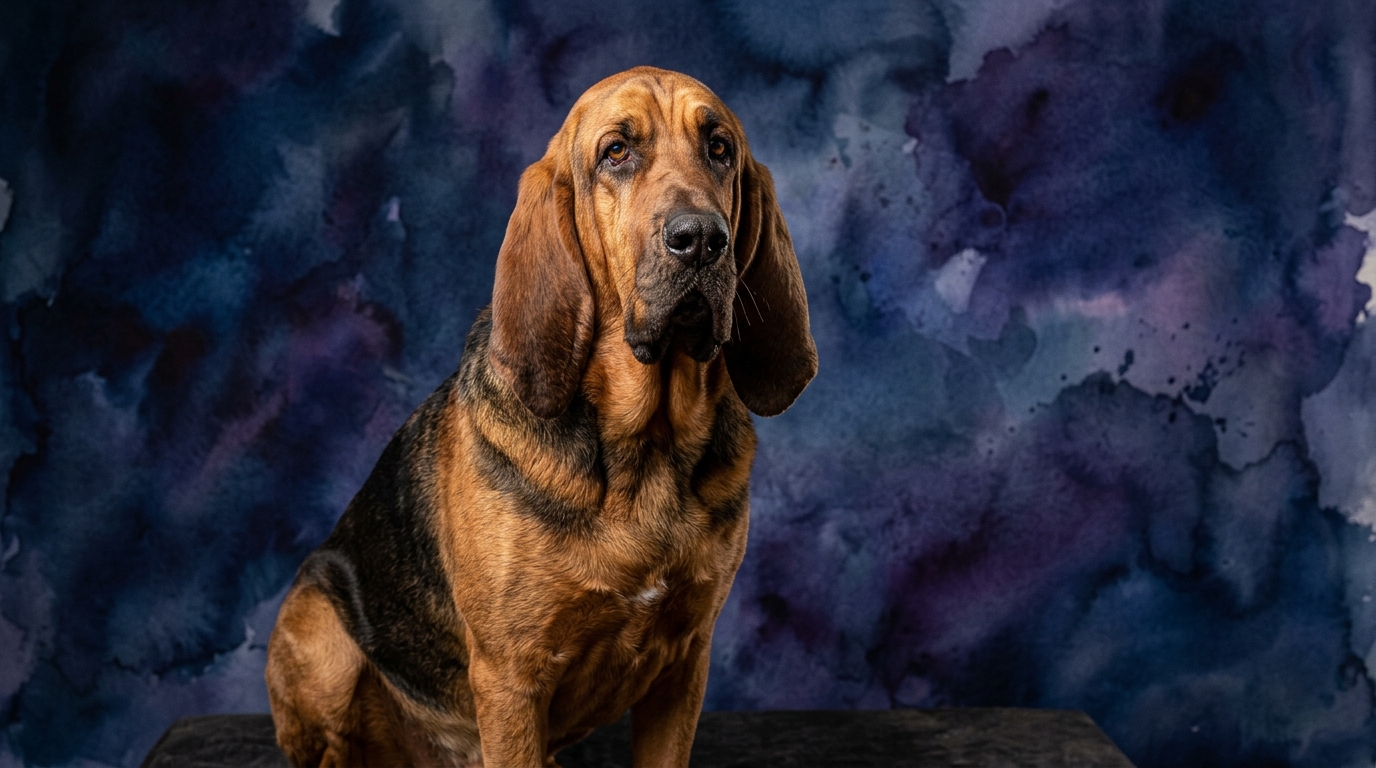
The Cosmic Pet Pet IQ Lab provides a unique lens through which to examine canine cognition, breaking down intelligence into five key dimensions. For the Bloodhound, these dimensions paint a picture of extreme specialization. Its Problem Solving is rated 5/5, reflecting its unparalleled ability to navigate complex scent trails, logically piecing together environmental cues to locate a target. Training Speed, however, stands at 1/5, indicating a strong independent streak where its primary drive often overshadows human directives. Social Intelligence is 2/5, suggesting a dog less attuned to nuanced human social signals and more focused on its task. Instinctive Drive is a perfect 5/5, undeniably dominated by its scenting prowess, while Memory is also 5/5, allowing it to retain intricate scent patterns and past trail information over extended periods.
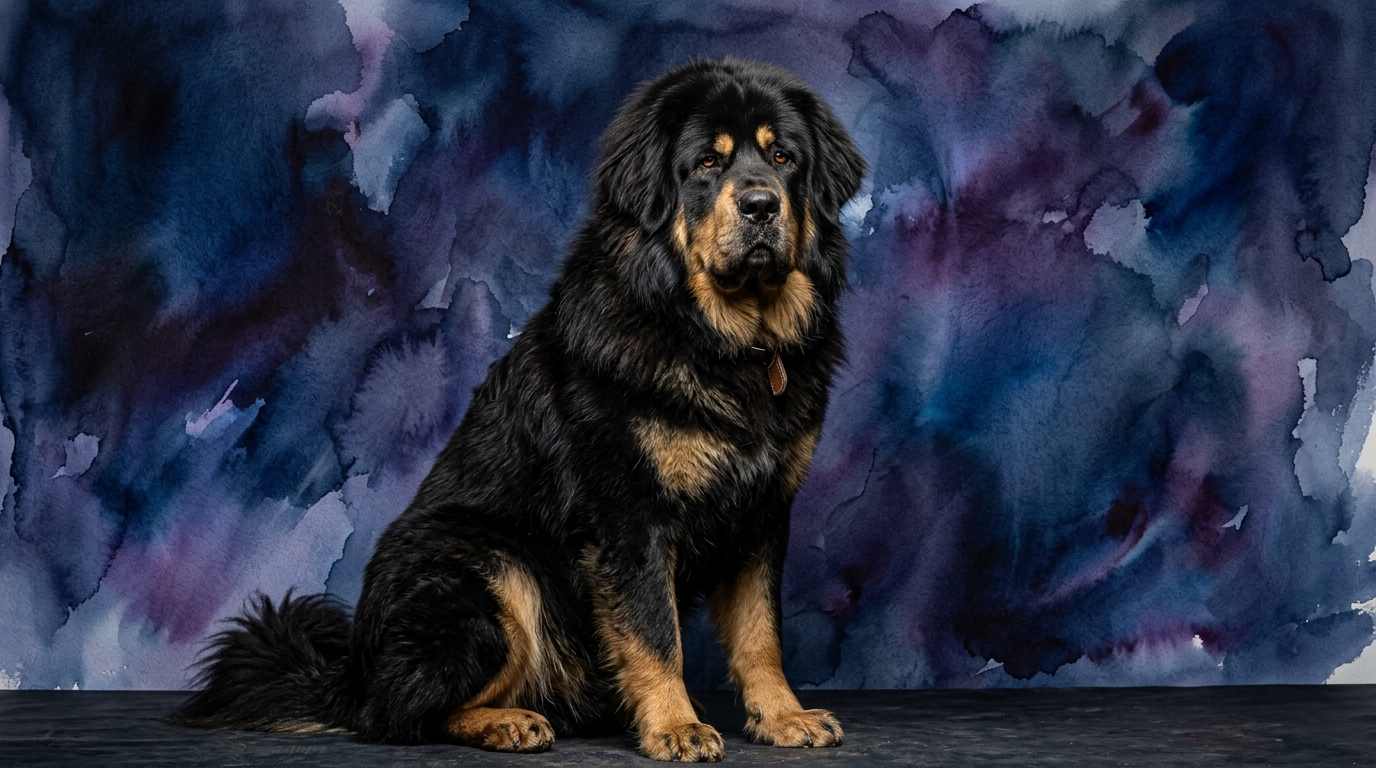
In contrast, the Tibetan Mastiff presents a more balanced cognitive profile, reflecting its historical role as a steadfast guardian rather than a specialized tracker. Its Problem Solving is 3/5, demonstrating a moderate capacity to assess and respond to environmental challenges, particularly those related to territory and perceived threats. Training Speed is also 3/5, indicating a dog that can learn commands with consistent effort, though perhaps not with a lightning-fast grasp. Social Intelligence rates 3/5, showing a reasonable understanding of its human family's dynamics while maintaining a degree of aloofness with strangers. Instinctive Drive is 3/5, primarily centered on protection and territorial defense, rather than a single overwhelming pursuit. Memory is likewise 3/5, enabling it to recall familiar faces, boundaries, and routines effectively.
Where the Bloodhound Excels Cognitively
The Bloodhound's cognitive superiority lies unequivocally in its olfactory processing and the problem-solving abilities directly linked to scent. Its 5/5 Problem Solving isn't about mastering complex obedience commands, but about the intricate mental mapping required to follow a faint scent trail across varied terrains and through distractions, a feat of sustained focus and deductive reasoning unparalleled in the canine world. This breed can differentiate individual human scents even after days, demonstrating an extraordinary capacity for scent discrimination and retention. Its 5/5 Instinctive Drive fuels this relentless pursuit, making it a canine detective whose cognitive architecture is optimized for one specific, incredibly demanding task: tracking. Paired with its 5/5 Memory, a Bloodhound can recall the nuances of a particular scent and the strategies it used to follow previous trails, continuously refining its approach to complex tracking scenarios.
Where the Tibetan Mastiff Excels Cognitively
The Tibetan Mastiff's cognitive strengths are rooted in its role as a formidable guardian, emphasizing vigilance and independent judgment. While its scores are moderate, they represent a balanced suite of abilities well-suited for its purpose. Its 3/5 Problem Solving allows it to assess potential threats and react appropriately within its guarded territory, often making decisions without direct human command. This isn't about following a scent, but about evaluating environmental cues for security. Its 3/5 Social Intelligence is a significant advantage over the Bloodhound's more task-oriented focus; the Tibetan Mastiff is more attuned to the social hierarchy of its family and the subtle shifts in its environment that might signal an intrusion. This allows for a more nuanced interaction with its human companions and a more effective, self-directed defense of its domain, relying on observation and discernment rather than single-minded pursuit.
Which is Easier to Train and Why
When considering ease of training for general obedience and companionship, the Tibetan Mastiff, with its 3/5 Training Speed and 3/5 Social Intelligence, generally presents a more straightforward path than the Bloodhound. The Tibetan Mastiff, while independent, is more receptive to human direction once a bond of respect is established. Its cognitive balance means its drives are not so overwhelming that they constantly override the desire to cooperate. Training requires consistency and patience, but the Mastiff's inherent desire to protect its family can be channeled into reliable obedience and boundary adherence. Conversely, the Bloodhound's 1/5 Training Speed is a direct consequence of its overwhelming 5/5 Instinctive Drive. Once a Bloodhound catches a scent, its cognitive focus narrows entirely to that trail, making it incredibly difficult to redirect with commands. Its low Social Intelligence means it's less inclined to seek human approval during a task, viewing its scent work as a self-sufficient endeavor. While capable of learning, its motivation to perform human-centric tasks is often dwarfed by its primal urge to track, requiring immense dedication and creative training methods to achieve consistent obedience outside of scent work.
Suitability for Active vs. Relaxed Owners
For owners with an active lifestyle deeply rooted in specific, focused activities, the Bloodhound can be an ideal match, provided that activity is scent-related. Its profound instinctive drive and problem-solving capabilities demand a dedicated outlet, making it perfect for those involved in search and rescue, tracking sports, or extensive, purposeful walks where its nose can be engaged. This breed thrives when given a 'job' that leverages its cognitive strengths, requiring an owner who is not just physically active but also mentally engaged in providing complex olfactory challenges. A relaxed owner expecting a docile companion without fulfilling its profound scenting needs would find the Bloodhound restless and potentially destructive, as its unused cognitive energy manifests in undesirable ways.
The Tibetan Mastiff, while not a couch potato, suits owners with a more 'relaxed' approach to physical activity, prioritizing consistent presence and territorial management over high-octane pursuits. Its cognitive profile supports a watchful, observant role. Owners need to be mentally active in managing its strong protective instincts and ensuring proper socialization, but the daily exercise requirements are generally moderate compared to a working Bloodhound. This breed is better suited for individuals who appreciate a large, loyal, and independent guardian presence, offering a different kind of 'activity' through vigilance and boundary enforcement, rather than constant physical exertion. Owners must be prepared for the cognitive demands of managing a powerful, self-assured dog whose intelligence is geared towards independent decision-making in its perceived domain.
The Verdict
Choose a Bloodhound if you are an owner deeply committed to harnessing unparalleled scent-tracking abilities and can provide consistent, challenging outlets for its profound olfactory drive and independent problem-solving.
Opt for a Tibetan Mastiff if you seek a vigilant, independent guardian with balanced cognitive traits, appreciating a dog whose intelligence prioritizes territorial defense and a more moderate, watchful presence.
🧠 Find Your Pet's IQ Score
Our Pet IQ Lab assessment covers 25+ tests across 5 cognitive dimensions — personalized to your breed.
Take the Full IQ Test →Frequently Asked Questions
Is a Bloodhound difficult to live with due to its low training speed?
A Bloodhound's low training speed (1/5) means general obedience requires immense patience and consistency, as its powerful scent drive (5/5) often overrides other motivations; owners must understand its independent nature and provide ample scent work.
How does the Tibetan Mastiff's social intelligence impact its family interactions?
The Tibetan Mastiff's 3/5 social intelligence allows it to form strong bonds with its immediate family while remaining reserved or aloof with strangers, a trait stemming from its guardian instincts that prioritize its inner circle.
Which breed is better for an owner looking for a dog to perform complex tasks beyond tracking or guarding?
Neither breed is ideally suited for a wide range of complex, general obedience tasks. The Bloodhound excels only in scent-related problem-solving, while the Tibetan Mastiff's intelligence is geared towards independent guarding, making both less adaptable to diverse, non-instinctual commands compared to breeds with higher training speeds and cognitive flexibility.