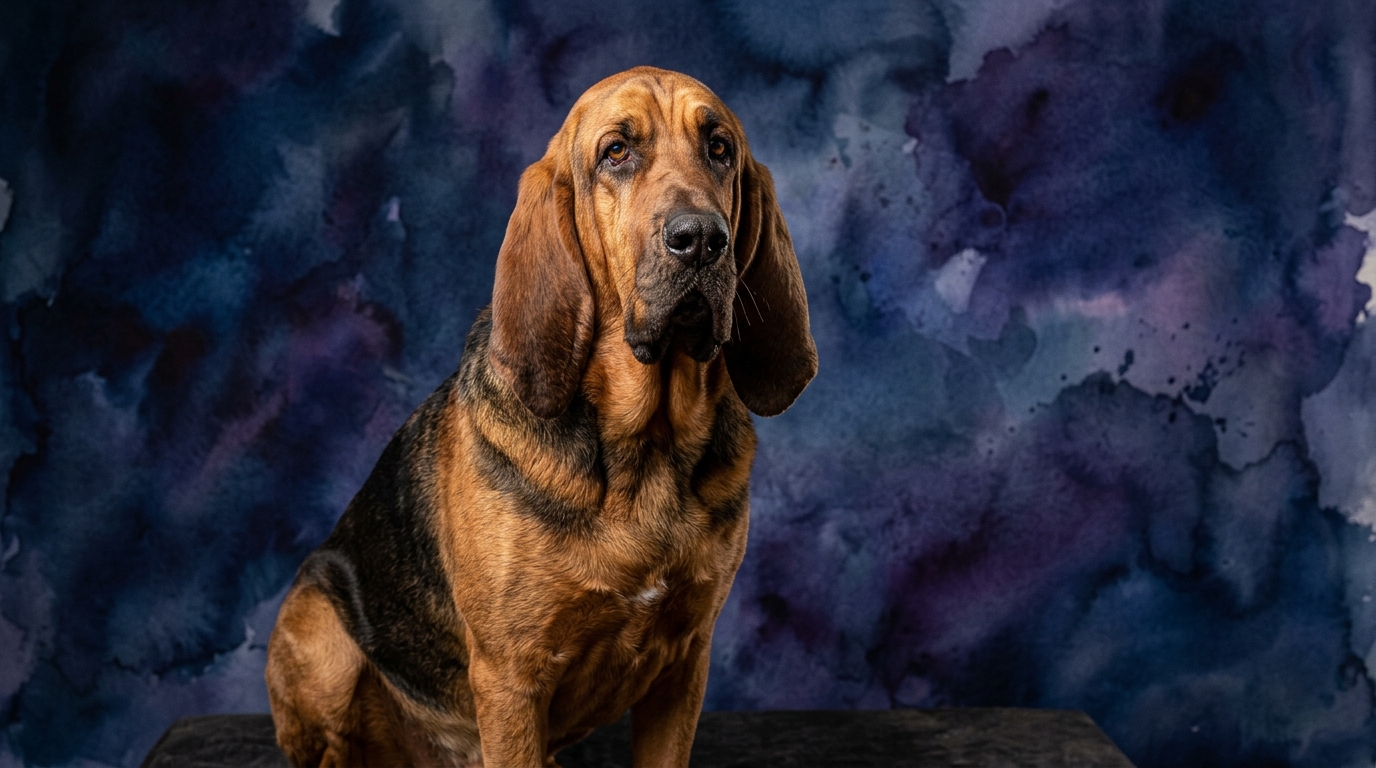
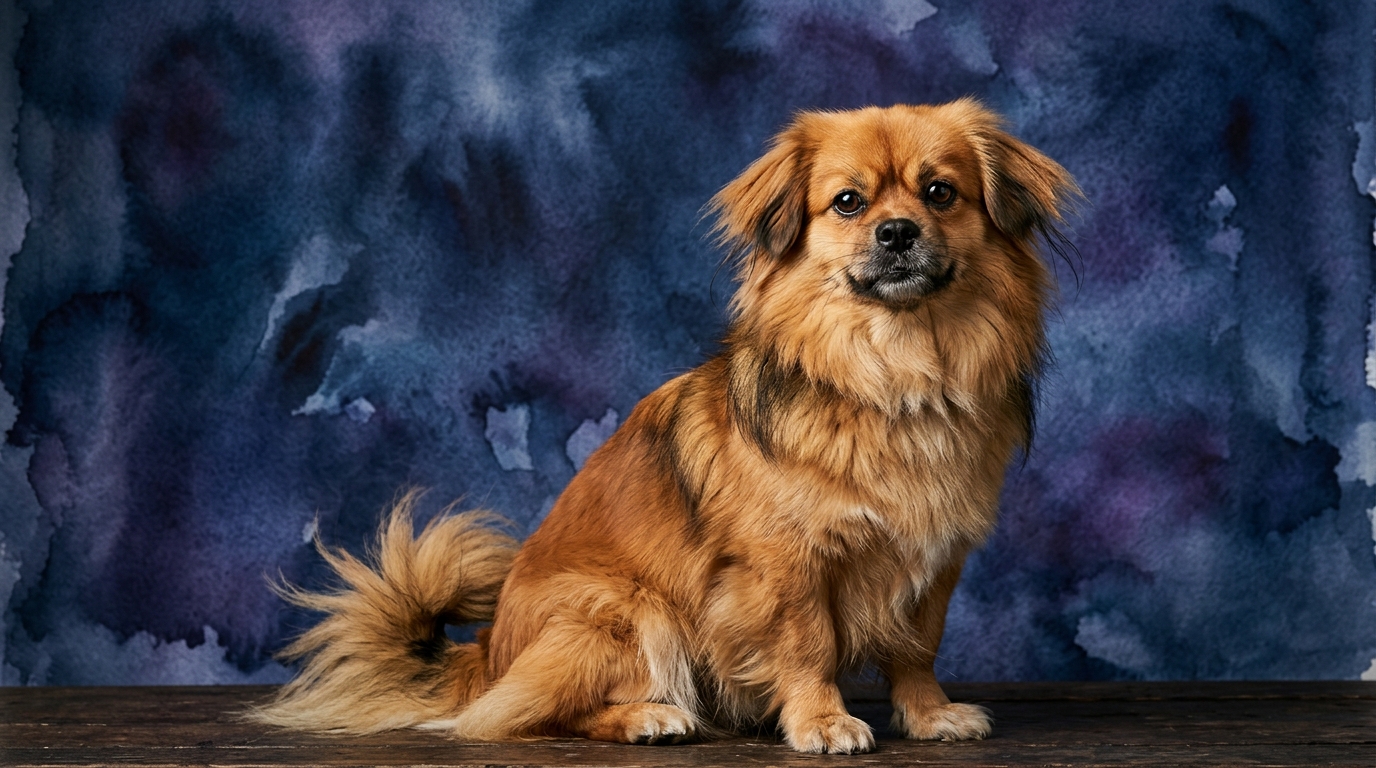
Side-by-Side Cognitive Profiles: Bloodhound vs. Tibetan Spaniel
The Cosmic Pet Pet IQ Lab offers a unique lens through which to examine canine cognition, categorizing intelligence across five critical dimensions. For the Bloodhound, a breed celebrated for its olfactory prowess, its profile reveals a highly specialized mind. Its Problem Solving is rated a perfect 5/5, reflecting an unmatched ability to unravel complex scent puzzles and navigate intricate environments purely by smell. However, this intense focus comes with a Training Speed score of 1/5, indicating a strong independent streak and a tendency to prioritize its own scent-driven agenda over human directives. Social Intelligence stands at 2/5, suggesting that while capable of forming bonds, its primary cognitive engagement is with its task, not necessarily nuanced human interaction. Instinctive Drive is an undeniable 5/5, fueled by an insatiable desire to track, and its Memory is a remarkable 5/5, allowing it to retain vast libraries of scent information and complex trail sequences.
In stark contrast, the Tibetan Spaniel presents a more balanced and generalized cognitive blueprint, ideally suited for its role as an alert and charming companion. Its Problem Solving is rated 3/5, demonstrating practical intelligence for navigating household dynamics and observing its environment, rather than specialized tracking. Training Speed also sits at a moderate 3/5, indicating a capacity for learning commands and routines, often motivated by positive reinforcement and a desire to interact. Social Intelligence is a balanced 3/5, reflecting its adaptability to family life, awareness of human moods, and ability to form strong, reciprocal bonds. Instinctive Drive is 3/5, manifesting as alertness, watchdog tendencies, and a desire for companionship rather than a singular task. Finally, its Memory is 3/5, sufficient for remembering routines, familiar faces, and learned behaviors, without the Bloodhound's granular recall for specific sensory data.
Where the Bloodhound's Cognition Excels
The Bloodhound's cognitive strengths are deeply rooted in its olfactory world, a domain where few breeds can compare. Its 5/5 Problem Solving isn't about abstract logic, but about an unparalleled capacity to process and interpret a vast array of scent information, often under challenging conditions. This breed can follow a scent trail that is hours or even days old, differentiating between countless odors to isolate a specific target. This involves complex mental mapping, pattern recognition within a scent mosaic, and an incredible persistence in the face of environmental distractions. Their 5/5 Memory is intrinsically linked to this, allowing them to catalog and recall specific scent profiles, differentiate between individuals by smell, and remember complex routes previously taken, demonstrating a highly specialized form of intelligence that is both profound and incredibly effective in its niche. Their instinctive drive to track becomes an engine for this cognitive powerhouse, sustaining mental effort over prolonged periods.
Where the Tibetan Spaniel's Cognition Shines
The Tibetan Spaniel's cognitive advantages lie in its adaptability, observational skills, and social attunement, perfectly suited for a life of companionship. Its 3/5 Problem Solving manifests as practical intelligence, allowing it to quickly understand household routines, figure out how to access a favorite sunbeam spot, or even subtly communicate its needs to its human companions. This isn't about solving complex external puzzles, but about navigating the intricacies of a human-centric environment with grace and foresight. The breed's balanced 3/5 Social Intelligence is a key asset, enabling it to read subtle human cues, adapt its behavior to different family members, and generally be a harmonious presence in the home. They are alert without being overly reactive, understanding the difference between a welcomed guest and an unexpected visitor. Their cognitive profile supports a life of engaged observation and responsive interaction, making them highly attuned to their domestic world.
Trainability: A Tale of Two Motivations
When it comes to trainability, the Bloodhound and Tibetan Spaniel present a stark contrast, largely due to their differing instinctive drives and approaches to human direction. The Bloodhound's 1/5 Training Speed is a direct consequence of its overwhelming 5/5 Instinctive Drive. Once a Bloodhound catches a scent, its focus becomes singular and intense; the world, including its human handler, often fades into the background. This isn't a lack of learning capacity, as their 5/5 Memory indicates they can indeed learn commands and associations, but rather a profound independence and a prioritization of their olfactory mission. Training a Bloodhound requires immense patience, creativity, and high-value rewards to compete with the allure of a scent. They learn best when training is integrated into their natural tracking behaviors, making compliance in other areas a persistent challenge. Their problem-solving is for the trail, not for arbitrary human requests.
Conversely, the Tibetan Spaniel's 3/5 Training Speed reflects a more cooperative and biddable nature. While they possess an independent streak characteristic of many companion breeds, their 3/5 Social Intelligence means they are generally more attuned to human feedback and desire interaction. They respond well to positive reinforcement, often eager to please their owners for praise or treats. Training them involves clear communication, consistency, and making the process enjoyable. They are capable of learning a wide range of commands and tricks, and their moderate instinctive drive means they are less likely to be completely derailed by external stimuli compared to a Bloodhound on a mission. Their cognitive balance makes them more adaptable to traditional obedience training methods and generally easier for the average owner to manage.
Matching Breeds to Lifestyles: Active vs. Relaxed Owners
The distinct cognitive profiles of these two breeds naturally align with very different owner lifestyles. The Bloodhound, with its profound 5/5 Instinctive Drive and unparalleled Problem Solving in scent work, is best suited for active, dedicated owners who can provide ample outlets for its natural talents. This means not just physical exercise, but significant mental stimulation in the form of scent work, tracking games, or even formal search and rescue training. Owners must be prepared for long, focused walks where the dog's nose leads the way, and understand that a Bloodhound's world is primarily experienced through scent. They thrive with owners who appreciate their independent, persistent nature and are willing to invest considerable time and effort into managing their powerful instincts. They require a secure environment where their scent drive won't lead them astray.
The Tibetan Spaniel, with its balanced 3/5 scores across most cognitive dimensions, is an ideal fit for more relaxed owners seeking a charming and adaptable companion. While they benefit from regular walks and playtime, they are not high-stamina athletes requiring intense daily exertion. Their 3/5 Social Intelligence and moderate Instinctive Drive mean they are content to be involved in daily household activities, observing their surroundings from a comfortable perch, and offering companionship. They thrive on human interaction and being part of the family unit, adapting well to apartment living as long as their modest exercise and mental stimulation needs are met. Owners who appreciate a dog's alert presence, gentle affection, and observant nature will find a devoted friend in the Tibetan Spaniel, a breed whose cognitive balance makes them a joy to live with in a more relaxed domestic setting.
The Verdict
Choose the Bloodhound if you are a dedicated owner seeking an extraordinary working partner with an unparalleled scenting ability, prepared for its independent nature and significant training and exercise commitments.
Opt for the Tibetan Spaniel if you desire an alert, charming, and adaptable companion dog that seamlessly integrates into family life and offers a balanced, responsive cognitive profile for everyday interaction.
🧠 Find Your Pet's IQ Score
Our Pet IQ Lab assessment covers 25+ tests across 5 cognitive dimensions — personalized to your breed.
Take the Full IQ Test →Frequently Asked Questions
Do Bloodhounds make good family pets despite their lower social intelligence score?
Bloodhounds can be devoted and affectionate family pets, especially with early socialization and consistent positive reinforcement. Their 2/5 social intelligence score primarily reflects their task-oriented focus and deep immersion in scent work, rather than a lack of capacity for bonding or affection within their trusted family circle.
Is the Tibetan Spaniel's moderate problem-solving sufficient for complex tasks?
The Tibetan Spaniel's 3/5 problem-solving ability is perfectly suited for navigating practical, everyday challenges and understanding household dynamics, making them astute companions. While not bred for complex specialized tasks like tracking, they are capable of learning a variety of tricks and adapting cleverly to their environment.
How does Coren rank #74 for Bloodhounds relate to its IQ scores?
Stanley Coren's ranking primarily assesses 'working and obedience intelligence,' which heavily weights a dog's ability to learn and comply with human commands. The Bloodhound's low training speed (1/5) and strong independent drive likely contribute to its #74 Coren rank, despite its exceptional problem-solving and memory within its specialized scenting domain.