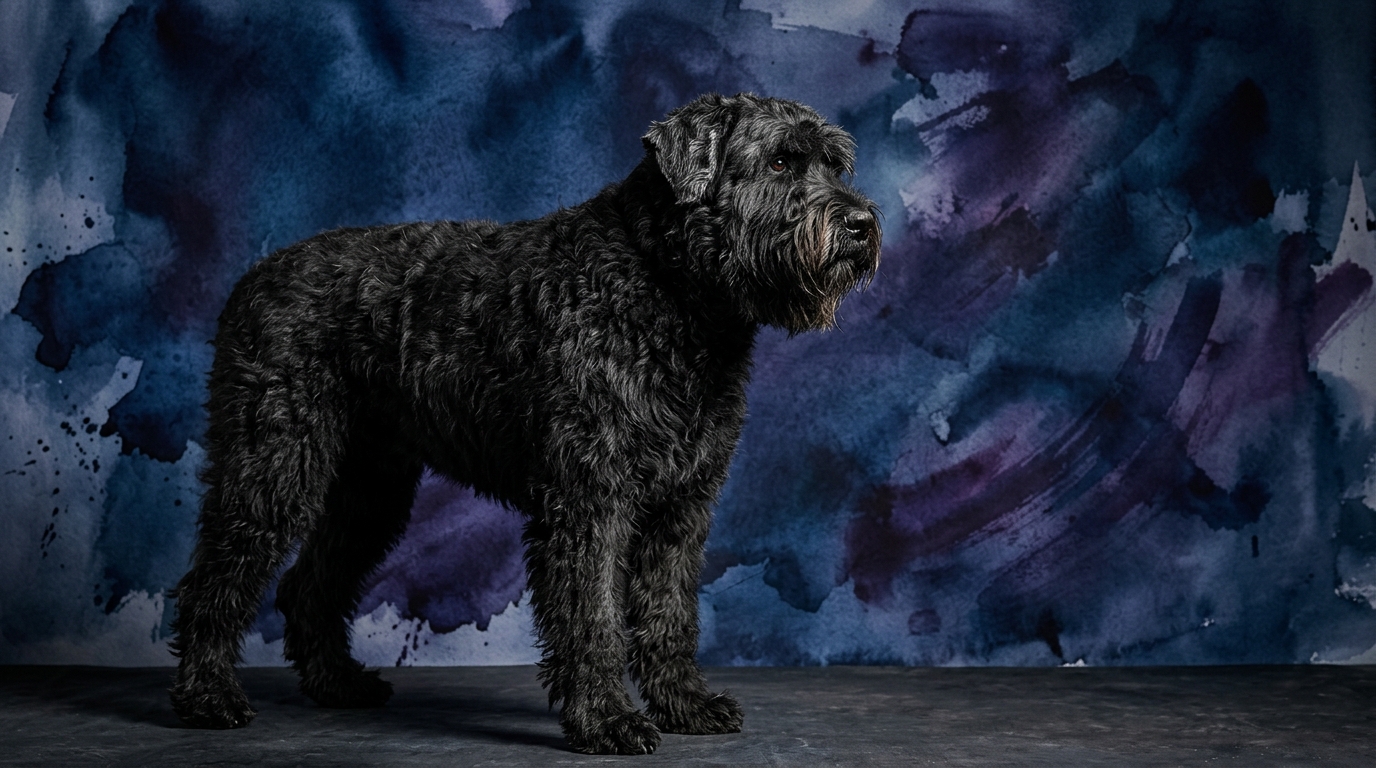
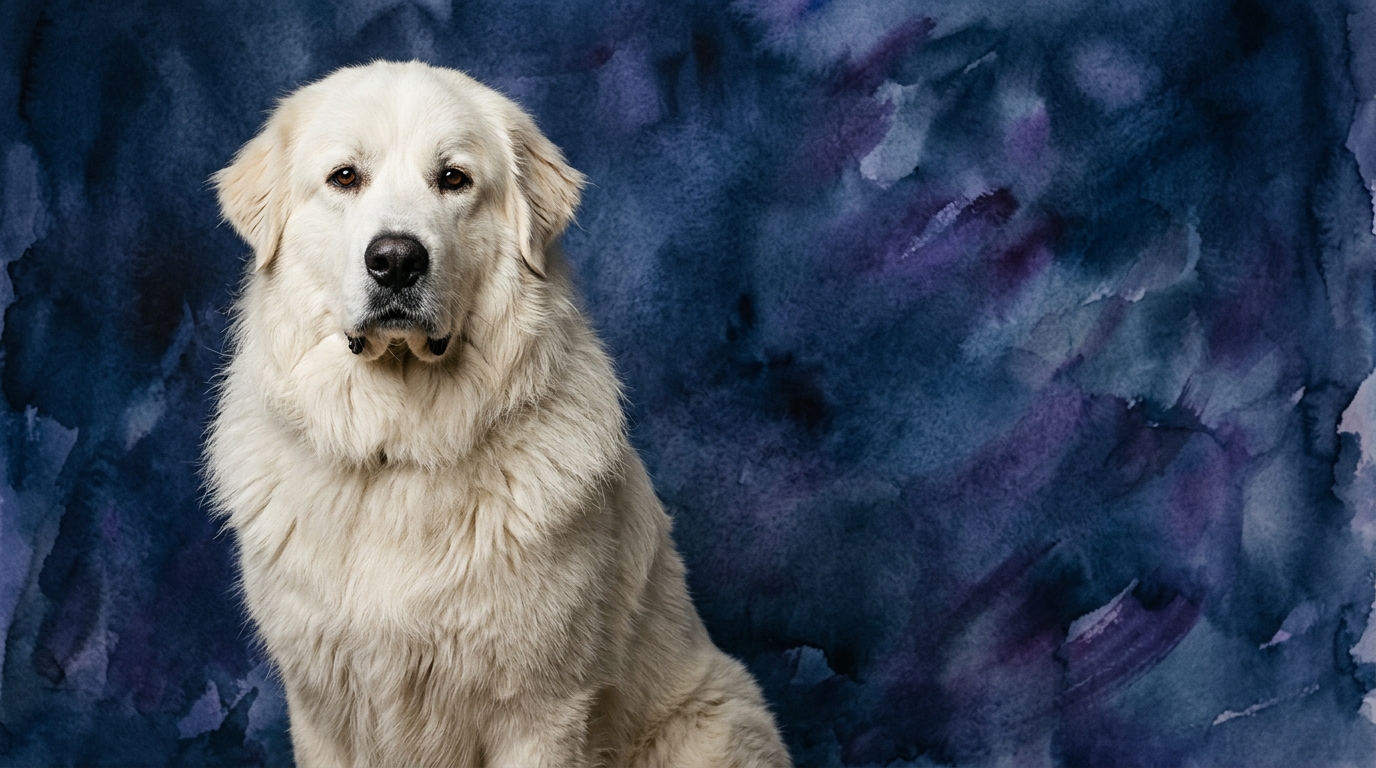
Side-by-Side IQ Profile: Herding Wit vs. Guarding Wisdom
At first glance, the IQ profiles for both the Bouvier des Flandres and the Great Pyrenees appear identical across all five dimensions, each scoring a solid 3 out of 5. However, this numerical equality belies significant qualitative differences in how these breeds apply their cognitive capacities, rooted deeply in their original purposes.
For the **Bouvier des Flandres**, their 3/5 in Problem Solving reflects an aptitude for navigating complex herding scenarios, understanding spatial relationships within a flock, and strategizing to move livestock efficiently. Their Training Speed at 3/5 indicates a capable learner, responsive to a handler's directives and eager to master tasks required for their work. Social Intelligence, also 3/5, manifests as an ability to read a handler's subtle cues and interpret the dynamics of a group, whether animal or human. An Instinctive Drive of 3/5 is evident in their inherent urge to gather, control, and protect their charges, maintaining order. Finally, their 3/5 Memory allows them to recall intricate routines, learned commands, and the layout of their working environment with dependable accuracy.
The **Great Pyrenees**, while sharing the same numerical scores, channels these attributes through the lens of a livestock guardian. Their 3/5 Problem Solving involves independent assessment of threats, determining appropriate deterrents without direct human intervention, and finding optimal vantage points for observation. A 3/5 Training Speed means they absorb information and commands, but their execution is often filtered through an independent decision-making process, prioritizing their perceived duty. Social Intelligence at 3/5 is expressed through their deep bond with their flock, discerning friend from foe, and communicating warnings with nuanced vocalizations or body language. Their Instinctive Drive, also 3/5, is a profound, self-directed commitment to territorial protection and the welfare of their charges, requiring minimal prompting. Their 3/5 Memory is crucial for recalling specific boundaries, identifying individual animals or people, and remembering the routines of their guarded domain, along with potential past threats.
Where the Bouvier des Flandres Wins Cognitively
The Bouvier des Flandres demonstrates a distinct cognitive edge in scenarios demanding close partnership and precise execution. Their herding background has honed a cognitive style that thrives on collaborative problem-solving, where the dog works as an extension of the handler's will. This breed excels at tasks requiring sequential steps, nuanced directional changes, and a readiness to adapt their approach based on human feedback.
Their cognitive strength lies in their 'active participation' intelligence. A Bouvier will more readily engage in learning new commands and intricate multi-step tasks, often displaying a tangible satisfaction in performing a job correctly for their person. This translates into a quicker uptake and more consistent application of learned behaviors in structured environments, making them particularly adept at competitive obedience, agility, or complex service roles where precision and handler alignment are paramount. Their memory is finely tuned to recall specific commands and sequences, allowing for a more predictable and repeatable performance.
Where the Great Pyrenees Wins Cognitively
The Great Pyrenees' cognitive strengths shine brightest in situations demanding independent judgment, self-reliance, and a deep understanding of their environment without constant human direction. Their role as a livestock guardian has fostered an intelligence centered on autonomous decision-making and subtle threat assessment, often over vast territories.
This breed's cognitive prowess lies in their 'situational awareness' and inherent prudence. A Great Pyrenees excels at observing, evaluating potential risks, and responding with appropriate, often non-confrontational, deterrents. Their problem-solving isn't about following a handler's instructions to move sheep through a gate, but about independently deciding how to protect those sheep from a perceived threat, whether it's a predator, a stray animal, or an unfamiliar human presence. Their social intelligence is geared towards integrating seamlessly with their charges and understanding subtle shifts in their environment, making them exceptional at reading livestock behavior and anticipating potential dangers. Their memory is less about recalling commands and more about remembering patterns, boundaries, and the specific characteristics of their guarded domain and its inhabitants.
Which is Easier to Train and Why
When considering ease of training, the Bouvier des Flandres generally presents a more straightforward path for owners seeking traditional obedience. Their herding heritage instilled a desire to work in concert with a human partner, making them more receptive to commands and structured learning sessions. The Bouvier's '3/5 Training Speed' signifies a competent learner who values the handler's direction and often finds purpose in performing tasks for their person. They are typically motivated by praise and the opportunity to engage in a 'job,' making positive reinforcement highly effective.
The Great Pyrenees, while equally capable of learning, approaches training with a different mindset due to their independent guarding role. Their '3/5 Training Speed' means they absorb information, but their '3/5 Instinctive Drive' to make their own decisions can sometimes translate into a perceived stubbornness. A Pyrenees will learn a command but may choose not to execute it if it conflicts with their perceived duty or if they deem it unnecessary. Training a Pyrenees requires patience, understanding of their independent nature, and a willingness to build a relationship based on mutual respect rather than strict compliance. They respond best to fair, consistent methods that acknowledge their inherent autonomy and provide a clear 'why' for the requested behavior, rather than simply 'because I said so'.
Cognitive Suitability for Active vs. Relaxed Owners
The Bouvier des Flandres is a better cognitive match for active and engaged owners who thrive on partnership and consistency. Their intelligence flourishes when given a 'job' and regular mental stimulation through training, sports, or purposeful activities. Owners who are committed to providing daily structure, consistent training, and opportunities for their Bouvier to work alongside them will find this breed's cognitive capacities truly shine. They require an owner who understands their need for direction and engagement, preventing their considerable mental energy from being misdirected.
The Great Pyrenees, conversely, is better suited for owners who appreciate a more relaxed, yet vigilant, canine companion. While they require exercise and mental engagement, their cognitive strengths are not primarily geared towards high-intensity, handler-directed activities. Owners who understand and respect the Pyrenees' independent nature, providing a secure environment where their guarding instincts can be fulfilled responsibly, will be a better fit. They need an owner who values their observational intelligence and calm presence, rather than seeking a dog for constant active collaboration. Their ideal owner provides a stable home and allows them to 'patrol' their domain, offering a sense of purpose aligned with their innate drives.
The Verdict: Choosing Your Cognitive Companion
Deciding between a Bouvier des Flandres and a Great Pyrenees hinges on the type of cognitive partnership an owner seeks and the lifestyle they can provide. Both breeds offer substantial loyalty and unique intellectual strengths, but they express them in fundamentally different ways.
The Bouvier des Flandres is the choice for owners who desire a highly engaged, responsive partner for structured activities and collaborative problem-solving, thriving on consistent direction and a clear purpose. The Great Pyrenees is ideal for those who value an independent, self-reliant guardian with keen observational skills and a calm, protective presence, best suited for a life where their innate instincts can be responsibly channeled.
The Verdict
Choose the Bouvier des Flandres if you seek a highly trainable, engaged partner for active pursuits and enjoy a collaborative approach to problem-solving and daily life.
Opt for the Great Pyrenees if you value an independent, self-sufficient guardian with strong observational skills and appreciate a more autonomous companion.
🧠 Find Your Pet's IQ Score
Our Pet IQ Lab assessment covers 25+ tests across 5 cognitive dimensions — personalized to your breed.
Take the Full IQ Test →Frequently Asked Questions
Do Bouvier des Flandres and Great Pyrenees have similar intelligence?
While both breeds score 3/5 across our IQ dimensions, their intelligence manifests differently. The Bouvier excels in collaborative, handler-focused tasks, while the Great Pyrenees shines in independent problem-solving and autonomous guarding roles. Their cognitive strengths are distinct despite numerical parity.
Which breed is more suitable for a first-time dog owner?
Neither breed is typically recommended for novice owners due to their size, strength, and strong working drives. However, a Bouvier might be marginally more manageable for a committed first-timer willing to invest heavily in consistent training, as they are generally more handler-focused than the independent Great Pyrenees.
Are Bouvier des Flandres or Great Pyrenees good with children?
Both breeds can be good with children when properly socialized and raised in a stable environment. Bouviers are often protective and playful with their family, while Great Pyrenees are typically gentle and patient, especially with 'their' children, viewing them as part of their flock to guard. Supervision is always crucial with any large breed and children.