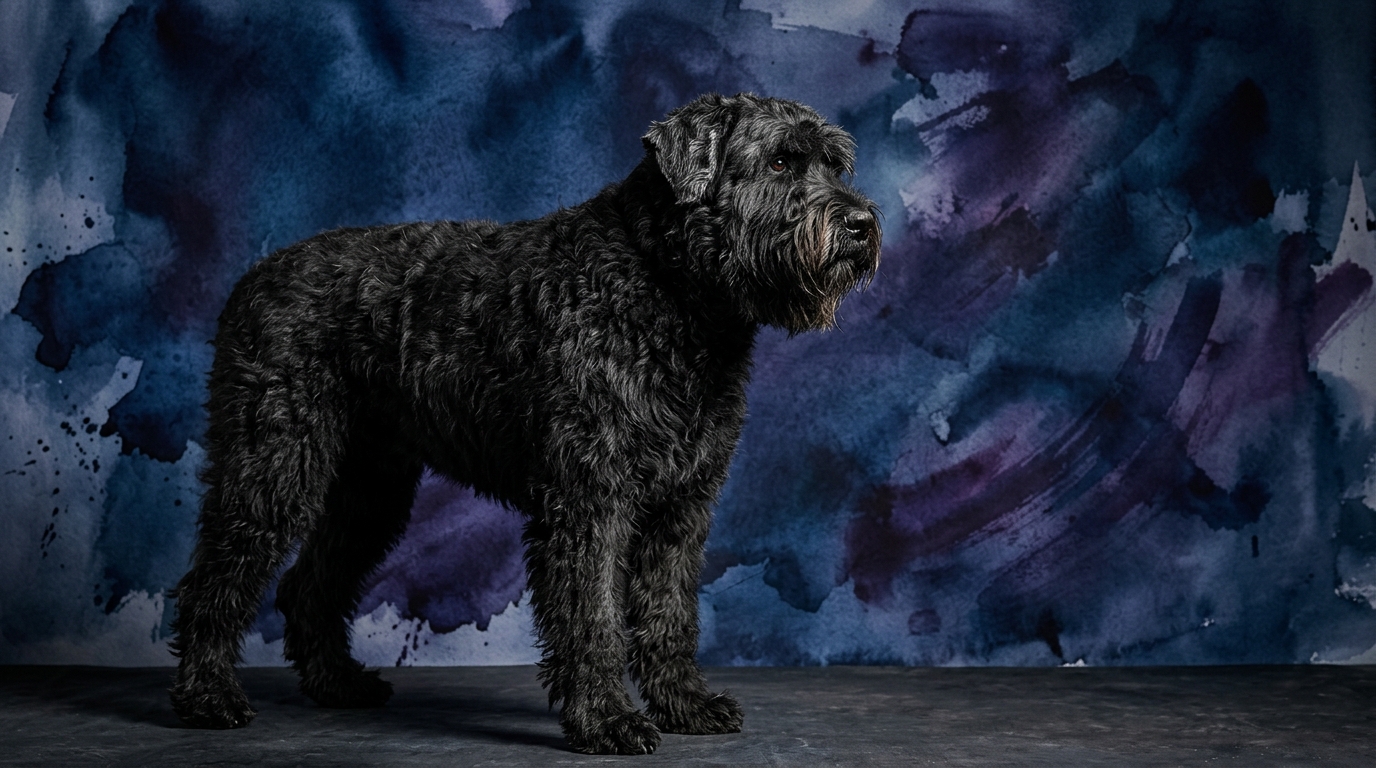
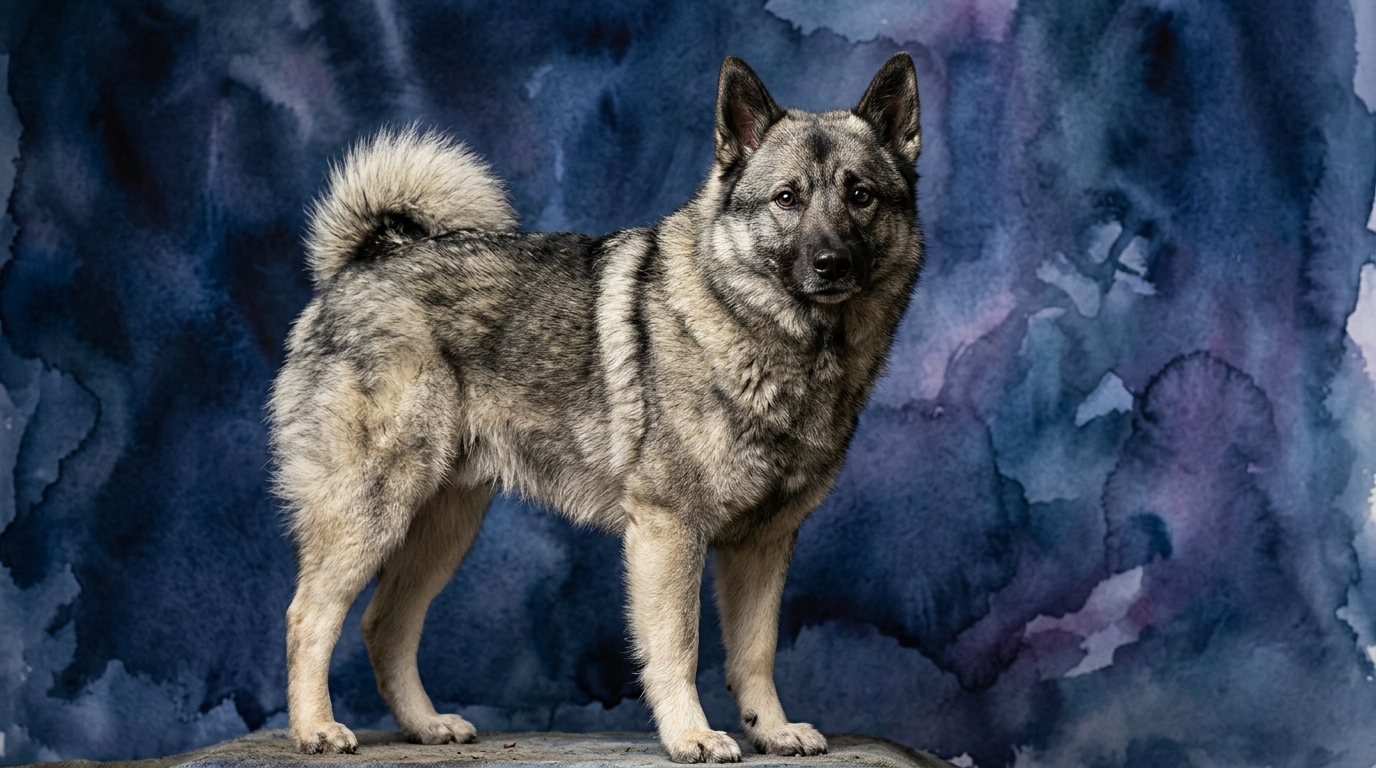
Side-by-Side IQ Profile
The Cosmic Pet Pet IQ Lab employs a five-dimensional framework to assess canine cognition, providing a nuanced perspective on how different breeds process information. The Bouvier des Flandres, a robust herding dog, demonstrates a balanced profile. Its Problem Solving at 3/5 suggests a capacity for deliberate, independent thought, often rooted in managing livestock. Training Speed also at 3/5 indicates it learns steadily but may require consistent, patient guidance. Social Intelligence, at 3/5, points to a good understanding of human cues and pack dynamics. The breed's Instinctive Drive is 3/5, reflecting moderate motivation for breed-specific behaviors. Its Memory score of 3/5 implies a solid ability to retain learned behaviors and experiences.
In contrast, the Norwegian Elkhound, a resilient hound breed, presents elevated cognitive scores in several areas. Its Problem Solving at 4/5 indicates a more pronounced aptitude for figuring out novel situations and adapting strategies, honed by centuries of tracking. Training Speed, also 4/5, suggests a quicker grasp of new commands and greater eagerness for structured learning. The Elkhound's Social Intelligence aligns with the Bouvier's at 3/5, showing comparable capacity for understanding social cues. Its Instinctive Drive similarly matches at 3/5, reflecting a moderate but persistent inclination towards ancestral hunting behaviors. Crucially, the Norwegian Elkhound's Memory stands at 4/5, signifying a robust ability to recall complex sequences and past experiences. Its inclusion in Stanley Coren's ranking at #36 further highlights its capacity for obedience and working intelligence.
Where Bouvier des Flandres Wins Cognitively
While the Norwegian Elkhound generally scores higher, the Bouvier des Flandres exhibits a unique strength in its deliberate, independent problem-solving approach, even at a 3/5 rating. This isn't about speed, but thoughtful consideration. A Bouvier, faced with a complex gate latch, might pause, observe, and experiment methodically until a solution is found, rather than relying on immediate trial and error. This stems from its herding lineage, where independent judgment was crucial for managing livestock without constant human direction. Their 3/5 Social Intelligence, combined with this deliberate nature, means they form deep, considered bonds, often assessing new situations with a measured calm. This thoughtful processing can translate into a composed and steady presence, a cognitive trait that distinguishes it from more impulsive breeds.
Where Norwegian Elkhound Wins Cognitively
The Norwegian Elkhound's cognitive strengths clearly emerge in its superior Problem Solving (4/5) and Memory (4/5) capabilities. This breed thrives on intellectual challenges, demonstrating a quicker grasp of novel situations and a more agile mind when encountering new puzzles. For instance, an Elkhound might more rapidly discern the mechanics of a puzzle toy or adapt to a changing environment during scent work. Their elevated memory score means they can retain complex sequences of commands or intricate routes with greater precision and for longer durations. This robust memory and problem-solving aptitude are rooted in their history as big-game hunters, where recalling vast territories, tracking subtle scents, and adapting to unpredictable prey movements were essential. Their keen observational skills contribute to a dog quicker to pick up new tasks and retain a broader repertoire of behaviors.
Which Is Easier to Train and Why
Based on the Cosmic Pet Pet IQ Lab scores, the Norwegian Elkhound is generally easier to train compared to the Bouvier des Flandres, primarily due to its higher Training Speed (4/5) and superior Memory (4/5). An Elkhound's quicker grasp of new commands means fewer repetitions are often needed, and they tend to retain that learning more effectively. Their historical role as independent hunters, while fostering self-reliance, also required responding to specific cues during the hunt. This translates into a dog that, with proper motivation, can be quite responsive and eager for structured learning. In contrast, the Bouvier des Flandres, with a Training Speed of 3/5 and Memory of 3/5, will require more patience and consistency. Bouviers are known for their thoughtful independence; they might analyze a command before complying, not out of stubbornness, but a desire to understand its purpose. Owners might find that while a Bouvier eventually masters a command, the path to proficiency is often longer and demands more creative motivation to keep their interest engaged.
Which Suits Active Owners vs. Relaxed Owners
Both the Bouvier des Flandres and the Norwegian Elkhound possess an Instinctive Drive of 3/5, suggesting they benefit from regular activity but are not hyperactive. However, their specific cognitive profiles lead them to suit different types of active owners. The Norwegian Elkhound, with its higher problem-solving and memory scores, thrives with owners who enjoy structured activities that engage both body and mind, such as scent work, advanced obedience, agility, or hiking challenging trails. Their independent hound nature means they appreciate exploring and 'working' alongside their human. For a more relaxed owner, the Elkhound might still be manageable with consistent, moderate exercise, but its keen mind will require mental stimulation to prevent boredom. The Bouvier des Flandres, while also needing activity, might appeal more to owners who appreciate a dog that is a thoughtful companion on long walks or engages in low-impact herding games. Its deliberate nature means it might not always be the fastest to try every new sport, but it will commit fully once it understands the task. For a truly relaxed owner, both breeds might present challenges if their moderate instinctive drives aren't met, but the Bouvier's less intense drive for constant "work" might make it marginally more adaptable to a slower pace, provided mental engagement is still present.
The Verdict
Choose the Bouvier des Flandres if you appreciate a thoughtful, independent companion who processes information deliberately and builds deep, considered bonds, excelling in roles requiring steady judgment.
Opt for the Norwegian Elkhound if you seek a quick-witted, agile learner who thrives on mental challenges and structured activities, retaining complex information with impressive recall.
🧠 Find Your Pet's IQ Score
Our Pet IQ Lab assessment covers 25+ tests across 5 cognitive dimensions — personalized to your breed.
Take the Full IQ Test →Frequently Asked Questions
Do Bouvier des Flandres and Norwegian Elkhounds get along with other pets?
Both breeds have a social intelligence of 3/5, indicating a moderate capacity for getting along with other pets. Early socialization is crucial for both, but the Bouvier's deliberate nature might mean a slower, more cautious introduction, while the Elkhound's hound instincts may require careful management around smaller prey animals.
Are Bouvier des Flandres or Norwegian Elkhounds good with children?
With a social intelligence of 3/5, both breeds can be good with children, especially when raised with them and properly socialized. The Bouvier's composed demeanor can make it a patient family member, while the Elkhound's playful energy can be a good match for active kids, always under supervised interaction.
How much mental stimulation do these breeds need daily?
Both breeds have an instinctive drive of 3/5, meaning they require a moderate amount of daily mental stimulation to prevent boredom and destructive behaviors. The Elkhound, with its higher problem-solving and memory scores, will particularly benefit from puzzle toys, scent games, and consistent training sessions that challenge its quick mind.