Side-by-Side IQ Profile
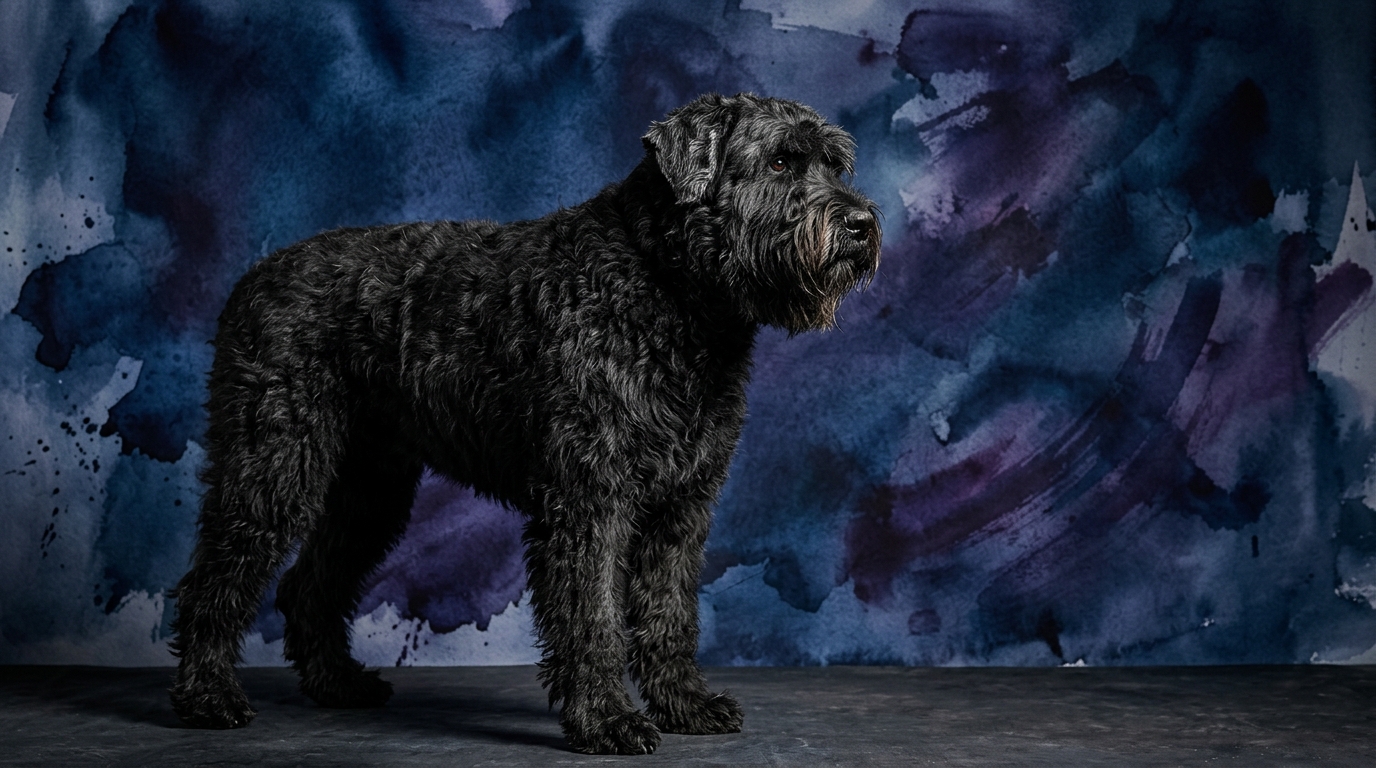
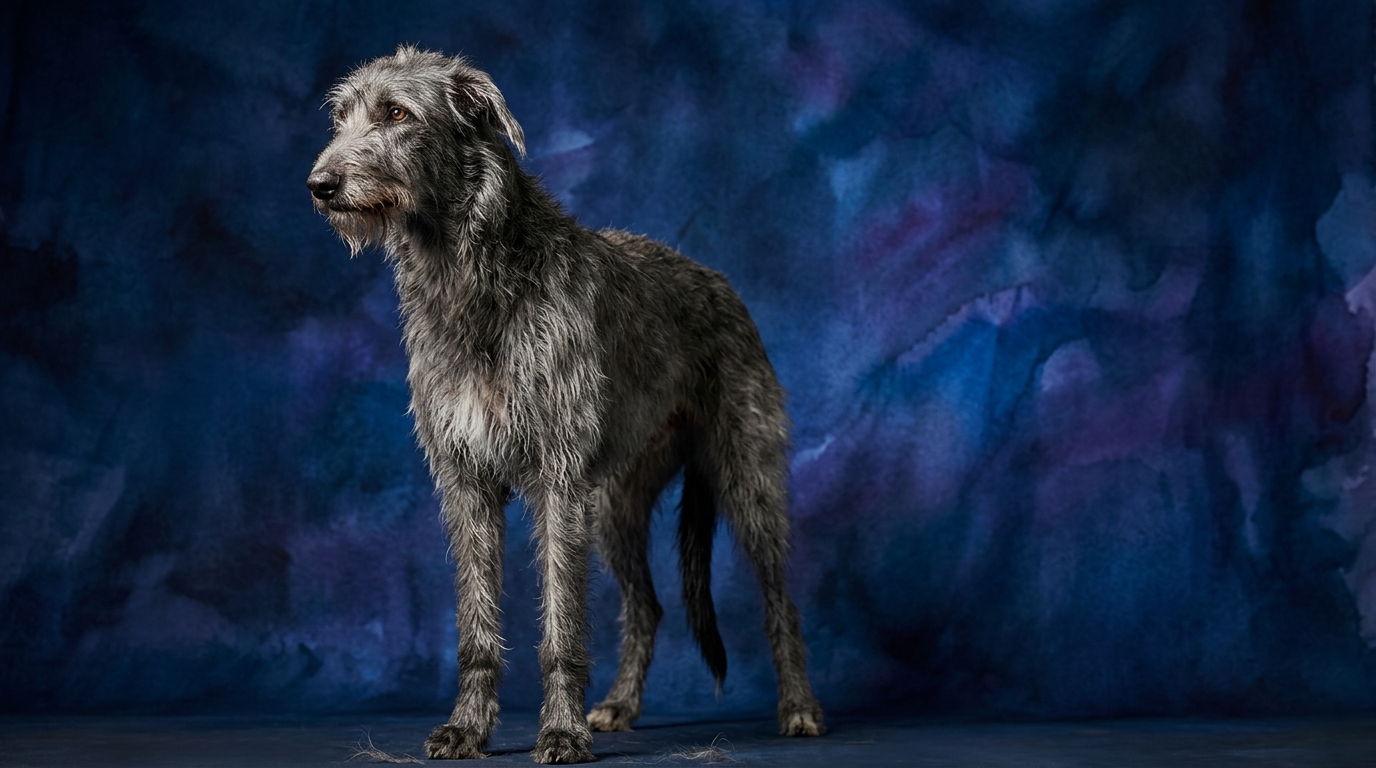
At The Cosmic Pet Pet IQ Lab, we assess canine intelligence across five key dimensions. Both the Bouvier des Flandres, a robust herding dog, and the elegant Scottish Deerhound, a swift sighthound, register a consistent 3 out of 5 across all metrics, indicating a solid cognitive foundation, yet their expression of these traits varies profoundly.
For Problem Solving, the Bouvier des Flandres demonstrates its 3/5 by excelling in practical, dynamic scenarios encountered during livestock management, anticipating movements, strategizing to guide a flock, and adapting to unpredictable environmental factors. This requires a blend of observation and tactical decision-making. The Scottish Deerhound applies its 3/5 problem-solving acumen to the hunt; its intelligence shines in quickly assessing terrain, predicting prey escape routes, and making rapid, independent decisions during a high-speed chase, where swift visual processing and situational awareness are paramount.
Training Speed for the Bouvier, also at 3/5, reflects a capacity to learn complex commands and sequences, crucial for working closely with a shepherd. They are generally responsive and willing to engage, though their independent streak means they thrive with consistent, clear guidance and a perceived purpose. The Deerhound’s 3/5 in training speed suggests they can learn, but their motivation often differs. As an independent hunter, they may require more patience and creative reinforcement, responding best when training aligns with intrinsic drives or offers immediate, tangible rewards.
Social Intelligence for the Bouvier, at 3/5, is marked by their ability to read human cues and their protective yet discerning nature, forming strong bonds with family and often reserved with strangers. The Scottish Deerhound, also 3/5, exhibits a gentle, sensitive social intelligence within their immediate circle, displaying a quiet understanding of human emotions, but often aloof towards unfamiliar individuals.
Their Instinctive Drive, both at 3/5, is a defining characteristic. For the Bouvier, this manifests as a powerful herding instinct and a strong protective drive over their family and territory, making them purposeful. The Scottish Deerhound's 3/5 drive is almost entirely centered on its immense prey drive and an innate desire to run, a deeply ingrained instinct that dictates much of their behavior and mental focus.
Finally, Memory at 3/5 for the Bouvier des Flandres is robust, allowing recall of intricate command sequences, routines, and environmental layouts. This underpins their ability to perform complex, multi-step tasks reliably. The Scottish Deerhound’s 3/5 memory serves its hunting prowess, enabling them to remember preferred hunting grounds and successful chase routes. While they remember learned behaviors, their recall might be more easily overshadowed by immediate sensory input related to their innate drives.
Where Bouvier des Flandres Wins Cognitively
The Bouvier des Flandres demonstrates a cognitive edge in scenarios demanding collaborative problem-solving and sustained focus on a given task. Their background as a working herding dog means they are wired to analyze a situation, understand their human partner's intent, and execute a strategy to achieve a shared goal. For instance, a Bouvier excels at figuring out how to maneuver around obstacles to keep a group of sheep together or guide them through a gate, requiring spatial reasoning and an understanding of cause and effect in a dynamic environment. Their problem-solving isn't just about finding a solution, but finding one that maintains order and control, often involving subtle manipulations and anticipatory actions. This makes them particularly adept at complex obedience, advanced trick training, and dog sports that require precision and partnership.
Where Scottish Deerhound Wins Cognitively
Conversely, the Scottish Deerhound showcases superior cognitive strengths in areas requiring rapid, independent decision-making and acute sensory processing, particularly visual. Their ancestral role as a large game hunter means they were bred to spot distant movement, assess the fastest pursuit path over varied terrain, and make split-second choices without direct human instruction. A Deerhound's problem-solving brilliance is evident when they navigate a complex field at high speed, avoiding hazards while maintaining sight of a lure or perceived prey. This involves exceptional visual discrimination, spatial awareness, and an almost intuitive understanding of physics in motion. Their cognitive processing is geared towards immediate action and efficient execution in a high-stakes, fast-paced environment, making them unparalleled in activities like lure coursing where their natural talents for observation, speed, and independent strategy are fully engaged.
Which is Easier to Train and Why
Determining which breed is 'easier' to train hinges significantly on the owner's approach and understanding of breed-specific motivations. The Bouvier des Flandres, with its herding background, generally presents as more amenable to structured training sessions. They possess an inherent desire to work and to collaborate with their human, viewing commands as part of a purposeful interaction. While they can be strong-willed and require a confident, consistent leader, their problem-solving and memory skills (both 3/5) mean they can grasp complex commands and remember them reliably. Their social intelligence (3/5) also makes them attuned to human feedback, making positive reinforcement highly effective.
The Scottish Deerhound, by contrast, can be more challenging for a novice trainer due to its independent nature, a hallmark of sighthounds. Their training speed (3/5) is sufficient, but their primary motivator is often their instinctive drive (3/5) for chase, not necessarily a strong desire to please. They can learn commands quickly but may choose to obey only if it aligns with their immediate interest or if the reward is highly compelling. Distractions, especially visual ones, can easily override learned behaviors. Training a Deerhound requires immense patience, creativity, and an understanding of their deep-seated prey drive. While sensitive and gentle, their social intelligence (3/5) doesn't translate into automatic deference; they require a trainer who can make learning a game that appeals to their independent spirit.
Which Suits Active Owners vs Relaxed Owners
The Bouvier des Flandres is a better fit for active owners who relish engaging their dog in purposeful activities and mental challenges. Their 3/5 instinctive drive and problem-solving skills mean they thrive when given a 'job,' whether herding, advanced obedience, agility, or complex scent work. They require consistent physical exercise and, more importantly, mental stimulation to prevent boredom. Owners who enjoy structured training, long walks with a purpose, and dog sports will find the Bouvier a rewarding companion, as they need their cognitive abilities regularly exercised.
The Scottish Deerhound, while possessing an immense capacity for bursts of speed and requiring regular opportunities to gallop freely in a safe, enclosed space to satisfy their 3/5 instinctive drive, can surprisingly suit owners who also appreciate periods of profound relaxation. Their exercise needs are intense but often episodic; after a vigorous run, they are typically content to lounge gracefully for extended periods. They are not dogs that demand constant 'work' or intricate mental puzzles in the same way a herding breed might. Therefore, they can be a good match for owners who can provide dedicated, safe spaces for runs, but also enjoy a calm, quiet companion indoors.
The Verdict
Choose the Bouvier des Flandres if you seek a collaborative, purposeful companion who thrives on shared tasks, structured learning, and requires a consistent mental workout alongside physical exercise.
Opt for the Scottish Deerhound if you appreciate an independent, gentle giant who needs intense, specific outlets for their powerful running instinct, balanced with a calm, serene presence indoors.
🧠 Find Your Pet's IQ Score
Our Pet IQ Lab assessment covers 25+ tests across 5 cognitive dimensions — personalized to your breed.
Take the Full IQ Test →Frequently Asked Questions
Do Bouvier des Flandres and Scottish Deerhounds have similar trainability?
While both breeds score 3/5 in training speed, their underlying motivations differ; Bouviers are generally more eager to collaborate in structured training, whereas Deerhounds, being independent sighthounds, require more patience and creative methods that appeal to their natural drives.
Which breed is better for a family with children?
Both breeds can be good family dogs with proper socialization. The Bouvier's protective nature and desire to "herd" might need gentle guidance around children, while the Deerhound's gentle, sensitive temperament generally makes them tolerant, though their large size requires supervision with very young kids.
What kind of mental stimulation do these breeds need?
The Bouvier thrives on purposeful tasks like obedience, agility, or problem-solving games that engage their strategic herding mind. The Deerhound benefits from activities that allow them to express their chase drive, like lure coursing, alongside gentle interaction that respects their sensitive nature.