
Side-by-Side Cognitive Profile: A Closer Look
The Cosmic Pet Pet IQ Lab employs a five-dimensional framework to assess canine intelligence, providing a granular view of a breed's cognitive strengths and inclinations. For the Boykin Spaniel, a compact Sporting dog, its profile consistently registers a 3 out of 5 across all measured dimensions: problem-solving, training speed, social intelligence, instinctive drive, and memory. This uniform score suggests a balanced and moderately adaptable cognitive makeup, aligning with its role as a versatile hunting companion.
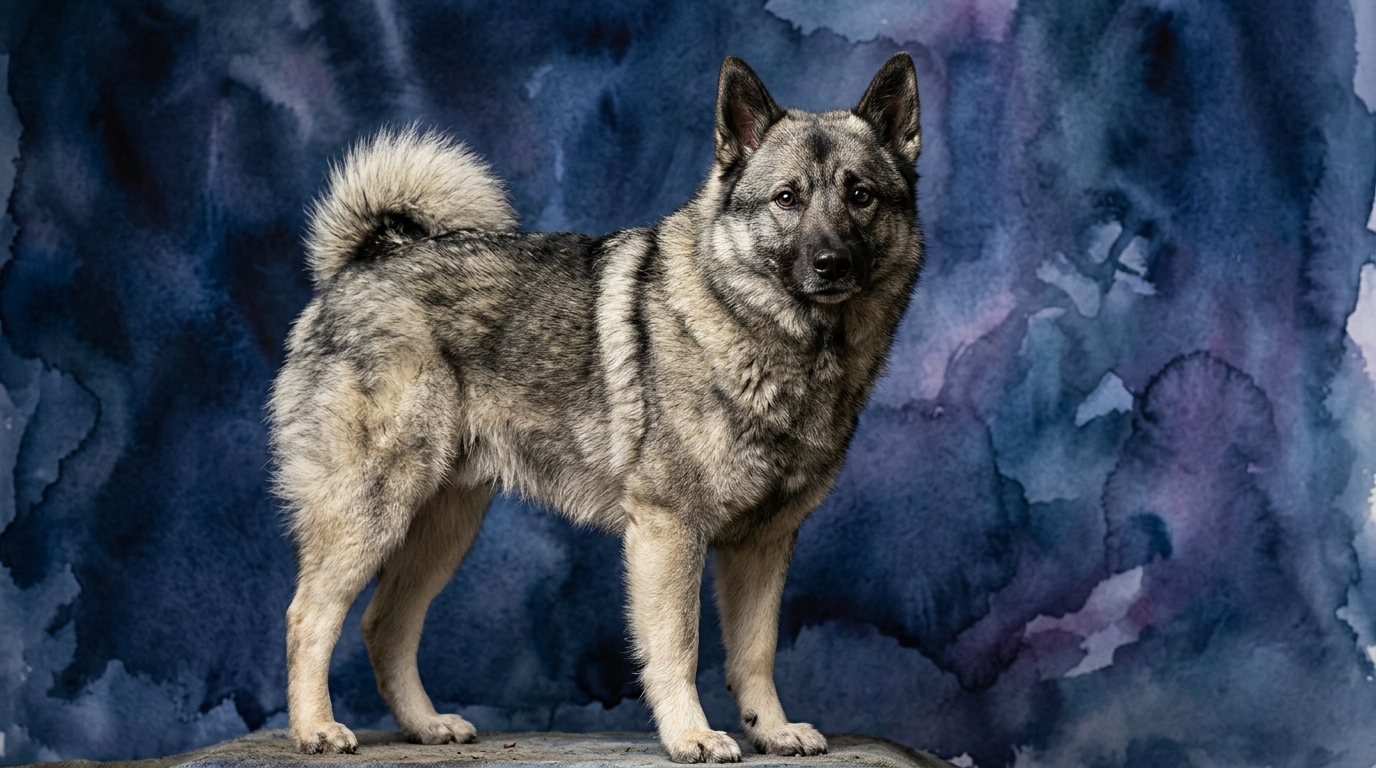
In contrast, the Norwegian Elkhound, a sturdy Hound breed with a notable Coren rank of #36, presents a slightly more varied and generally elevated cognitive profile. It scores 4 out of 5 in problem-solving, training speed, and memory, indicating a higher aptitude in these areas. Its social intelligence and instinctive drive, however, align with the Boykin Spaniel at 3 out of 5. This distinction hints at a breed capable of more independent thought and rapid learning, while still possessing a moderate social connection and innate drive.
Delving into problem-solving, the Boykin's 3/5 suggests it can navigate common environmental puzzles and learn sequential tasks, perhaps requiring a few more repetitions or simpler steps to grasp complex solutions. The Elkhound's 4/5, however, points to a quicker ability to strategize and independently figure out solutions, making it adept at overcoming obstacles or understanding spatial relationships more readily.
Regarding training speed, the Boykin's 3/5 indicates a moderate pace of learning new commands and routines. They are receptive but benefit from consistent, patient instruction. The Elkhound's 4/5 signifies a faster acquisition of new behaviors and commands, often grasping concepts in fewer repetitions. However, this speed can sometimes be paired with an independent streak, a hallmark of many hound breeds, which might influence their *willingness* to perform.
Both breeds share a 3/5 in social intelligence, meaning they are adequately attuned to human emotions and social cues. They are companionable and form strong bonds with their families but might not exhibit the hyper-sensitivity or constant desire for interaction seen in breeds with higher scores. Their social awareness is sufficient for harmonious cohabitation without being overly demanding of constant reassurance.
Instinctive drive, also at 3/5 for both, manifests differently. For the Boykin Spaniel, this drive is primarily channeled into retrieving and flushing game, demonstrating a persistent but not overwhelming urge to work alongside a hunter. For the Norwegian Elkhound, this drive translates into a persistent tracking and scenting ability, essential for its historical role in hunting large game, suggesting a focused but not frantic pursuit of its innate purpose.
Finally, memory reveals another distinction. The Boykin's 3/5 suggests solid retention of learned commands and routines, making them reliable in familiar scenarios. The Elkhound's 4/5 indicates a superior capacity for memory, particularly valuable for remembering complex scent trails, past training experiences, or intricate navigation, allowing for a more robust recall of information over time.
Where the Boykin Spaniel Excels Cognitively
The Boykin Spaniel's cognitive strength lies in its balanced and consistent aptitude across all dimensions, making it a remarkably adaptable and cooperative partner. While it may not possess the Elkhound's superior problem-solving or memory, its uniform 3/5 scores mean it is rarely deficient in any area, offering a predictable and agreeable temperament for various tasks. Its moderate instinctive drive, specifically geared towards retrieving, makes it a focused but manageable worker in the field, less prone to independent excursions than some other hunting breeds.
Their 3/5 social intelligence, combined with a moderate training speed, means Boykins are generally eager to please and responsive to their handler's guidance. This balance fosters a strong working relationship where the dog actively seeks to understand and comply, even if it takes a few extra repetitions. This disposition makes them excellent candidates for owners who appreciate a dog that learns steadily and maintains focus on its human companion, rather than being overly independent or easily distracted by external stimuli.
A Boykin's memory, at 3/5, is reliable for retaining a repertoire of commands and routines, ensuring consistency in daily life and during training sessions. This steady recall, coupled with its moderate problem-solving abilities, means they thrive in structured environments where expectations are clear, and they can confidently execute learned behaviors without constant re-teaching. Their cognitive profile makes them particularly adept at repetitive tasks and established routines, where unwavering performance is key.
Where the Norwegian Elkhound Wins Cognitively
The Norwegian Elkhound's cognitive victories are most evident in its elevated problem-solving, training speed, and memory capabilities, distinguishing it as a more independently astute and quick-witted breed. Its 4/5 in problem-solving means it often approaches new situations with a keen analytical mind, capable of devising effective strategies to achieve goals or overcome obstacles without constant human intervention. This makes them highly effective in tasks requiring ingenuity and self-reliance.
The Elkhound's training speed, also at 4/5, indicates a rapid grasp of new commands and concepts, allowing for quicker progression through complex training regimens. While their independent hound nature might sometimes present a challenge in consistent obedience, their sheer capacity to learn new information swiftly is undeniable. This makes them suitable for advanced obedience, agility, or working roles where new skills must be acquired efficiently.
Their superior memory, scoring 4/5, is a significant asset, particularly in tasks requiring spatial awareness, tracking, or long-term retention of complex sequences. An Elkhound can remember intricate scent trails over long distances and extended periods, or recall a wide array of commands and experiences, making them highly reliable in scenarios where past knowledge is crucial. This robust memory enhances their ability to adapt and perform consistently, even after periods of inactivity.
Furthermore, the Elkhound's Coren rank of #36, while not part of our IQ Lab's internal metrics, is an external indicator of their working and obedience intelligence, reinforcing their capacity for understanding and executing commands. This ranking reflects their overall trainability and ability to perform complex tasks, underscoring their cognitive edge in structured learning environments.
Which is Easier to Train and Why?
Determining which breed is 'easier' to train is nuanced, as it depends on an owner's definition of ease and their preferred training style. The Boykin Spaniel, with its 3/5 training speed and moderate instinctive drive, is often perceived as more compliant and eager to please. They learn at a steady pace, and their desire for partnership means they are typically very receptive to positive reinforcement and consistent guidance, making the training journey feel collaborative and rewarding for many owners.
A Boykin's training approach benefits from patience and clear, repetitive instruction, building confidence through successful completion of tasks. Their moderate social intelligence means they respond well to a handler's cues without being overly sensitive, creating a stable learning environment. Owners who value a dog that maintains focus on them and enjoys working together will likely find the Boykin Spaniel a straightforward and gratifying student.
The Norwegian Elkhound, despite its 4/5 training speed, can present a different set of challenges due to its independent nature, characteristic of many hound breeds. While they grasp concepts quickly, their strong instinctive drive (3/5) and superior problem-solving (4/5) can sometimes lead them to prioritize an interesting scent or a self-devised solution over a handler's command. This means training an Elkhound often requires more motivational insight and a stronger emphasis on proofing behaviors in distracting environments.
Training an Elkhound effectively demands an owner who understands how to channel their cognitive strengths and manage their independence. They benefit from engaging, varied training sessions that appeal to their problem-solving abilities, rather than rote repetition. While they learn commands faster, their willingness to perform them consistently might require a more assertive and consistent leadership style, alongside strong positive reinforcement, to ensure their considerable intellect is directed towards desired behaviors rather than independent pursuits.
Which Suits Active Owners vs. Relaxed Owners
For active owners seeking a dynamic companion, both breeds offer considerable energy, but their ideal activities and demands on an owner differ. The Boykin Spaniel, with its balanced 3/5 instinctive drive and moderate energy, thrives with regular exercise that includes retrieving, swimming, and brisk walks. They are excellent partners for active families who enjoy outdoor adventures like hiking or hunting, but their needs are generally met with a few hours of engagement daily, fitting well into a moderately active lifestyle.
Boykins appreciate mental engagement through training sessions and puzzle toys, but they are generally content to relax indoors after their needs are met. Their social intelligence means they enjoy being part of family activities without constantly demanding attention, making them suitable for owners who are active but also appreciate periods of calm companionship. They are a good match for someone looking for a versatile dog that can keep up on trails and then settle down at home.
The Norwegian Elkhound, however, is better suited for highly active owners who can commit to consistent, rigorous physical and mental challenges. Their superior problem-solving and memory, combined with a strong instinctive drive, mean they require more than just physical exercise; they need a purpose. Activities like long-distance hiking, skijoring, scent work, or advanced obedience training are ideal for satisfying their robust cognitive and physical needs.
An Elkhound that lacks sufficient mental and physical outlets can become bored and resort to independent, potentially destructive, behaviors. Their independence means they thrive on exploration and tracking, making them fantastic partners for dedicated outdoors enthusiasts or those involved in dog sports. They are best for owners who are not only active but also enjoy engaging their dog's mind with complex tasks and consistent training, embracing their strong-willed nature.
For relaxed owners, neither breed is an ideal fit without significant adjustments to their lifestyle. Both require substantial daily exercise and mental stimulation to prevent boredom and behavioral issues. However, if a 'relaxed' owner is willing to outsource some of these needs, perhaps through dog walkers or daycare, the Boykin Spaniel's more moderate demands might be marginally more manageable than the Elkhound's persistent drive for purpose and activity.
The Verdict
Choose the Boykin Spaniel if you seek a balanced, cooperative companion for moderate outdoor activities and enjoy a steady, partnership-oriented training journey. Their consistent cognitive profile ensures a reliable and eager-to-please temperament for families and active individuals.
Opt for the Norwegian Elkhound if you are a highly active owner prepared to engage a quick-witted, independent dog in rigorous physical and mental challenges. Their superior problem-solving and memory excel with purposeful tasks and experienced training.
🧠 Find Your Pet's IQ Score
Our Pet IQ Lab assessment covers 25+ tests across 5 cognitive dimensions — personalized to your breed.
Take the Full IQ Test →Frequently Asked Questions
Do Boykin Spaniels make good family pets?
Yes, Boykin Spaniels generally make good family pets due to their balanced social intelligence (3/5) and moderate drive. They are affectionate, enjoy being part of family activities, and are typically good with children, provided they receive adequate exercise and consistent training.
Are Norwegian Elkhounds stubborn during training?
Norwegian Elkhounds can be perceived as stubborn during training, despite their high training speed (4/5), because their independent nature and strong instinctive drive (3/5) mean they sometimes prioritize their own interests, like a compelling scent. Consistent, motivational training and strong leadership are key to channeling their intelligence effectively.
Which breed requires more mental stimulation?
The Norwegian Elkhound generally requires more intense and consistent mental stimulation than the Boykin Spaniel. With higher scores in problem-solving and memory, the Elkhound thrives on complex tasks, scent work, and varied training to prevent boredom and channel their considerable independent intellect.