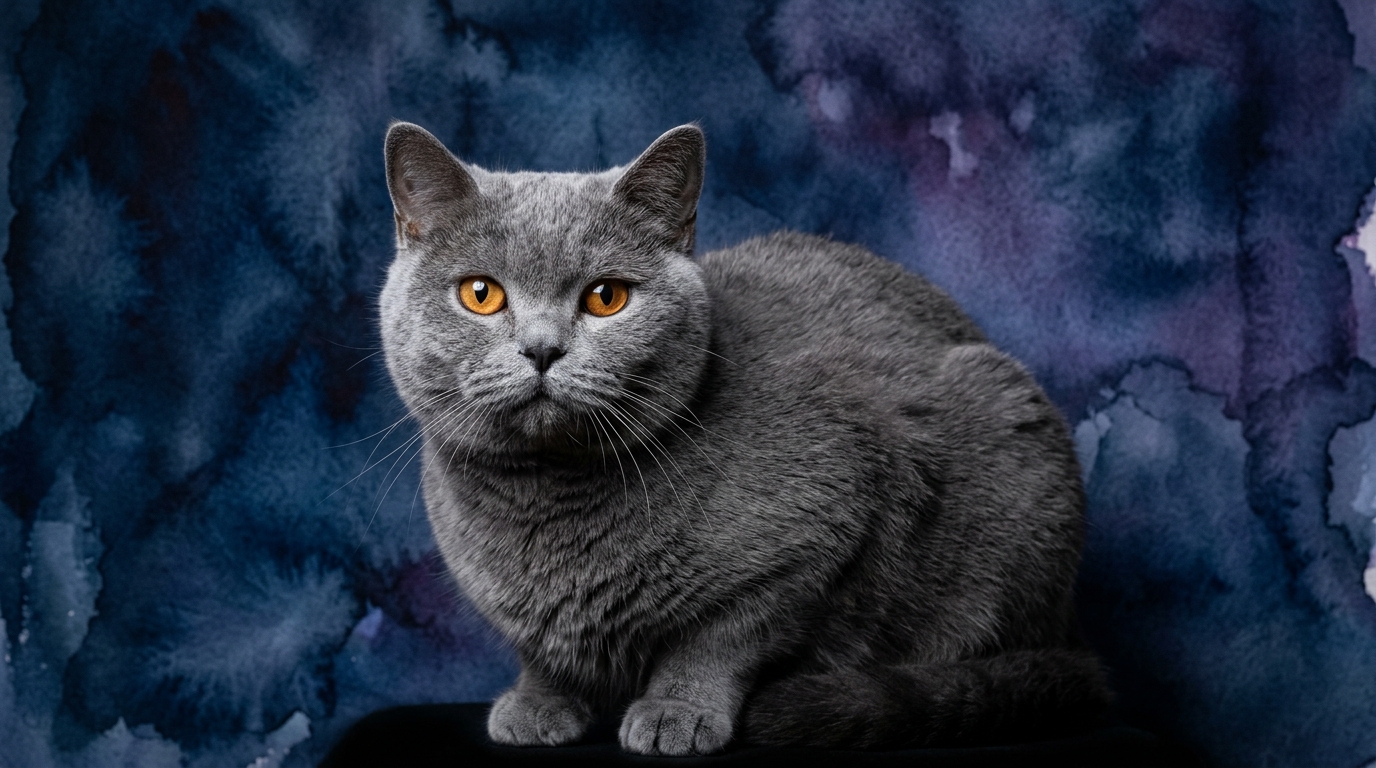
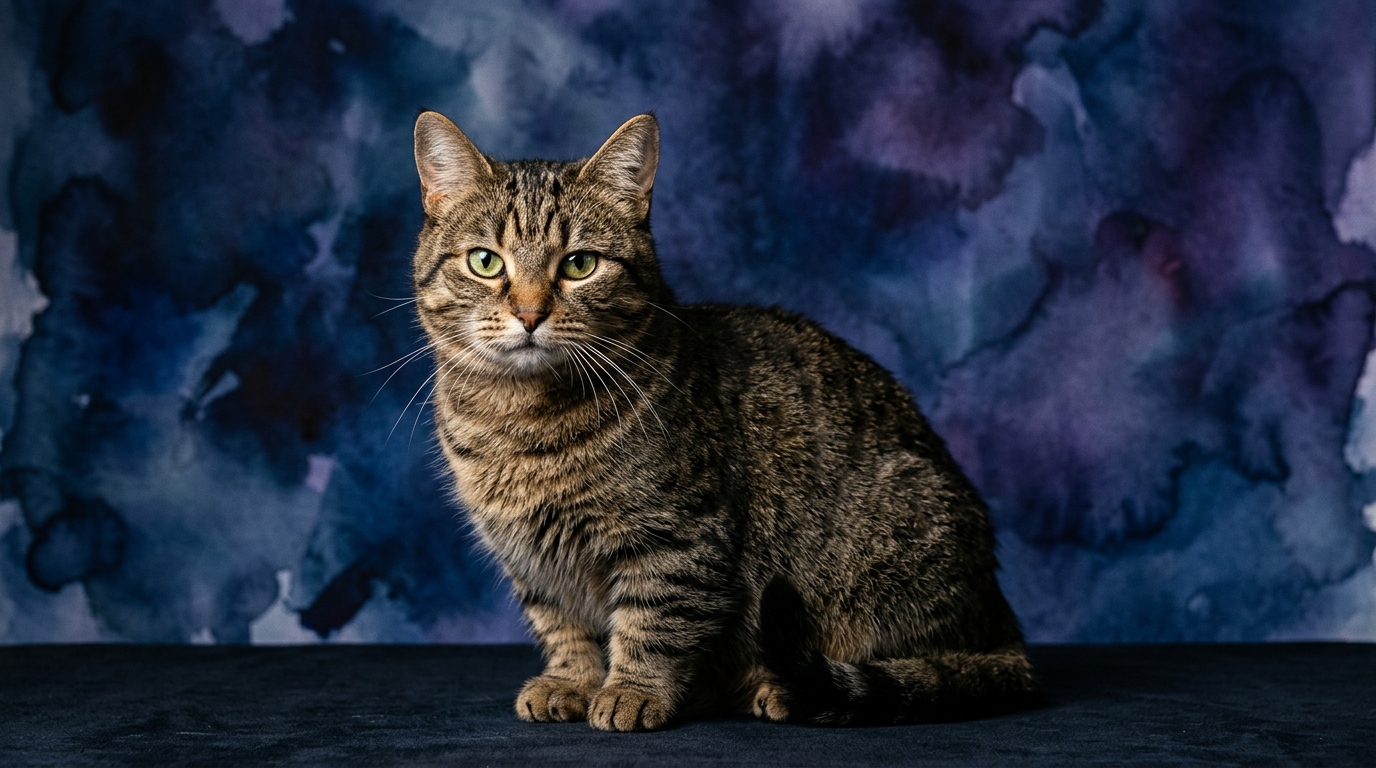
Side-by-Side IQ Profile: British Shorthair vs. Munchkin
The Cosmic Pet Pet IQ Lab assesses feline intelligence across five crucial dimensions, providing a granular view of a breed's cognitive landscape. For both the British Shorthair and the Munchkin, all five categories register a consistent score of 3 out of 5, indicating a moderate, capable level of intelligence in each area, though the expression of these capacities can vary significantly between the breeds.
**Problem Solving (3/5):** For the British Shorthair, this moderate problem-solving ability often manifests as a thoughtful, observational approach. They tend to analyze situations with a calm demeanor before attempting a solution, such as figuring out how to open a cupboard or access a favored toy. Their methods are typically methodical, relying on memory and learned patterns. The Munchkin, conversely, tackles problems with an energetic, often playful, trial-and-error strategy. Their natural curiosity encourages them to experiment with different actions, sometimes using their unique physical attributes to their advantage, even if it means a more circuitous route to success.
**Training Speed (3/5):** Both breeds demonstrate a moderate capacity for learning new commands and routines. The British Shorthair's training speed is influenced by its independent and sometimes reserved nature; while capable of learning, they require consistent, patient reinforcement and a clear purpose for the requested action. Munchkins, with their lively and social disposition, can pick up cues quickly, especially when training is framed as a game. However, their playful distractibility means maintaining focus can sometimes be a challenge, requiring engaging and varied training sessions.
**Social Intelligence (3/5):** A score of 3/5 in social intelligence suggests both breeds are adept at understanding and responding to social cues. British Shorthairs exhibit this through discerning affection; they are generally devoted to their chosen family members and can read their moods, offering companionship without being overly demanding. They appreciate routine and predictable interactions. Munchkins display their social acumen through their outgoing and adaptable nature, often forming strong bonds with multiple family members and even other pets. They are quick to engage in play and seek interaction, demonstrating an intuitive understanding of social dynamics within a household.
**Instinctive Drive (3/5):** This dimension reflects a cat's innate behavioral patterns related to hunting, territory, and survival. Both breeds possess a moderate instinctive drive. British Shorthairs, while capable hunters, often channel this drive into quiet observation of their surroundings or occasional, deliberate play with interactive toys. Their territorial instincts are present but typically expressed in a calm, non-confrontational manner. Munchkins, despite their short stature, possess a robust prey drive, often seen in their enthusiastic pursuit of toys, their penchant for 'collecting' small items, and their active exploration of their environment. They retain a lively, kitten-like engagement with their world, driven by natural curiosity.
**Memory (3/5):** Both the British Shorthair and the Munchkin show a moderate ability to retain information over time. British Shorthairs demonstrate this through their consistent adherence to routines, remembering preferred resting spots, feeding times, and the habits of their owners. They recall positive and negative experiences, influencing their future interactions. Munchkins also exhibit good memory, remembering where toys are hidden, favorite play routes, and the individuals who provide the most engaging interactions. Their memory contributes to their ability to learn complex play sequences and adapt to changes in their environment.
Where the British Shorthair Wins Cognitively
While their raw IQ scores are identical, the British Shorthair's cognitive strengths often manifest in their composed and methodical approach to life. Their 3/5 problem-solving ability, combined with their placid temperament, allows them to excel in environments that reward patience and observation. A British Shorthair might spend longer assessing a new puzzle toy, but once they devise a strategy, they are likely to execute it with calm precision, relying on their 3/5 memory to recall successful tactics. This makes them particularly adept at navigating consistent routines and understanding subtle shifts in their human companions' moods, leveraging their 3/5 social intelligence for stable, predictable companionship.
Their moderate training speed, while not flashy, is often very effective in a home that values calm learning. A British Shorthair may not jump through hoops, but they can reliably learn household rules, litter box etiquette, and even simple commands when approached with consistent, positive reinforcement that respects their independent spirit. Their cognitive strength lies in their ability to integrate learned behaviors into their tranquil daily rhythm, contributing to a harmonious household without excessive demands for novelty or stimulation.
Where the Munchkin Wins Cognitively
The Munchkin's cognitive advantages often stem from their boundless curiosity and energetic disposition. Their 3/5 problem-solving ability is frequently expressed through playful experimentation and adaptability, making them particularly good at finding creative solutions to perceived challenges, even if it means a less direct route. Their inherent zest for life fuels their exploration, leading them to discover new spaces and interactions, showcasing a dynamic application of their cognitive skills. This playful approach to their environment allows them to quickly adapt to new toys, people, and situations, leveraging their 3/5 memory to retain successful play strategies and social engagements.
Their 3/5 social intelligence shines in their ability to engage readily with a wide range of individuals and pets, often initiating play and seeking interaction. This makes them highly responsive to social cues and adept at integrating into diverse family structures. Furthermore, their moderate training speed, when combined with their strong play drive and social nature, means they can learn quickly through interactive games and positive reinforcement, often surprising owners with their capacity for fetching, agility, and even leash training, as long as the learning process remains engaging and fun.
Which is Easier to Train and Why?
Given their identical 3/5 training speed scores, the ease of training between a British Shorthair and a Munchkin largely depends on the owner's approach and the cat's individual personality. The British Shorthair, with its independent and dignified nature, may require more patience and a less overtly enthusiastic training style. They respond well to calm, consistent positive reinforcement, often learning through observation and repetition. Their independent streak means they might choose to comply when it suits them, rather than out of an eagerness to please, making consistency paramount. Training a British Shorthair often involves creating routines they can comfortably integrate into their day, such as specific times for play or treat-dispensing puzzles.
The Munchkin, conversely, often embraces training as an extension of play. Their energetic and curious nature means they are generally eager to engage, especially if the training involves movement, toys, or treats. While their 3/5 training speed is similar, their higher activity levels and social drive can make them appear more receptive to new commands. However, their playful distractibility means that training sessions need to be kept short, engaging, and varied to maintain their focus. Owners who enjoy interactive play and can make learning a fun experience might find the Munchkin more overtly responsive to training efforts, especially for tricks or games like fetch.
Which Suits Active Owners vs. Relaxed Owners?
For owners seeking a more relaxed and self-sufficient companion, the British Shorthair is often an ideal match. Their calm demeanor and moderate instinctive drive mean they are content with a peaceful home environment, enjoying quiet companionship without requiring constant stimulation. They are happy to observe the world from a comfortable perch, engaging in play on their own terms. While they appreciate interaction, they are not demanding, making them suitable for individuals or families with busy schedules who still desire a loving presence.
The Munchkin, with its playful energy and social inclination, is better suited for more active owners or families who enjoy regular interactive play. Their kitten-like antics and robust instinctive drive mean they thrive on engagement, whether it's chasing toys, solving puzzles, or interacting with their human companions. Owners who are prepared to provide daily playtime, mental stimulation, and social interaction will find the Munchkin an enthusiastic and charming companion. Their adaptable social intelligence also makes them a good fit for multi-pet households or homes with children who understand how to play gently.
The Verdict: When to Choose Each
The Verdict
Choose a British Shorthair if you value a calm, independent, and dignified companion who thrives in a predictable, quiet environment and offers discerning affection. They are well-suited for owners seeking a low-maintenance cat intellectually, who appreciates subtle expressions of intelligence and companionship.
Opt for a Munchkin if you desire an energetic, curious, and highly social cat that thrives on interactive play, mental stimulation, and constant engagement. They are ideal for active households willing to channel their playful problem-solving and social intelligence into fun, enriching activities.
🧠 Find Your Pet's IQ Score
Our Pet IQ Lab assessment covers 25+ tests across 5 cognitive dimensions — personalized to your breed.
Take the Full IQ Test →Frequently Asked Questions
Do British Shorthairs enjoy puzzle toys?
Yes, British Shorthairs can enjoy puzzle toys that offer a moderate challenge. Their thoughtful problem-solving approach means they will methodically work to figure out how to access treats, often preferring puzzles that don't require frantic physical exertion.
Can Munchkins be trained to do tricks?
Absolutely. Munchkins, with their playful nature and moderate training speed, can be quite receptive to learning tricks, especially when training is made into a fun game with positive reinforcement. Their curiosity and social drive make them eager participants in engaging activities.
Are British Shorthairs good with children and other pets?
British Shorthairs can be good with children and other pets, particularly if introduced calmly and respectfully. Their social intelligence allows them to adapt, but they generally prefer gentle interactions and a peaceful environment, retreating if overwhelmed rather than engaging in conflict.