
Side-by-Side Cognitive Profile
Understanding the inherent cognitive strengths of the Bullmastiff and the Norwegian Elkhound requires a look at specific mental dimensions. For the Bullmastiff, ranked #69 by Coren, their Problem Solving is rated 3/5, indicating a practical approach to challenges, particularly those related to their protective duties, rather than abstract puzzles. Their Training Speed, also 3/5, suggests they learn at a moderate pace, thriving on consistency and clear motivation. Social Intelligence stands at 3/5, reflecting deep bonds within their family unit and an intuitive understanding of familiar human cues, though they can be reserved with outsiders. Their Instinctive Drive, 3/5, is channeled primarily into watchful guardianship and territorial awareness. Finally, their Memory, 3/5, is reliable for retaining routines and learned behaviors, especially those reinforced positively.
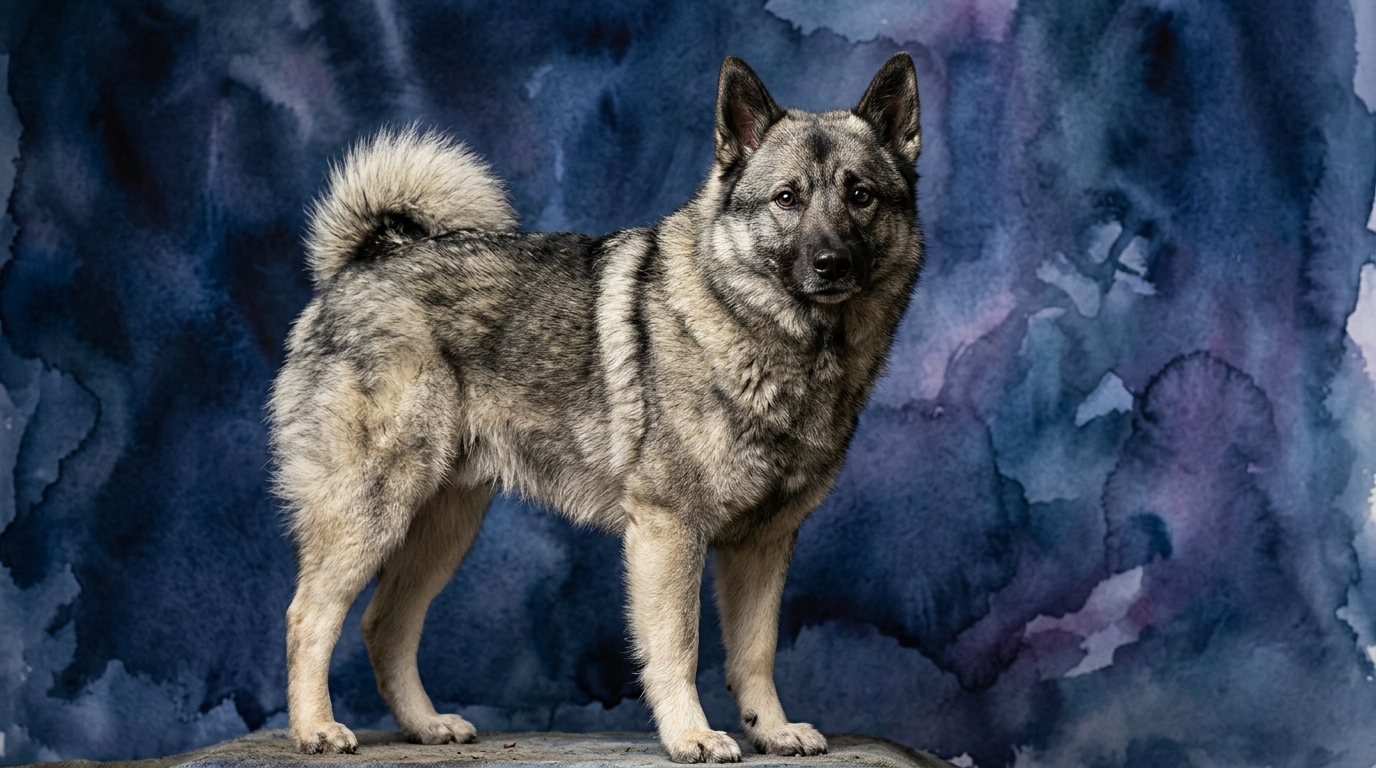
In contrast, the Norwegian Elkhound, holding a higher Coren rank of #36, demonstrates a more agile cognitive profile. Their Problem Solving is rated 4/5, indicating a greater aptitude for navigating complex situations and devising creative solutions, particularly in tasks involving exploration or scent work. Training Speed, at 4/5, means they generally pick up new commands and routines more quickly, showing a keen interest in engagement. Their Social Intelligence is 3/5, similar to the Bullmastiff, but often expressed through an independent yet responsive understanding of pack dynamics. The Elkhound’s Instinctive Drive, 3/5, is rooted in its historical role as a hunting dog, manifesting as a strong desire to track, explore, and vocalize. Their Memory, rated 4/5, is particularly strong, allowing them to recall intricate details, learned commands, and even specific locations over extended periods, a crucial trait for an independent hunter.
Where Bullmastiff Wins Cognitively
The Bullmastiff's cognitive strengths frequently manifest in areas demanding steadfastness and discerning judgment. While their Problem Solving is rated 3/5, it is most effective in scenarios requiring protective vigilance. They excel at assessing potential threats, understanding established boundaries, and making decisions that prioritize the safety of their family or territory. This isn't about solving abstract puzzles but rather about applying a robust, grounded intelligence to real-world security situations with unwavering focus. Their Social Intelligence, also 3/5, manifests as a profound loyalty and an intuitive grasp of their immediate family's emotional states, allowing them to offer silent, comforting presence or intervene when they perceive distress. This deep, focused social bond means they are acutely aware of their inner circle's needs, often without needing verbal cues. Their moderate Instinctive Drive (3/5) is a quiet strength, channeled into watchful observation rather than restless pursuit, making them exceptionally reliable in their guardian role, a cognitive advantage for owners seeking a dedicated protector.
Where Norwegian Elkhound Wins Cognitively
The Norwegian Elkhound's cognitive profile showcases a distinct advantage in agility of thought and independent action. With a Problem Solving score of 4/5, they are adept at devising creative solutions, especially when presented with environmental challenges or tasks requiring strategic thinking, like navigating difficult terrain or locating hidden items using their keen senses. This makes them less reliant on direct human instruction for every step and more inclined to figure things out for themselves, demonstrating an impressive mental flexibility. Their Training Speed of 4/5 reflects a quick mental grasp, allowing them to learn complex sequences and commands with fewer repetitions. This isn't just about speed, but also about a nuanced understanding of intent, enabling them to generalize learned behaviors efficiently. Furthermore, their Memory, also 4/5, is particularly impressive, enabling them to recall intricate scent trails, past training sessions, or even specific locations over long periods. This strong recall supports their historical role as independent hunters, where remembering patterns and paths was crucial for survival and success.
Which is Easier to Train and Why
When considering ease of training, the Norwegian Elkhound generally presents a more straightforward experience for many owners, primarily due to its higher Training Speed (4/5) and Problem Solving (4/5) scores. Elkhounds typically demonstrate a quicker grasp of new commands and a greater eagerness to engage in learning sessions. Their independent nature, while sometimes perceived as stubbornness, often translates into a dog that can understand and execute tasks efficiently once motivated. They respond well to varied training techniques and can quickly generalize learned behaviors to different environments, making them rewarding partners for those who enjoy structured training. In contrast, the Bullmastiff, with a Training Speed of 3/5, requires a more patient, consistent, and reward-based approach. While capable of learning, they may take longer to solidify commands and can be less inclined to perform repetitive tasks without a clear purpose or strong incentive. Their protective Instinctive Drive (3/5) means early socialization and consistent boundary setting are crucial to channel their natural guarding tendencies appropriately, rather than suppressing them. For the Bullmastiff, training is about building a respectful partnership and making them understand the value of cooperation, whereas for the Elkhound, it's often about engaging their cleverness and desire for mental stimulation.
Which Suits Active Owners vs. Relaxed Owners
The choice between these breeds significantly depends on an owner's lifestyle and activity level. The Norwegian Elkhound, with its background as a robust hunting dog, thrives with active owners. Its Instinctive Drive (3/5), while not the highest, is geared towards exploration, scent work, and sustained physical activity. They require regular, vigorous exercise, such as long hikes, runs, or engaging in dog sports like agility or tracking. Their Problem Solving (4/5) and Memory (4/5) also mean they benefit immensely from mental stimulation, like puzzle toys or advanced obedience training, to prevent boredom and potential mischievousness. A relaxed owner might find an Elkhound's energy and desire for activity overwhelming, potentially leading to an under-stimulated dog prone to destructive behaviors. Conversely, the Bullmastiff is generally better suited for more relaxed owners, though "relaxed" does not mean inactive. While they need daily walks and opportunities for moderate exercise to maintain their formidable physique, their Instinctive Drive (3/5) leans more towards watchful companionship and less towards continuous high-intensity activity. Their moderate Problem Solving (3/5) means they are content with routine and less likely to seek out constant novel challenges. They appreciate a calm home environment and are often content to supervise their domain from a comfortable spot, making them excellent companions for those who enjoy a more sedate pace of life but still commit to consistent daily engagement.
The Verdict
Opt for a Bullmastiff if you seek a steadfast, loyal guardian with a calm demeanor, valuing consistent companionship over high-octane activity, and are prepared for patient, purpose-driven training.
Select a Norwegian Elkhound if you are an active individual or family seeking an agile, problem-solving companion for outdoor adventures and enjoy engaging in stimulating training activities.
🧠 Find Your Pet's IQ Score
Our Pet IQ Lab assessment covers 25+ tests across 5 cognitive dimensions — personalized to your breed.
Take the Full IQ Test →Frequently Asked Questions
How do their social intelligence scores of 3/5 differ in practice?
For the Bullmastiff, a 3/5 social intelligence means deep loyalty and intuitive understanding within their tight-knit family circle, often expressed through quiet vigilance and a protective presence. The Norwegian Elkhound's 3/5 reflects a good understanding of pack dynamics and responsiveness to human cues, but with a more independent social expression that values interaction while retaining its own will.
Does the Bullmastiff's lower problem-solving score mean it cannot learn complex tasks?
Not at all; a 3/5 problem-solving score indicates they excel at practical, security-related problems rather than abstract ones. They can learn complex tasks, but it typically requires more repetition and a clear, consistent training methodology focused on the task's real-world utility and relevance to their guardian nature.
How does the Elkhound's strong memory (4/5) impact its behavior?
The Norwegian Elkhound's strong memory means they excel at recalling training, locations, and experiences, which can be highly beneficial for complex commands or tracking. However, it also means they may remember negative experiences or inconsistencies in training, requiring a thoughtful and consistently positive approach to avoid ingrained undesirable habits.