Side-by-Side Cognitive Profile
The Cosmic Pet Pet IQ Lab employs a five-dimensional framework to assess canine intelligence. Let's delve into how the Bullmastiff and Tibetan Mastiff measure up across these key cognitive areas:
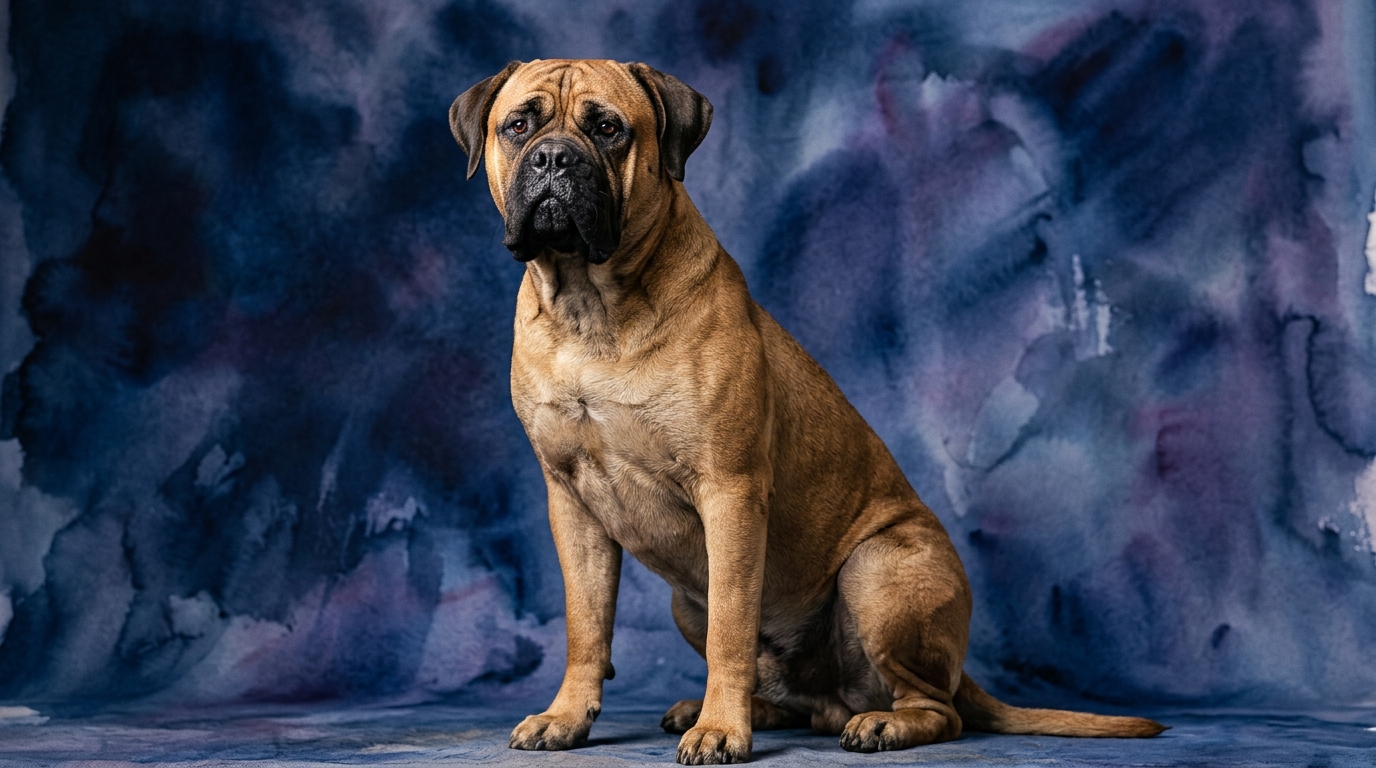
**Bullmastiff (Coren Rank #69):**
**Problem Solving (3/5):** The Bullmastiff exhibits a moderate capacity for independent thought and practical problem-solving, particularly when it pertains to their immediate environment and perceived threats. This manifests as an ability to assess a new person's demeanor, determine if a gate is secure, or navigate household obstacles efficiently. They are not typically inclined towards intricate puzzle-solving for its own sake but will employ their intellect to achieve comfort or security, demonstrating a pragmatic rather than purely exploratory cognitive style.
**Training Speed (3/5):** Possessing a moderate training speed, Bullmastiffs can learn new commands and routines effectively, provided the methods are consistent, clear, and positive. They respond best when training feels like a partnership, where their efforts are rewarded. While they grasp concepts, their moderate independence means they might not always execute commands with lightning speed, often taking a moment to process or decide if the request aligns with their current inclination. Patience and understanding of their thoughtful nature are key.
**Social Intelligence (3/5):** Bullmastiffs display a moderate level of social intelligence, excelling in their ability to read human emotions within their family unit and understand established social hierarchies in the home. They are acutely aware of their owner's mood and can offer comfort or space as needed. With strangers, their social intelligence shifts to a more observational, discerning mode, where they quickly categorize individuals as friend, neutral, or potential threat, guiding their reserved initial interactions.
**Instinctive Drive (3/5):** Their instinctive drive is moderately strong, primarily channeled into protection and companionship. This drive fuels their natural inclination to guard their home and family, often acting as a formidable, silent deterrent. Beyond guarding, they possess a moderate drive for social interaction with their family, seeking proximity and engagement, reflecting their historical role as a companion and protector for gamekeepers.
**Memory (3/5):** Bullmastiffs have a moderate memory, retaining learned commands, routines, and experiences over significant periods. They remember past interactions with specific individuals and places, which informs their future responses, especially regarding perceived threats or pleasant encounters. This reliable memory contributes to their consistent behavior within their established family and territory.
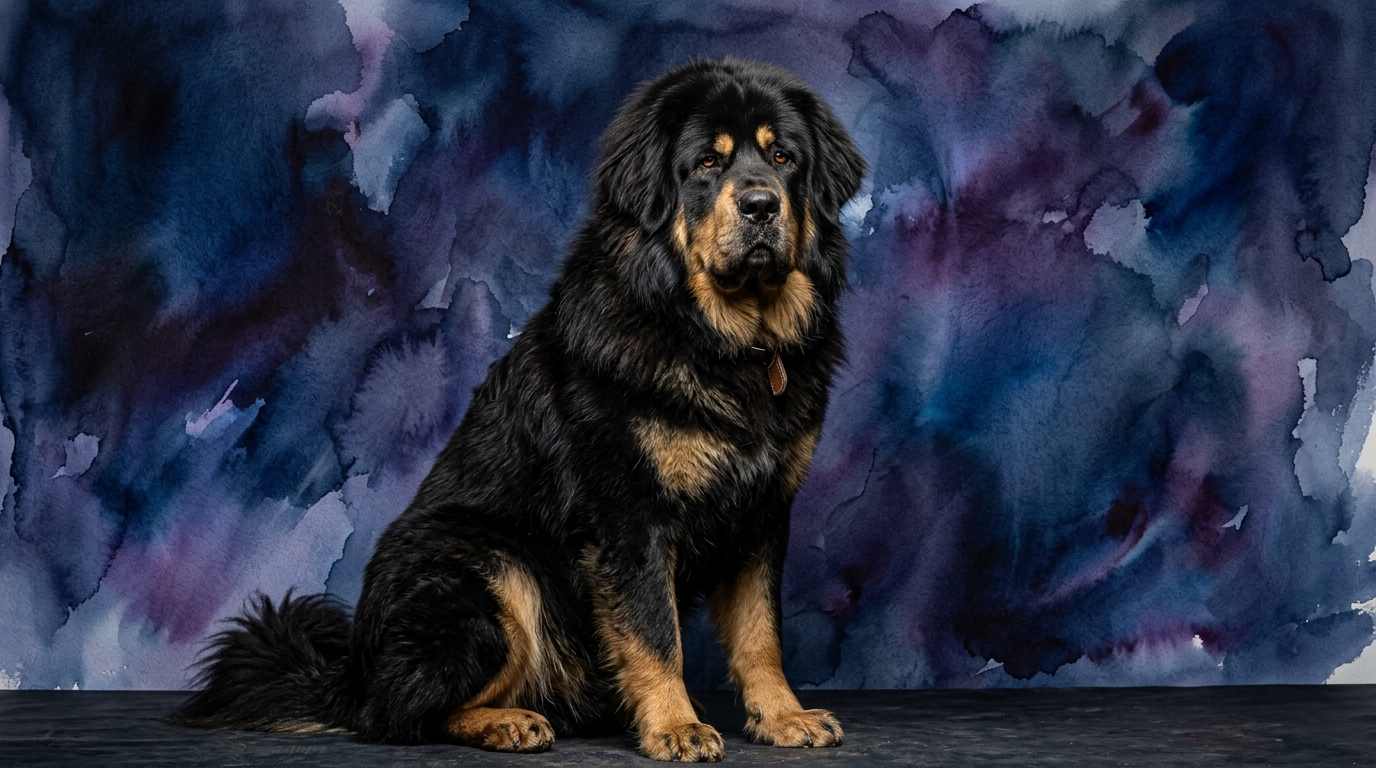
**Tibetan Mastiff (Not Coren-Ranked):**
**Problem Solving (3/5):** The Tibetan Mastiff also demonstrates a moderate problem-solving ability, but it is heavily skewed towards autonomous decision-making in guarding scenarios. They are exceptionally adept at identifying and neutralizing threats to their territory or flock independently, often without requiring human direction. Their intellect excels at spatial reasoning and strategic positioning, allowing them to effectively patrol and secure boundaries. Their problem-solving is less about following human cues and more about self-initiated, practical application of their guarding instincts.
**Training Speed (3/5):** While rated 3/5, the Tibetan Mastiff's training speed is uniquely influenced by their profound independence and self-reliance, making them appear "slower" to train in conventional obedience. They learn at their own deliberate pace and are not inherently motivated by the desire to please in the same way many breeds are. Training requires immense patience, understanding their motivations, and presenting tasks in a way that aligns with their inherent purpose or appears logical to them, rather than simply demanding compliance.
**Social Intelligence (3/5):** Tibetan Mastiffs exhibit a moderate social intelligence, forming intensely deep, almost primal bonds with their immediate family, whom they will protect fiercely. Their understanding of social nuances outside this inner circle is often limited by their natural aloofness and suspicion of strangers. They are masters of discerning "their people" from "outsiders," and their social interactions are heavily filtered through this protective lens, requiring extensive, careful socialization from puppyhood.
**Instinctive Drive (3/5):** Their instinctive drive is profoundly powerful, centered on vigilant guarding and territorial protection. This breed possesses an ancient, deep-seated instinct to patrol, alert, and stand watch, especially during the nocturnal hours. Their drive for independence is equally strong, shaping their decision-making and often leading them to act on their own initiative rather than waiting for human command, a trait forged in centuries of solitary work.
**Memory (3/5):** Tibetan Mastiffs possess a moderate memory, particularly potent for recalling spatial layouts, established routines, and the identity of those within their trusted circle versus perceived threats. They remember past events, especially those involving territorial challenges or significant encounters, which significantly informs their cautious and protective nature, ensuring consistent vigilance over their domain.
Where Bullmastiff Wins Cognitively
While both breeds share similar raw IQ scores across our five dimensions, the Bullmastiff's cognitive strengths often lie in their adaptability to a structured family environment and a slightly greater inclination towards cooperative learning. Their Coren ranking, even at #69, indicates a higher general trainability and responsiveness compared to a breed specifically bred for extreme independence. This means a Bullmastiff is typically more receptive to varied training methods and enjoys engaging in learning sessions that strengthen the bond with their human, viewing it as a collaborative effort. Their problem-solving, though rated 3/5, can be more readily directed by an owner towards tasks like obedience trials, scent work, or even basic household assistance, as they possess a stronger desire to integrate into human-led structures and fulfill a partnership role. This subtle difference in their social-cognitive framework makes them more inclined to "win" in scenarios requiring directed partnership and a willingness to follow a leader.
Where Tibetan Mastiff Wins Cognitively
The Tibetan Mastiff's cognitive superiority emerges in areas demanding profound independence and autonomous decision-making, particularly concerning protection and environmental assessment. Their 3/5 problem-solving and instinctive drive ratings, while numerically identical to the Bullmastiff, manifest through a different lens. A Tibetan Mastiff excels at assessing complex environmental cues and potential threats without direct human intervention, a skill honed over centuries of solitary guarding. They possess an innate, almost primal understanding of territory and perceived danger, often making nuanced judgments about who belongs and who doesn't based on subtle changes in their environment. Their memory, while rated 3/5, is particularly robust for spatial awareness and recalling past territorial infringements, making them incredibly effective, self-sufficient guardians. This breed's cognition shines when entrusted with overarching responsibility and minimal direct instruction, where their ancient instincts guide their formidable intellect in a truly self-reliant manner.
Which is Easier to Train and Why
Despite both breeds having a "training speed 3/5" rating, the Bullmastiff is generally considered easier to train for the average owner. This is largely due to their relatively higher Coren rank and a more pronounced desire for human companionship and approval. Bullmastiffs typically respond well to positive reinforcement and consistent, firm guidance, showing a willingness to engage in structured learning. Their independence is present but balanced with a cooperative spirit, meaning they are more likely to perform a command even if they don't immediately see the "point." In contrast, the Tibetan Mastiff's extreme self-reliance and deep-seated guarding instincts make them significantly more challenging. They learn at their own pace and often require compelling reasons to obey, viewing commands as suggestions rather than absolute directives. Training a Tibetan Mastiff demands extraordinary patience, a deep understanding of their breed specific motivations, and an acceptance that their compliance will often be conditional upon their own assessment of the situation.
Which Suits Active Owners vs Relaxed Owners
Neither the Bullmastiff nor the Tibetan Mastiff are typically suited for highly active owners seeking a running or agility partner, as both are large, robust breeds with moderate exercise requirements. However, the Bullmastiff leans more towards suiting a moderately active owner who enjoys daily walks, some playtime, and engages in consistent training and mental stimulation. They thrive on being part of family activities and appreciate a structured routine that includes physical and mental engagement. For truly relaxed owners, neither breed is ideal, as both require significant socialization, training, and management due to their size and guarding instincts. The Tibetan Mastiff, with its profound independence and nocturnal guarding tendencies, is particularly ill-suited for a relaxed owner. They require an owner who is knowledgeable, committed to extensive socialization, and prepared to manage a dog with strong, ancient instincts that demand respect and understanding, rather than a "relaxed" approach.
The Verdict
Choose a Bullmastiff if you seek a formidable yet cooperative family guardian, valuing a dog that integrates more readily into household routines and responds well to consistent, positive training.
Opt for a Tibetan Mastiff if you are an experienced, patient owner seeking an ancient, independent guardian whose primary cognitive strength lies in autonomous territorial protection, requiring minimal direct intervention.
🧠 Find Your Pet's IQ Score
Our Pet IQ Lab assessment covers 25+ tests across 5 cognitive dimensions — personalized to your breed.
Take the Full IQ Test →Frequently Asked Questions
Do Bullmastiffs and Tibetan Mastiffs get along with other pets?
Bullmastiffs, with proper early socialization, can often coexist peacefully with other pets, though supervision is always advisable with smaller animals. Tibetan Mastiffs, due to their strong territorial and guarding instincts, may be more challenging to integrate with other pets, particularly unfamiliar dogs, and require extensive, careful introductions.
What kind of mental stimulation do these breeds need?
Both breeds benefit from mental stimulation that taps into their guarding instincts, such as "watch" games or perimeter checks. Bullmastiffs also enjoy obedience training, puzzle toys, and interactive play with their family. Tibetan Mastiffs thrive on having a defined territory to patrol and opportunities for independent observation, rather than complex obedience drills.
Are these breeds good for first-time dog owners?
Neither breed is generally recommended for first-time dog owners due to their size, strength, and strong guardian instincts. Bullmastiffs can be managed by a dedicated novice with professional guidance, but Tibetan Mastiffs require an experienced owner deeply familiar with guardian breeds and their unique cognitive and behavioral traits.