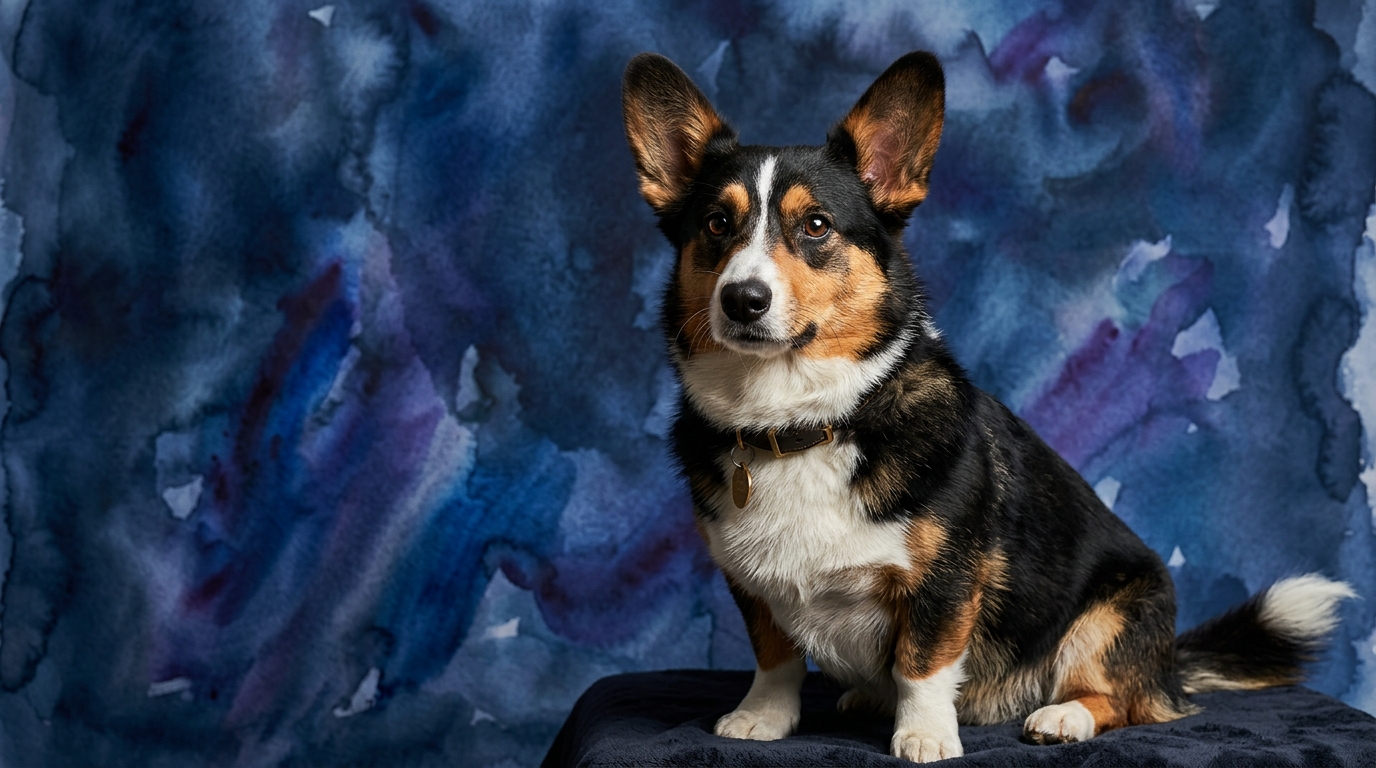
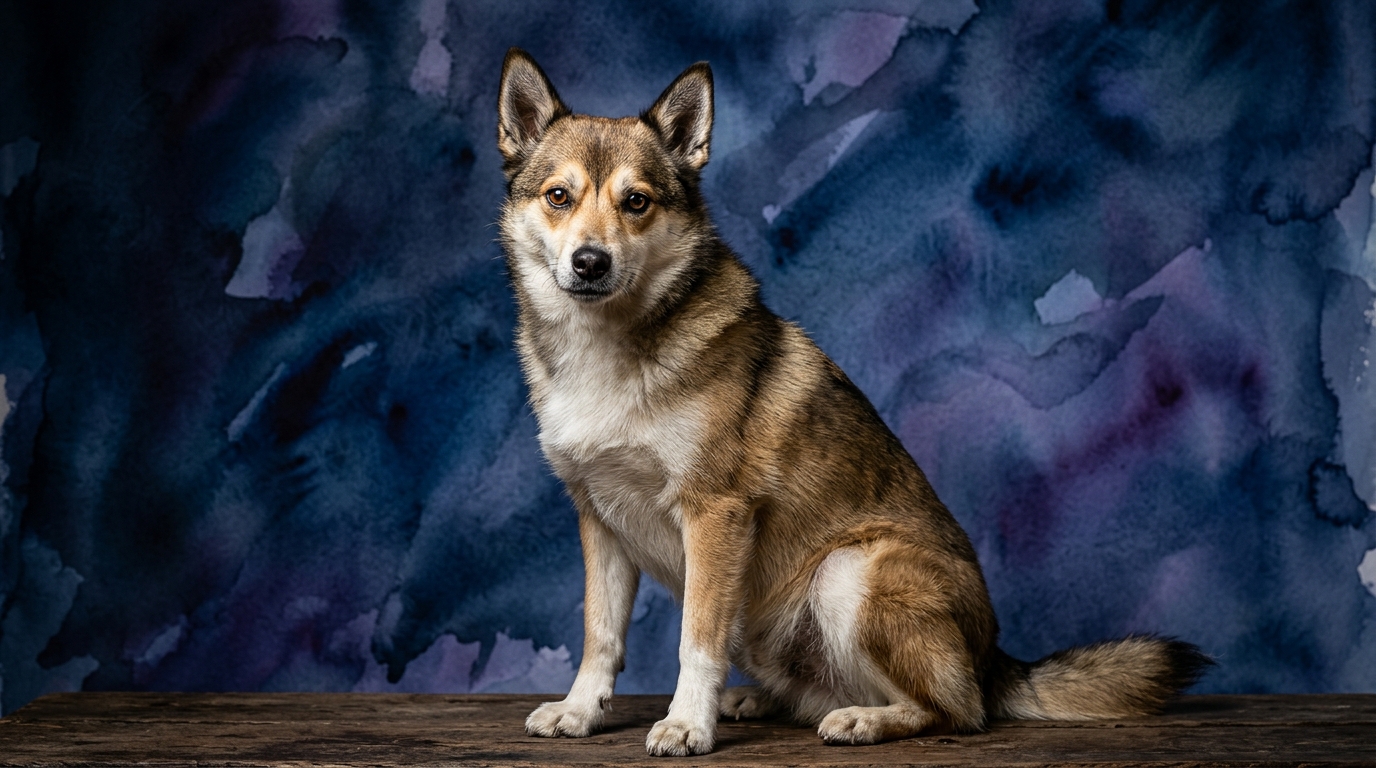
Side-by-Side Cognitive Profile: Cardigan Welsh Corgi vs. Norwegian Lundehund
At The Cosmic Pet Pet IQ Lab, we delve into specific cognitive dimensions to understand what truly differentiates breeds. The Cardigan Welsh Corgi, recognized by Coren for its working intelligence at rank #26, presents a profile geared towards collaborative tasks and rapid learning. Its Problem Solving is rated 4/5, reflecting an aptitude for navigating complex situations and making quick, effective decisions, often under human direction. The Training Speed also scores 4/5, indicating a strong eagerness to learn and respond to cues with relatively few repetitions, making them highly receptive students. Social Intelligence stands at 3/5, suggesting a practical awareness of social dynamics without being overly effusive or deeply nuanced in human emotional cues. Instinctive Drive, at 3/5, points to a moderate but present herding impulse, directing their energy towards managing movement. Finally, their Memory is strong at 4/5, allowing them to retain commands, routines, and spatial information with impressive recall.
In contrast, the Norwegian Lundehund, a breed not formally ranked by Coren, demonstrates a cognitive architecture molded by its highly specialized historical role as a puffin hunter on steep coastal cliffs. Its Problem Solving is rated 3/5, indicating an ability to find solutions independently, often through trial and error, particularly when navigating challenging physical environments. Training Speed is also 3/5, meaning they can learn, but might require more patience and consistency due to their inherent independence rather than a strong desire to please a handler above all else. Social Intelligence is 3/5, similar to the Corgi, suggesting a self-reliant social awareness without constant reliance on human validation. Instinctive Drive, also 3/5, is channeled into tenacious hunting and exploring behaviors, manifesting as persistent burrowing, climbing, and scent tracking. Their Memory score is 3/5, sufficient for recalling learned routes and successful hunting strategies but perhaps less geared towards complex, multi-step human commands.
Where the Cardigan Welsh Corgi Excels Cognitively
The Cardigan Welsh Corgi demonstrates clear cognitive advantages in areas requiring structured learning and collaborative execution. Their 4/5 score in Problem Solving is not just about finding solutions, but about finding them efficiently within a framework provided by a human partner. This manifests in their ability to quickly interpret and respond to complex commands in obedience, agility, or herding trials, where strategic thinking and rapid adaptation are crucial. They excel at deciphering patterns and anticipating sequences in training exercises, showcasing a practical intelligence geared towards partnership.
Furthermore, the Corgi's superior Training Speed (4/5) combined with strong Memory (4/5) creates a highly trainable canine. They absorb new information with impressive speed, requiring fewer repetitions to master a command or trick. This retention allows them to build a vast repertoire of learned behaviors, making them adept at tasks that demand a wide range of responses. Their cognitive architecture is optimally designed for understanding and executing human-directed tasks, making them quick studies for multi-stage commands and adaptable to varying training methodologies.
Unique Cognitive Strengths of the Norwegian Lundehund
While the Norwegian Lundehund's general cognitive scores are slightly lower than the Corgi's, its strengths lie in a different, highly specialized form of intelligence. Its 3/5 Problem Solving score reflects an exceptional capacity for independent, self-directed solutions, particularly in navigating physically demanding and unpredictable terrains. Imagine a dog needing to find its way through a labyrinth of rock crevices and tunnels to reach prey; this requires a unique blend of spatial reasoning, physical adaptability, and tenacious exploration without constant human guidance. Their cognitive processes are honed for autonomous environmental interaction.
The Lundehund's Instinctive Drive (3/5), while numerically similar to the Corgi's, is channeled into a persistent hunting focus that demands a specific kind of cognitive resilience. This drive fuels their ability to methodically search, track, and overcome obstacles in pursuit of a goal, relying on their own judgment rather than external cues. Their memory (3/5), though not as high as the Corgi's, is likely robust for remembering successful hunting routes, hidden pathways, and the location of specific resources, demonstrating a practical, survival-oriented recall. This breed's cognitive profile emphasizes self-reliance and ingenious adaptation to extreme environmental challenges.
Trainability: Cardigan Welsh Corgi vs. Norwegian Lundehund
When it comes to ease of training, the Cardigan Welsh Corgi holds a distinct advantage. Their higher Training Speed (4/5) and Problem Solving (4/5) scores are direct indicators of their responsiveness and aptitude for learning human commands. Corgis, originating as herding dogs, possess an inherent desire to work cooperatively with a handler, often displaying strong focus and an eagerness to please. This translates into quicker acquisition of new skills and a more reliable recall in varied environments. Behavioral differences are evident; Corgis frequently offer eye contact and actively seek direction, making them highly engaged students in formal training sessions.
The Norwegian Lundehund, with its 3/5 scores in both Training Speed and Problem Solving, presents a greater challenge for traditional obedience training. Their history as independent puffin hunters cultivated a self-reliant mindset, meaning they are less inclined to automatically defer to human commands. While they are certainly capable of learning, their motivation often needs to be more intrinsically rewarding, and they may be more easily distracted by compelling environmental stimuli like scents or potential burrowing spots. Training a Lundehund requires significant patience, consistency, and a deep understanding of positive reinforcement tailored to their independent nature, rather than expecting immediate compliance or a strong desire to please.
Lifestyle Match: Active vs. Relaxed Owners
Both the Cardigan Welsh Corgi and the Norwegian Lundehund are breeds that require active engagement, but the *nature* of that activity differs significantly. The Cardigan Welsh Corgi thrives with owners who enjoy structured activities. They excel in dog sports like agility, obedience, and rally, or even recreational herding, which tap into their problem-solving and training speed. They need consistent mental stimulation through training and physical exercise that often has a purpose or a goal. An active owner who provides regular, varied challenges and enjoys collaborative work will find the Corgi a fulfilling partner.
The Norwegian Lundehund, while equally active, suits owners who appreciate and can accommodate a more independent and exploratory approach to exercise. They need outlets for their instinctive drives, which include climbing, exploring varied terrains, and digging. Long hikes in natural environments where they can investigate and use their unique physical adaptations are ideal. While they can participate in some dog sports, their primary need is for physical activity that allows for self-directed exploration and problem-solving. Owners who understand and respect this independence, providing opportunities for their dog to 'be a Lundehund' in challenging outdoor settings, will find a suitable companion.
The Verdict
Choose the Cardigan Welsh Corgi for a canine partner eager for structured learning, quick to adapt to complex commands, and thriving on collaborative tasks like advanced obedience or dog sports.
Opt for the Norwegian Lundehund if you seek an independent companion with a unique physical and cognitive makeup, valuing self-directed exploration and resilient problem-solving in challenging environments.
🧠 Find Your Pet's IQ Score
Our Pet IQ Lab assessment covers 25+ tests across 5 cognitive dimensions — personalized to your breed.
Take the Full IQ Test →Frequently Asked Questions
Do Cardigan Welsh Corgis bark a lot?
Cardigan Corgis, with their herding instincts, often use barking to manage their 'flock' or alert to novelties, so they can be vocal without proper training. Consistent training focused on quiet commands and managing environmental triggers can help moderate this behavior.
Are Norwegian Lundehunds good with children?
Norwegian Lundehunds can be good with respectful children, but their independent nature means they might not constantly seek interaction. Supervision is always recommended, and early, positive socialization is crucial for harmonious family life, teaching both dog and child boundaries.
What unique physical traits does a Lundehund possess?
The Norwegian Lundehund possesses several unique traits, including six functional toes on each foot for better grip on rocky surfaces, extra flexible shoulder and neck joints allowing them to turn their heads 180 degrees backwards, and the ability to fold their ears shut for protection in tight spaces.