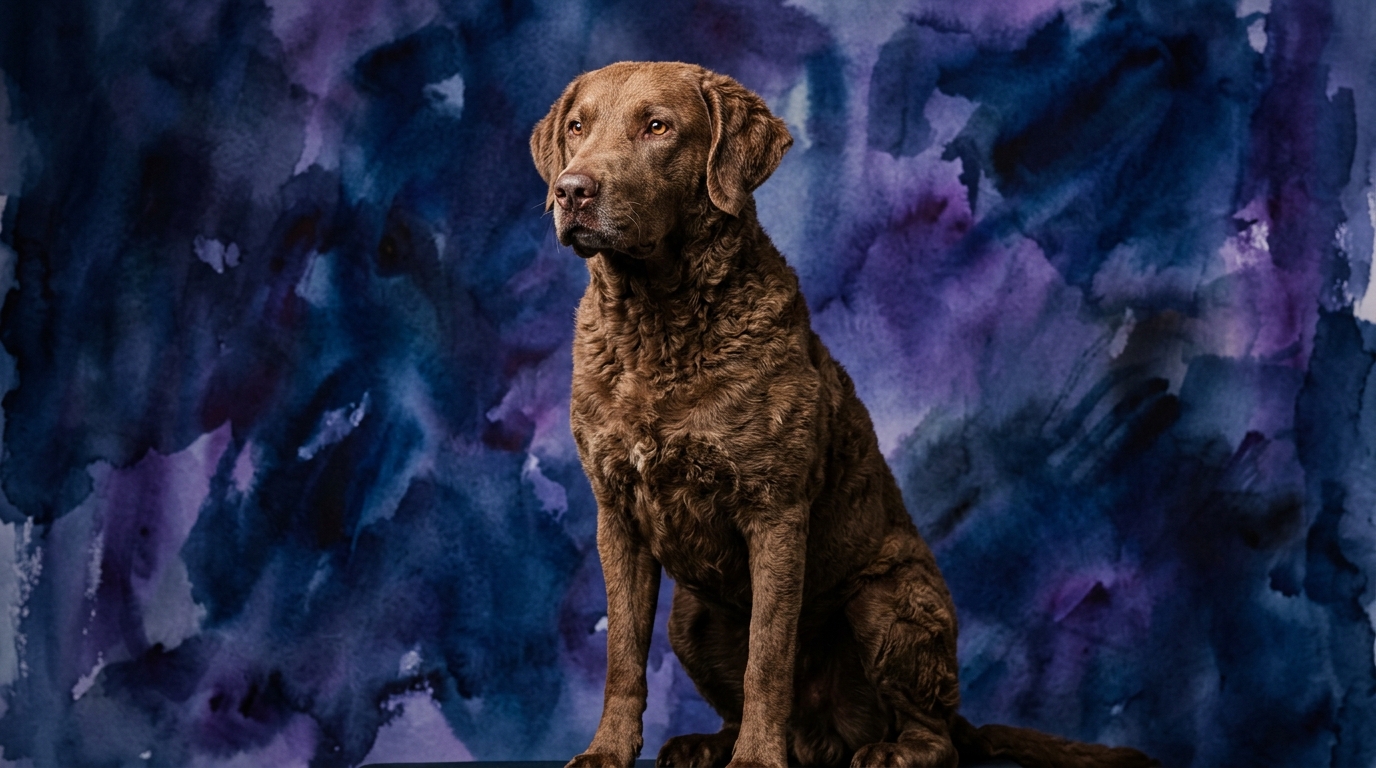
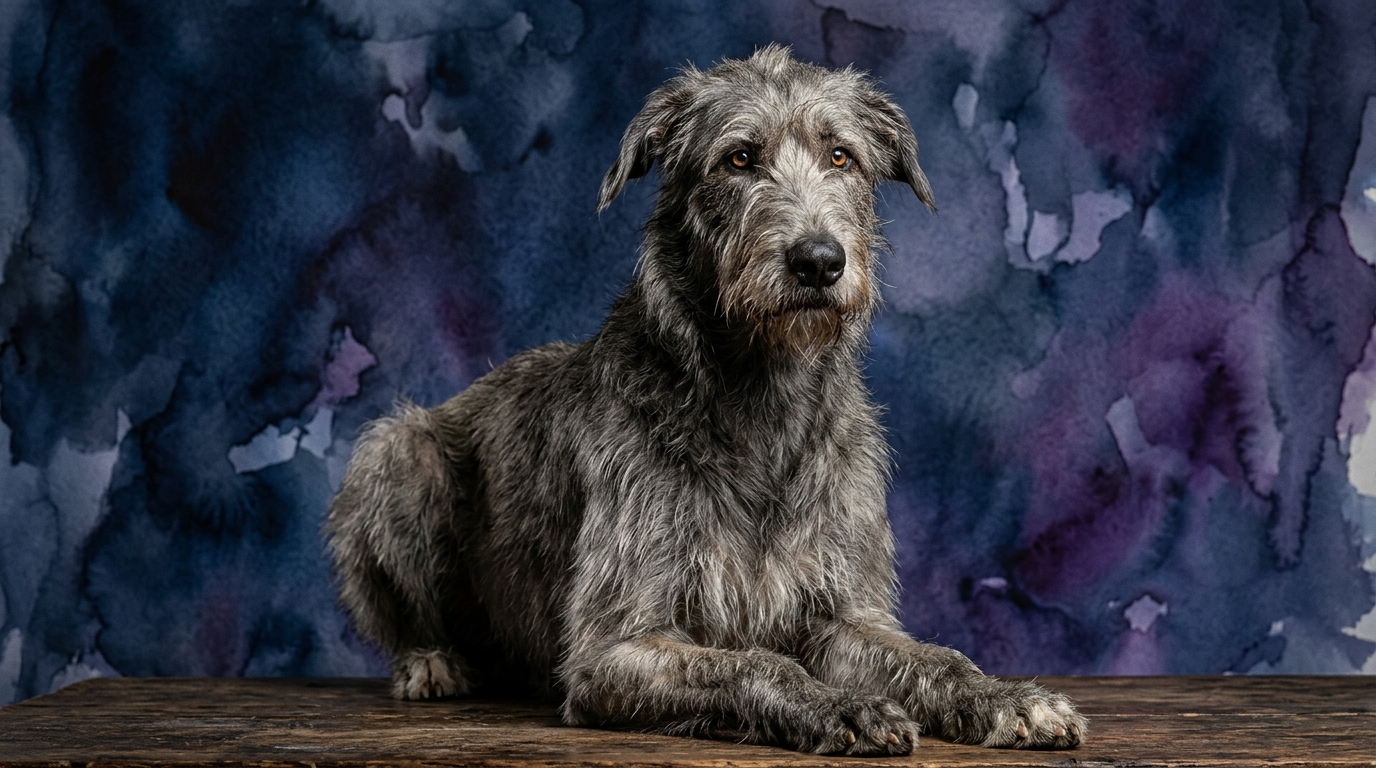
Side-by-Side IQ Profiles: A Cognitive Snapshot
The Cosmic Pet Pet IQ Lab employs a five-dimensional framework to assess canine intelligence, offering a nuanced view beyond mere obedience. For the Chesapeake Bay Retriever, our analysis shows a Problem Solving score of 4/5, indicating a strong capacity to navigate complex situations and strategize. Their Training Speed also rates 4/5, reflecting an eagerness and ability to grasp new commands and sequences quickly. Social Intelligence is marked at 3/5, suggesting a practical understanding of human cues without excessive emotional dependence, while Instinctive Drive, at 3/5, points to a purposeful, task-oriented nature. Finally, their Memory scores an impressive 4/5, enabling them to retain intricate information and learned behaviors over time. This breed’s cognitive profile is further supported by its Coren rank of #27, placing it among breeds that demonstrate a consistent ability to learn and follow commands.
In contrast, the Irish Wolfhound presents a different cognitive landscape. Their Problem Solving score is 3/5, indicating a thoughtful approach to challenges, though perhaps with less urgency or direct strategizing than the Chesapeake. Training Speed also sits at 3/5, meaning they are capable learners but may require more repetition or varied motivational techniques. Social Intelligence is rated 3/5, reflecting a calm and observant nature, often forming deep bonds within their family unit without overt displays. Their Instinctive Drive, also 3/5, is geared more towards companionship, vigilance, and the occasional burst of pursuit rather than sustained, directed work. Memory for the Irish Wolfhound is 3/5, suggesting they retain information adequately but might not recall complex sequences with the same precision as a Chesapeake. Notably, the Irish Wolfhound does not appear on the Coren ranking, a factor that often indicates a breed whose primary cognitive strengths lie outside of rapid obedience learning.
Where the Chesapeake Bay Retriever Excels Cognitively
The Chesapeake Bay Retriever's cognitive strengths are deeply rooted in their working heritage. Their 4/5 Problem Solving score shines when faced with environmental challenges, such as figuring out the optimal path to retrieve a decoy from dense cover or navigating currents. They don't just react; they often assess the situation, making independent decisions to achieve their goal. This breed's superior 4/5 Training Speed means they absorb new commands and multi-step routines with remarkable efficiency, often requiring fewer repetitions than many other breeds. An owner teaching a Chessie a complex agility course or a series of hunting hand signals will likely observe rapid comprehension and execution.
Furthermore, their 4/5 Memory allows them to recall these learned behaviors and specific locations with precision, even after long periods. A Chesapeake might remember the exact spot a ball landed weeks ago or flawlessly execute a sequence of commands learned months prior. This cognitive recall is invaluable in field work, where consistency and reliability are paramount. Their focused Instinctive Drive, while 3/5, is perfectly aligned with purposeful tasks, channeling their mental energy into achieving a clear objective rather than being easily sidetracked. This combination of traits makes them particularly adept at tasks requiring sustained mental engagement and independent decision-making within a structured framework.
Where the Irish Wolfhound Shows Unique Cognitive Strengths
While the Irish Wolfhound's scores appear lower on paper, their cognitive profile reveals strengths that are often overlooked by metrics focused on rapid task completion. Their 3/5 Problem Solving, for instance, manifests as a thoughtful, often less impulsive approach to new situations. An Irish Wolfhound might not immediately rush to solve a puzzle toy but will observe, consider, and then methodically attempt solutions, sometimes demonstrating surprising ingenuity in their own time. This deliberate processing can lead to stable, well-considered responses rather than quick, potentially flawed ones. Their 3/5 Social Intelligence, though not outwardly effusive, reflects a profound capacity for emotional attunement within their family. They often read subtle human cues and moods, offering comfort or space as needed, without requiring explicit commands.
The Irish Wolfhound's Instinctive Drive, also 3/5, is less about directed work and more about companionship and vigilance. Their cognitive energy is often directed towards monitoring their environment and the well-being of their human companions, making them naturally attentive guardians. Their 3/5 Memory, while not as sharp for complex sequences, is entirely sufficient for remembering routines, family members, and established boundaries. This allows them to thrive in a predictable home environment, fostering a sense of security and belonging. Their calm demeanor, a hallmark of their breed, also suggests a cognitive capacity for self-regulation and patience, which are valuable traits in a large companion animal.
Training Dynamics: Chesapeake Bay Retriever vs. Irish Wolfhound
When it comes to training, the Chesapeake Bay Retriever generally presents a more straightforward experience for owners seeking a responsive learner. Their 4/5 Training Speed means they pick up new commands with efficiency, often understanding the expectation after just a few repetitions. This is coupled with a strong desire to please and a focused work ethic, making them highly motivated by praise and task completion. For instance, teaching a Chessie to 'stay' or 'heel' typically progresses rapidly because they are eager to engage and process information quickly, often demonstrating a clear understanding of what is being asked of them. Their problem-solving abilities also mean they can generalize learned behaviors to new environments more readily.
The Irish Wolfhound, with a 3/5 Training Speed, requires a different approach. They are capable of learning, but their hound heritage often means a more independent streak and a less urgent drive to comply. Training an Irish Wolfhound demands patience, positive reinforcement, and a focus on building a strong, trusting relationship. For example, while a Chessie might quickly learn to retrieve, an Irish Wolfhound might need more consistent, reward-based motivation and a longer period of repetition to solidify the command, especially if their attention is drawn by a scent or visual stimulus. They respond best to fair, consistent methods and can be sensitive to harsh corrections. Their training is more about gentle persuasion and establishing a respectful partnership than about rapid command acquisition.
Ideal Lifestyles: Active Engagement vs. Relaxed Companionship
The cognitive makeup of the Chesapeake Bay Retriever makes them an ideal match for active owners who relish engaging their dog in purposeful activities. Their high problem-solving capacity and rapid training speed mean they thrive with consistent mental stimulation, such as advanced obedience, retrieving sports, or even scent work. An owner who enjoys outdoor adventures, regular training sessions, and providing their dog with 'jobs' will find the Chessie to be an incredibly rewarding partner. These dogs benefit from having their keen memory and instinctive drive channeled into constructive outlets, preventing boredom and potential behavioral issues that can arise from under-stimulation. They are not content to merely observe; they want to participate and apply their cognitive abilities.
Conversely, the Irish Wolfhound is better suited for owners who appreciate a more relaxed, yet attentive, companion. While they require regular exercise due to their size, their cognitive needs lean more towards social interaction and a calm home environment rather than intense, task-oriented work. Owners who enjoy long, leisurely walks, quiet evenings, and a large, gentle presence will find the Irish Wolfhound a perfect fit. Their thoughtful problem-solving and social intelligence allow them to integrate seamlessly into family life, often becoming deeply intuitive members. They are content with observing and being present, offering a steady, comforting companionship that doesn't demand constant mental challenges in the same way a Chesapeake does.
The Verdict
Choose the Chesapeake Bay Retriever if you are an active owner seeking a highly trainable, task-oriented partner eager for mental challenges and consistent engagement in activities like retrieving, obedience, or dog sports.
Opt for the Irish Wolfhound if you desire a calm, thoughtful, and deeply companionable giant breed, appreciating their subtle social intelligence and patient demeanor in a more relaxed home setting, provided you can accommodate their physical needs.
🧠 Find Your Pet's IQ Score
Our Pet IQ Lab assessment covers 25+ tests across 5 cognitive dimensions — personalized to your breed.
Take the Full IQ Test →Frequently Asked Questions
Which breed is better for first-time dog owners?
Neither breed is typically recommended for absolute first-time owners without prior large dog experience, but the Chesapeake Bay Retriever's higher drive and need for consistent training might be more demanding. The Irish Wolfhound's independent nature also requires patience and understanding, making both better suited for owners with some canine experience.
Do Irish Wolfhounds require a lot of mental stimulation?
Irish Wolfhounds benefit from mental stimulation through consistent routines, gentle training, and social interaction with their family, but they don't typically demand the same intensity of structured 'work' or complex problem-solving games as a Chesapeake Bay Retriever. Their cognitive engagement often revolves around observation and companionship.
Can a Chesapeake Bay Retriever adapt to apartment living?
While physically capable, a Chesapeake Bay Retriever's high cognitive drive and need for consistent mental and physical activity make apartment living challenging unless their owners are exceptionally dedicated to daily, rigorous exercise and training sessions outside the home. They thrive with space to move and engage their working instincts.