Side-by-Side Cognitive Profiles
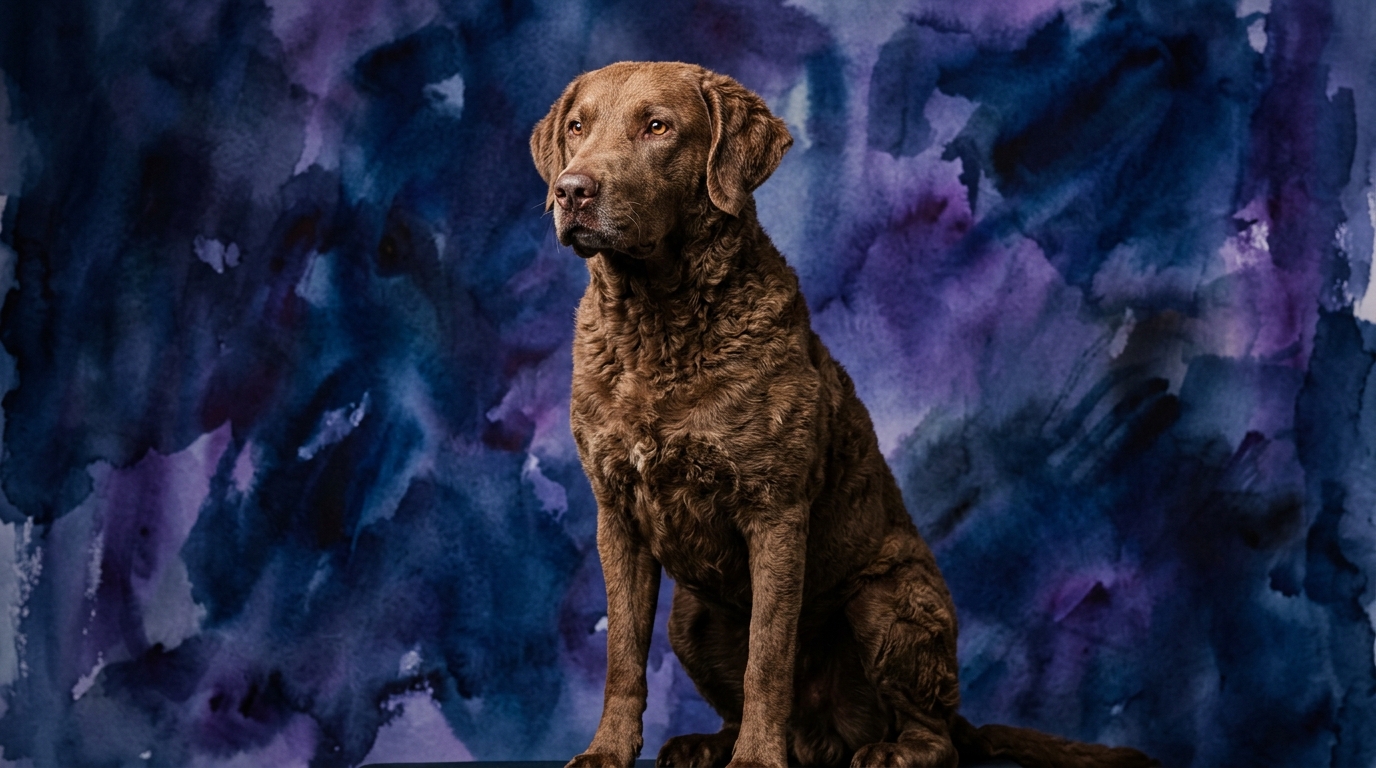
The Cosmic Pet Pet IQ Lab employs five key dimensions to map canine intelligence, offering a nuanced view beyond simple rankings. For the Chesapeake Bay Retriever, a breed globally recognized for its working capacity and ranked #27 by Coren, its profile shows impressive cognitive strengths suited for demanding tasks. It scores 4/5 in Problem Solving, indicating a strong capacity for navigating complex scenarios and figuring out solutions independently. Its Training Speed also stands at 4/5, reflecting a quick grasp of new commands and routines. Social Intelligence is rated 3/5, suggesting an ability to read human cues but perhaps a more reserved demeanor with strangers. Instinctive Drive is 3/5, channeled strongly into its retrieving heritage, and its Memory is a solid 4/5, crucial for recalling complex sequences and past experiences.
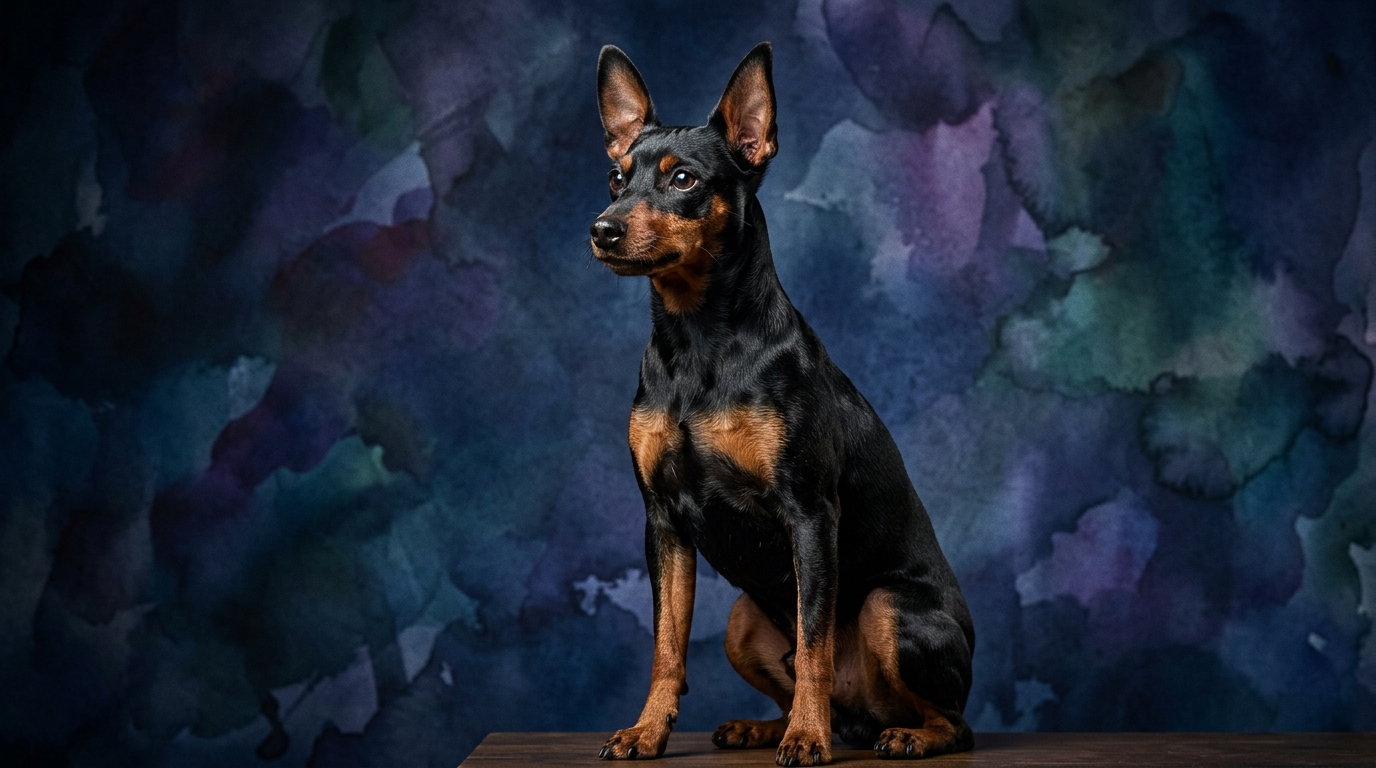
In contrast, the Miniature Pinscher, a breed not Coren-ranked but with its own distinct cognitive toolkit, presents a profile geared towards alertness and companion dynamics. It registers 3/5 in Problem Solving, capable of navigating household challenges and figuring out routes to desired objects, albeit with less complexity than its retriever counterpart. Training Speed is 3/5, meaning it can learn reliably but may require more consistent reinforcement and patience. Its Social Intelligence, like the Chessie, is 3/5, showing awareness of its human family's moods but often expressing wariness towards outsiders. Instinctive Drive also scores 3/5, manifesting as a keen prey drive and territorial instincts. Finally, its Memory is 3/5, allowing it to retain learned behaviors and routines, though perhaps with a shorter recall span for less frequently practiced tasks.
Where the Chesapeake Bay Retriever Excels Cognitively
The Chesapeake Bay Retriever's cognitive prowess truly shines in areas demanding sustained focus, strategic thinking, and robust recall, reflecting its heritage as a dedicated working dog. Its 4/5 rating in Problem Solving enables it to tackle multi-step challenges with notable efficiency, such as figuring out how to retrieve a decoy from a dense cover or navigating a complex field course. This isn't merely about brute force; it involves assessing the environment, planning a route, and executing a strategy, often under challenging conditions.
Furthermore, the Chessie's superior Memory (4/5) is a significant cognitive advantage. This allows them to retain an extensive repertoire of commands, remember the locations of hidden objects, and recall past successful strategies for problem-solving. For an owner engaged in dog sports, hunting, or even advanced obedience, this strong memory ensures consistency and a solid foundation for building intricate behavioral chains. Their ability to quickly absorb and apply new information, evidenced by their 4/5 Training Speed, further solidifies their position as a breed adept at structured learning and practical application.
Distinct Cognitive Strengths of the Miniature Pinscher
While the Miniature Pinscher's IQ scores may be numerically lower than the Chessie's in some areas, its cognitive strengths are perfectly attuned to its role as an alert and spirited companion. Its 3/5 in Problem Solving manifests as cleverness in navigating its domestic world—like figuring out how to reach a countertop treat or manipulating toys to extract rewards. This isn't about retrieving game from icy waters, but rather about resourceful adaptation within its immediate environment, often with a mischievous flair.
The Min Pin's 3/5 Social Intelligence, combined with its 3/5 Instinctive Drive, contributes to its role as a vigilant household sentinel. These dogs are acutely aware of their surroundings and their family's dynamics. They process subtle changes in their environment or human behavior very quickly, often reacting with immediate alerts. This rapid perceptual processing and decision-making for signaling perceived threats is a distinct cognitive strength, requiring sharp observation and a quick translation of sensory input into vocalizations, making them effective, albeit vocal, watchdogs for their size.
Trainability: Who Learns Faster?
When considering ease of training, the Chesapeake Bay Retriever generally offers a smoother, more straightforward path for most handlers, primarily due to its higher scores in Training Speed (4/5) and Problem Solving (4/5). These dogs possess a natural eagerness to work alongside their human companions and a strong capacity to grasp new concepts quickly. Their history as working dogs means they thrive on purpose and clear direction, often showing a focused determination to complete tasks once they understand what is expected. This translates into fewer repetitions needed to solidify commands and a greater ability to generalize learned behaviors to new situations.
The Miniature Pinscher, with its 3/5 in Training Speed and Problem Solving, requires a more nuanced approach. While capable of learning, their independent spirit and occasional stubbornness mean that training sessions need to be consistent, engaging, and highly rewarding to maintain their interest. They might take longer to internalize commands and may test boundaries more frequently. Success with a Min Pin often hinges on a handler's patience, creativity in motivation, and the establishment of clear, firm boundaries from a young age, leveraging their social intelligence and drive for attention rather than relying solely on their intrinsic desire to obey.
Matching Cognition to Lifestyles: Active vs. Relaxed Owners
For owners with an active lifestyle, especially those who enjoy outdoor pursuits, dog sports, or have a desire for a canine partner in structured activities, the Chesapeake Bay Retriever is an ideal match. Their superior problem-solving, training speed, and memory mean they excel in roles requiring mental engagement and physical exertion. These dogs thrive when given a 'job' to do, whether it's retrieving, agility, or advanced obedience. An owner who can channel their substantial instinctive drive and cognitive capacities into constructive outlets will find a highly rewarding and capable companion. Without sufficient mental and physical stimulation, a Chessie might invent its own 'problems' to solve, potentially leading to undesirable behaviors.
The Miniature Pinscher, while energetic, generally suits owners who appreciate a lively, attentive companion within a more domestic setting. Their cognitive profile, emphasizing alertness and adaptable problem-solving within a smaller domain, means they don't typically demand the same level of strenuous, goal-oriented activity as a Chessie. They thrive on consistent interaction, mental enrichment through puzzle toys, and short, engaging training sessions. Owners who are home often, can provide consistent boundaries, and enjoy a confident, watchful housemate will find the Min Pin's specific cognitive strengths and spirited personality a delightful addition to their lives, without needing to commit to extensive outdoor working engagements.
The Verdict
Choose a Chesapeake Bay Retriever if you seek a highly capable, trainable partner for demanding activities, valuing a dog with exceptional problem-solving and memory for complex tasks.
Opt for a Miniature Pinscher if you desire an alert, spirited companion adept at navigating its home environment, appreciating a dog whose quick reactions and independent spirit bring unique charm.
🧠 Find Your Pet's IQ Score
Our Pet IQ Lab assessment covers 25+ tests across 5 cognitive dimensions — personalized to your breed.
Take the Full IQ Test →Frequently Asked Questions
Can Miniature Pinschers be trained for complex tasks?
While their problem-solving and training speed scores are lower than a Chesapeake Bay Retriever's, Miniature Pinschers can certainly learn complex tasks with consistent, positive reinforcement and patience. Their independent nature means the training approach needs to be engaging and rewarding to overcome their occasional stubbornness.
How does social intelligence differ between these two breeds?
Both breeds score 3/5 in social intelligence, indicating they read human cues well. The Chesapeake Bay Retriever tends to be more reserved with strangers but deeply bonded with its family, while the Miniature Pinscher is often more outwardly wary of outsiders, using its awareness to alert its household.
Which breed is better for first-time dog owners?
For first-time owners, the Chesapeake Bay Retriever's strong drive and cognitive needs can be demanding, requiring dedication to training and exercise. The Miniature Pinscher, while spirited, might be more manageable in terms of physical demands, but still requires a consistent hand to manage its independent streak and territorial instincts.