Side-by-Side Cognitive Profiles: Decoding the Minds
At first glance, the Chesapeake Bay Retriever (Coren rank #27) and the Norwegian Elkhound (Coren rank #36) present identical scores across our five key cognitive dimensions, suggesting a remarkable parity in their mental faculties. However, understanding these scores requires delving into the unique evolutionary pressures and breed purposes that shaped each dog, revealing how the same cognitive strengths can be applied in profoundly different contexts.
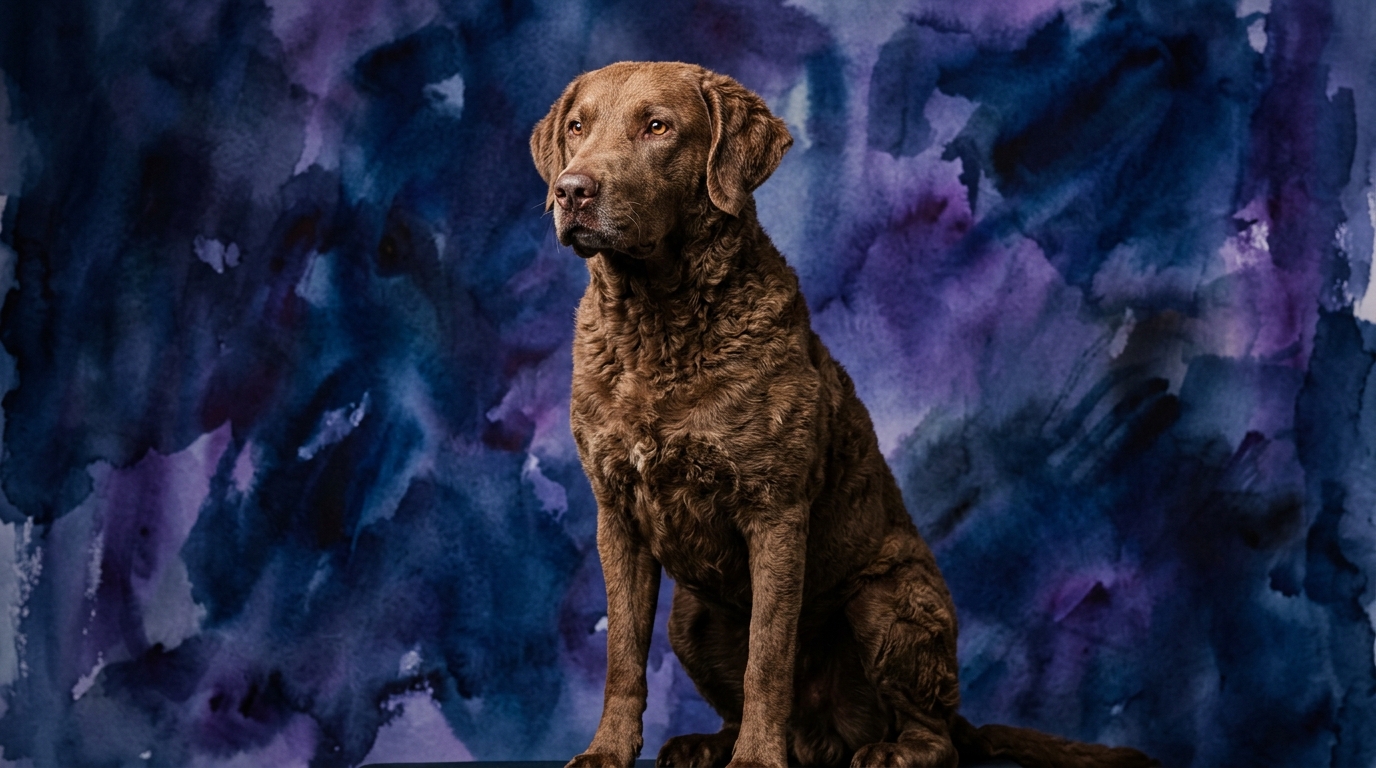
For the **Chesapeake Bay Retriever**, a Sporting group dog, their Problem Solving (4/5) is honed for complex retrieving scenarios, strategizing paths through dense cover or strong currents. Their Training Speed (4/5) reflects a strong desire to work cooperatively with a handler, quickly internalizing commands for practical tasks. Social Intelligence (3/5) indicates a reserved nature, deeply loyal to their family but often discerning with strangers. Instinctive Drive (3/5) is channeled into a powerful desire for water work and retrieving, a core component of their historical role. Finally, Memory (4/5) is crucial for accurately marking multiple falls and recalling intricate retrieve sequences over varied terrain.
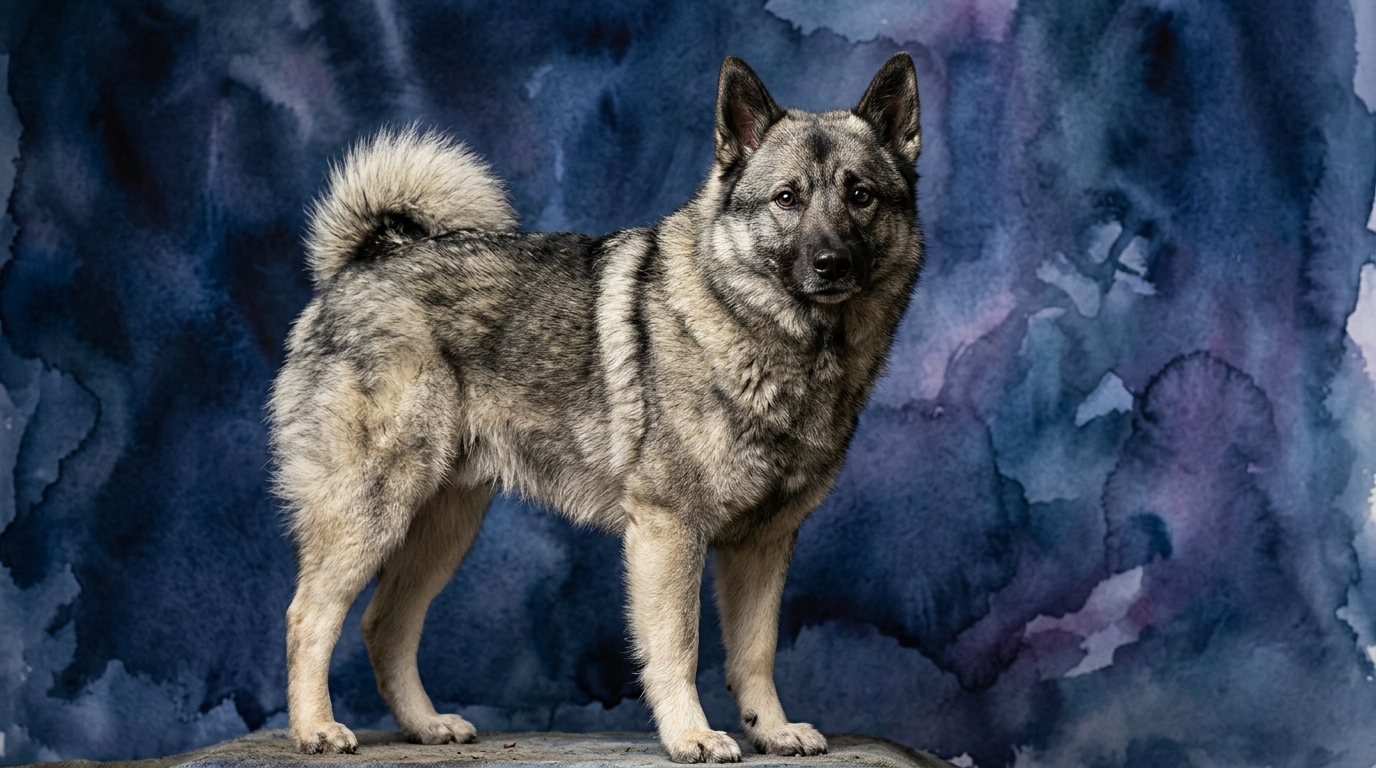
The **Norwegian Elkhound**, a Hound group dog, also demonstrates Problem Solving (4/5), but it is often directed towards independent tracking, navigating challenging wilderness to locate game. Their Training Speed (4/5) signifies a capacity for rapid learning, though their independent streak means they often require a strong rationale for compliance. Social Intelligence (3/5) presents as a watchful, independent demeanor, forming deep bonds with their inner circle but maintaining a certain aloofness with outsiders. Their Instinctive Drive (3/5) manifests as an enduring prey drive, keen scenting abilities, and stamina for sustained pursuit. Memory (4/5) is vital for retaining intricate scent trails, mapping vast territories, and recalling learned hunting patterns.
Where the Chesapeake Bay Retriever Excels Cognitively
The Chesapeake Bay Retriever's cognitive strengths are deeply intertwined with its heritage as a dedicated waterfowl retriever. Its Problem Solving (4/5) shines brightest in practical, multi-step tasks that demand precision and adaptability under pressure. Imagine a Chessie calculating the most efficient retrieve path for a downed bird across a choppy lake, navigating ice floes, or recalling the exact location of a bird hidden deep in reeds after a long wait. This isn't just about speed; it's about strategic thinking, adapting to changing environmental variables, and maintaining focus amidst distractions.
Furthermore, their Memory (4/5) is particularly robust for sequential tasks and spatial recall. A Chessie can be taught to "mark" several birds falling in different locations and retrieve them in a specific order, demonstrating impressive working memory and an ability to hold complex instructions. This cognitive agility allows them to excel in competitive retrieving trials, where accuracy, speed, and adherence to complex commands are paramount, highlighting their capacity for handler-directed, goal-oriented cognitive effort.
Where the Norwegian Elkhound Excels Cognitively
In contrast, the Norwegian Elkhound's cognitive prowess, while equally rated, is geared towards independent action and sustained mental engagement in the wilderness. Their Problem Solving (4/5) is vividly displayed when they are independently tracking game, making intricate decisions about scent concentration, wind direction, and terrain without constant human guidance. This involves deciphering complex olfactory puzzles and adapting their strategy over long distances and varied landscapes, showcasing a different facet of cognitive flexibility.
The Elkhound's Memory (4/5) serves them exceptionally well in recalling intricate scent patterns and vast territorial knowledge. They can remember subtle scent nuances, differentiate between fresh and old trails, and map out familiar hunting grounds, demonstrating a memory geared towards long-term, sensory-rich information processing. Their cognitive strengths lie in their ability to operate autonomously, using their keen senses and accumulated knowledge to achieve a goal, rather than relying solely on direct handler instruction for every step.
Training Dynamics: A Tale of Two Approaches
Both breeds boast a Training Speed of 4/5, indicating their capacity to learn new commands and tasks quickly. However, the *application* of this speed differs significantly due to their inherent temperaments and historical roles. The Chesapeake Bay Retriever typically exhibits a strong desire to please its handler, often making them highly receptive to positive reinforcement and eager to perform cooperative tasks. Their focus on their human partner, combined with their strong retrieve drive, can make training feel more straightforward and less demanding of creative motivation.
The Norwegian Elkhound, while quick to grasp concepts, often possesses a more independent, hound-like mindset. They learn rapidly but may require more convincing that a command is worthwhile or more engaging motivation to comply, especially if a compelling scent or independent interest arises. Training an Elkhound demands consistency, patience, and making the learning process intrinsically rewarding, as they are less inclined to offer blind obedience. Their cognitive speed is undeniable, but it's often paired with a questioning nature that seeks purpose in tasks, rather than simply fulfilling a handler's request.
Lifestyle Match: Active vs. Relaxed Owners
When considering which breed aligns with an owner's lifestyle, both demand significant physical and mental engagement, but the *type* of engagement varies. The Chesapeake Bay Retriever thrives with active owners who enjoy outdoor adventures, especially those involving water, retrieving, or dog sports like obedience and agility. Their cognitive profile benefits immensely from structured activities that allow them to use their problem-solving and memory skills in a cooperative setting, reinforcing their bond with their handler. They are best suited for individuals who can integrate their dog into a highly active, task-oriented lifestyle.
The Norwegian Elkhound also requires substantial exercise and mental stimulation, but their needs often lean towards independent exploration, hiking, and scent work. They are built for endurance and thrive on having a 'job' that allows them to utilize their keen senses and independent problem-solving abilities. Ideal owners for an Elkhound appreciate a dog with an independent streak, enjoy long walks or hikes in varied terrain, and can provide outlets for their natural tracking and patrolling instincts. While deeply loyal to their family, their social intelligence suggests they are not typically seeking constant human interaction beyond their trusted circle, making them suitable for owners who value a watchful, resilient companion.
The Verdict
Choose the Chesapeake Bay Retriever if you seek a devoted, task-oriented partner for water sports, retrieving, or competitive dog sports, thriving on cooperative tasks and handler interaction.
Choose the Norwegian Elkhound if you admire a resilient, independent companion for hiking, scent work, or a watchful family guardian, appreciating a dog that thinks for itself while remaining loyal.
🧠 Find Your Pet's IQ Score
Our Pet IQ Lab assessment covers 25+ tests across 5 cognitive dimensions — personalized to your breed.
Take the Full IQ Test →Frequently Asked Questions
Are Chesapeake Bay Retrievers harder to train than Norwegian Elkhounds?
While both score 4/5 in training speed, the Chesapeake Bay Retriever typically exhibits a stronger desire to please its handler, often making them more straightforward to train for cooperative tasks. The Norwegian Elkhound, with its independent hound nature, learns quickly but may require more consistent motivation and proof that a command is worthwhile.
Which breed is better for a first-time dog owner?
The Chesapeake Bay Retriever's handler-focused disposition and strong desire to work with people might make them a slightly more manageable choice for a dedicated first-time owner prepared for their exercise needs. The Norwegian Elkhound's independence and strong prey drive could present a greater challenge for someone new to dog ownership.
Do both breeds require a lot of exercise?
Absolutely, both the Chesapeake Bay Retriever and the Norwegian Elkhound are working breeds with significant energy levels and require substantial daily exercise to remain physically and mentally content. Their exercise needs differ in type, with the CBR often preferring water and retrieving games, while the NE thrives on endurance activities like hiking and scent work.