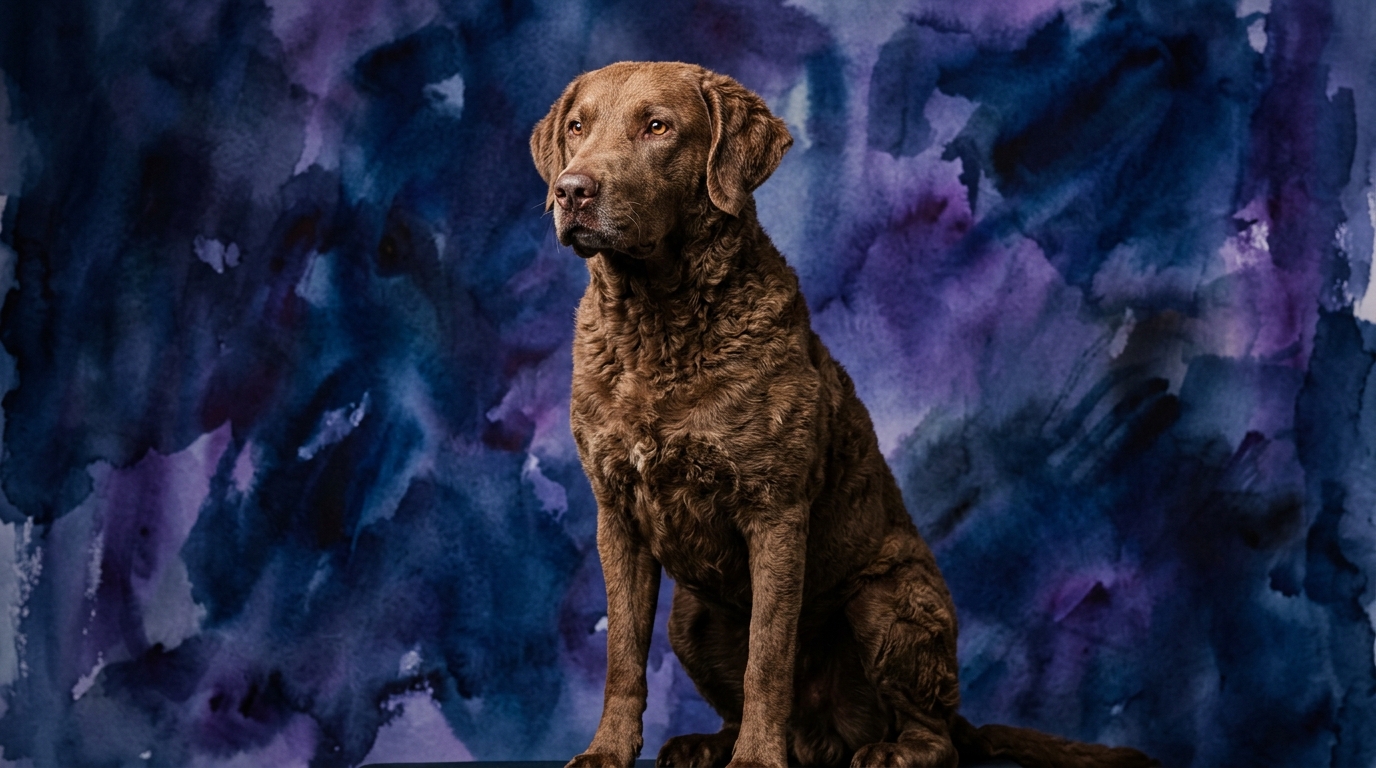
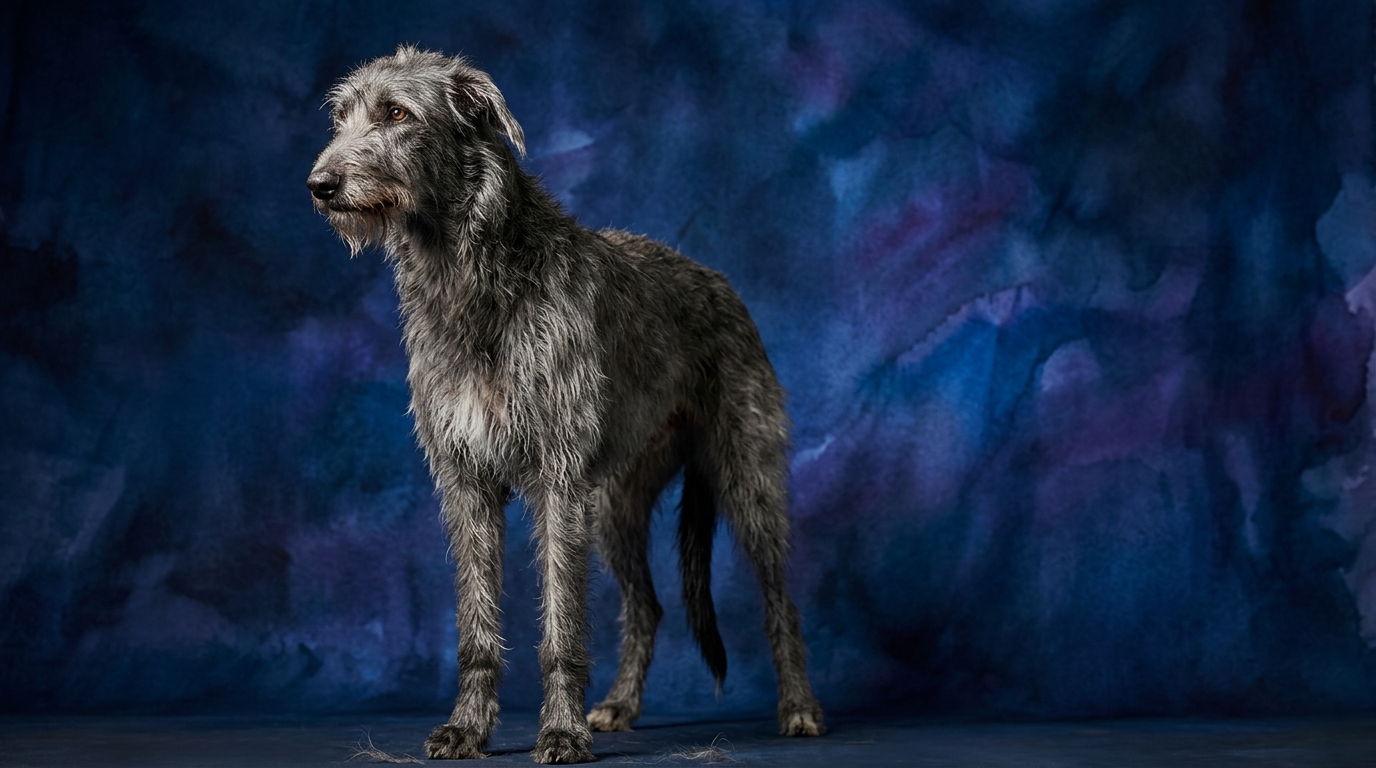
Side-by-Side IQ Profile: Chesapeake Bay Retriever vs. Scottish Deerhound
The Cosmic Pet Pet IQ Lab provides a nuanced look into the cognitive abilities of various breeds across five key dimensions. For the Chesapeake Bay Retriever, a breed ranked #27 by Stanley Coren for working and obedience intelligence, their profile reflects a dog built for purpose and partnership. Their Problem Solving is rated 4/5, indicating a strong capacity for figuring out complex tasks, particularly those involving retrieval and navigating obstacles to reach a goal. Training Speed also stands at 4/5, meaning these dogs pick up new commands and routines quickly, often requiring fewer repetitions than many other breeds. Social Intelligence is 3/5, showing they are capable of forming deep bonds but can be reserved with strangers, prioritizing their core family unit. Instinctive Drive is 3/5, primarily focused on retrieving and working, less on independent hunting or tracking. Finally, Memory is 4/5, signifying an impressive ability to recall commands, routines, and even specific locations or objects over time.
The Scottish Deerhound, while not Coren-ranked, presents a different cognitive blueprint, reflecting its sighthound heritage. Their Problem Solving is 3/5, demonstrating a moderate aptitude, often approaching tasks with a blend of independent thought and practical application rather than structured analysis. Training Speed is also 3/5; they learn at a moderate pace, often requiring patience and positive reinforcement, as their independent nature means they might not always be as eager for repetitive drills. Social Intelligence mirrors the Chessie at 3/5, meaning they are affectionate with their families but maintain a dignified reserve with outsiders, displaying a gentle, calm demeanor. Their Instinctive Drive is 3/5, but this is strongly rooted in their sighthound heritage—the pursuit of movement, manifesting as a powerful chase instinct. Memory is 3/5, a competent recall for routines and familiar people, though perhaps more focused on spatial awareness and the memory of specific chase routes rather than complex command sequences.
Where the Chesapeake Bay Retriever Excels Cognitively
The Chessie's cognitive profile reveals clear strengths in areas directly supporting their working heritage. Their Problem Solving (4/5) is a significant advantage, particularly in scenarios requiring strategic thinking to overcome environmental challenges. Imagine a Chessie calculating the best path through dense reeds to retrieve a fallen bird, or figuring out how to open a gate to reach their handler. This isn't just brute force; it's an adaptive mental flexibility that allows them to navigate and manipulate their environment effectively to achieve a goal.
Their Training Speed (4/5) is another standout. This means they process new information and associate actions with commands more rapidly, making the initial stages of obedience and specialized training considerably smoother. They seem to derive satisfaction from understanding and executing tasks, which fuels their learning curve and makes them highly responsive to consistent instruction. Furthermore, the Chessie's Memory (4/5) contributes to their reliability. They can retain complex sequences of commands, remember specific locations where items were dropped, or recall intricate scent patterns over time. This robust recall makes them dependable partners for repetitive or multi-stage tasks, ensuring consistent performance even after breaks. Their Coren ranking at #27 underscores this combination of quick learning and strong retention, positioning them among breeds that grasp new commands in fewer than 20 repetitions and obey them 85% of the time or better.
Cognitive Strengths of the Scottish Deerhound
While the Scottish Deerhound's IQ scores are generally consistent across the board at 3/5, their cognitive strengths lie in a different domain, reflecting their specialized role as sighthounds. Their Instinctive Drive (3/5), while rated the same as the Chessie, manifests as an acute focus on visual stimuli and an unparalleled drive to pursue. This isn't a 'win' in terms of a higher score, but a distinct cognitive specialization: the ability to process visual information rapidly and initiate high-speed pursuit with remarkable single-mindedness. This cognitive filtering allows them to ignore distractions and lock onto a moving target, a crucial ability for their historical purpose, demanding a specific kind of mental acuity.
Their Problem Solving (3/5), while not as high as the Chessie's, is often geared towards independent decision-making in the field. A Deerhound might not solve a puzzle box as quickly, but it excels at independently evaluating a landscape for the most efficient chase route or anticipating the movement of prey based on subtle visual cues. This form of practical, independent problem-solving is a cognitive asset for their specific tasks, requiring quick, decisive action without constant human input. The Deerhound's Memory (3/5), too, is tailored. While not as adept at recalling complex command sequences, they likely possess a strong spatial memory for their environment, remembering terrain, safe running paths, and areas where prey has been sighted previously. This type of memory is vital for navigating large, open spaces safely and effectively during a pursuit, allowing them to learn and adapt to their hunting grounds. Their social intelligence, also at 3/5, allows them to be wonderfully gentle and intuitive companions within their family, understanding subtle emotional cues without the need for constant direction, fostering a quiet, deep bond.
Trainability: Chesapeake Bay Retriever vs. Scottish Deerhound
Based on their respective IQ profiles, the Chesapeake Bay Retriever is demonstrably easier to train for most conventional obedience and task-oriented work. Their Training Speed (4/5) indicates a faster acquisition of commands and routines, meaning handlers will likely see results with fewer repetitions and in a shorter timeframe. This is coupled with their superior Problem Solving (4/5), which allows them to understand the *why* behind a task, not just the *how*, making them more adaptable when conditions change. Chessies generally possess a strong desire to please their handler and a focused work ethic, which translates into a more cooperative and engaged training partner. They are often enthusiastic about learning new skills and excel in activities like advanced obedience, agility, and, of course, retrieve work, thriving on consistent direction and positive reinforcement. They are less likely to become bored with repetition and more likely to seek out opportunities to engage in learning.
The Scottish Deerhound, with a Training Speed (3/5) and Problem Solving (3/5), requires a different approach. Their independent nature and strong Instinctive Drive (3/5), particularly for chasing, mean that while they are certainly capable of learning, they may not always prioritize human commands over their innate urges. Training a Deerhound often involves more patience, consistency, and finding ways to motivate them that align with their sighthound instincts, rather than directly opposing them. For example, recall training must be exceptionally strong to counteract their powerful chase drive when a visual stimulus appears. They respond best to positive reinforcement and methods that make training feel like a game or a partnership, rather than strict instruction. While they can achieve high levels of obedience, it often takes more time and a nuanced understanding of their breed-specific motivations, requiring a handler who appreciates their thoughtful independence and can make training engaging and rewarding on their terms. Their social intelligence means they respond well to kind, consistent handling, but their focus can be fleeting if something visually stimulating captures their attention, demanding a handler who can maintain engagement.
Lifestyle Suitability: Active vs. Relaxed Owners
The Chesapeake Bay Retriever is ideally suited for active owners who enjoy engaging in structured activities and outdoor adventures. Their combination of high Problem Solving and Training Speed means they thrive with mental stimulation alongside vigorous physical exercise. Owners who want to participate in dog sports like dock diving, hunt tests, agility, or competitive obedience will find a Chessie to be an eager and capable partner, excelling in roles that demand both physical stamina and sharp mental focus. They require consistent training, daily vigorous exercise such as swimming, running, or long hikes, and a clear role or job to feel fulfilled. A Chessie will not be content with merely lounging; their cognitive and physical needs demand an owner who is ready to provide purpose and challenge, integrating them fully into an active lifestyle.
The Scottish Deerhound, while possessing a powerful chase instinct and requiring significant bursts of exercise, can surprisingly suit owners who appreciate a balance of activity and relaxed home life. They need ample space to gallop and opportunities for off-leash running in secure areas to satisfy their instinctive drive, which is paramount for their well-being. However, once their physical needs are met, Deerhounds are renowned for their calm, dignified demeanor indoors, often described as 'couch potatoes.' They are not typically high-strung or demanding of constant attention, making them excellent companions for owners who enjoy quiet evenings at home after a good run. Their moderate social intelligence means they are affectionate but not overtly clingy, fitting a relaxed owner who values a gentle, independent presence that doesn't constantly demand interaction. They require an owner who understands their sighthound nature for exercise, but can also appreciate their considerable indoor serenity and dignified companionship.
The Verdict
Opt for a Chessie if you are an experienced, active owner seeking a highly trainable, problem-solving partner for structured activities, dog sports, or dedicated working roles, valuing their robust memory and quick learning.
Select a Deerhound if you appreciate a gentle, dignified companion with an independent spirit, willing to provide secure, expansive spaces for their powerful bursts of running, and value a calm presence indoors.
🧠 Find Your Pet's IQ Score
Our Pet IQ Lab assessment covers 25+ tests across 5 cognitive dimensions — personalized to your breed.
Take the Full IQ Test →Frequently Asked Questions
Are Chesapeake Bay Retrievers good family dogs?
Yes, with proper socialization, Chessies can be devoted family dogs. Their social intelligence, while moderate, means they form strong bonds with their immediate family, though they may be reserved with strangers and benefit from early, positive introductions.
How much exercise does a Scottish Deerhound need?
Scottish Deerhounds require daily opportunities for vigorous running in a safe, enclosed area to satisfy their strong instinctive drive. Beyond these bursts of activity, they are generally calm indoors, preferring to lounge after their exercise needs are met.
Can a Scottish Deerhound live with cats?
Due to their high instinctive drive for chasing, Scottish Deerhounds can pose a risk to smaller pets like cats unless raised with them from puppyhood and carefully supervised. Their sighthound instincts are powerful and can be difficult to override, necessitating cautious management.