Side-by-Side IQ Profile: Unpacking the 3/5 Scores
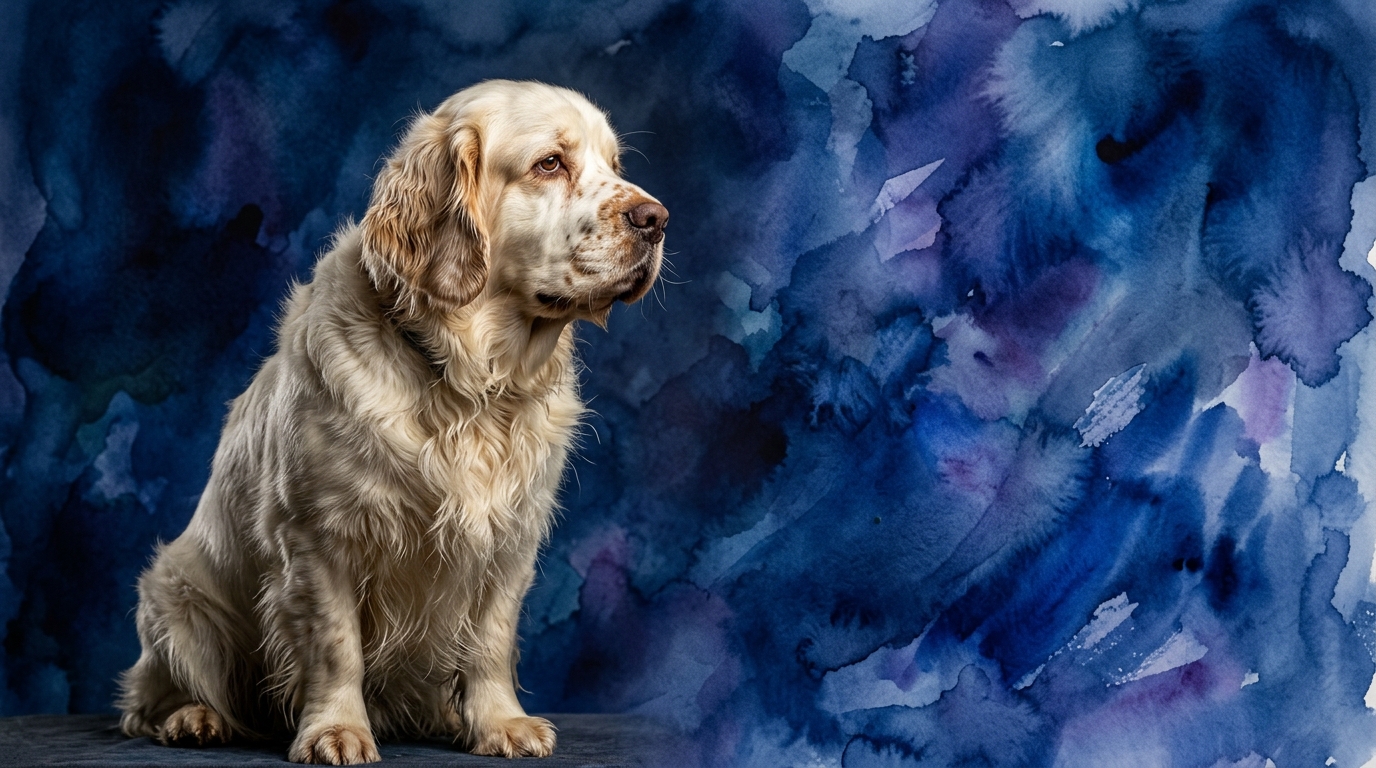
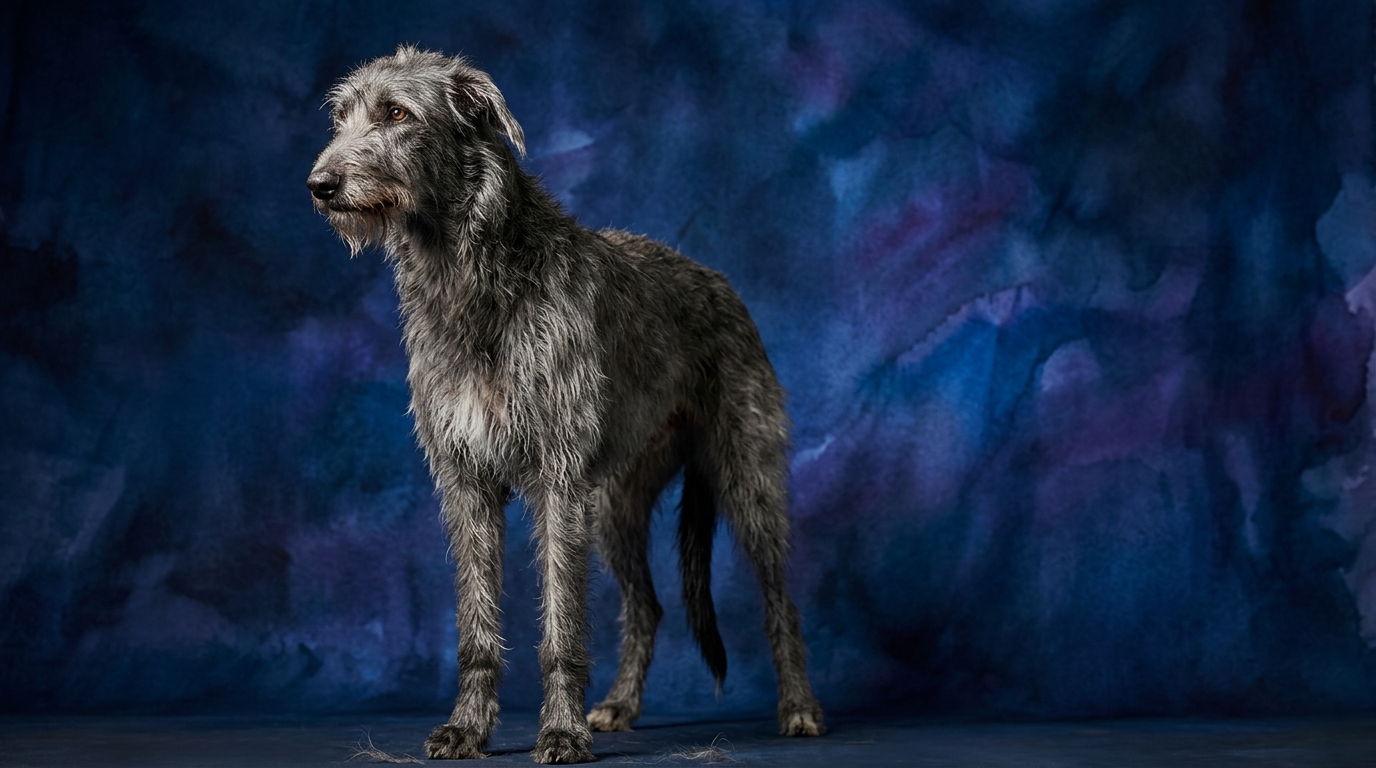
At The Cosmic Pet Pet IQ Lab, we assess canine intelligence across five key dimensions. Interestingly, both the Clumber Spaniel and the Scottish Deerhound register a consistent 3/5 across all categories. This numerical parity, however, belies significant differences in how these cognitive abilities manifest, influenced by their historical roles and inherent temperaments.
For the **Clumber Spaniel**, a 3/5 in **Problem Solving** denotes a methodical approach, particularly when navigating dense terrain or locating hidden objects through scent. Their cognition leans towards persistent, systematic exploration rather than rapid, abstract solutions, excelling in tasks requiring sustained focus. Their **Training Speed** (3/5) is characterized by a steady willingness to learn and retain information reliably, benefiting from consistent, positive reinforcement and valuing routine. **Social Intelligence** (3/5) for Clumbers means they are adept at reading human emotions and intentions, forming deep, empathetic bonds and integrating smoothly into household dynamics. Their **Instinctive Drive** (3/5) manifests primarily in their traditional role as a flushing and retrieving gun dog, showing persistent scenting ability and a natural inclination to work collaboratively. Finally, their **Memory** (3/5) is reliable for learned commands, established routines, and familiar environments, effectively recalling positive and negative associations.
The **Scottish Deerhound**, with a 3/5 in **Problem Solving**, demonstrates skills acutely tuned to their sighthound heritage, excelling in dynamic situations requiring quick assessment and adaptation. They are particularly adept at spatial reasoning and anticipating movement, calculating optimal pursuit paths for fast-moving objects. Their **Training Speed** (3/5) means they can learn new commands quickly, especially when training incorporates elements of chase or high-value rewards, though their independent nature can make consistent performance conditional on motivation. **Social Intelligence** (3/5) for Deerhounds translates to being perceptive observers of their human companions, understanding social hierarchies and individual personalities, forming deep, quiet bonds while often reserved with strangers. Their **Instinctive Drive** (3/5) is powerfully rooted in their sighthound heritage, characterized by an intense visual prey drive and the innate need to chase, fueling bursts of incredible speed and focus. Their **Memory** (3/5) is excellent for spatial recall, remembering effective chase routes, terrain features, and the location of significant stimuli, influencing future responses and successful hunts.
Where the Clumber Spaniel Wins Cognitively
The Clumber Spaniel’s cognitive strengths truly shine in environments that reward deliberate, methodical engagement. Their problem-solving (3/5) is less about rapid innovation and more about persistent, scent-driven exploration; a Clumber will meticulously work a field, using superior olfactory memory and a systematic approach to locate a hidden dummy, demonstrating sustained cognitive effort. This contrasts with a breed that might rely on speed or visual cues. Their social intelligence (3/5) translates into a remarkable capacity for empathy and understanding subtle human emotional shifts, making them exceptionally attuned companions within a family setting, a nuanced form of cognitive processing that strengthens the human-animal bond. Furthermore, their memory (3/5) ensures they reliably recall complex scent patterns and established routines, making them predictable and consistent partners in activities like tracking or obedience, where precision and repetition are valued.
Where the Scottish Deerhound Wins Cognitively
The Scottish Deerhound’s cognitive advantages are most evident in situations demanding quick, independent decision-making and acute spatial awareness. Their problem-solving (3/5) is uniquely adapted to their sighthound role, excelling at rapidly assessing dynamic environments and instantly calculating optimal intercept trajectories for moving objects. This involves complex spatial reasoning and predictive cognition, a different facet of intelligence than a spaniel's methodical search. Their instinctive drive (3/5) is a powerful cognitive engine, enabling them to focus with unwavering intensity on visual stimuli and ignore distractions during a chase. This singular focus, combined with their memory (3/5) for terrain and successful pursuit strategies, allows them to navigate challenging landscapes at speed. Socially, their 3/5 intelligence manifests as a quiet perceptiveness, allowing them to gauge intentions and maintain a dignified reserve, processing social cues without overt display, which makes them remarkably discerning companions.
Which is Easier to Train, and Why?
When evaluating ease of training, the Clumber Spaniel generally presents a more straightforward path for the average owner. Their training speed, rated 3/5, is characterized by a steady willingness to learn and a desire to please their handler. They respond very well to positive reinforcement, consistency, and a clear, repetitive structure, making progress predictable. A Clumber is less likely to question a command and more inclined to follow through, embodying a cooperative spirit stemming from their historical role as a close working partner.
In contrast, the Scottish Deerhound, while possessing a 3/5 training speed, can be more challenging due to their independent sighthound nature. They grasp concepts quickly but may choose to obey only if they perceive sufficient motivation or if the task aligns with their innate drives. Training a Deerhound often requires creativity, engaging their prey drive through play, and making sessions stimulating to overcome their potential for selective deafness when a more interesting stimulus (like a squirrel) presents itself. Their training is more about negotiation and understanding their unique motivations than simple compliance.
Suitability for Active vs. Relaxed Owners
For owners contemplating a companion, understanding each breed's activity profile is key. The Clumber Spaniel, despite its sporting heritage, suits moderately active owners who enjoy consistent, lower-impact activities. They thrive on daily walks, scent games in the yard, and mental stimulation from training sessions, but they are not built for marathon running or relentless high-energy demands. Their preference is often for a comfortable spot near their family after a reasonable outing, making them an excellent fit for individuals or families seeking a devoted, calm presence that still enjoys outdoor adventures.
Conversely, the Scottish Deerhound is an ideal match for active owners who understand and can accommodate their unique exercise needs. While they appear calm indoors, their sighthound physiology demands opportunities for intense, full-speed running in a securely fenced area multiple times a week. They are not dogs that can be satisfied with just a leash walk; they need to gallop freely. After these bursts of exhilarating speed, however, they transform into magnificent couch potatoes, making them surprisingly relaxed companions indoors, provided their primal need to run has been met. They are not suited for owners who cannot provide these safe, expansive running opportunities.
The Verdict
Choose a Clumber Spaniel if you seek a consistently biddable, empathetic companion who thrives on routine, scent work, and a calm, devoted presence within a moderately active household.
Opt for a Scottish Deerhound if you appreciate independent thinkers, can provide opportunities for intense, free-running exercise, and desire a dignified, reserved, yet deeply affectionate companion.
🧠 Find Your Pet's IQ Score
Our Pet IQ Lab assessment covers 25+ tests across 5 cognitive dimensions — personalized to your breed.
Take the Full IQ Test →Frequently Asked Questions
Are Clumber Spaniels good family dogs?
Yes, Clumber Spaniels are generally known for their gentle and patient temperament, making them excellent family companions. They are typically good with children and other pets, forming strong, affectionate bonds with their human family.
Do Scottish Deerhounds need a lot of exercise?
Scottish Deerhounds require significant exercise, specifically opportunities for full-speed running in a large, securely fenced area. While calm indoors, they need to satisfy their strong prey drive and athletic build with bursts of intense activity.
How do their grooming needs compare?
Clumber Spaniels have a dense, heavy coat with extensive feathering that requires regular brushing several times a week to prevent mats and keep it healthy. Scottish Deerhounds have a harsher, wiry coat that is less prone to matting and generally requires less frequent brushing, perhaps once a week, along with occasional hand-stripping.