
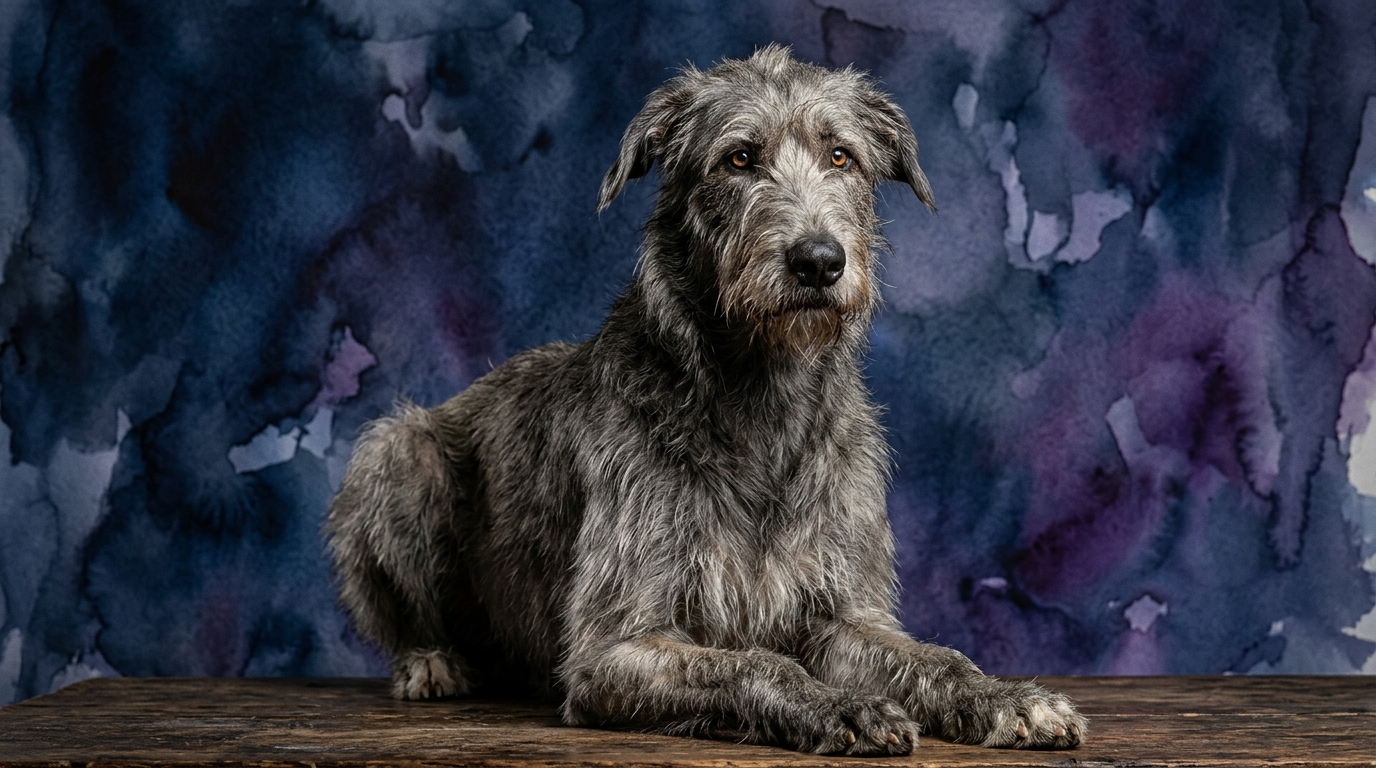
Side-by-Side IQ Profile: Cocker Spaniel vs. Irish Wolfhound
The Cocker Spaniel, a member of the Sporting group, presents a vibrant cognitive profile, reflecting its heritage as a bird dog. Its problem-solving ability scores a solid 3/5, indicating competence in navigating practical challenges, while its training speed is impressive at 4/5, showcasing a readiness to learn and respond to cues. Where the Cocker truly excels is in social intelligence, earning a perfect 5/5, highlighting its exceptional capacity to understand and interact with human emotions and social structures. Instinctive drive is rated 4/5, pointing to a strong natural inclination for tasks like retrieving and scent work, and its memory is also robust at 4/5, allowing it to retain commands and experiences effectively.
In contrast, the Irish Wolfhound, a majestic Hound breed, exhibits a more consistent, measured cognitive profile across the board. While not Coren-ranked, our Pet IQ Lab assessment shows a problem-solving score of 3/5, matching the Cocker, suggesting a similar capacity for independent thought in practical situations. Its training speed is 3/5, indicating a steady but not rapid pace of learning. The Irish Wolfhound's social intelligence sits at 3/5, suggesting a more reserved or independent approach to social interactions compared to the Cocker. Instinctive drive is also 3/5, reflecting its historical role as a sighthound focused on distant prey, rather than intricate close-range tasks. Finally, its memory registers at 3/5, indicating a reliable, though not outstanding, recall of information.
Where the Cocker Spaniel Wins Cognitively
The Cocker Spaniel’s cognitive strengths truly shine in areas demanding quick responsiveness, social attunement, and a strong work ethic directed by human partnership. Its superior training speed (4/5 versus the Wolfhound’s 3/5) means it typically grasps new commands and routines with greater alacrity, making training sessions more efficient and rewarding. This quick uptake is often coupled with its exceptional social intelligence (5/5), allowing it to anticipate owner intentions, read subtle body language, and respond with an eagerness to please that is deeply ingrained. For tasks requiring intricate communication and a desire to collaborate closely, such as advanced obedience, agility, or therapy work, the Cocker’s cognitive makeup provides a clear advantage. Its robust memory (4/5) further supports complex learning and the retention of a wide repertoire of behaviors, making it adept at recall and executing multi-step sequences.
Where the Irish Wolfhound Wins Cognitively
While the Irish Wolfhound doesn't boast higher numerical scores in most cognitive dimensions compared to the Cocker Spaniel, its intelligence profile presents distinct advantages for specific contexts. Their 3/5 instinctive drive, for instance, suggests a less frenetic pursuit of perceived prey or tasks, translating into a calmer, more measured presence in a home environment than a higher-drive sporting breed. This measured approach can be a cognitive asset, allowing for careful observation and assessment rather than impulsive action, a strength particularly valuable in their historical role as guardians and hunters of large game where patience and strategic thinking were paramount. Furthermore, their consistent 3/5 in social intelligence, while lower, indicates a companion less prone to intense dependency, fostering a degree of independence that some owners find appealing, valuing a dog that is present but not constantly demanding interaction. Their problem-solving, though scored equally, often manifests as a thoughtful, independent assessment of a situation, rather than a frantic search for human direction.
Which is Easier to Train and Why
Based on their Pet IQ Lab scores, the Cocker Spaniel is generally easier to train than the Irish Wolfhound. The Cocker’s training speed rating of 4/5, combined with its perfect 5/5 in social intelligence, means it is typically highly receptive to instruction and deeply motivated by human interaction and approval. Cocker Spaniels often exhibit an innate desire to collaborate, quickly forming associations between commands and actions, and finding joy in performing tasks for their owners. This makes them highly responsive to positive reinforcement and capable of mastering a wide range of commands and tricks relatively quickly. Their strong memory (4/5) ensures learned behaviors are retained over time, contributing to their overall trainability.
The Irish Wolfhound, with a training speed of 3/5 and social intelligence of 3/5, tends to be more deliberate in its learning. While certainly capable of learning, their independent nature, characteristic of many sighthounds, means they may not always perceive immediate value in performing a command if it doesn't align with their own motivations. Training an Irish Wolfhound requires patience, consistency, and an understanding of their thoughtful, sometimes stubborn, temperament. They respond best to clear, fair methods and positive reinforcement, but their learning curve might be slower, and their compliance less enthusiastic or immediate compared to the eager-to-please Cocker Spaniel. Their impressive size also necessitates early and consistent training to ensure they are manageable companions.
Which Suits Active Owners vs. Relaxed Owners
The Cocker Spaniel, with its higher instinctive drive (4/5) and boundless social intelligence (5/5), is an ideal match for active owners who relish consistent engagement and outdoor adventures. Their energy levels demand regular exercise, whether it's brisk walks, fetch in the park, or participation in dog sports like agility or scent work. An owner who enjoys training and wants a highly interactive companion will find the Cocker Spaniel’s cognitive profile perfectly aligned with their lifestyle. They thrive on being part of family activities and require significant mental stimulation to prevent boredom, making them less suitable for purely relaxed, sedentary households where their social and physical needs might go unmet.
Conversely, the Irish Wolfhound, despite its imposing size, often suits a more relaxed owner, provided they can accommodate its need for space and a measured exercise routine. Their lower instinctive drive (3/5) and social intelligence (3/5) suggest a dog that is content with a more tranquil pace of life, enjoying a calm presence rather than constant, high-energy interaction. While they do require daily walks and the opportunity to stretch their long legs, they are not typically high-strung and appreciate quiet companionship. Owners who enjoy a serene home environment, appreciate a thoughtful, independent companion, and have the space for a giant breed will find the Irish Wolfhound’s cognitive demeanor a harmonious fit. Their measured problem-solving and memory mean they adapt well to routine but won't constantly demand novel challenges.
The Verdict
Choose the Cocker Spaniel if you desire a highly trainable, socially attuned, and energetic companion eager for close partnership and consistent engagement.
Opt for the Irish Wolfhound if you seek a calm, independent, and thoughtful giant companion, valuing a serene presence over constant high-energy interaction.
🧠 Find Your Pet's IQ Score
Our Pet IQ Lab assessment covers 25+ tests across 5 cognitive dimensions — personalized to your breed.
Take the Full IQ Test →Frequently Asked Questions
Are Cocker Spaniels truly "smarter" than Irish Wolfhounds based on these scores?
The term "smarter" is multifaceted; Cocker Spaniels demonstrate higher aptitude in areas like training speed and social intelligence, making them more adept at collaborative tasks. Irish Wolfhounds possess a different cognitive profile, excelling in independent thought and measured responses, which are strengths for their specific historical roles.
Does the size difference impact their intelligence scores?
While size itself doesn't directly dictate intelligence, a breed's physical attributes often correlate with its historical purpose, which in turn shapes its cognitive development. A smaller, agile dog like the Cocker was bred for close work, demanding quick learning, while the larger Irish Wolfhound's role required more independent assessment and sustained focus, influencing how their intelligence manifests.
Can an Irish Wolfhound be as trainable as a Cocker Spaniel with enough effort?
With consistent, patient, and positive reinforcement, an Irish Wolfhound can certainly become a well-trained companion, mastering many commands and routines. However, their learning pace and motivation style differ; they may not achieve the same level of rapid, eager responsiveness as a Cocker Spaniel, requiring a dedicated and understanding trainer.