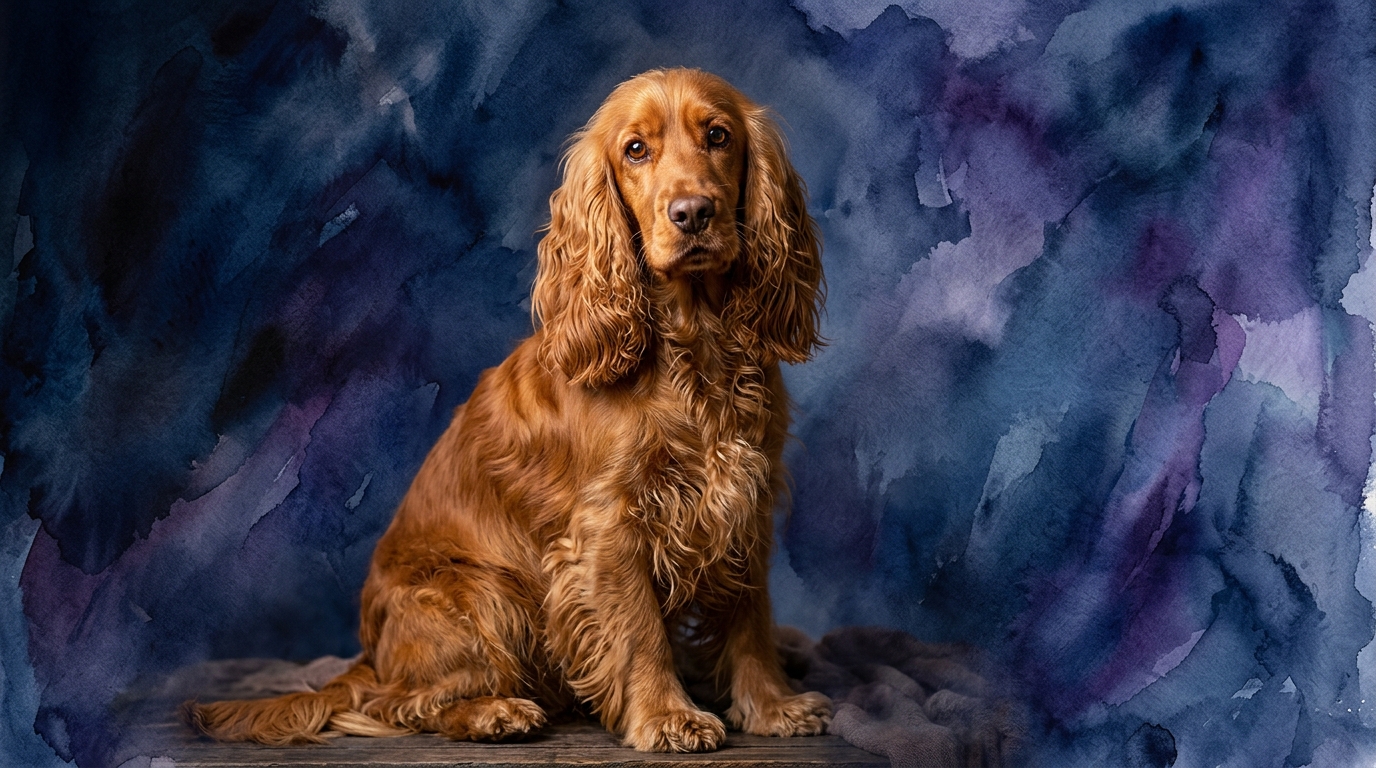
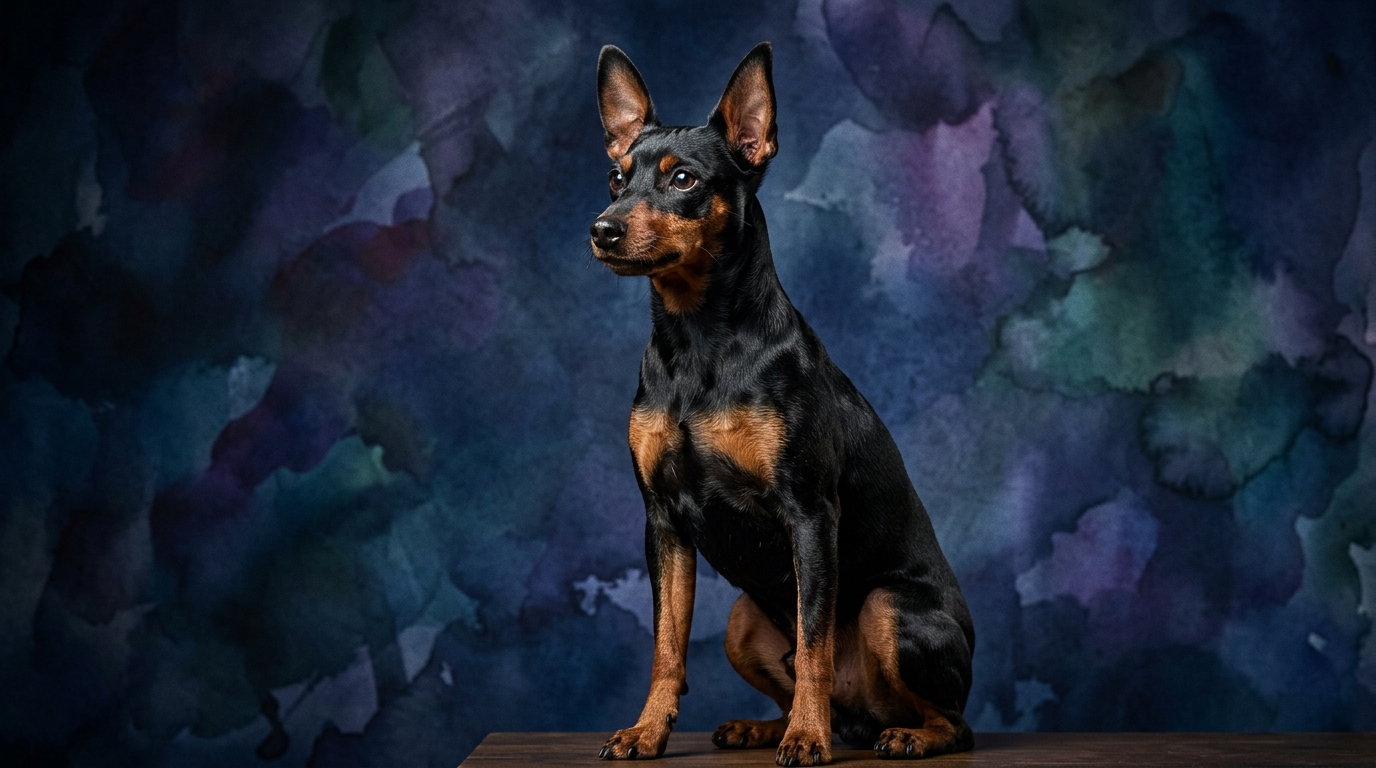
Side-by-Side IQ Profile: Cocker Spaniel vs. Miniature Pinscher
The Cosmic Pet Pet IQ Lab employs a five-dimensional framework to assess canine intelligence, providing a nuanced look at how different breeds process information and interact with their world. For the Cocker Spaniel, ranked #20 by Coren, and the Miniature Pinscher, an unranked but cognitively distinct breed, these dimensions highlight their unique mental architectures.
Cocker Spaniel:
Problem Solving (3/5): Exhibits practical problem-solving for tasks like retrieval or navigating obstacles, often with human guidance. Less abstract, more focused on efficient execution of learned behaviors.
Training Speed (4/5): Learns new commands quickly, driven by a strong desire to please. Attentiveness and eagerness to engage contribute to a swift learning curve and responsiveness.
Social Intelligence (5/5): Excels at reading human emotions and intentions, fostering deep, empathetic bonds. Highly attuned to subtle cues, making them intuitive and cooperative partners.
Instinctive Drive (4/5): Possesses strong sporting instincts for flushing and retrieving, coupled with an acute sense of smell. Demonstrates focused determination in scent work and purposeful tasks.
Memory (4/5): Robust memory for routines, commands, and positive social associations. Recalls complex sequences and people reliably, aiding consistent performance and responsiveness.
Miniature Pinscher:
Problem Solving (3/5): Displays resourceful, independent problem-solving, often focused on personal advantage like accessing forbidden areas or navigating barriers. Ingenious in self-serving environmental challenges.
Training Speed (3/5): Moderate learning speed, often requiring more repetition and higher motivation due to an independent streak. Consistency and patience are crucial for embedding new behaviors.
Social Intelligence (3/5): Perceptive of owner's moods but interactions are selective, less overtly cooperative. Understands hierarchies but often prioritizes its own comfort or agenda.
Instinctive Drive (3/5): Strong prey drive for vermin and territorial instincts, leading to keen alertness. Drive is more about independent vigilance and pursuit rather than collaborative work.
Memory (3/5): Remembers routines, cues, and past experiences, especially rewarding or startling ones. Memory serves its independent nature, recalling actions leading to desired outcomes.
Where the Cocker Spaniel Wins Cognitively
The Cocker Spaniel’s standout cognitive strength lies in its exceptional social intelligence, rated a perfect 5/5. This breed possesses an innate ability to read and respond to human emotions and intentions with profound accuracy, fostering deep, empathetic connections. They are often driven by a genuine desire for cooperative engagement and pleasing their human companions, making them incredibly intuitive partners in shared activities.
This high social attunement directly enhances their training speed (4/5) and memory (4/5), particularly for complex sequences involving human interaction. Their eagerness to absorb commands and routines, remembering not just actions but interaction context, gives them a distinct advantage for nuanced responses to cues.
Where the Miniature Pinscher Wins Cognitively
The Miniature Pinscher’s cognitive strengths lean towards independence and resourceful self-sufficiency. While their problem-solving is rated 3/5, it's often directed at personal objectives, such as figuring out how to access a desired item or navigate a perceived barrier without explicit human instruction. This breed demonstrates a cleverness in adapting to their environment and pursuing their own interests, showcasing a distinct form of practical ingenuity.
Their instinctive drive (3/5) manifests as keen alertness and strong territoriality, making them highly effective watchdogs. This drive, combined with independent problem-solving, allows them to assess situations and react decisively, often without needing immediate owner guidance.
Ease of Training: Behavioral Differences
When evaluating ease of training, the Cocker Spaniel generally presents a more straightforward path for most owners, largely due to its superior social intelligence (5/5) and training speed (4/5). This breed thrives on cooperative work and an inherent desire to please, making them highly receptive to instruction. They quickly form associations between commands and actions, with strong memory (4/5) ensuring retention. Their responsiveness stems from deep attunement to owner cues, often anticipating desires and reacting with enthusiasm.
Conversely, the Miniature Pinscher, with a training speed of 3/5, can be more challenging due to its independent nature and lower social intelligence (3/5) compared to the Cocker. While certainly capable of learning, their motivation needs careful management, as they may prioritize their own agenda over immediate compliance. Their problem-solving is often self-serving, requiring creative, consistent training to overcome potential stubbornness. A real behavioral difference lies in the Cocker's sustained eye contact and eagerness for affirmation versus the Min Pin's tendency to assess whether a command aligns with its immediate interest.
Matching Breeds to Owner Lifestyles
Both breeds benefit significantly from active engagement, but the *nature* of that activity differs, influencing suitability for various owner lifestyles. The Cocker Spaniel, with its sporting background and high social intelligence, thrives with owners who enjoy collaborative activities. They excel in structured training, scent work, agility, and long walks or runs where they can engage directly with their owner. Their need for mental stimulation often comes through learning new commands or performing tasks *with* their person, making them ideal for individuals who want a highly interactive canine partner for adventures and training sessions.
The Miniature Pinscher also requires regular physical activity to manage its energy and strong instincts, but its independent streak means it can often be satisfied with different types of engagement. While walks and playtime are essential, a Min Pin might also appreciate opportunities for independent exploration in a secure area, or puzzle toys that challenge its individual problem-solving skills. Owners who are active but perhaps prefer less structured, cooperative training sessions, or who appreciate a dog that can entertain itself for periods, might find the Min Pin's independent spirit a better match, provided its exercise needs are still consistently met.
The Verdict
Opt for a Cocker Spaniel if you desire a deeply cooperative, socially attuned companion eager to learn and engage in structured activities and training alongside you.
Select a Miniature Pinscher if you appreciate an independent, resourceful companion with a spirited personality, who thrives with consistent, creative training and opportunities for self-directed exploration.
🧠 Find Your Pet's IQ Score
Our Pet IQ Lab assessment covers 25+ tests across 5 cognitive dimensions — personalized to your breed.
Take the Full IQ Test →Frequently Asked Questions
Are Cocker Spaniels good at learning tricks?
Yes, Cocker Spaniels generally excel at learning tricks due to their high training speed and desire to please, often picking up new behaviors quickly with positive reinforcement. Their memory for sequences also aids in mastering complex routines.
Do Miniature Pinschers need a lot of exercise?
Miniature Pinschers do require regular exercise to channel their energy and maintain their physical and mental well-being. Daily walks, playtime, and mental challenges are important to prevent boredom and destructive behaviors.
Which breed is better for first-time dog owners?
The Cocker Spaniel is often considered more suitable for first-time dog owners due to its cooperative nature and eagerness to please, making training generally more straightforward. Miniature Pinschers may require more experience due to their independent streak and potential for stubbornness.