
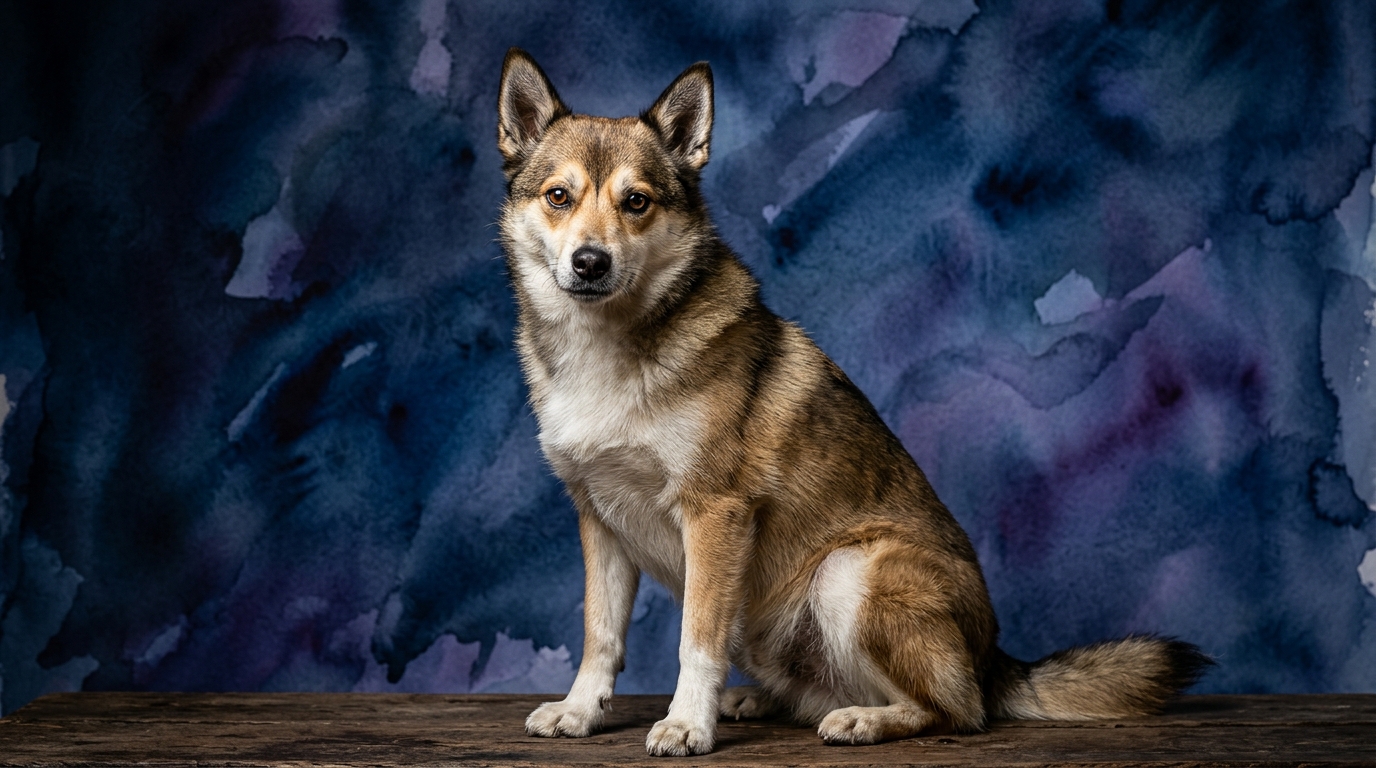
Side-by-Side IQ Profile: Cocker Spaniel vs. Norwegian Lundehund
The Cosmic Pet Pet IQ Lab employs five key dimensions to evaluate canine intelligence, offering a nuanced understanding of each breed's cognitive landscape. For the Cocker Spaniel and Norwegian Lundehund, these scores paint a picture of their distinct mental aptitudes and how they engage with their environment and human companions.
Problem Solving (Cocker 3/5, Lundehund 3/5): This dimension assesses a dog's capacity to navigate novel situations and figure out solutions independently. Both breeds register a mid-range score, suggesting they can tackle moderate puzzles but might not consistently devise complex, multi-step solutions without guidance. For the Cocker, this might involve learning how to open a treat-dispensing toy; for the Lundehund, it could relate to maneuvering through tight spaces.
Training Speed (Cocker 4/5, Lundehund 3/5): Training speed measures how quickly a dog learns and retains new commands and behaviors. The Cocker Spaniel’s higher score indicates a more rapid grasp of new instructions, likely driven by its keen desire to please and focus on human cues. The Lundehund, with its average score, may require more repetition and patience, reflecting a more independent learning style.
Social Intelligence (Cocker 5/5, Lundehund 3/5): This refers to a dog's ability to understand and respond to human communication, emotions, and social dynamics. The Cocker Spaniel excels here, demonstrating an exceptional capacity to read subtle human signals and integrate into family life. The Lundehund's more moderate score suggests it may be less attuned to human emotional nuances, often appearing more self-contained.
Instinctive Drive (Cocker 4/5, Lundehund 3/5): Instinctive drive gauges the strength of a dog's inherent, hardwired behaviors, such as hunting, herding, or guarding. The Cocker Spaniel's 4/5 reflects its strong retrieving and flushing instincts, characteristic of a sporting breed. The Lundehund's 3/5 points to its specialized, independent hunting instincts for puffins, which involve climbing and navigating treacherous terrain, rather than a broad, human-directed drive.
Memory (Cocker 4/5, Lundehund 3/5): Memory evaluates a dog's ability to recall learned behaviors, commands, and experiences over time. The Cocker Spaniel's stronger memory score aids in its training and consistent performance. The Lundehund’s average memory score implies it will retain information, but perhaps not with the same speed or reliability as the Cocker in diverse, human-centric contexts.
Where the Cocker Spaniel Wins Cognitively
The Cocker Spaniel undeniably shines in areas centered around human interaction and directed tasks. Its exceptional Social Intelligence, rated 5 out of 5, means it possesses a profound ability to interpret human body language, vocal tones, and emotional states, making it an incredibly responsive and empathetic companion. This cognitive strength translates into a dog that often anticipates needs and seeks to engage, fostering deep bonds with its family. Coupled with a 4/5 in Training Speed, the Cocker Spaniel absorbs new commands with impressive alacrity, quickly connecting actions with rewards and human approval. This is further supported by its strong Memory (4/5), allowing it to retain a vast repertoire of learned behaviors and routines over extended periods. For tasks requiring sustained focus and adherence to human direction, such as obedience trials or complex retrieving games, the Cocker Spaniel’s cognitive profile provides a distinct advantage, leveraging its instinctive drive (4/5) to work cooperatively toward a shared goal.
Where the Norwegian Lundehund Wins Cognitively
While the Norwegian Lundehund’s general IQ scores might appear lower, its cognitive strengths are uniquely tailored to its historical role, offering a different kind of mental prowess. Its 3/5 in Problem Solving, while not exceptional in a broad sense, reflects an independent and persistent approach to overcoming physical obstacles. These dogs historically navigated perilous cliff faces and tight rock crevices to hunt puffins, a task demanding intricate spatial reasoning, agility, and self-reliance without human direction. This historical imperative has fostered a tenacity and focused determination that, once engaged in a task, can be profoundly effective. Its Instinctive Drive, rated 3/5, is highly specialized, manifesting as a deep-seated urge to explore, climb, and burrow – behaviors crucial for its survival and success in its native environment. Owners who appreciate a dog capable of making autonomous decisions and demonstrating extraordinary physical dexterity in challenging environments will find the Lundehund’s specific cognitive adaptations a compelling asset, even if they don't always translate to immediate human-directed obedience.
Which is Easier to Train and Why
For most owners seeking a responsive and compliant canine partner, the Cocker Spaniel presents a significantly easier training experience. Its 4/5 Training Speed, combined with its perfect 5/5 Social Intelligence, means it actively seeks to understand and please its human companions. This breed thrives on positive reinforcement, quickly associating commands with actions and rewards, and retaining these lessons due to its 4/5 Memory. They are often highly motivated by praise and attention, making them eager participants in training sessions. In contrast, the Norwegian Lundehund, with its 3/5 Training Speed and 3/5 Social Intelligence, requires a more patient and nuanced approach. The Lundehund was bred for independent work, making its own decisions in challenging environments, not for deferring to human commands. This often translates into a dog that, while capable of learning, may appear less motivated by human approval and more driven by its own curiosity or specific instinctive urges. Training a Lundehund demands creativity, consistency, and a deep understanding of its unique, independent nature, as they may question commands or prefer to follow their own investigative paths.
Which Suits Active Owners vs. Owners Seeking Unique Traits
The Cocker Spaniel is an excellent match for active owners who desire a highly interactive and engaged canine partner. Its Sporting Group heritage means it thrives on regular physical activity, such as long walks, fetching games, and even dog sports like agility or obedience. Beyond physical exertion, its high Social Intelligence demands consistent mental stimulation and companionship, making it ideal for families or individuals who can dedicate significant time to training, play, and general interaction. These owners will appreciate the Cocker's eagerness to participate and its responsive nature. Conversely, the Norwegian Lundehund appeals to owners who are prepared for a dog with unique physical and mental needs, and who appreciate a more independent spirit. While active, their activity often manifests as a desire to explore, climb, and investigate rather than solely engaging in human-directed play. Owners must provide outlets for these specific instinctive drives, such as secure climbing structures or supervised digging areas. They suit individuals who are patient, understand the nuances of a highly specialized, independent breed, and can provide a stimulating environment that respects the Lundehund's self-reliant cognitive style, rather than expecting constant, eager compliance.
The Verdict
Choose a Cocker Spaniel if you seek a highly responsive, socially attuned companion eager to learn and participate in family activities and training. Its cooperative nature and strong memory make it a joyful partner for many dog sports and daily interactions.
Opt for a Norwegian Lundehund if you are drawn to a unique, independent breed with specialized cognitive strengths for exploration and problem-solving in challenging environments. Be prepared for a dog that requires patient, creative training and thrives with outlets for its distinct physical and investigative drives.
🧠 Find Your Pet's IQ Score
Our Pet IQ Lab assessment covers 25+ tests across 5 cognitive dimensions — personalized to your breed.
Take the Full IQ Test →Frequently Asked Questions
Do Cocker Spaniels and Norwegian Lundehunds get along well with children?
Cocker Spaniels, with their high social intelligence, typically integrate well into families and can be very gentle with children when properly socialized and trained. Norwegian Lundehunds, while generally good-natured, are more independent and may prefer less boisterous interaction, requiring careful supervision with very young children.
Are either of these breeds prone to specific behavioral challenges related to their intelligence?
Cocker Spaniels, if not adequately stimulated or trained, can develop separation anxiety or become overly vocal due to their strong social needs. Norwegian Lundehunds, given their independent nature and strong drive to explore, can be prone to wandering or being selective about obedience if not consistently managed and provided with appropriate outlets for their instincts.
How do their problem-solving skills differ in a home environment?
Both breeds score 3/5 in problem-solving, but it manifests differently; Cocker Spaniels might excel at figuring out puzzle toys or anticipating routines. Norwegian Lundehunds might demonstrate their problem-solving by finding ingenious ways to access high places or navigate intricate obstacles within the home, reflecting their historical climbing and maneuvering skills.