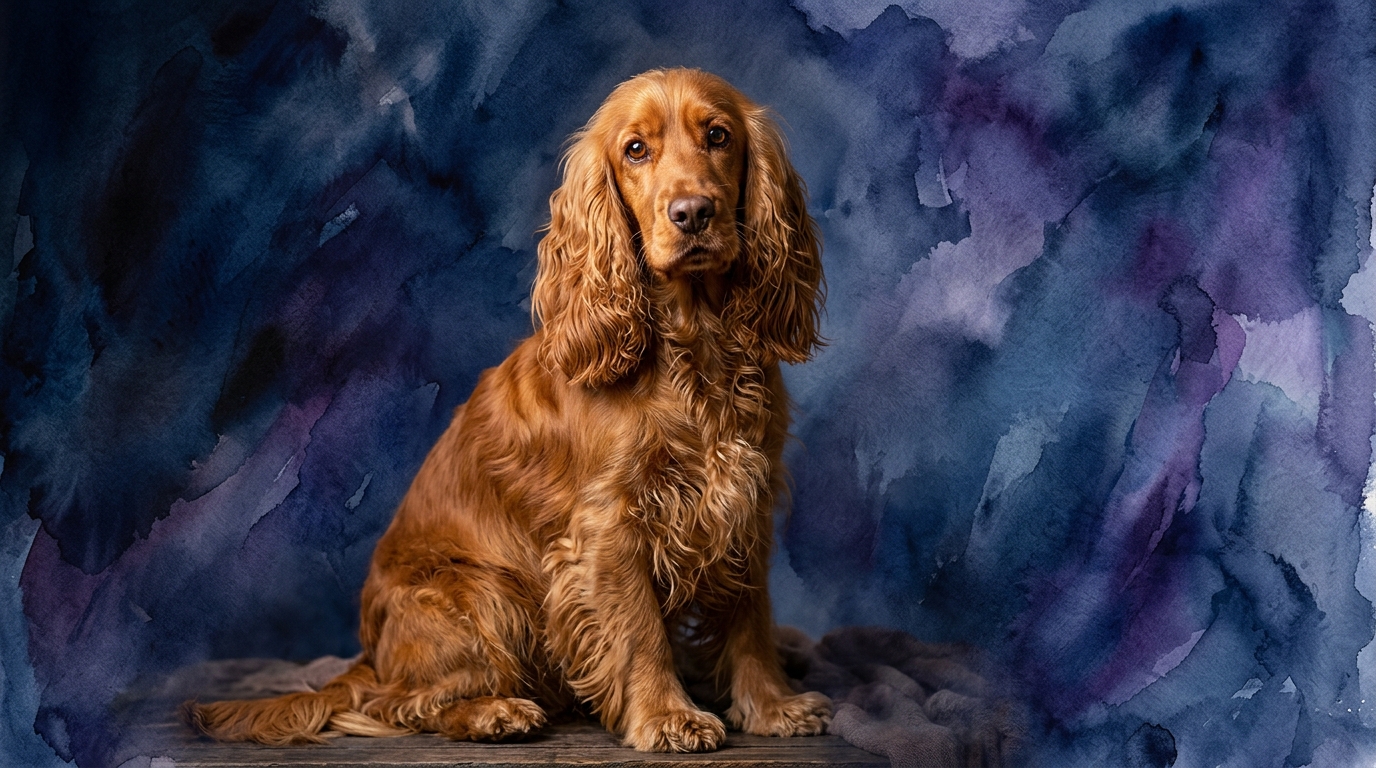
Side-by-Side IQ Profile: Cocker Spaniel
The Cocker Spaniel, a vibrant member of the Sporting Group and ranked #20 by Coren, demonstrates a profile geared towards collaborative work and strong human connection. Their Problem Solving is rated 3/5, reflecting an ability to navigate varied tasks in the field, often in partnership with their handler, showing good adaptability within a structured context. Training Speed shines at 4/5, indicating a keen readiness to learn and absorb new commands, eager to engage with instruction. Social Intelligence is a standout 5/5, highlighting their exceptional attunement to human emotions and strong desire for interaction, making them highly responsive companions. Instictive Drive, at 4/5, points to a robust drive for flushing and retrieving, a core part of their heritage, yet typically manageable and directed. Their Memory, rated 4/5, allows them to retain a wide array of commands, routines, and experiences, contributing to their reliability as working partners and family members.
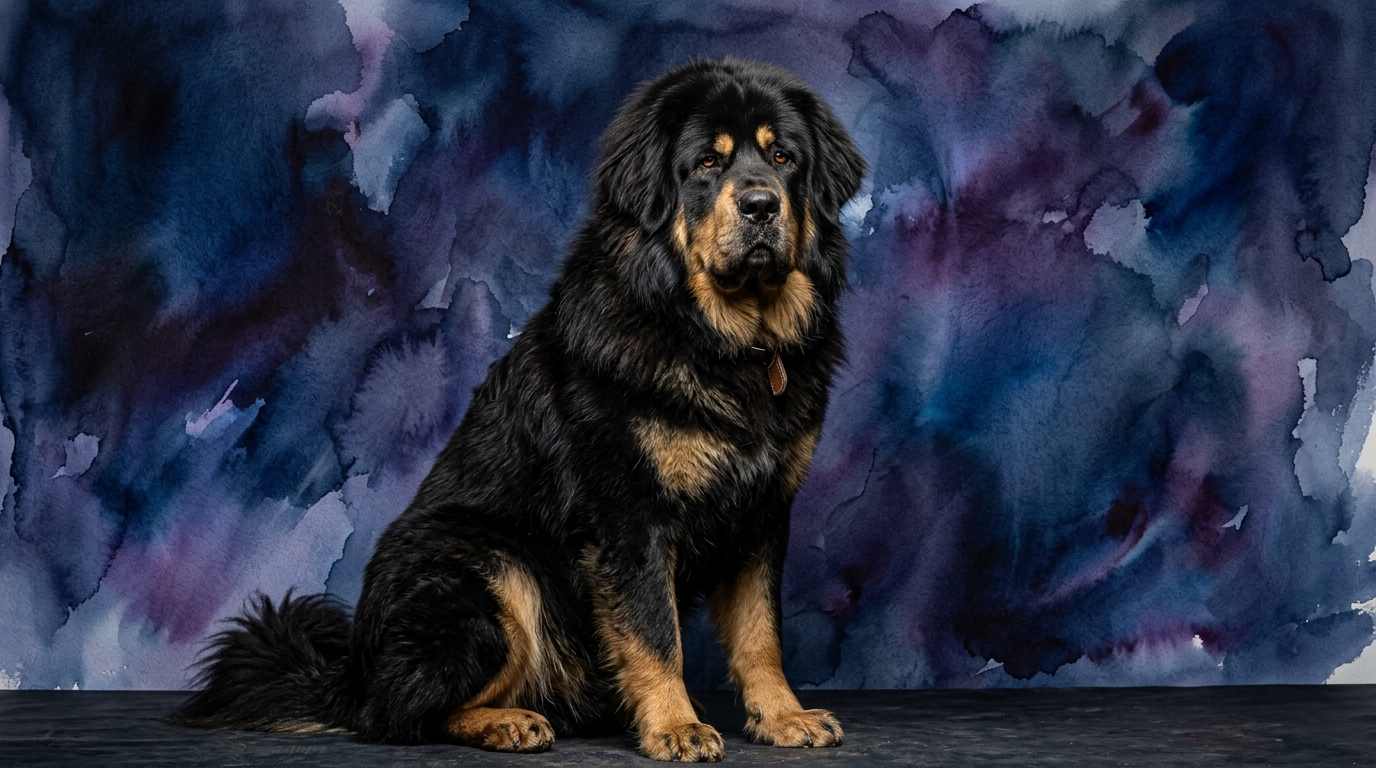
Side-by-Side IQ Profile: Tibetan Mastiff
In contrast, the Tibetan Mastiff, a majestic Working breed, presents a cognitive profile rooted in independent guardianship, a role that demands self-sufficiency rather than constant human direction. Their Problem Solving is also 3/5, but this score reflects their capacity to assess and respond to environmental threats autonomously, making decisions without explicit human command, rather than solving collaborative puzzles. Training Speed is 3/5, indicating that while capable of learning, their inherent independence means they may take longer to adopt human-centric commands, often requiring patience and consistent, clear guidance. Social Intelligence stands at 3/5; they are deeply loyal and protective of their immediate family, but typically reserved and discerning with strangers, not seeking broad social validation. Instictive Drive is 3/5, primarily manifesting as a strong territorial and protective instinct, a drive to guard their domain and family, rather than a drive for human-directed tasks or prey. Their Memory, also 3/5, serves them well in remembering perceived threats, established routines, and the boundaries of their territory, though perhaps not as many complex, arbitrary commands as a more biddable breed.
Where the Cocker Spaniel Wins Cognitively
The Cocker Spaniel distinctly outshines the Tibetan Mastiff in areas demanding close human collaboration and emotional synchronicity. Their 5/5 Social Intelligence means they possess an unparalleled ability to read human cues, anticipate needs, and adapt their behavior to maintain harmony within a family unit. This profound emotional understanding translates into a dog that not only comprehends commands but also seeks to engage and please, making them exceptionally responsive partners in various activities. Furthermore, their superior Training Speed (4/5) signifies a quicker uptake of new skills and a more enthusiastic approach to learning complex sequences, thriving on the mental stimulation of diverse training regimens. When it comes to problem-solving within a human-directed context, such as navigating agility courses or learning intricate tricks, the Cocker Spaniel's eagerness to collaborate and strong memory (4/5) give them a significant edge, allowing for rapid skill acquisition and reliable performance.
Where the Tibetan Mastiff Wins Cognitively
The Tibetan Mastiff's cognitive strengths lie in areas where independence, discernment, and self-reliance are paramount, distinct from the Cocker Spaniel's collaborative focus. Their Problem Solving (3/5), though numerically equal, manifests differently: they excel at independently assessing and managing their environment, particularly concerning perceived threats. This breed demonstrates a superior capacity for situational awareness within their territory, making autonomous decisions about who or what poses a risk without needing explicit direction. Their instinctive drive (3/5) is less about human-directed tasks and more about an intrinsic, unwavering commitment to guarding, which requires a quiet, observant understanding to identify and deter intruders. This involves a unique form of memory for spatial awareness and threat recognition, allowing them to recall specific individuals or patterns that might signify danger. While not seeking constant human approval, their social intelligence (3/5) is highly attuned to the nuances of their family unit, enabling them to make protective judgments based on subtle changes in household dynamics or external stimuli, a form of social acumen focused on security rather than broad interaction.
Ease of Training: A Tale of Two Temperaments
When evaluating ease of training, the Cocker Spaniel emerges as the more straightforward student due to their inherent desire for human interaction and cooperative nature. Their 5/5 Social Intelligence and 4/5 Training Speed mean they actively seek to understand and comply with human directives, often viewing training as a collaborative game. They are highly motivated by praise and positive reinforcement, quickly forming associations between actions and rewards, which makes teaching new commands and behaviors a relatively swift and enjoyable process. Their history as flushing and retrieving dogs means they are bred to work in close concert with humans, eager to follow complex instructions in varied environments. In stark contrast, the Tibetan Mastiff's independent Problem Solving (3/5) and lower Training Speed (3/5) mean they approach training with a more self-sufficient mindset. They are not necessarily 'stubborn,' but rather make their own assessments of whether a command is relevant or necessary from their perspective. Training a Tibetan Mastiff requires immense patience, consistency, and a deep understanding of their guardian instincts. They respond best to clear, calm leadership and reasoning that respects their inherent autonomy, rather than expecting blind obedience. Their motivation is often internal, tied to their role as protectors, making them less inclined to perform arbitrary tasks simply for human approval.
Matching Breeds to Lifestyles: Active vs. Relaxed Owners
The Cocker Spaniel is an ideal match for active owners who relish constant engagement and shared activities with their dog. Their energetic nature, combined with their profound social intelligence, means they thrive on mental stimulation, regular physical exercise, and being integral to family life. Owners who enjoy dog sports like agility, obedience, or scent work, or simply long walks and interactive play, will find a willing and enthusiastic partner in a Cocker Spaniel. They need consistent interaction and can become anxious or destructive if left isolated or under-stimulated. Conversely, the Tibetan Mastiff, while requiring diligent management, often suits owners who appreciate a more relaxed, self-sufficient canine presence within their home. These dogs are not demanding of constant interactive play or complex training sessions; instead, they are content with a secure yard to patrol and a calm, consistent routine. Their “relaxed” nature pertains to their lower requirement for human-directed activity, but this must not be confused with low-maintenance. Owners must be prepared for their strong protective instincts, requiring extensive early socialization and ongoing management to ensure they are well-adjusted and safe in diverse situations. They need owners who are firm, consistent leaders, understanding that a Tibetan Mastiff will often make its own decisions based on its guardian role, rather than seeking constant human validation.
The Verdict
Choose a Cocker Spaniel if you desire a highly interactive, trainable, and emotionally attuned companion for family life and diverse activities. They thrive on collaborative engagement and a busy, shared lifestyle, eager to please and quick to learn.
Opt for a Tibetan Mastiff if you are seeking a steadfast, independent guardian with a reserved demeanor, prepared for a long-term commitment to specific socialization and management. They offer quiet companionship and dedicated protection to owners who respect their self-reliant nature.
🧠 Find Your Pet's IQ Score
Our Pet IQ Lab assessment covers 25+ tests across 5 cognitive dimensions — personalized to your breed.
Take the Full IQ Test →Frequently Asked Questions
Is a Cocker Spaniel good with children?
Yes, Cocker Spaniels generally have a high social intelligence (5/5) and are known for being affectionate and patient with children, making them excellent family pets. Early socialization and teaching children how to interact respectfully with dogs are always beneficial for harmonious living.
Does a Tibetan Mastiff require a lot of exercise?
While large, Tibetan Mastiffs have moderate exercise needs compared to some working breeds. They enjoy patrolling their territory and appreciate a good walk, but aren't typically high-energy dogs seeking constant vigorous activity. Mental stimulation through their guarding role and secure outdoor space are often more important than intense workouts.
How do the problem-solving abilities differ between these two breeds?
Both breeds score 3/5 in problem-solving, but their application differs significantly. The Cocker Spaniel excels at solving problems collaboratively, such as navigating an agility course or learning complex tricks with human guidance. The Tibetan Mastiff's problem-solving is more independent, focused on assessing and responding to potential threats within its territory, making autonomous decisions as a guardian.