
Side-by-Side IQ Profile
The Cocker Spaniel, positioned at a respectable #20 on Stanley Coren's ranking, presents a well-rounded cognitive profile geared towards partnership and cooperation. Their problem-solving ability scores a solid 3 out of 5, indicating a capacity to navigate novel situations and learn new tasks with moderate effort. Training speed is a notable strength at 4 out of 5, reflecting their historical role as gundogs requiring responsiveness and quick uptake of commands. Social intelligence shines brightest at a perfect 5 out of 5, suggesting a profound understanding of human cues and a strong desire for interaction, while their instinctive drive sits at 4 out of 5, channeling their natural hunting instincts into focused retrieve work. Memory, crucial for retaining learned behaviors, is also robust at 4 out of 5.
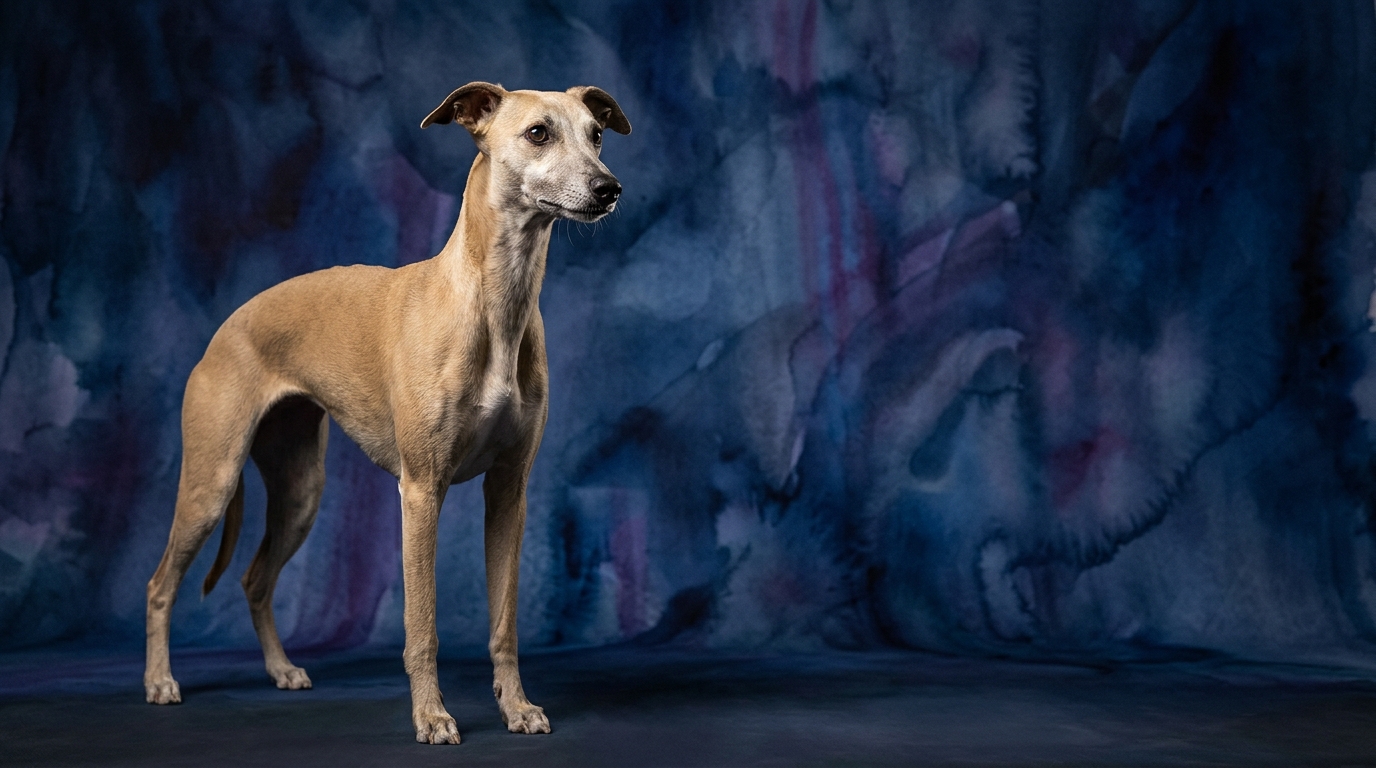
In contrast, the Whippet, ranked #51, showcases a cognitive design optimized for independent pursuit and observation. Their problem-solving mirrors the Cocker at 3 out of 5, demonstrating an equivalent baseline capacity to figure things out, though perhaps applied differently. Training speed, however, is a more leisurely 2 out of 5, reflecting their sighthound heritage which values autonomous action over strict obedience. Their social intelligence is a commendable 4 out of 5, indicating they are certainly capable of forming deep bonds and understanding social dynamics, though perhaps with a touch more independence than the Cocker. The Whippet's instinctive drive is its defining characteristic, scoring a powerful 5 out of 5, a testament to their ingrained ability to spot and chase moving objects with incredible focus and determination. Memory comes in at 3 out of 5, sufficient for daily routines but perhaps less geared towards complex, multi-step recall.
Where Cocker Spaniel Wins Cognitively
The Cocker Spaniel's cognitive strengths distinctly outshine the Whippet in areas requiring close human collaboration and sustained mental engagement. Their perfect 5/5 social intelligence means they are exceptionally attuned to human emotions and intentions, making them superb companions who actively seek to understand and please their people. This translates into an easier rapport during training sessions, where they often anticipate what's expected. Furthermore, their 4/5 training speed enables them to grasp new commands and routines with greater alacrity, processing information and linking actions to consequences more rapidly than their sighthound counterpart. This eagerness to learn, coupled with their 4/5 memory, allows them to build a more extensive repertoire of learned behaviors and recall them reliably, making them more adaptable to diverse training disciplines like obedience, agility, or therapy work.
Where Whippet Wins Cognitively
While the Cocker excels in cooperative tasks, the Whippet's cognitive architecture is uniquely superior in domains requiring independent action and acute sensory processing, particularly concerning movement. Their 5/5 instinctive drive is a profound advantage in tasks demanding self-reliance and an unwavering focus on a moving target. This isn't just about chasing; it encompasses a rapid visual assessment of speed and trajectory, and the autonomous decision-making required to intercept. While their general problem-solving is 3/5, this drive means they are exceptional at solving specific "prey-related" problems, like finding the quickest path to a lure or navigating obstacles while maintaining pursuit. This intrinsic motivation means they don't always need human direction to engage their cognitive abilities; instead, they are driven by their environment, demonstrating a unique form of problem-solving tailored to their sighthound heritage, where quick, decisive action without handler input is paramount.
Which is Easier to Train and Why
There's a clear distinction in ease of training between these two breeds, largely favoring the Cocker Spaniel due to their core cognitive makeup. The Cocker's 4/5 training speed and 5/5 social intelligence create a powerful combination for teachability; they are inherently motivated to engage with their handler, interpret human signals, and quickly learn what earns them positive reinforcement. Their historical role as gundogs demanded a high degree of responsiveness and a desire to work alongside humans, making them naturally inclined to focus on their trainer and absorb new commands efficiently. A Cocker is often eager to please, making repetitive training sessions productive and rewarding for both dog and owner.
Conversely, the Whippet's 2/5 training speed and dominant 5/5 instinctive drive present a different training challenge. Whippets, as sighthounds, were bred for independent thought and action, spotting and pursuing quarry without direct human command. This strong intrinsic motivation towards movement means they can be easily distracted in training environments by anything that catches their eye, making sustained focus on a handler difficult. While they are certainly capable of learning, their motivation often needs to be more compelling than a simple desire to please, often requiring high-value rewards and engaging, varied training methods. Their independence means they might question the necessity of a command if it doesn't align with their immediate instincts or perceived self-interest, making consistency and patience paramount for their owners.
Which Suits Active Owners vs Relaxed Owners
The suitability for active versus relaxed owners hinges on the type of activity and engagement desired. The Cocker Spaniel, with its robust social intelligence (5/5) and moderate instinctive drive (4/5), thrives with owners who are "active" in terms of interactive engagement and consistent mental stimulation. They require regular, varied training sessions, interactive games, and social outings to satisfy their need for companionship and cognitive input. While they enjoy physical exercise, their true activity lies in joint endeavors with their human, making them a fit for owners who enjoy teaching new tricks, participating in dog sports, or simply having a canine shadow involved in daily activities.
The Whippet, on the other hand, suits owners who are "active" in providing opportunities for explosive physical exertion but are otherwise "relaxed" about constant interaction. Their 5/5 instinctive drive means they need regular, safe outlets for running at top speed, such as a securely fenced yard or a designated off-leash park. However, once their need for a good sprint is met, Whippets are famously calm, quiet, and content to lounge indoors, often preferring a soft couch to constant mental games. They are not typically demanding of constant human attention or complex training routines once basic manners are established. Thus, they are ideal for owners who appreciate a dog that can transition from intense physical activity to a placid, independent companion with ease.
The Verdict
Choose a Cocker Spaniel if you desire a highly responsive, socially attuned companion eager to participate in cooperative training, engage in interactive play, and thrive on consistent human connection.
Choose a Whippet if you appreciate an independent, calm indoor presence that requires intense bursts of physical activity and whose unique problem-solving is rooted in keen observation and autonomous pursuit.
🧠 Find Your Pet's IQ Score
Our Pet IQ Lab assessment covers 25+ tests across 5 cognitive dimensions — personalized to your breed.
Take the Full IQ Test →Frequently Asked Questions
Does a Cocker Spaniel's high social intelligence mean they are prone to separation anxiety?
A Cocker Spaniel's 5/5 social intelligence means they form very strong bonds and prefer being near their people, which can make them susceptible to separation distress if not properly conditioned for alone time. Early training and gradual increases in solitude are important to foster independence.
How does a Whippet's 5/5 instinctive drive impact their daily life?
A Whippet's powerful instinctive drive means they are highly motivated by movement and visual stimuli, making them exceptional at chasing but also requiring secure environments; off-leash walks in unfenced areas are generally ill-advised due to their strong chase instinct. This drive shapes their play, exercise needs, and environmental awareness.
Can a Whippet be trained for complex tasks despite a lower training speed?
While a Whippet's 2/5 training speed suggests a slower learning curve compared to some breeds, they are certainly capable of learning complex tasks with patience, consistent positive reinforcement, and methods that tap into their natural motivations, often involving movement or high-value rewards. Their cognitive capacity is present, but their willingness to engage in structured training may vary.