Side-by-Side IQ Profile
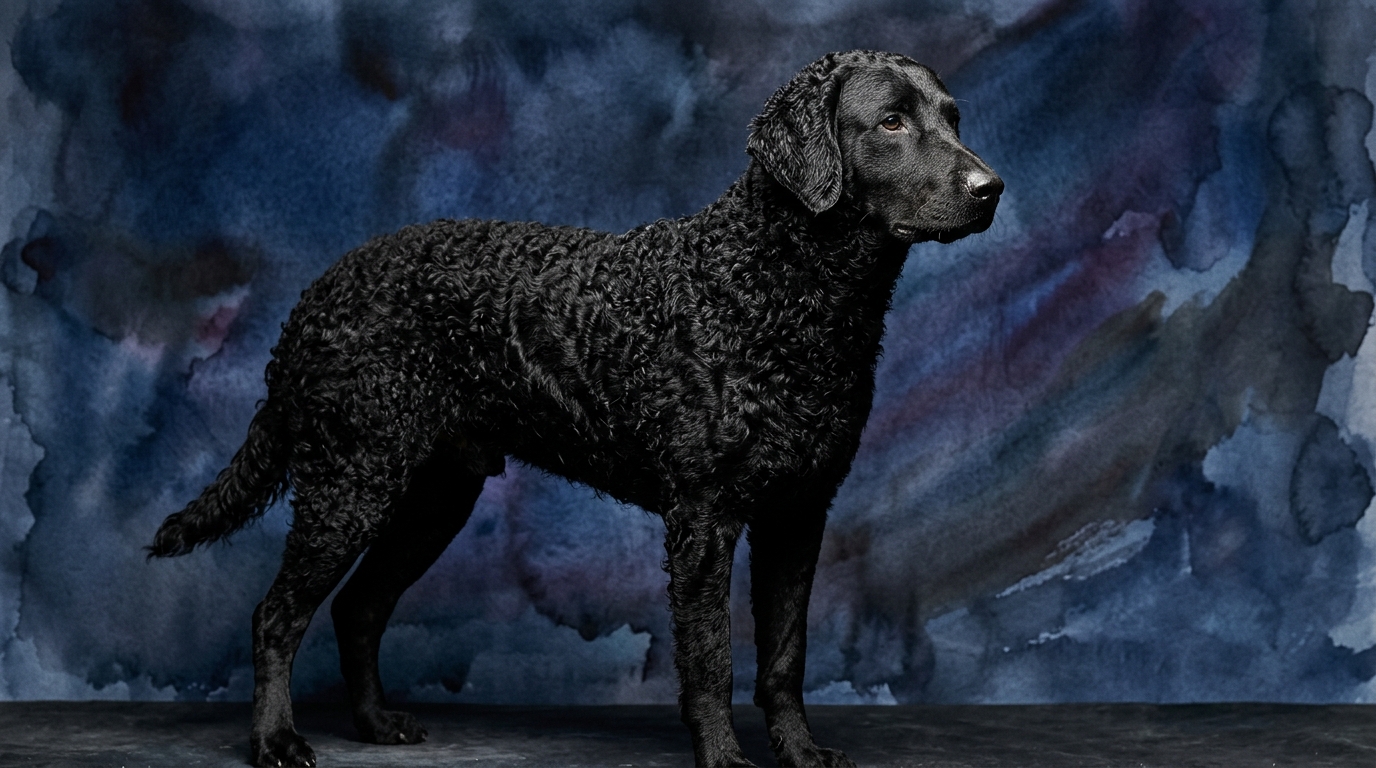
The Curly-Coated Retriever, a breed from the Sporting group, holds a respectable Coren rank of #41, indicating a solid foundation in obedience and adaptive intelligence. Its IQ dimensions show Problem Solving at 3/5, suggesting a capacity to navigate novel situations and figure out solutions, though perhaps not always with immediate, groundbreaking innovation. Training Speed is also 3/5, meaning it learns new commands at a moderate pace, requiring consistent but not overly repetitive instruction. Social Intelligence, rated 3/5, points to an adequate understanding of human cues and pack dynamics, allowing for effective communication and cooperation. Its Instinctive Drive, also 3/5, reflects a moderate propensity for its original working tasks like retrieving, without being overwhelmingly driven. The standout here is Memory, at 4/5, indicating a strong ability to retain learned behaviors and past experiences over time, which is crucial for complex sequence learning and recall in field work.
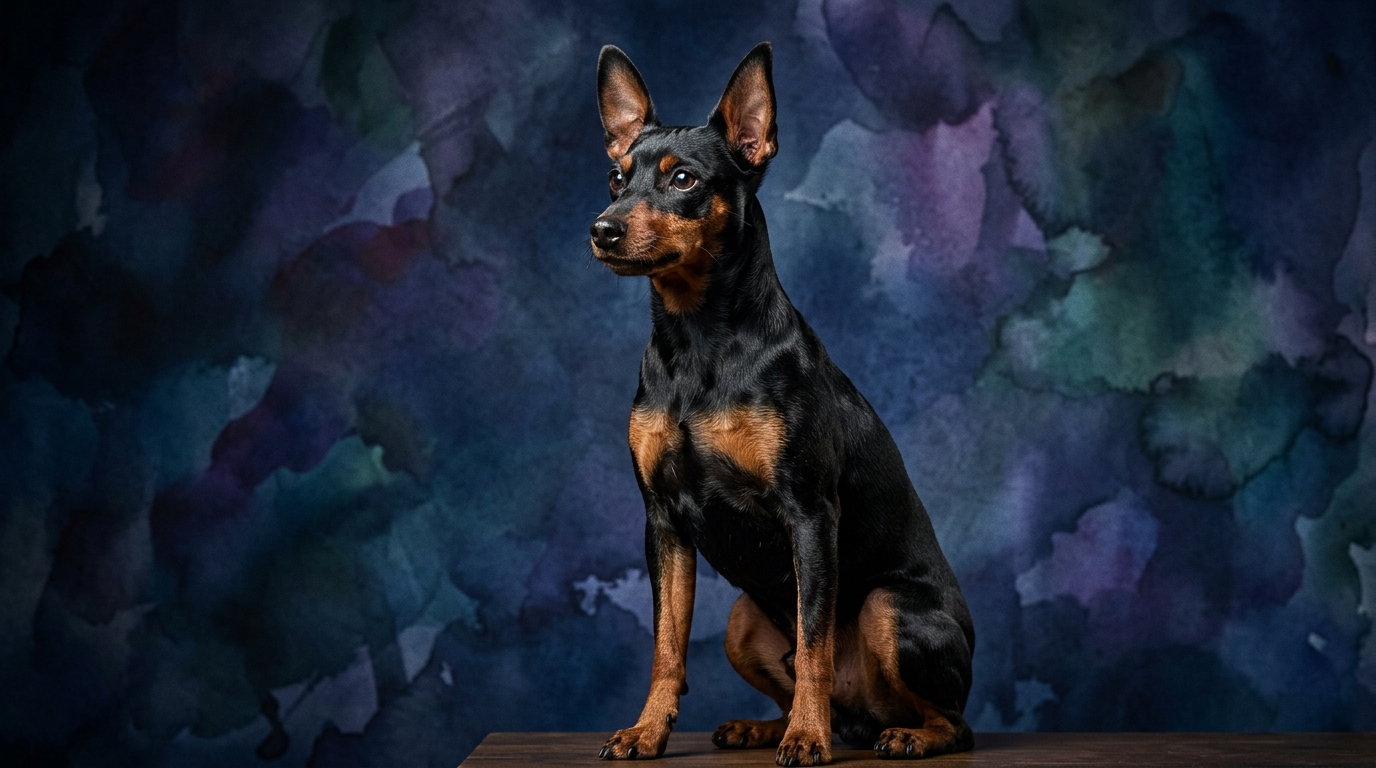
The Miniature Pinscher, a dynamic member of the Toy group, does not appear on the Coren ranking, which typically focuses on working and obedience intelligence, suggesting its primary cognitive strengths lie elsewhere. Across the board, its IQ dimensions are rated 3/5: Problem Solving, Training Speed, Social Intelligence, Instinctive Drive, and Memory. A 3/5 in Problem Solving implies it can tackle common household challenges and learn from experience, albeit sometimes requiring encouragement to persevere. Its Training Speed of 3/5 means it can grasp new concepts at a reasonable pace, provided the training methods are engaging and consistent, overcoming its potential independent streak. Social Intelligence at 3/5 suggests it can read human emotions and intentions well enough for companionship, forming strong bonds. Instinctive Drive at 3/5 reflects its inherent "King of Toys" mentality – a confident, assertive disposition that, while not for specific labor, drives its vigilant nature. Lastly, a Memory score of 3/5 means it retains information adequately, capable of remembering commands and routines, though perhaps not with the same depth or longevity as breeds with higher scores.
Where the Curly-Coated Retriever Excels Cognitively
The Curly-Coated Retriever's cognitive advantage is most pronounced in its exceptional memory, scoring 4/5. This superior retention allows it to master intricate multi-step commands and recall them reliably, even after periods of inactivity. For owners engaged in advanced obedience, field trials, or complex dog sports, this means the Curly can build a vast repertoire of skills and execute them with precision. Its memory also aids in consistent house-training and adherence to household rules, as it quickly learns what is expected and remembers consequences. Furthermore, its Coren rank of #41 signifies a general aptitude for understanding and executing human commands, underpinning its reliability as a working companion. This combination of robust memory and a good capacity for understanding makes it particularly adept at tasks requiring sequential learning and sustained focus.
Where the Miniature Pinscher Shines Cognitively
While the Miniature Pinscher's IQ scores are consistently 3/5, its cognitive strengths manifest uniquely, often intertwined with its physical agility and inherent assertiveness. Its Problem Solving at 3/5, combined with its compact size, means it can adeptly navigate complex environments, finding creative routes around obstacles or to desired objects within a home. This isn't about solving abstract puzzles but about practical, spatial problem-solving in its immediate world. Its Instinctive Drive, also 3/5, translates into a keen awareness of its surroundings, making it an excellent, albeit vocal, alarm system. This vigilance, while not a "smartness" per se, is a valuable cognitive output that leverages its sensory input and quick processing to alert its family. Its social intelligence, at 3/5, allows it to form incredibly strong, devoted bonds, often anticipating its owner's moods and preferences, which is a nuanced form of understanding crucial for a companion breed.
Training Ease: Curly-Coated Retriever vs. Miniature Pinscher
When it comes to training, both breeds share a Training Speed rating of 3/5, suggesting they can learn at a similar moderate pace. However, the Curly-Coated Retriever's superior memory (4/5) gives it an edge in retaining learned behaviors and complex sequences over the long term. This means once a Curly learns a command, it's likely to stick, making advanced training and maintaining a high level of obedience more straightforward. Their moderate instinctive drive (3/5) is also generally directed towards cooperation in retrieving tasks, aligning well with typical training goals. They tend to be eager to please, making them responsive to positive reinforcement.
In contrast, the Miniature Pinscher, while capable of learning at a 3/5 speed, can present unique training challenges due to its assertive personality and independent streak. Its "King of Toys" demeanor means it often requires a firm, consistent, and engaging approach to prevent it from deciding its own rules. While its social intelligence (3/5) allows for strong bonds, its instinctive drive (3/5) can sometimes manifest as a stubborn refusal to comply if it perceives a better alternative or lacks sufficient motivation. Early socialization and consistent, reward-based training are crucial to channel its intelligence effectively and ensure a well-behaved companion. The Min Pin might learn just as quickly, but consistently applying that learning can be more variable without dedicated effort.
Suiting Active vs. Relaxed Lifestyles
The Curly-Coated Retriever, originating from the Sporting group, is inherently suited for active owners. Its moderate instinctive drive (3/5) combined with its physical prowess means it thrives on regular, vigorous exercise that engages both its body and mind. Activities like retrieving games, swimming, hiking, and agility training are not just physical outlets but essential cognitive stimulation, leveraging its problem-solving (3/5) and memory (4/5) skills. Owners who enjoy outdoor adventures and can provide consistent mental challenges will find the Curly an eager and capable partner, preventing boredom-induced behaviors. This breed requires an owner who understands the need for purpose and activity.
The Miniature Pinscher, despite its small size, is far from a sedentary lapdog, but its needs align differently. While possessing an instinctive drive (3/5) that makes it energetic and playful, its exercise requirements are typically met with shorter, more frequent bursts of activity rather than marathon excursions. Daily walks, indoor play sessions, and interactive toys are usually sufficient. Its problem-solving (3/5) and social intelligence (3/5) mean it still benefits greatly from mental engagement, such as puzzle toys or learning new tricks, to prevent boredom. A relaxed owner who enjoys indoor companionship but can commit to consistent, albeit less physically demanding, mental and physical stimulation will find the Min Pin a delightful fit. It's an active indoor companion rather than an outdoor endurance athlete.
The Verdict
Choose the Curly-Coated Retriever if you are an active owner seeking a highly trainable, intelligent companion for outdoor adventures and dog sports, valuing strong memory and consistent obedience. Its robust build and cognitive profile are ideal for a partner in various canine activities.
Opt for the Miniature Pinscher if you desire a spirited, confident, and devoted indoor companion who thrives on consistent, engaging training and moderate activity, appreciating its assertive charm and vigilant nature. It's a big personality in a small package.
🧠 Find Your Pet's IQ Score
Our Pet IQ Lab assessment covers 25+ tests across 5 cognitive dimensions — personalized to your breed.
Take the Full IQ Test →Frequently Asked Questions
Is the Curly-Coated Retriever truly easier to train than a Miniature Pinscher?
While both breeds have a similar learning speed (3/5), the Curly-Coated Retriever's superior memory (4/5) generally makes it easier to achieve and maintain advanced obedience. Its cooperative nature, stemming from its Sporting group heritage, often translates into a more eager-to-please attitude during training sessions compared to the Min Pin's independent streak.
Which breed requires more mental stimulation to prevent destructive behaviors?
Both breeds require mental stimulation, but the Curly-Coated Retriever, with its higher memory and working background, often needs more structured cognitive challenges to prevent boredom. The Miniature Pinscher also benefits from mental games, though its needs might be met with consistent trick training and puzzle toys rather than extensive field work.
Can a Miniature Pinscher excel in dog sports despite not being Coren-ranked?
Absolutely, a Miniature Pinscher can excel in various dog sports like agility, obedience, and rally, leveraging its problem-solving (3/5) and quick reflexes. While not Coren-ranked, its intelligence, agility, and assertive drive, when channeled through positive training, allow it to be a very competitive and engaging participant.