Side-by-Side IQ Profile: Curly-Coated Retriever vs. Norwegian Elkhound
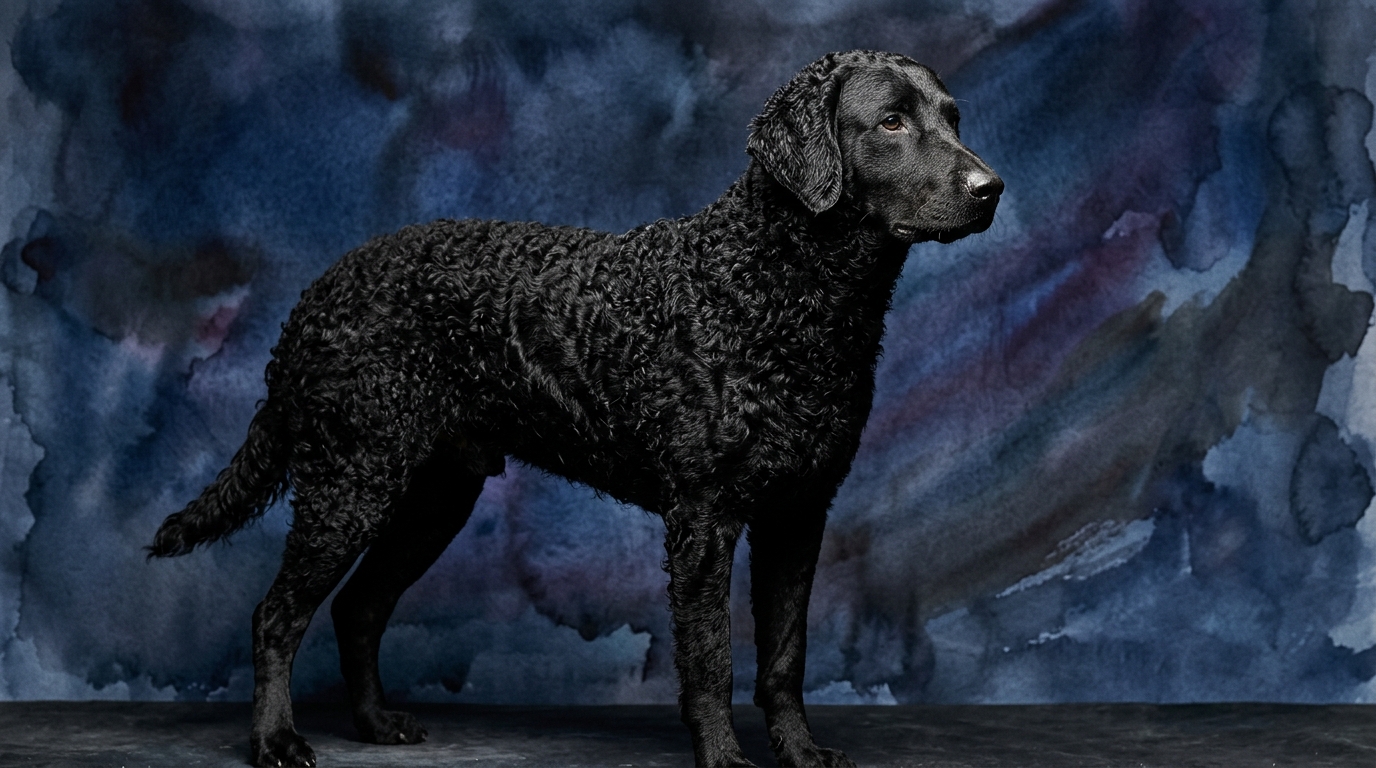
The Cosmic Pet Pet IQ Lab offers a granular view of canine cognitive strengths, moving beyond simple ranking to illuminate specific facets of a breed's mind. The Curly-Coated Retriever, ranking #41 on the Coren scale, exhibits a balanced cognitive profile suitable for its role as a versatile retriever. Its Problem Solving score of 3/5 suggests it can navigate moderately complex situations, often relying on learned patterns rather than innovative solutions, typical for a dog bred to follow commands in varied environments. Training Speed at 3/5 indicates a steady learning pace; they absorb new commands effectively with consistent, positive reinforcement, rather than being immediate quick studies. Social Intelligence also scores 3/5, reflecting an awareness of human cues and a capacity for harmonious interaction, crucial for a companion and working partner. Their Instinctive Drive, also 3/5, points to a moderate inclination towards their retrieving instincts, balanced enough to be directed by their handlers. Where the Curly truly shines is in Memory, earning a 4/5, signifying an excellent capacity to recall commands, locations, and past experiences, a vital trait for retrieving game over diverse terrains.
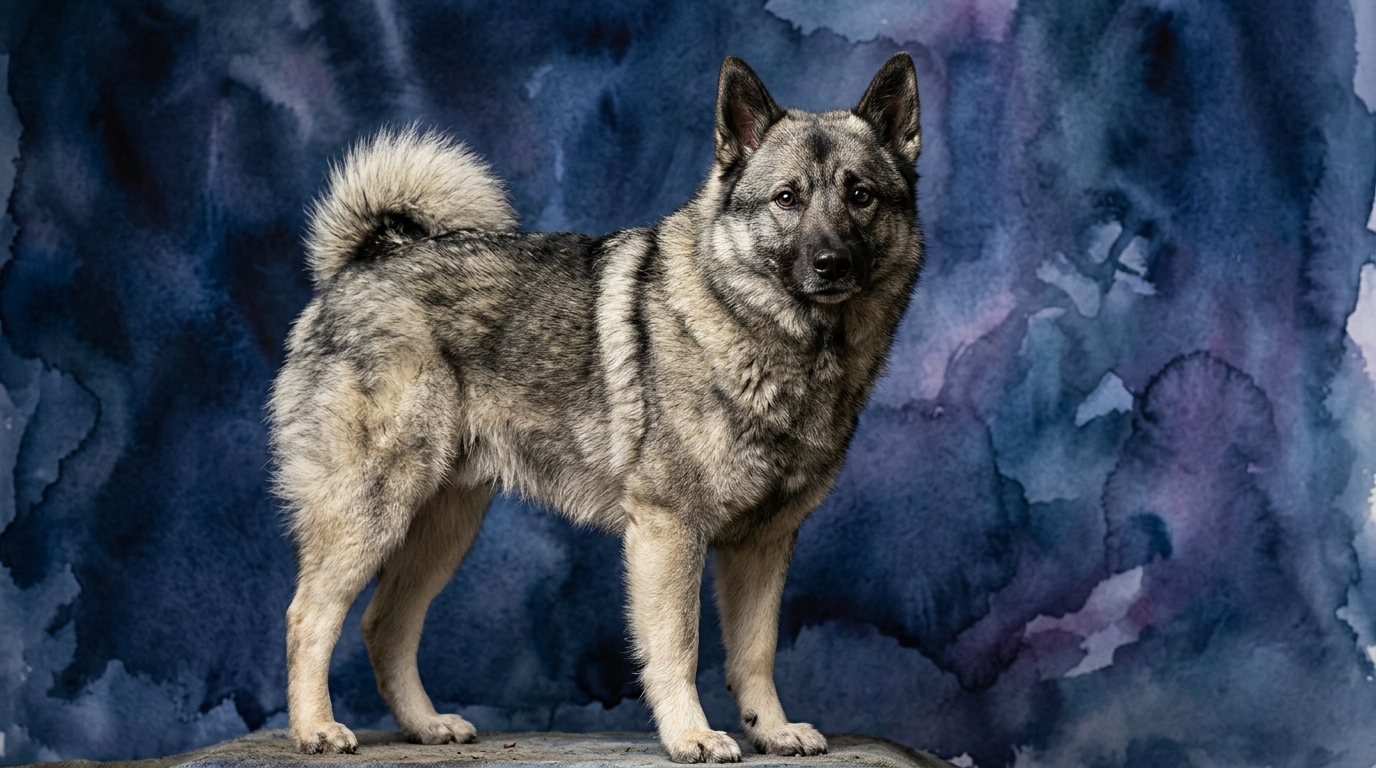
In contrast, the Norwegian Elkhound, positioned at #36 on the Coren scale, presents a cognitive makeup honed for independent hunting in challenging landscapes. Its Problem Solving score of 4/5 is a notable advantage, indicating a greater aptitude for independent thought and creative solutions when faced with novel obstacles, a necessity for tracking game autonomously. This breed also boasts a higher Training Speed at 4/5, suggesting it can grasp and retain new commands more quickly than the Curly-Coated Retriever, often requiring fewer repetitions. Like the Curly, its Social Intelligence is 3/5, showing a solid understanding of social dynamics and an ability to form strong bonds with its human family, albeit with a degree of typical hound independence. The Elkhound's Instinctive Drive also registers 3/5, reflecting its potent drive for tracking and hunting, which is a powerful motivator. Importantly, its Memory also scores 4/5, mirroring the Curly's excellent recall for vital information, whether it's the scent trail of game or the layout of its territory.
Where the Curly-Coated Retriever Wins Cognitively
While the Elkhound edges out the Curly in some areas, the Curly-Coated Retriever's cognitive profile particularly excels in its remarkable memory and balanced drives, making them highly effective in their intended role. A 4/5 Memory score is a significant asset, allowing them to precisely recall complex retrieving patterns, the location of fallen game, or a sequence of learned commands over extended periods. This superior recall is crucial for a working retriever, ensuring reliability in field tasks. Their 3/5 Instinctive Drive means their retrieving instincts are strong enough to be highly effective without overwhelming their trainability or leading to excessive independent ventures. This balance allows their cognitive skills to be directed rather than constantly managed, fostering a cooperative working relationship essential for a sporting companion.
Where the Norwegian Elkhound Wins Cognitively
The Norwegian Elkhound demonstrates a clear cognitive advantage in its Problem Solving and Training Speed capabilities. Its 4/5 Problem Solving score signifies a breed adept at independent decision-making and creative solutions to novel challenges, a crucial trait for a dog historically tasked with tracking and holding large game without direct human supervision. This translates to a dog that intelligently navigates complex environments or adapts to unexpected situations with greater ingenuity. Furthermore, the Elkhound's 4/5 Training Speed indicates a quicker uptake of new information and commands. They typically require fewer repetitions to solidify learning, allowing for a more efficient training process and potentially a broader range of learned behaviors in a shorter timeframe. This cognitive efficiency, coupled with their robust memory, allows them to build a large repertoire of skills effectively.
Which is Easier to Train and Why?
Based on their cognitive profiles, the Norwegian Elkhound generally presents as the easier breed to train for initial command acquisition, primarily due to its 4/5 Training Speed. Elkhounds grasp new concepts and commands with fewer repetitions, making early training more fluid. Their higher Problem Solving score also aids this, as they can often infer expectations or adapt to command variations. However, their strong independent nature, rooted in hunting heritage, means they might apply their intelligence to their own agenda if not consistently engaged.
The Curly-Coated Retriever, with a 3/5 Training Speed, requires a more patient and consistent approach. They will learn, but it might take more repetitions. Yet, their excellent 4/5 Memory ensures retention once learned. Their 3/5 Instinctive Drive, focused on retrieving, is highly trainable and can be channeled into cooperative tasks. The key difference lies in the speed of initial learning versus the willingness to perform and cooperate.
Suitability for Active vs. Relaxed Owners
Both the Curly-Coated Retriever and the Norwegian Elkhound demand active engagement, making neither truly suitable for relaxed, sedentary owners. The Curly-Coated Retriever, a sporting dog, requires regular physical exercise and, crucially, mental stimulation centered around tasks. Owners who enjoy activities like retrieving games, canine sports such as agility or obedience, or field work will find the Curly a highly engaged and cooperative partner. Their balanced instinctive drive and excellent memory suit structured activities involving learning and recall, thriving when given a purpose.
The Norwegian Elkhound, a hound breed, demands a different kind of activity. Their strong problem-solving skills and instinctive drive for tracking mean they excel in activities involving scent work, exploration, and endurance. Owners keen on hiking, long walks in varied terrain, or engaging in scent-based games will find the Elkhound's natural aptitudes shine. Their independent nature and preference for following a trail mean they need an outlet for their problem-solving and stamina, ideal for owners who enjoy active outdoor adventures.
The Verdict
Choose the Curly-Coated Retriever if you seek a cooperative, task-oriented companion for structured activities like retrieving, obedience, or agility, valuing consistent performance and excellent memory.
Opt for the Norwegian Elkhound if you appreciate an independent, intelligent partner for adventurous outdoor pursuits like hiking and scent work, where their problem-solving and quick learning will be an asset.
🧠 Find Your Pet's IQ Score
Our Pet IQ Lab assessment covers 25+ tests across 5 cognitive dimensions — personalized to your breed.
Take the Full IQ Test →Frequently Asked Questions
Are Curly-Coated Retrievers good family dogs?
Yes, Curly-Coated Retrievers typically possess a solid 3/5 Social Intelligence, indicating they form strong bonds and are generally responsive to social cues. Their cooperative nature and balanced drives make them adaptable companions in an active household.
What kind of mental stimulation do Norwegian Elkhounds need?
Norwegian Elkhounds thrive on mental stimulation engaging their 4/5 Problem Solving and 3/5 Instinctive Drive for tracking. Scent work, puzzle toys, and exploring new environments where they can use their nose and independent thought are excellent ways to challenge their minds.
How do their Coren ranks reflect their practical intelligence?
While the Elkhound's Coren rank (#36) is slightly higher than the Curly's (#41), these rankings represent general working and obedience intelligence. Our granular IQ scores show the Elkhound excels in independent problem-solving and training speed, while the Curly's strength is memory and cooperative task focus.