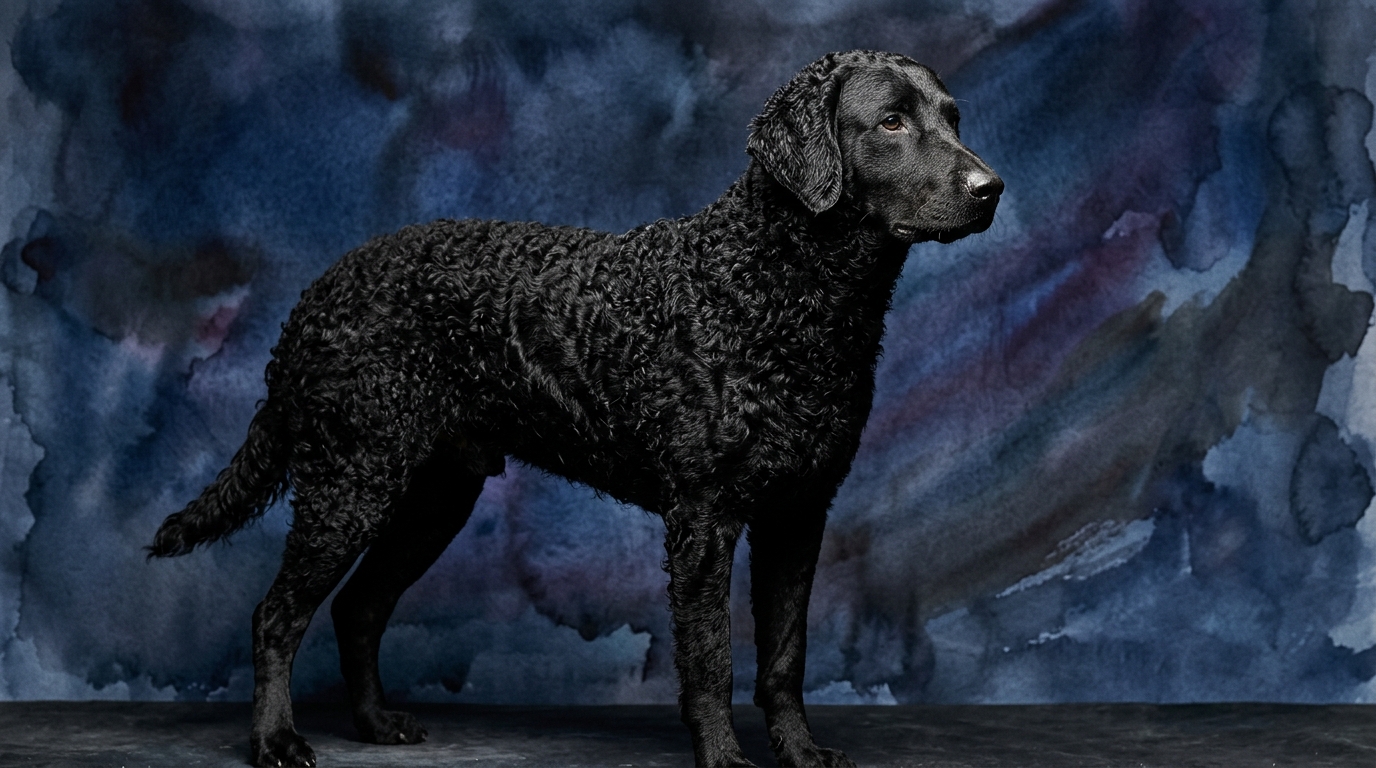
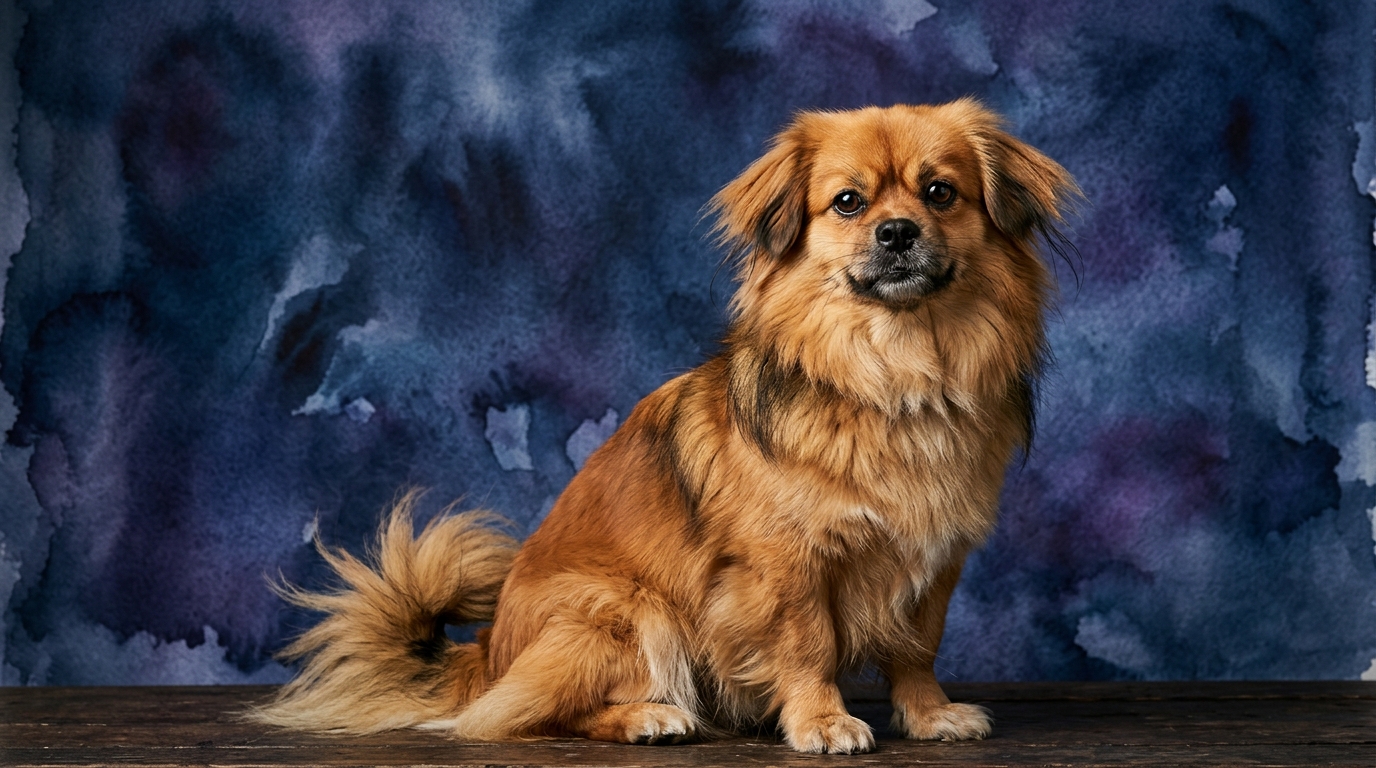
Side-by-Side IQ Profile: Curly-Coated Retriever vs. Tibetan Spaniel
The Cosmic Pet Pet IQ Lab framework offers a detailed lens through which to compare the cognitive landscapes of these two distinct breeds. While both share some numerical scores, their historical roles mean these cognitive traits manifest in uniquely tailored ways.
For the Curly-Coated Retriever, a breed ranked #41 by Coren and belonging to the Sporting group, its IQ profile reflects its heritage as a capable working dog. Its Problem Solving is rated 3/5, indicating a moderate ability to navigate novel situations or overcome obstacles, such as figuring out how to retrieve a toy stuck under furniture or strategizing the best path through dense cover during a hunt. Training Speed also scores 3/5, suggesting they grasp new commands and routines at an average pace, requiring consistent, clear instruction and repetition to solidify learning, though their working background generally means an eagerness to cooperate. Social Intelligence is 3/5, pointing to a moderate capacity for understanding and responding to human cues and social dynamics; they form strong bonds and are generally attuned to their family's moods but maintain a degree of self-possession. Instinctive Drive, at 3/5, reflects a moderate, inherent inclination towards their original purpose, meaning a natural desire to retrieve, to work with a handler, and to engage with their environment through scent and sight, which is channelled rather than overwhelming. The Curly's standout cognitive trait is its Memory, scoring 4/5, indicating a robust ability to recall past experiences, learned commands, and established routines over extended periods, invaluable for remembering multiple marked falls in a field or complex obedience sequences.
The Tibetan Spaniel, a Non-Sporting breed not listed on the Coren ranking, presents an IQ profile attuned to its history as a watchful companion and temple dog. Its Problem Solving score is 3/5, similar to the Curly, suggesting a moderate capability for independent thought in new situations, which might involve figuring out how to get the best vantage point on a sofa or subtly communicating a desire for attention. Training Speed is also 3/5, meaning they learn new commands at an average rate; they can be receptive to training, particularly when it’s framed as a positive interaction, but their independent spirit means they require patient and consistent methods. Social Intelligence also scores 3/5, demonstrating a moderate understanding of social cues; they are deeply bonded with their families and can be sensitive to their moods, often positioning themselves as watchful companions, with their social intelligence manifesting as astute observation rather than a drive to constantly please. Instinctive Drive, at 3/5, reflects their heritage as temple dogs, embodying an instinct for watchful companionship and a keen awareness of their surroundings, a natural inclination to guard their family and territory from a high perch. The Tibetan Spaniel's Memory score is 3/5, indicating a solid, average ability to retain information; they remember routines, family members, and basic commands, but might not recall intricate sequences with the same clarity or duration as a breed with a higher memory score, making consistent reinforcement beneficial for long-term retention.
Where the Curly-Coated Retriever Wins Cognitively
The Curly-Coated Retriever distinctly excels in memory, scoring 4/5 compared to the Tibetan Spaniel's 3/5. This superior recall is a cornerstone of its working aptitude, allowing it to accurately remember the location of multiple fallen birds in a hunting scenario or execute intricate multi-step obedience routines with greater precision and less prompting. This robust memory translates into a dog that can master and retain a wider repertoire of commands and tasks over time, making it particularly adept for complex dog sports like advanced obedience, field trials, or even service work where sequence recall is critical. Their ability to 'store' and retrieve information efficiently means that once a concept is learned, it is likely to be deeply ingrained, reducing the need for constant re-teaching and building a highly reliable working partner. This cognitive strength underpins their capacity for independent problem-solving in dynamic environments, where past experiences inform current actions, such as navigating a complex retrieve path based on previous successful attempts.
Where the Tibetan Spaniel Wins Cognitively
While the Tibetan Spaniel doesn't have a numerically higher score in any single cognitive dimension, its strength lies in the *application* of its balanced 3/5 scores within its specific context: companion and watchful observer. Its problem-solving, social intelligence, and instinctive drive coalesce into a nuanced awareness of its immediate environment and family dynamics. This breed demonstrates a particular aptitude for discerning subtle human cues and adapting its behavior to maintain domestic harmony, often acting as a quiet, intuitive presence. Their 'winning' edge isn't in complex task mastery, but in their sophisticated ability to integrate into human family life with a self-sufficient grace. They excel at the 'art of companionship,' needing less external direction for cognitive fulfillment than a working breed. Their instinctive drive, channeled into watchful observation rather than active pursuit, means they are naturally alert to changes in their surroundings without being overly reactive, offering a calm, intelligent presence that thrives on close, reciprocal relationships.
Which is Easier to Train and Why
Both breeds share a 3/5 score in training speed, suggesting they learn new commands at a comparable, average pace. However, the Curly-Coated Retriever's superior memory (4/5 vs. Tibetan Spaniel's 3/5) gives it an edge in long-term retention and the ability to build upon previously learned concepts. While a Tibetan Spaniel might grasp a new command just as quickly initially, a Curly is more likely to remember it consistently over time and integrate it into more complex sequences without needing frequent refreshers. The Curly's sporting background also instills a greater inherent desire to work cooperatively with a handler, which, when combined with its strong memory, can make the overall training *process* feel more fluid and progressive. The Tibetan Spaniel, despite its similar training speed, possesses a more independent and sometimes stubborn streak, meaning motivation needs to be kept fresh and engaging to maintain its interest. While capable of learning, their training often benefits from shorter, more frequent sessions that respect their individualistic nature, whereas the Curly can often handle more sustained and structured training.
Which Suits Active Owners vs. Relaxed Owners
The Curly-Coated Retriever is better suited for active owners. Its moderate instinctive drive (3/5) and sporting heritage mean it thrives on engaging activities that challenge its body and mind. Owners who enjoy hiking, running, swimming, or participating in dog sports like agility, obedience, or field work will find a willing and capable partner in the Curly. Their robust memory allows them to excel in structured training and repetitive tasks, making them ideal for individuals dedicated to consistent physical and mental engagement. A relaxed owner might find the Curly’s need for purposeful activity translates into boredom or destructive behaviors if left unstimulated.
Conversely, the Tibetan Spaniel is an excellent match for more relaxed owners. While they enjoy regular walks and playtime, their cognitive and physical needs are generally less demanding than a sporting breed. Their instinctive drive, focused on watchful companionship, means they are content to be near their human, observing the world from a comfortable perch. They appreciate gentle interaction, quiet companionship, and a consistent routine, making them well-suited for individuals who prefer less intense physical outings and more relaxed indoor activities. Their problem-solving abilities are often satisfied by navigating the home environment and understanding family dynamics rather than needing complex external challenges.
The Verdict
Choose the Curly-Coated Retriever if you seek a dedicated, reliable working partner for sporting activities or structured training, valuing its robust memory and cooperative spirit. This breed thrives with owners who can provide consistent mental and physical engagement, appreciating a dog that retains complex lessons efficiently.
Opt for the Tibetan Spaniel if you desire a perceptive, self-sufficient companion who excels at quiet observation and nuanced social interaction within a relaxed home environment. This breed suits owners who value an intuitive presence and are content with moderate activity, appreciating a dog that integrates seamlessly into family life without constant cognitive demands.
🧠 Find Your Pet's IQ Score
Our Pet IQ Lab assessment covers 25+ tests across 5 cognitive dimensions — personalized to your breed.
Take the Full IQ Test →Frequently Asked Questions
Do Curly-Coated Retrievers need a lot of mental stimulation?
Yes, with a Problem Solving score of 3/5 and a Memory of 4/5, Curly-Coated Retrievers benefit greatly from regular mental challenges. They enjoy learning new commands, engaging in puzzle toys, and participating in activities that allow them to utilize their strong recall and problem-solving skills, preventing boredom.
Are Tibetan Spaniels difficult to train due to their independence?
While Tibetan Spaniels have a 3/5 Training Speed score, their independent nature means training requires patience and positive reinforcement to be effective. They learn at an average pace but respond best to engaging, varied sessions that respect their self-possessed character rather than forceful methods.
How do the instinctive drives of these two breeds differ in daily life?
The Curly-Coated Retriever's 3/5 instinctive drive manifests as a natural inclination to retrieve and participate in outdoor activities, often requiring outlets like fetching or swimming. The Tibetan Spaniel's 3/5 instinctive drive is more about watchful companionship and observing its surroundings, leading to behaviors like perching on high spots or acting as a vigilant, but not overly reactive, household guardian.