
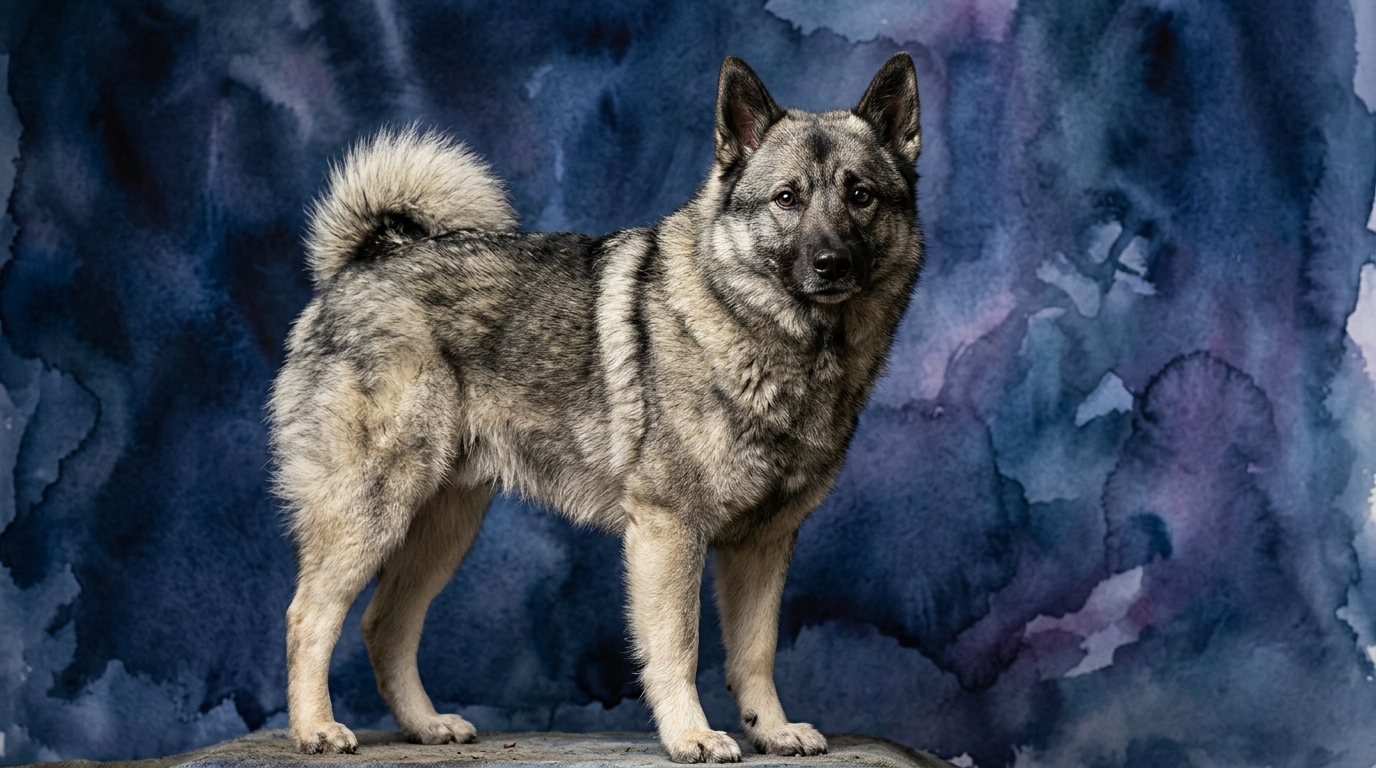
Side-by-Side IQ Profile: Dachshund vs. Norwegian Elkhound
The Cosmic Pet Pet IQ Lab's assessment offers a detailed look into the cognitive architecture of these two unique Hound breeds. The Dachshund, with a Coren rank of #49, and the Norwegian Elkhound, ranked #36, present intriguing differences across five key intelligence dimensions, each reflecting their historical roles and inherent behavioral patterns.
For the **Dachshund** (Coren rank #49): Problem Solving (4/5) indicates a significant capacity for independent thought and strategic thinking; bred to hunt badgers, they developed an ability to assess situations and devise solutions in complex underground tunnels without direct human instruction. Training Speed (2/5) reflects a breed that can be more challenging to motivate for repetitive tasks, often preferring to follow its own instincts rather than human commands, leading to a slower acquisition of new behaviors. Social Intelligence (3/5) suggests a moderate understanding of human social cues; while capable of deep bonds, their independent nature means they are discerning in social interactions. Instinctive Drive (5/5) is a defining characteristic, an exceptionally strong drive to scent, track, and burrow, reflecting centuries of tenacious hunting. Memory (3/5) is solid, allowing retention of experiences and routines, though their independent drive might sometimes override recall.
For the **Norwegian Elkhound** (Coren rank #36): Problem Solving (4/5) also displays a robust capacity for cognitive challenges; as ancient hunting companions for large game, they needed to make quick decisions, track intelligently, and hold prey at bay, demonstrating keen situational awareness. Training Speed (4/5) signifies a breed generally more receptive to training and quicker to pick up new commands, fostered by a history of close working partnership with humans in challenging conditions. Social Intelligence (3/5) is moderate; loyal and forming strong family bonds, they understand human emotions but possess a dignified self-assurance rather than an overwhelming need for constant validation. Instinctive Drive (3/5) is moderate compared to the Dachshund's; they have a strong prey drive but often express it with more control, relying on intelligent tracking and holding rather than relentless pursuit. Memory (4/5) is strong, crucial for remembering complex hunting routes, commands, and past experiences, aiding their trainability and reliability.
Where the Dachshund Wins Cognitively
The Dachshund truly shines in its **Instinctive Drive (5/5)**, a cognitive area where it surpasses the Norwegian Elkhound's 3/5. This isn't merely about physical energy; it's a deep-seated, unwavering mental tenacity and motivation to pursue specific tasks related to its original purpose. This extreme drive manifests as an unparalleled determination in scent tracking, digging, and flushing out prey, often displaying a single-minded focus that can be both admirable and challenging. While this high drive can translate into stubbornness in other contexts, it represents a peak cognitive specialization for relentless, independent pursuit, a unique strength honed over centuries for specific hunting challenges.
Where the Norwegian Elkhound Wins Cognitively
The Norwegian Elkhound demonstrates clear cognitive advantages in **Training Speed (4/5)** and **Memory (4/5)** when compared to the Dachshund's 2/5 and 3/5 respectively. Their higher training speed indicates a greater readiness and ability to grasp and execute commands efficiently, suggesting a more pliable cognitive framework when it comes to learning from human instruction. This is coupled with a superior memory, allowing Elkhounds to retain complex sequences, recall specific training cues over extended periods, and navigate intricate environments with learned precision. These combined strengths make the Elkhound a more responsive and consistently reliable partner in structured learning and recall tasks.
Which is Easier to Train and Why
Based on their cognitive profiles, the **Norwegian Elkhound is generally easier to train** than the Dachshund. The Elkhound's **Training Speed of 4/5** indicates a quicker understanding and willingness to comply with commands, often showing a natural aptitude for structured learning. This stems from their historical role as close working partners, where responsiveness and reliability were paramount. They tend to focus better on human directives, their moderate instinctive drive (3/5) allowing them to be redirected more readily from environmental distractions. In contrast, the Dachshund's **Training Speed of 2/5** reflects a more independent and sometimes stubborn nature. Their exceptional **Instinctive Drive (5/5)** means they are powerfully motivated by their own urges – a captivating scent or the urge to dig – which can easily override human commands. Teaching a Dachshund often requires more patience, creativity, and a deep understanding of their inherent motivations to make training rewarding enough to compete with their strong internal drives, leading to a slower overall training process.
Which Suits Active Owners vs. Relaxed Owners
The choice between these two breeds depends significantly on an owner's lifestyle. The **Norwegian Elkhound**, with its robust problem-solving skills, strong memory, and moderate instinctive drive, is well-suited for active owners who enjoy engaging their dogs in regular, purposeful activities. Their need for physical exercise is complemented by a cognitive demand for mental stimulation, making them excellent companions for hiking, dog sports, or advanced obedience training. They thrive when given a job or a clear routine that utilizes their intellect and stamina. Conversely, the **Dachshund**, despite its smaller size, is not necessarily a 'relaxed' companion in the traditional sense due to its overwhelming **Instinctive Drive (5/5)**. While they can enjoy periods of relaxation, their innate desire to explore, scent, and dig means they require consistent mental engagement and outlets for their natural behaviors. They are better suited for owners who are prepared to manage and channel this intense drive, perhaps through scent work games, secure outdoor exploration, or consistent training that acknowledges their independent spirit rather than trying to suppress it entirely. A truly 'relaxed' owner might find the Dachshund's tenacity challenging, whereas an owner who enjoys interactive play and mental puzzles would find them engaging.
The Verdict
Choose a Dachshund if you appreciate a tenacious, independent thinker with an unparalleled instinctive drive, and are prepared to engage with their strong personality and channel their natural urges into appropriate activities.
Choose a Norwegian Elkhound if you seek a responsive, intelligent working partner with a good memory and a cooperative spirit, who will thrive on consistent training and an active, engaging lifestyle.
🧠 Find Your Pet's IQ Score
Our Pet IQ Lab assessment covers 25+ tests across 5 cognitive dimensions — personalized to your breed.
Take the Full IQ Test →Frequently Asked Questions
Are Dachshunds difficult to train due to their intelligence?
Dachshunds are not 'difficult' due to a lack of intelligence; rather, their independent problem-solving (4/5) and strong instinctive drive (5/5) mean they often prioritize their own motivations. Their training speed (2/5) indicates they require more patience and creative, highly motivating methods to learn and comply consistently, as they are less inclined to simply follow commands.
How does the Norwegian Elkhound's hunting background influence its cognitive traits?
The Elkhound's background as a big-game hunter shaped its strong problem-solving (4/5) and memory (4/5) for tracking and strategizing. Their moderate instinctive drive (3/5) allows for more controlled hunting behaviors, while their higher training speed (4/5) reflects a historical need for close cooperation and responsiveness with human partners in challenging environments.
Does Coren rank directly correlate with the five IQ dimensions?
Coren rank primarily measures 'working and obedience intelligence,' which broadly aligns with training speed and responsiveness to human commands. While it offers a general indicator (Elkhound #36 vs. Dachshund #49), it doesn't fully capture the nuances of problem-solving, social intelligence, instinctive drive, or memory as individual cognitive strengths, which our Cosmic Pet IQ Lab dimensions detail.