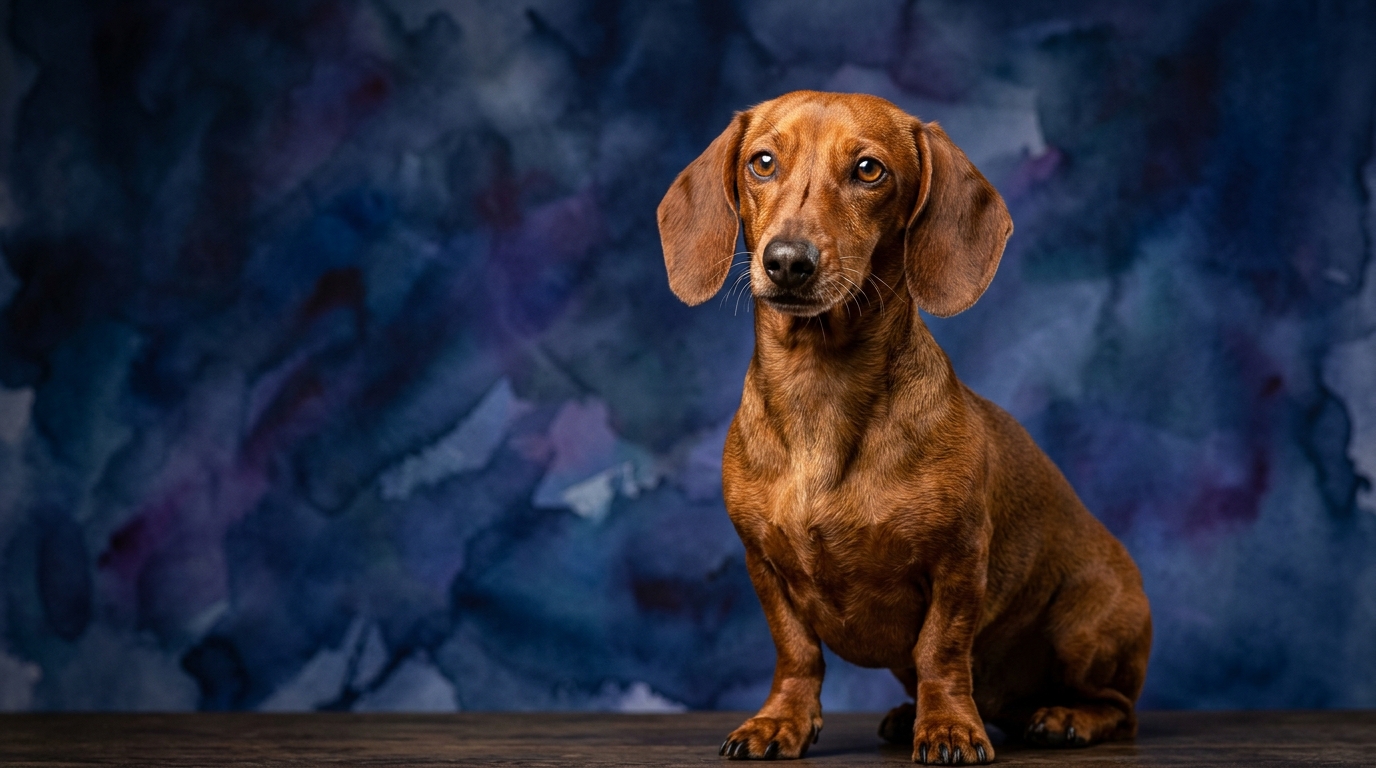
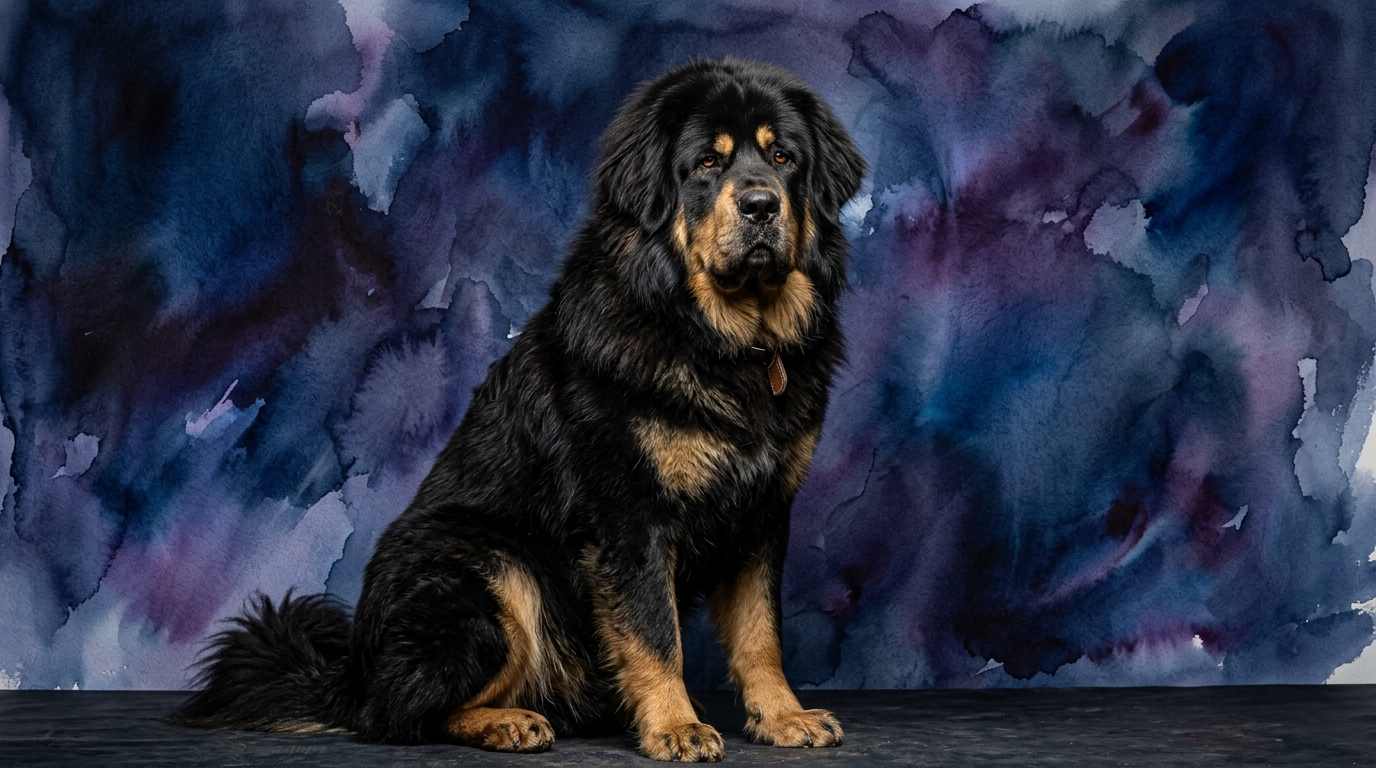
Side-by-Side IQ Profile: Dachshund vs. Tibetan Mastiff
At The Cosmic Pet Pet IQ Lab, we evaluate canine cognition across five key dimensions, offering a nuanced understanding of each breed's mental strengths. For the Dachshund, a breed originally developed in Germany for hunting badgers and other burrow-dwelling animals, its cognitive profile reflects a history of independent, tenacious work. Its Problem Solving is rated 4/5, indicative of its ability to independently navigate complex underground tunnels and strategize against elusive prey. Training Speed, however, is 2/5; their strong will and focus on instinct often mean human commands take a backseat to a compelling scent or chase. Social Intelligence stands at 3/5, as they form strong bonds with their human 'pack' but can be quite opinionated and selective in their interactions. Instinctive Drive is an undeniable 5/5, manifesting as an unwavering prey drive, relentless scent tracking, and an innate urge to dig. Their Memory is a solid 3/5, recalling important locations, routines, and the individuals they trust, though perhaps selectively forgetting commands they deem less interesting.
The Tibetan Mastiff, a majestic guardian breed from the Himalayas, presents a contrasting cognitive blueprint, shaped by centuries of protecting livestock and homes in harsh, isolated environments. Lacking a Coren rank, our lab's assessment provides insight into its unique mental makeup. Its Problem Solving is 3/5, geared towards assessing potential threats, understanding territorial boundaries, and making independent judgments rather than intricate puzzle-solving. Training Speed is 3/5; while capable of learning, their independent nature and self-assured temperament mean they are not inherently eager to please and require consistent, respectful guidance. Social Intelligence is 3/5, characterized by deep loyalty to their family and a profound wariness of strangers, accurately discerning intentions within their perceived domain. Their Instinctive Drive is 3/5, primarily focused on guarding, patrolling, and territorial defense, rather than a high prey drive or complex scent work. Memory is also 3/5, excellent for remembering routines, their territory, trusted individuals, and any perceived past threats.
Where the Dachshund Excels Cognitively
The Dachshund's cognitive strengths shine brightest in areas demanding independent action and persistent problem-solving. Its 4/5 rating in Problem Solving is a testament to its original purpose: navigating intricate, dark burrows to corner prey. This isn't about solving human-designed puzzles, but rather about dynamic, on-the-spot decision-making in a challenging environment. A Dachshund excels at figuring out how to get to something it wants, whether that's a squirrel in a tree or a dropped treat under the sofa, demonstrating remarkable ingenuity and determination.
Furthermore, its unparalleled 5/5 Instinctive Drive gives the Dachshund a distinct edge in tasks requiring unwavering focus and tenacity. When a scent captures its attention, the Dachshund becomes a single-minded force, capable of ignoring distractions and pursuing its goal with relentless vigor. This drive, while sometimes challenging for owners, is a profound cognitive asset that allows them to excel in scent work, tracking games, and any activity where persistence and a strong natural impulse are paramount.
Where the Tibetan Mastiff Excels Cognitively
The Tibetan Mastiff's cognitive prowess centers on its formidable role as a guardian, emphasizing independent judgment and territorial awareness. Its 3/5 Problem Solving, while not about agility course challenges, reflects a sophisticated capacity to evaluate situations, often from a distance, and make autonomous decisions regarding perceived threats. This breed excels at assessing the nuances of an approaching stranger or an unusual sound, determining whether it warrants a warning, a closer inspection, or simply watchful observation without direct human instruction.
Their 3/5 Instinctive Drive, specifically tailored for guarding, demonstrates a cognitive strength in vigilance and protective strategy. A Tibetan Mastiff's memory (3/5) is particularly strong in recalling specific individuals, routines, and the layout of its territory, allowing it to maintain consistent patrol patterns and quickly identify anything amiss. This breed possesses an innate understanding of boundaries and a calm, deliberate approach to its duties, making calculated decisions that prioritize the safety of its charge without needing constant direction.
Training Dynamics: Which Breed is More Amenable?
When considering trainability, neither the Dachshund nor the Tibetan Mastiff fit the mold of a 'eager to please' breed with a high training speed. The Dachshund, with its 2/5 Training Speed, presents challenges rooted in its independent hunting heritage. They are often described as 'stubborn' due to their strong will and tendency to prioritize their instincts, particularly their formidable prey drive, over human commands. If a compelling scent is present, recall can be a significant hurdle, as their focus shifts entirely to the chase. Successful training requires immense patience, consistency, positive reinforcement, and a talent for making commands seem like the dog's own idea, appealing to their problem-solving nature rather than demanding blind obedience.
The Tibetan Mastiff, rated 3/5 for Training Speed, is also independent but for different reasons. Their primary drive is guarding, which necessitates making their own judgments rather than constantly seeking human directives. They are not naturally inclined to repetitive drills or quick obedience; instead, they require a confident, respectful leader who understands their protective instincts. Training with a Tibetan Mastiff is more about establishing a clear relationship based on trust and mutual respect, channeling their natural guarding tendencies, and setting firm boundaries. While they may not learn tricks quickly, they are capable of understanding complex household rules and expectations when taught consistently and with an appreciation for their autonomous nature. Therefore, while neither is 'easy' in the conventional sense, the Tibetan Mastiff's training, though demanding, can be more predictable if one understands its core motivations, whereas the Dachshund's spontaneous prey drive can be a constant, engaging battle.
Suitability for Active vs. Relaxed Owners
The distinction between 'active' and 'relaxed' owners takes on unique dimensions when considering these two breeds. The Dachshund, despite its small stature, is far from a purely relaxed companion. Its 5/5 Instinctive Drive for hunting and scent work means it requires significant mental stimulation and appropriate outlets for its energy. Owners who are 'active' in the sense of providing engaging sniff walks, puzzle toys, and consistent training to channel their tenacity will find a contented companion. A truly relaxed owner who neglects these needs might find their Dachshund creating its own 'fun' by digging up the garden or persistently barking at perceived intruders, demonstrating that its cognitive engagement needs are substantial.
Conversely, the Tibetan Mastiff is not a breed for owners seeking a high-intensity running or agility partner, but neither is it suited for a completely 'relaxed' owner. Their activity is more about purposeful patrolling and vigilant observation. Owners must be 'active' in providing ample secure space for their territorial instincts to be expressed, and 'active' in consistent, calm leadership. A Tibetan Mastiff thrives with owners who are confident, structured, and capable of managing a large, independent guardian, understanding that its physical presence and mental engagement in its role as a protector are its primary forms of activity. A truly relaxed owner unprepared for the breed's independent judgment and territorial nature would quickly find themselves overwhelmed.
The Verdict
Choose a Dachshund if you appreciate a dog with immense personality, a tenacious spirit, and are prepared to channel its formidable prey drive and independent problem-solving through engaging activities and consistent, patient training.
Opt for a Tibetan Mastiff if you are an experienced, confident owner with ample space, seeking a steadfast, independent guardian that makes its own judgments and thrives on a deep, respectful bond, rather than constant direction.
🧠 Find Your Pet's IQ Score
Our Pet IQ Lab assessment covers 25+ tests across 5 cognitive dimensions — personalized to your breed.
Take the Full IQ Test →Frequently Asked Questions
Are Dachshunds difficult to train?
Dachshunds can be challenging due to their strong independent streak and high instinctive drive for hunting. Their 2/5 training speed means they prioritize their own impulses, particularly scents, over commands, requiring exceptional patience and consistency from their owners.
Do Tibetan Mastiffs make good family pets?
Tibetan Mastiffs can be wonderful family pets, exhibiting deep loyalty and protective instincts towards their immediate family members. However, their cautious social intelligence towards strangers and independent nature means they require extensive socialization and a confident, experienced owner to thrive in a family setting.
Which breed is better for apartment living?
Given their size and strong territorial guarding instincts, the Tibetan Mastiff is generally not suited for apartment living. The Dachshund, despite its active mind and body, can adapt to apartment life if its needs for mental stimulation, regular walks, and outlets for its instinctive drives are consistently met.