
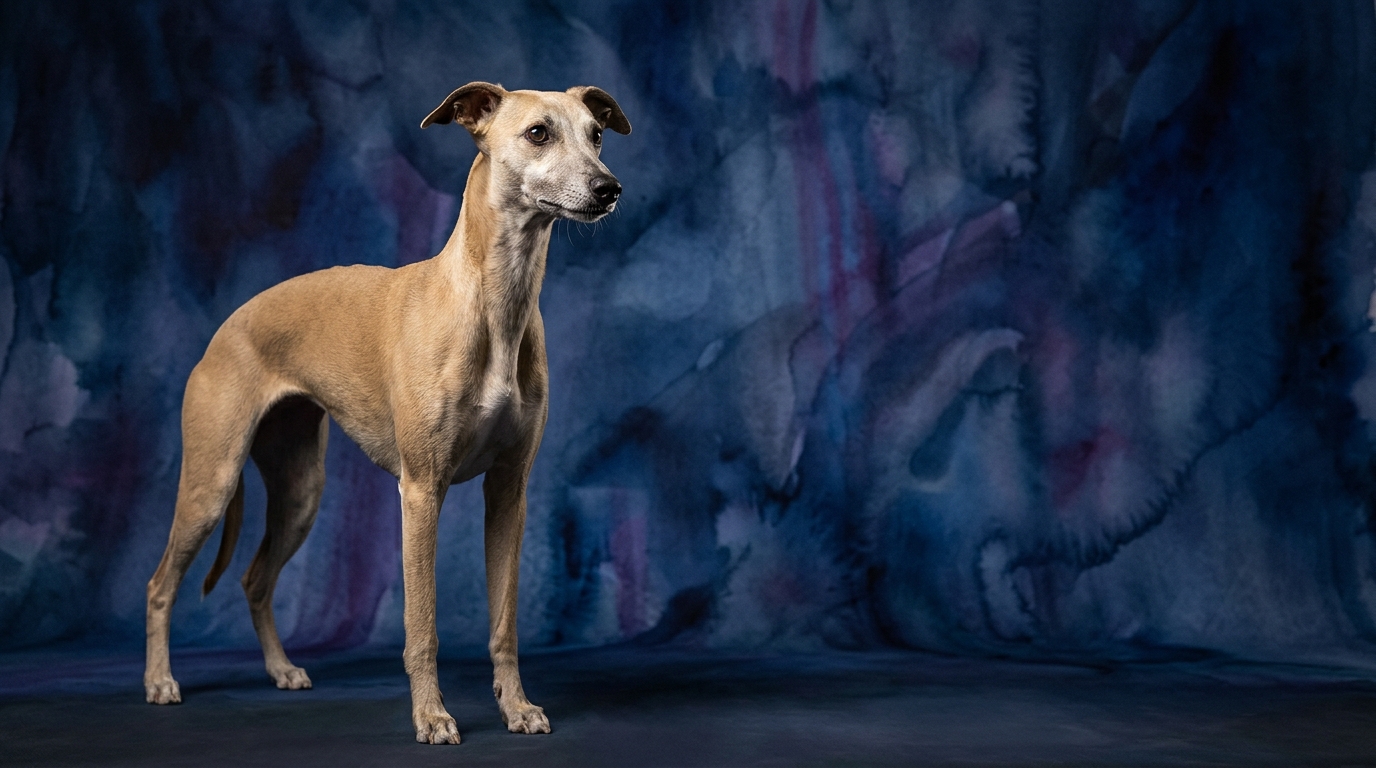
Side-by-Side IQ Profile: Dachshund vs. Whippet
At The Cosmic Pet Pet IQ Lab, we analyze canine intelligence across five key dimensions, providing a nuanced understanding beyond simple obedience. Both the Dachshund and the Whippet, while sharing the 'Hound' group designation, present intriguing contrasts in their cognitive makeup.
The Dachshund, a small but tenacious hound, registers a Coren rank of #49. Its cognitive profile includes a Problem Solving score of 4/5, indicating a strong capacity for independent thought and figuring things out. Training Speed is rated 2/5, suggesting a more deliberate learning pace. Social Intelligence stands at 3/5, reflecting a moderate ability to interpret human cues. Instinctive Drive is a robust 5/5, characteristic of its hunting heritage, and Memory scores 3/5.
In contrast, the Whippet, a graceful sighthound, holds a Coren rank of #51, placing it just slightly behind the Dachshund in terms of working and obedience intelligence. Its Problem Solving score is 3/5, suggesting a good but not exceptional aptitude for complex tasks. Training Speed matches the Dachshund at 2/5, highlighting a similar independent streak. However, the Whippet excels in Social Intelligence with a 4/5 rating, indicating a heightened sensitivity to its human companions. Its Instinctive Drive is also a perfect 5/5, mirroring its breed function, and Memory, like the Dachshund, is 3/5.
Where the Dachshund Excels Cognitively
The Dachshund's primary cognitive advantage lies in its superior Problem Solving ability, scoring a 4 out of 5 compared to the Whippet's 3 out of 5. This difference manifests in their resourceful nature; a Dachshund is often adept at navigating complex environments, figuring out how to open gates or retrieve hidden toys. Their tenacity, originally bred for badger hunting, translates into a mental persistence that allows them to work through challenges independently. Owners often observe them strategizing to achieve a desired outcome, whether it's burrowing under blankets or manipulating objects to get what they want. This cognitive strength makes them surprisingly adept at puzzle toys and tasks requiring a series of steps to complete.
Where the Whippet Excels Cognitively
The Whippet's standout cognitive strength is its elevated Social Intelligence, scoring 4 out of 5 against the Dachshund's 3 out of 5. This refined social aptitude means Whippets are generally more attuned to human emotions and social cues. They often exhibit a greater desire to please and can be more responsive to subtle gestures or changes in vocal tone from their owners. This enhanced sensitivity helps them integrate smoothly into family dynamics, often seeking out comfort and companionship. Their ability to read a room and adapt their behavior accordingly makes them excellent companions in varied social settings, often displaying a gentle and adaptable demeanor that fosters strong bonds.
Training Dynamics: Which Breed is Easier?
When it comes to training speed, both the Dachshund and the Whippet share a score of 2/5, indicating that neither breed is typically a rapid learner of complex commands or a natural candidate for competitive obedience. Their shared 'Hound' classification often implies an independent spirit and a strong focus on their innate drives, which can sometimes overshadow a desire to comply with human directives. This means owners of both breeds should anticipate needing patience, consistency, and positive reinforcement methods.
However, their differing social intelligence levels introduce a subtle distinction in the training experience. The Whippet's higher social intelligence (4/5) often translates to a greater willingness to engage with their handler and a stronger desire for social approval. While they may not grasp new concepts instantly, their attentiveness to human cues can make them more receptive to guidance and less prone to outright defiance. They are generally more inclined to cooperate if they feel a strong bond and understand what is expected of them, responding well to gentle, encouraging methods.
The Dachshund's lower social intelligence (3/5) combined with its higher problem-solving ability (4/5) can present a different set of training challenges. While resourceful, a Dachshund might choose to solve problems in its own way rather than following a human instruction, especially if its instinctive drive (5/5) is engaged. Their independent streak means they can be more challenging to motivate purely through social praise and may require more creative methods to keep them engaged. Consistency is paramount, as is understanding their powerful instinctive drive to scent and explore, which can easily distract them from training tasks.
Matching Breeds to Lifestyles: Active vs. Relaxed Owners
Understanding their cognitive profiles helps align these breeds with suitable owner lifestyles. For the truly active owner who defines 'active' as physical exertion, neither breed requires the intense, sustained exercise of a working dog. Both possess a 5/5 Instinctive Drive, but this manifests differently. Whippets are sprinters; they need regular opportunities for explosive, short bursts of running in a secure area, followed by extensive periods of rest. An owner who enjoys daily walks and provides safe off-leash running opportunities for 15-30 minutes will suit a Whippet well, appreciating their calm, relaxed demeanor indoors.
The Dachshund, while also having a strong instinctive drive, channels much of its energy into scent work and exploration. Owners who are 'mentally active' and enjoy engaging their dog's mind will find the Dachshund a rewarding companion. They thrive on puzzle toys, scent games, and opportunities to sniff and investigate on walks. While they enjoy moderate physical activity, their longer backs necessitate careful handling and avoidance of excessive jumping. A relaxed owner might find a Dachshund's independent spirit and need for mental engagement more demanding than anticipated, whereas an owner who enjoys problem-solving alongside their pet will appreciate their cleverness. For both breeds, the 'relaxed' part of their nature often comes after their specific exercise and mental stimulation needs are met; a bored hound is rarely a relaxed one.
The Verdict
Choose a Dachshund if you appreciate a clever, independent companion who excels at figuring things out and enjoys mental challenges, and you are prepared for a consistent, patient training approach.
Opt for a Whippet if you desire a sensitive, socially intelligent dog that forms deep bonds, thrives on short bursts of vigorous exercise, and then enjoys a calm, affectionate indoor life.
🧠 Find Your Pet's IQ Score
Our Pet IQ Lab assessment covers 25+ tests across 5 cognitive dimensions — personalized to your breed.
Take the Full IQ Test →Frequently Asked Questions
Are Dachshunds good at learning tricks?
Dachshunds possess a 4/5 problem-solving ability, meaning they can certainly learn tricks, especially those that involve a sequence of actions or figuring something out. However, their 2/5 training speed and independent nature mean it might take more repetition and patience than with other breeds, and they may decide to perform on their own terms.
Do Whippets need a lot of mental stimulation?
While Whippets have a 5/5 instinctive drive, their problem-solving score is 3/5, suggesting their primary mental stimulation comes from their environment and social interactions rather than complex puzzles. They benefit from moderate mental engagement like basic obedience, scent games, and opportunities to observe their surroundings, but their need for complex mental tasks isn't as high as some other breeds.
Which breed is more prone to 'selective hearing' during training?
Both breeds, being hounds with a 2/5 training speed and 5/5 instinctive drive, can exhibit 'selective hearing.' The Dachshund's lower social intelligence and higher problem-solving might lead it to prioritize its own agenda, like following a scent, over your commands. The Whippet, despite higher social intelligence, can also become deeply focused on visual stimuli (like a squirrel) due to its sighthound heritage, making recall challenging in distracting environments.