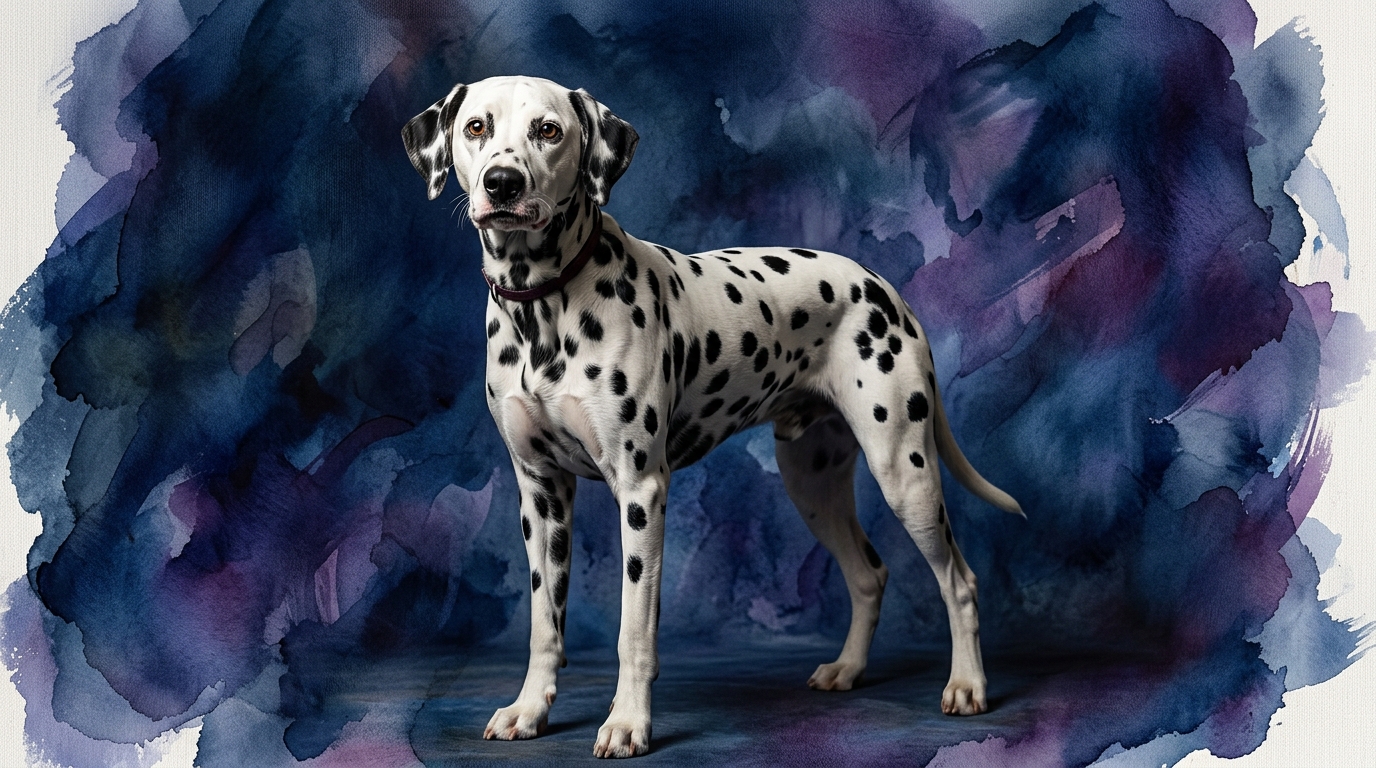
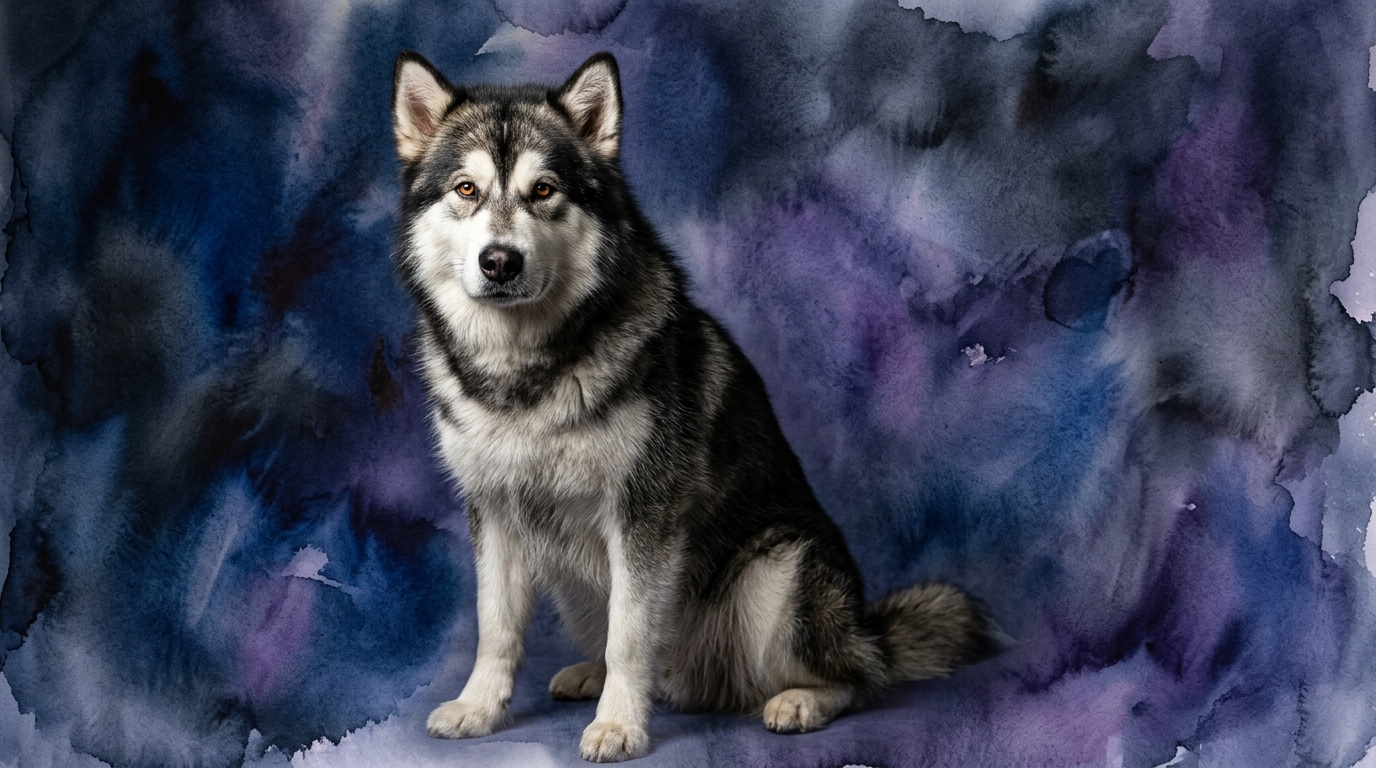
A Side-by-Side Look at Cognitive Profiles
To understand the unique mental landscapes of the Dalmatian and the Alaskan Malamute, we turn to the Cosmic Pet Pet IQ Lab framework, which assesses five key cognitive dimensions. These insights, alongside their respective Coren ranks (Dalmatian #39, Alaskan Malamute #50), offer a nuanced perspective beyond simple obedience metrics, highlighting their inherent capabilities and learning styles.
The Dalmatian, a Non-Sporting breed, presents a balanced cognitive profile: Problem Solving 3/5, Training Speed 3/5, Social Intelligence 4/5, Instinctive Drive 4/5, and Memory 4/5. This suggests a dog capable of navigating moderately complex challenges, responding adequately to new commands, and possessing a strong understanding of social cues, coupled with robust inherent motivations and effective information retention.
In contrast, the Working breed Alaskan Malamute showcases a different set of strengths: Problem Solving 4/5, Training Speed 2/5, Social Intelligence 3/5, Instinctive Drive 5/5, and Memory 4/5. This profile indicates a breed with a notable capacity for independent thought and overcoming obstacles, alongside an exceptionally strong inherent drive, though they may require more repetition in training. Their social understanding is present, and their memory is solid.
Where the Dalmatian Shines Cognitively
The Dalmatian’s cognitive strengths are particularly evident in its Social Intelligence (4/5) and its relatively higher Training Speed (3/5) compared to the Malamute. This elevated social awareness means Dalmatians are often more attuned to human emotional states and subtle communication signals, making them responsive partners in various interactions. They tend to seek connection and understand social hierarchies with greater ease.
This moderate training speed, coupled with their social acumen, implies that Dalmatians often grasp new concepts and commands with fewer repetitions than many other breeds. Their willingness to engage cooperatively, reinforced by a 4/5 memory score, means they can reliably recall learned behaviors, making them adaptable to diverse training disciplines, from basic obedience to more intricate trick training or even dog sports like rally obedience, provided the handler fosters a strong, positive bond.
Where the Alaskan Malamute's Mind Excels
The Alaskan Malamute’s cognitive prowess truly stands out in its Problem Solving ability (4/5) and its exceptional Instinctive Drive (5/5). This superior problem-solving score points to a natural inclination for independent thought and resourcefulness, allowing them to devise their own solutions to challenges, which can be invaluable in complex environments or tasks requiring self-reliance.
Their top-tier instinctive drive (5/5) means Malamutes are profoundly motivated by their inherent inclinations, whether it's pulling, exploring, or establishing their place within a group. This powerful drive, combined with their problem-solving capacity, makes them formidable at tasks demanding persistence and autonomous decision-making. Their robust memory (4/5) ensures they retain effective strategies, even if those strategies occasionally diverge from an owner’s immediate wishes, showcasing their independent spirit.
Training Dynamics: Patience vs. Partnership
When it comes to training, the Dalmatian's 3/5 Training Speed suggests a generally straightforward learning curve. They often possess an eagerness to please and respond well to positive reinforcement, typically absorbing new commands within a reasonable timeframe. Their higher social intelligence means they are often more inclined to cooperate and work alongside their handler, valuing the shared activity and positive feedback.
In contrast, the Alaskan Malamute's 2/5 Training Speed, coupled with its high Problem Solving and Instinctive Drive, implies a more independent and potentially strong-willed learner. Malamutes are more likely to question the 'why' behind a command and may prioritize their powerful innate drives over immediate compliance. Training a Malamute demands exceptional patience, unwavering consistency, and a deep understanding of their motivations, often requiring the owner to frame training as a collaborative effort rather than simple instruction.
Practically, for Dalmatians, varied and engaging training sessions with clear rewards tend to be highly effective. For Malamutes, training needs to tap into their working heritage, using positive reinforcement and making tasks feel purposeful, often leveraging their drive for pulling, scent work, or navigating obstacles. Success with a Malamute often hinges on convincing them that following your lead aligns with their own self-interest or provides a fulfilling 'job'.
Lifestyle Suitability: Energy Levels and Mental Engagement
Both breeds demand substantial physical activity, but their cognitive and engagement needs differ in nuance. An active owner seeking a responsive companion for diverse sports like agility, rally obedience, or long-distance running, where responsiveness and social connection are key, might find the Dalmatian (with its 3/5 training speed and 4/5 social intelligence) a more intuitive partner. Their instinctive drive (4/5) ensures they have the stamina and enthusiasm for consistent, varied engagement.
Owners who thrive on vigorous outdoor activities and are prepared for a dog with a profound independent streak might find the Alaskan Malamute a fulfilling companion. Their exceptional instinctive drive (5/5) and problem-solving prowess (4/5) make them superb partners for pursuits like skijoring, backpacking, or even competitive weight pulling. These owners must be willing to engage with a dog that thinks for itself and requires consistent, creative mental and physical challenges to prevent boredom, channeling their natural robust tendencies.
The Verdict
Choose a Dalmatian if you seek a socially attuned, moderately trainable companion for diverse activities, thriving on cooperative engagement and a strong handler bond.
Opt for an Alaskan Malamute if you desire a highly independent, robust partner for demanding physical endeavors, ready to embrace a dog with powerful instincts and a strong will.
🧠 Find Your Pet's IQ Score
Our Pet IQ Lab assessment covers 25+ tests across 5 cognitive dimensions — personalized to your breed.
Take the Full IQ Test →Frequently Asked Questions
Are Dalmatians good family dogs?
Dalmatians, with their 4/5 social intelligence, can be wonderful family pets, often forming strong bonds. Early socialization and consistent training are key to ensuring they interact politely with all family members and visitors.
Do Alaskan Malamutes need a lot of exercise?
Absolutely. With an instinctive drive of 5/5, Alaskan Malamutes demand substantial daily exercise and mental stimulation. Without it, their problem-solving skills might be applied to less desirable activities, like digging or destructive chewing.
Which breed is better for first-time dog owners?
Given their relative training speed (3/5) and social intelligence (4/5), Dalmatians might present a slightly less challenging initial experience for dedicated first-time owners. Alaskan Malamutes, with their independent nature and powerful drives, often benefit from owners experienced in handling strong-willed, working breeds.