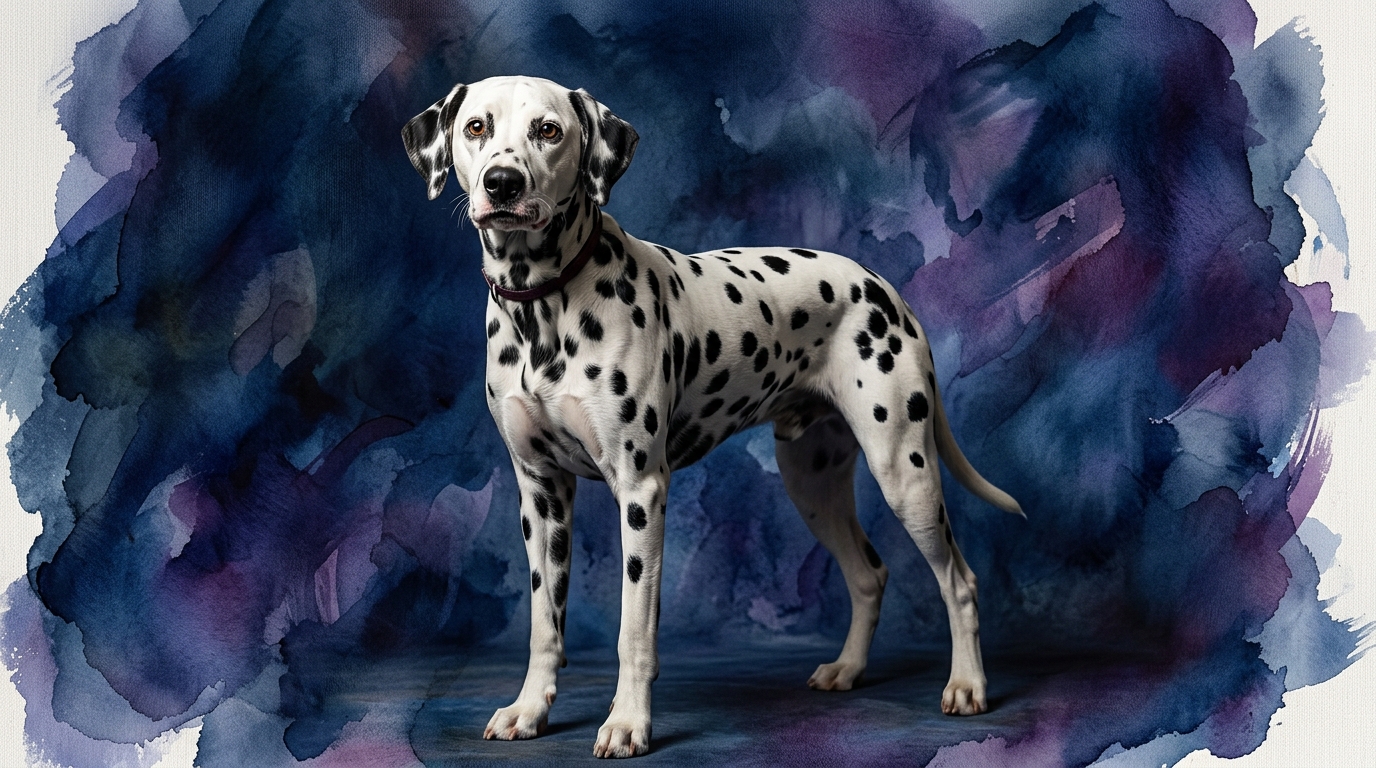
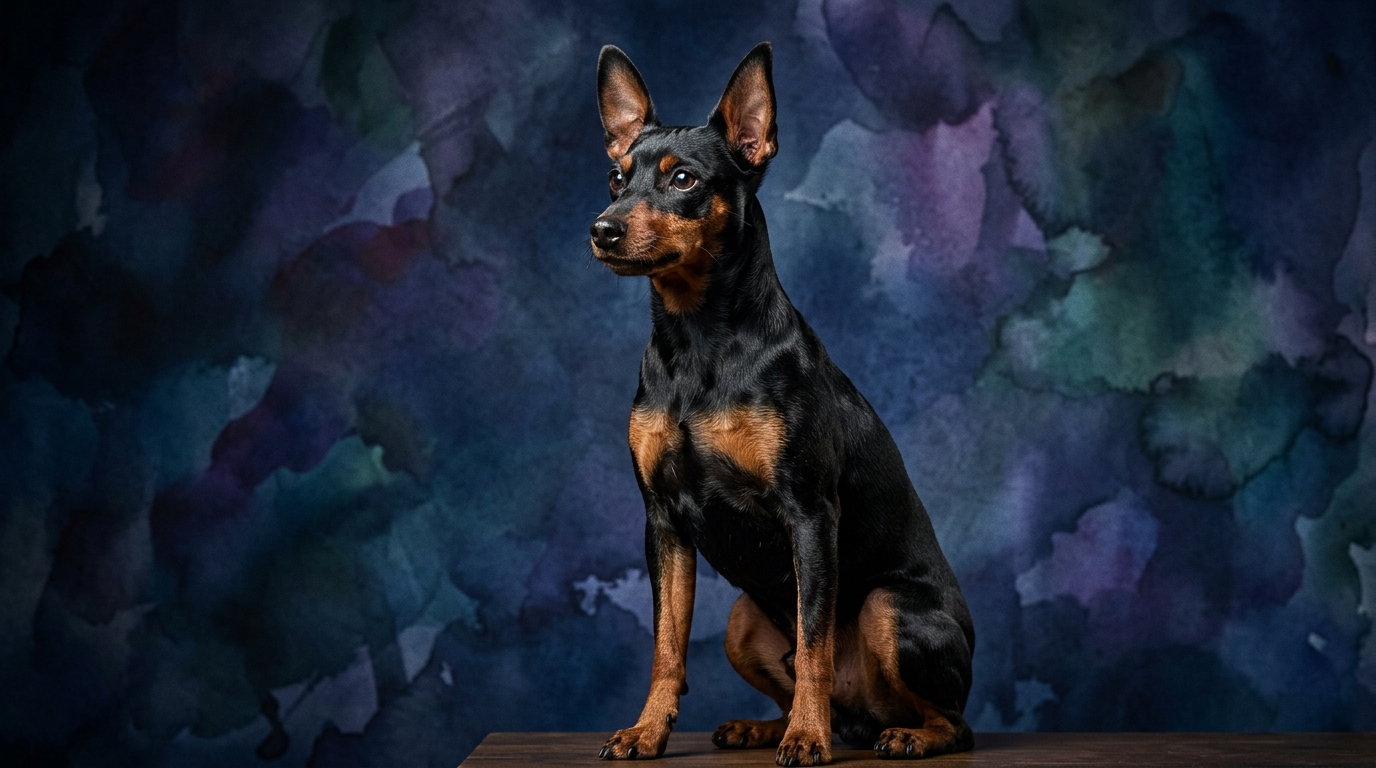
Side-by-Side IQ Profile: Dalmatians vs. Miniature Pinschers
At The Cosmic Pet Pet IQ Lab, we evaluate canine intelligence across five key dimensions, offering a nuanced view of how different breeds process information and engage with their environment. The Dalmatian, a striking Non-Sporting breed, and the Miniature Pinscher, a spirited Toy breed, present distinct cognitive blueprints, despite some superficial similarities in certain scores. Understanding these profiles helps us appreciate their individual mental capabilities.
The Dalmatian's cognitive profile includes a Problem Solving score of 3/5, indicating a capacity to navigate challenges and figure out solutions, though perhaps not always with immediate innovation. Their Training Speed also stands at 3/5, suggesting they learn at a steady pace, capable of absorbing new commands and routines with consistent guidance. Where Dalmatians truly shine is in their Social Intelligence, scoring an impressive 4/5; this reflects a strong aptitude for reading human cues, understanding social dynamics, and forming deep, responsive bonds. Their Instinctive Drive is equally robust at 4/5, a testament to their historical roles requiring purpose and stamina, such as coaching alongside carriages. Finally, their Memory is rated 4/5, meaning they retain learned behaviors, past experiences, and routines with considerable clarity.
In contrast, the Miniature Pinscher, while not Coren-ranked, shows a consistent performance across the board in our IQ metrics. Their Problem Solving ability is rated 3/5, demonstrating an aptitude for practical navigation and overcoming minor environmental obstacles, often with a clever, independent streak. Their Training Speed also scores 3/5, indicating they are capable learners, though their spirited nature might require engaging methods to maintain focus. The Miniature Pinscher's Social Intelligence is 3/5, showing they bond well with their chosen people and can interpret cues, but might be more selective or assertive in their interactions compared to the Dalmatian. Their Instinctive Drive, at 3/5, reflects a moderate prey drive and an alert, often protective, nature befitting their 'King of Toys' moniker. Similarly, their Memory is 3/5, allowing them to recall commands and routines reliably, though perhaps not with the same depth of detail as their larger counterpart.
Where the Dalmatian Wins Cognitively
The Dalmatian's cognitive strengths truly stand out in areas related to social interaction and retention. Their superior Social Intelligence score of 4/5, compared to the Miniature Pinscher's 3/5, means Dalmatians possess a heightened ability to interpret human body language, tone of voice, and emotional states. This makes them exceptionally attuned companions, capable of forming nuanced, empathetic connections with their families. They are often more eager to work collaboratively, driven by their understanding of human expectations and the desire to be part of the family unit's activities.
Furthermore, the Dalmatian's Memory, also at 4/5 versus the Min Pin's 3/5, gives them an edge in retaining complex sequences of commands, routines, and past experiences. This robust memory contributes to their reliability in established training scenarios and their capacity to adapt to consistent structures over time. Paired with their 4/5 Instinctive Drive, Dalmatians excel when given a purpose that taps into their natural inclinations, such as long runs, agility courses, or jobs that require sustained focus and recall. Their history as coach dogs, running alongside horses and carriages, speaks volumes about their endurance and the mental fortitude to stay on task, making them well-suited for owners who can channel this powerful, purpose-driven cognition into constructive activities.
Where the Miniature Pinscher Wins Cognitively
While the Miniature Pinscher's scores are generally consistent at 3/5, their unique combination of cognitive traits within a compact package provides distinct advantages, especially for navigating smaller environments and acting as vigilant companions. Their 3/5 Problem Solving ability, combined with their inherent agility and curiosity, means they are adept at figuring out how to get to desired locations, whether it's finding a dropped treat under furniture or navigating a complex home layout. This practical intelligence, coupled with their spirited demeanor, makes them surprisingly resourceful in their daily lives.
The Miniature Pinscher's 3/5 Instinctive Drive, while not as intense as the Dalmatian's, is perfectly suited for their role as an alert watchdog and a tenacious small game hunter (historically). This drive manifests as keen awareness of their surroundings and a quick reaction time, making them excellent at signaling the presence of strangers or unusual sounds. Their 3/5 Social Intelligence, though lower than the Dalmatian's, often translates into fierce loyalty and a strong bond with their primary caregiver, making them exceptionally dedicated, albeit sometimes assertive, companions. For owners who appreciate a smaller dog with a substantial personality and a sharp, independent mind, the Miniature Pinscher's cognitive profile offers a spirited and engaging partnership without the overwhelming physical demands of a high-drive working breed.
Which is Easier to Train and Why?
Determining which breed is 'easier' to train is nuanced, as both the Dalmatian and Miniature Pinscher score 3/5 in Training Speed, but their underlying cognitive and behavioral differences influence the training experience. The Dalmatian's higher Social Intelligence (4/5) and Memory (4/5) are significant assets. They often respond well to positive reinforcement methods that build on their desire for connection and understanding of human expectations. Their strong memory allows them to quickly solidify learned behaviors, and their social awareness means they are often eager to please their handler. However, their robust 4/5 Instinctive Drive requires consistent, engaging training to channel their energy and focus, preventing boredom or independent pursuits that can be challenging to redirect. Owners must provide ample mental and physical stimulation to keep them engaged and responsive.
The Miniature Pinscher, with 3/5 scores across the board, presents a different training dynamic. While they learn at a similar pace, their slightly lower Social Intelligence (3/5) might mean they are less inherently driven by the desire to please purely for social reward. Instead, Min Pins often respond best to clear, consistent boundaries and highly motivating rewards. Their spirited, independent nature, combined with their moderate instinctive drive, can sometimes translate into a 'what's in it for me?' attitude. Training a Miniature Pinscher requires patience, creativity, and a firm but gentle hand to prevent them from developing 'small dog syndrome' where their assertive tendencies go unchecked. While both breeds benefit from early socialization and consistent training, the Dalmatian's higher social cognition and memory can make them more adaptable to relationship-based training, whereas the Min Pin often thrives on structured, reward-driven methods that clearly communicate expectations.
Which Suits Active Owners vs. Relaxed Owners?
For owners with an active lifestyle, the Dalmatian is undoubtedly the more suitable choice. Their 4/5 Instinctive Drive means they possess a deep-seated need for physical exertion and mental engagement. These are not dogs content with a short walk around the block; they thrive on long runs, hikes, agility training, or participating in dog sports that challenge both their bodies and minds. Their historical role as endurance runners and coach dogs underscores their requirement for consistent, vigorous activity. An owner who can provide daily outlets for this energy will find a highly fulfilled and cooperative companion, while a more sedentary owner might inadvertently foster behavioral issues stemming from boredom and unspent drive.
The Miniature Pinscher, while spirited and energetic, generally suits a broader range of owners, including those who are moderately active. Their 3/5 Instinctive Drive translates to a need for regular, but less intense, exercise compared to a Dalmatian. Daily walks, playtime in a secure yard, and indoor mental games are usually sufficient to keep a Min Pin content. They are adaptable to apartment living provided their exercise needs are met and they receive plenty of human interaction. While they enjoy being active, their smaller size means their exercise requirements are more manageable for owners who might not be able to commit to several hours of high-intensity activity daily. However, it's crucial to remember that 'relaxed' doesn't mean 'negligent'; a Min Pin still requires consistent mental stimulation and engagement to prevent boredom and potential mischievousness.
The Verdict
Choose a Dalmatian if you are an active individual or family seeking a highly social, purpose-driven companion with a strong memory and an eagerness for shared adventures and consistent mental stimulation.
Opt for a Miniature Pinscher if you desire a spirited, alert, and loyal companion in a compact package, suitable for moderately active homes that can provide consistent structure and appreciate a dog with a clever, independent streak.
🧠 Find Your Pet's IQ Score
Our Pet IQ Lab assessment covers 25+ tests across 5 cognitive dimensions — personalized to your breed.
Take the Full IQ Test →Frequently Asked Questions
Are Dalmatians good family dogs despite their high instinctive drive?
Yes, Dalmatians can be wonderful family dogs, especially in active households. Their high social intelligence and strong memory enable them to form deep bonds, but their drive requires consistent physical and mental engagement to prevent boredom and ensure they channel their energy constructively.
How does a Miniature Pinscher's problem-solving manifest in a home environment?
A Miniature Pinscher's problem-solving often appears as clever navigation of their surroundings, figuring out how to reach desired items, or outsmarting baby gates. Their 3/5 problem-solving score means they are resourceful and quick-witted in tackling everyday challenges within their environment.
What is the biggest training challenge for each breed?
For Dalmatians, the biggest challenge often lies in consistently channeling their strong instinctive drive and energy into productive activities to prevent them from becoming bored or independent. For Miniature Pinschers, it's often managing their spirited independence and potential stubbornness with consistent, motivating training to ensure good manners and responsiveness.