Decoding Canine Cognition: A Side-by-Side IQ Profile
The Cosmic Pet Pet IQ Lab employs a five-dimensional framework to evaluate a breed's cognitive strengths, moving beyond simplistic notions of 'smartness.' This framework assesses problem-solving, training speed, social intelligence, instinctive drive, and memory, offering a nuanced view of how each breed processes information and interacts with its world.
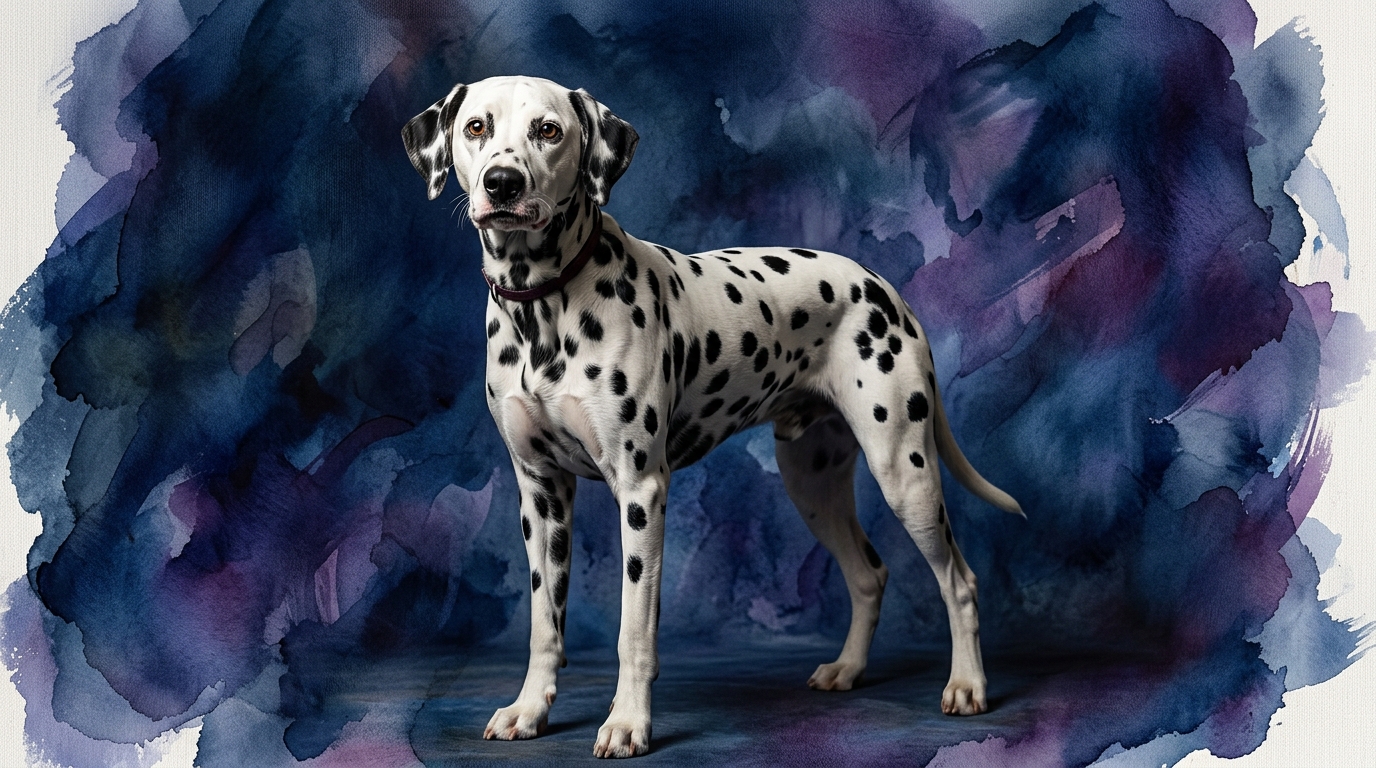
The Dalmatian, a member of the Non-Sporting Group and ranked #39 by Coren, demonstrates a balanced cognitive profile. Its problem-solving capacity is rated 3/5, indicating an ability to navigate moderate challenges with observation and adaptable strategies. Training speed also stands at 3/5, reflecting a dog that learns consistently with proper motivation but can exhibit an independent streak. Where Dalmatians truly shine is in social intelligence, scoring 4/5, showing a strong aptitude for reading human cues and forming complex social bonds. Their instinctive drive is also 4/5, rooted in their historical role requiring endurance and companionship, and their memory is a robust 4/5, allowing them to retain vast amounts of information and routines over time.
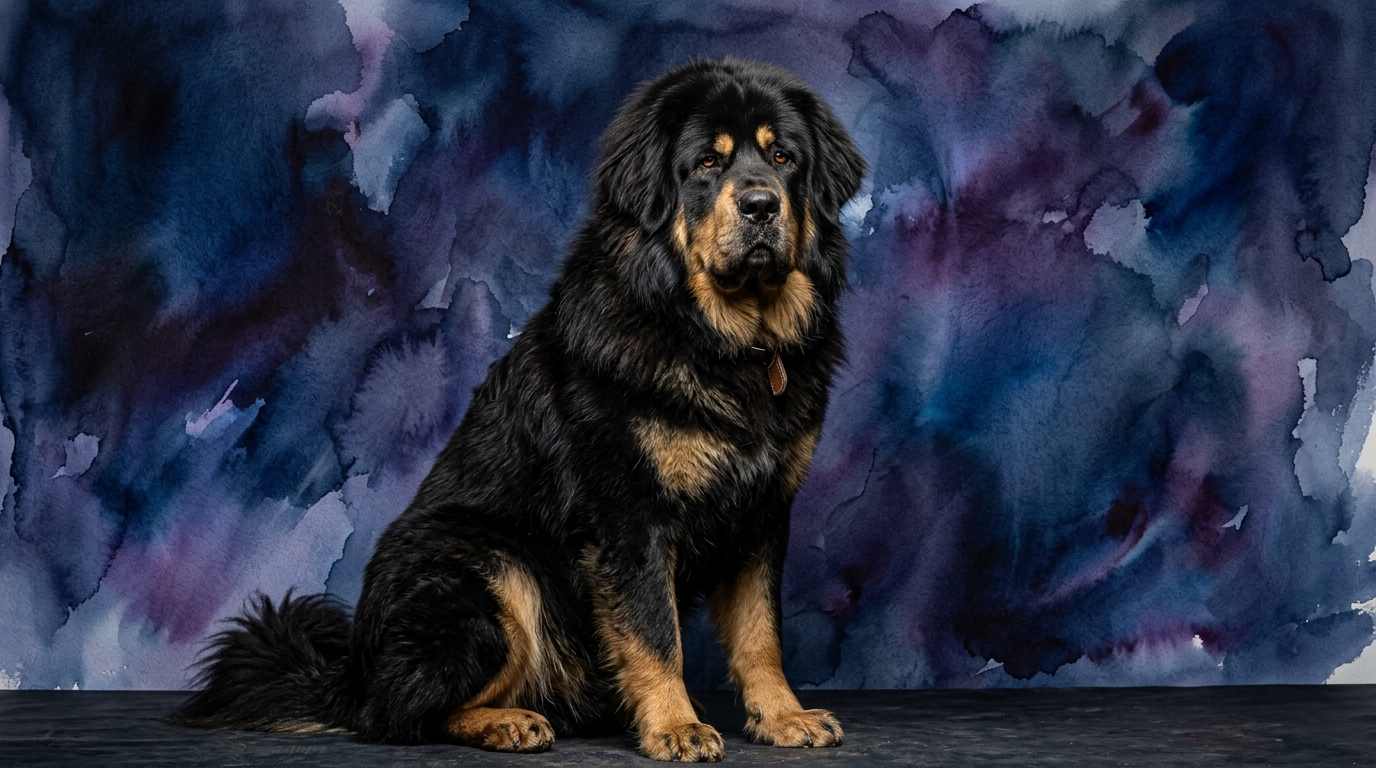
In contrast, the Tibetan Mastiff, a powerful Working Group dog without a Coren ranking, possesses a distinct cognitive makeup shaped by its ancient guardian lineage. Its problem-solving ability is 3/5, specifically oriented towards assessing and responding to territorial or security concerns. Training speed is also 3/5, indicating a capacity to learn but often through the lens of its own judgment and protective instincts, requiring patience and a different approach from its handler. Social intelligence for the Tibetan Mastiff is 3/5; while deeply devoted to its family, it is typically reserved or wary with strangers. Its instinctive drive is 3/5, predominantly focused on its inherent guarding duties, and its memory is also 3/5, proficient at recalling important boundaries and family members crucial to its protective role.
Dalmatian's Cognitive Edge: Social Acuity and Adaptability
While both breeds possess admirable cognitive traits, the Dalmatian generally holds an edge in specific areas, particularly concerning social engagement and memory retention. Their 4/5 social intelligence rating signifies a superior capacity for interpreting subtle human expressions, body language, and vocal tones. This allows them to integrate smoothly into varied family dynamics and respond more readily to a broader spectrum of social interactions, making them highly attuned companions.
Furthermore, the Dalmatian's 4/5 memory score provides a distinct advantage in learning and recall. They are adept at remembering a wide array of commands, routines, and experiences, which facilitates easier communication and adaptation to new situations. Their problem-solving, though rated equally, often manifests in a more interactive and curiosity-driven manner, allowing them to explore and learn from their environment with a greater degree of flexibility compared to the more task-specific problem-solving of the Tibetan Mastiff.
Tibetan Mastiff's Cognitive Prowess: Independent Guardianship
The Tibetan Mastiff's cognitive strengths are profoundly rooted in its ancient purpose as a formidable guardian, leading to distinct advantages in independent decision-making and territorial awareness. Its 3/5 instinctive drive, while numerically lower, is intensely focused on protection, fostering an unparalleled sense of situational awareness regarding its perceived territory and family. This manifests as a keen ability to detect anomalies and assess potential threats with remarkable independence, a crucial trait for a solitary sentinel.
Their problem-solving, also rated 3/5, is often directed towards practical applications of security, such as determining the best vantage point or managing access to their domain. While their social intelligence is 3/5, it reflects a selective, profound loyalty rather than a deficit; they excel at discerning trusted family members from perceived outsiders, forming deep, protective bonds with their inner circle. This specialized cognitive makeup allows them to operate effectively as vigilant protectors, relying on their own judgment rather than constant human direction.
Training Dynamics: Dalmatian's Responsiveness vs. Tibetan Mastiff's Independence
When considering ease of training, the Dalmatian generally presents a more straightforward path for the average owner, primarily due to its higher social intelligence and drive for companionship. With a training speed of 3/5, Dalmatians respond well to consistent, positive reinforcement methods. Their 4/5 social intelligence means they are often motivated by the desire to engage with their human companions and understand their expectations, making them more amenable to learning a wide range of commands and tricks. Their strong memory (4/5) also ensures that once a behavior is learned, it is retained effectively, leading to more predictable responses during training sessions.
The Tibetan Mastiff, also rated 3/5 for training speed, requires a vastly different approach rooted in understanding its fundamental independence and guardian instincts. They are not inherently driven by a desire to 'please' in the conventional sense, often weighing commands against their own assessment of a situation or their protective duties. Training must be consistent, fair, and establish clear leadership, focusing on tasks that align with their natural protective behaviors. Early, thorough socialization is paramount to ensure they learn appropriate responses to various stimuli. Their 3/5 social intelligence means they form deep bonds, but their discernment makes them less inclined to blindly follow commands from anyone they do not fully respect as a leader, demanding a patient and confident handler.
Lifestyle Fit: Matching Cognitive Needs to Owner Lifestyles
The cognitive profiles of these two breeds dictate very different lifestyle requirements for their owners. The Dalmatian, with its 4/5 instinctive drive for endurance and historical role as a carriage dog, is best suited for active owners. They possess a high need for physical exertion, thriving on daily long walks, runs, or engaging activities that challenge both their bodies and minds. Their high social intelligence means they also require significant interactive playtime and companionship, making them ideal for owners who enjoy integrating their dog into a dynamic, participatory lifestyle.
Conversely, the Tibetan Mastiff, while not demanding the same intensity of physical exercise, requires a specific type of 'relaxed' owner – one who is calm, confident, and prepared for the unique responsibilities of a large guardian breed. Their 3/5 instinctive drive is focused on watchful protection, meaning they need a secure environment and consistent boundary setting rather than constant high-energy activities. Moderate daily exercise combined with mental engagement that acknowledges their guarding instincts is sufficient. They are not for the truly hands-off or 'relaxed' owner seeking a low-maintenance companion, but rather for those who appreciate a stoic, independent, and deeply loyal protector and are ready to provide thoughtful, consistent leadership.
The Verdict
If you seek an engaging, socially responsive companion for active adventures and enjoy the process of teaching a dog that thrives on interaction and recalls a wide range of commands readily, choose the Dalmatian.
If your lifestyle provides a secure, well-defined territory and you are prepared to lead a formidable guardian with a deep, selective loyalty, appreciating their independent judgment and watchful nature, choose the Tibetan Mastiff.
🧠 Find Your Pet's IQ Score
Our Pet IQ Lab assessment covers 25+ tests across 5 cognitive dimensions — personalized to your breed.
Take the Full IQ Test →Frequently Asked Questions
Do Dalmatians and Tibetan Mastiffs learn at the same pace?
While both breeds are rated 3/5 for training speed, their learning approaches differ significantly. Dalmatians often learn through social interaction and a desire to engage, whereas Tibetan Mastiffs process commands through the lens of their protective instincts, requiring a more patient, consistent, and leadership-oriented approach to training.
How do their problem-solving skills compare in practical situations?
Both score 3/5 for problem-solving, but Dalmatians might apply their skills to interactive games or navigating novel environments with curiosity and adaptability. Tibetan Mastiffs, conversely, typically direct their problem-solving towards assessing and managing their territory or family's security, often making independent decisions based on their strong protective drive.
Which breed is more adaptable to new environments or strangers?
The Dalmatian, with its 4/5 social intelligence and history of accompanying humans in varied settings, tends to adapt more readily to new environments and engage more openly with new people. The Tibetan Mastiff's 3/5 social intelligence means it forms strong bonds but can be reserved or wary of strangers and new situations, preferring familiarity and a clear hierarchy within its established domain.