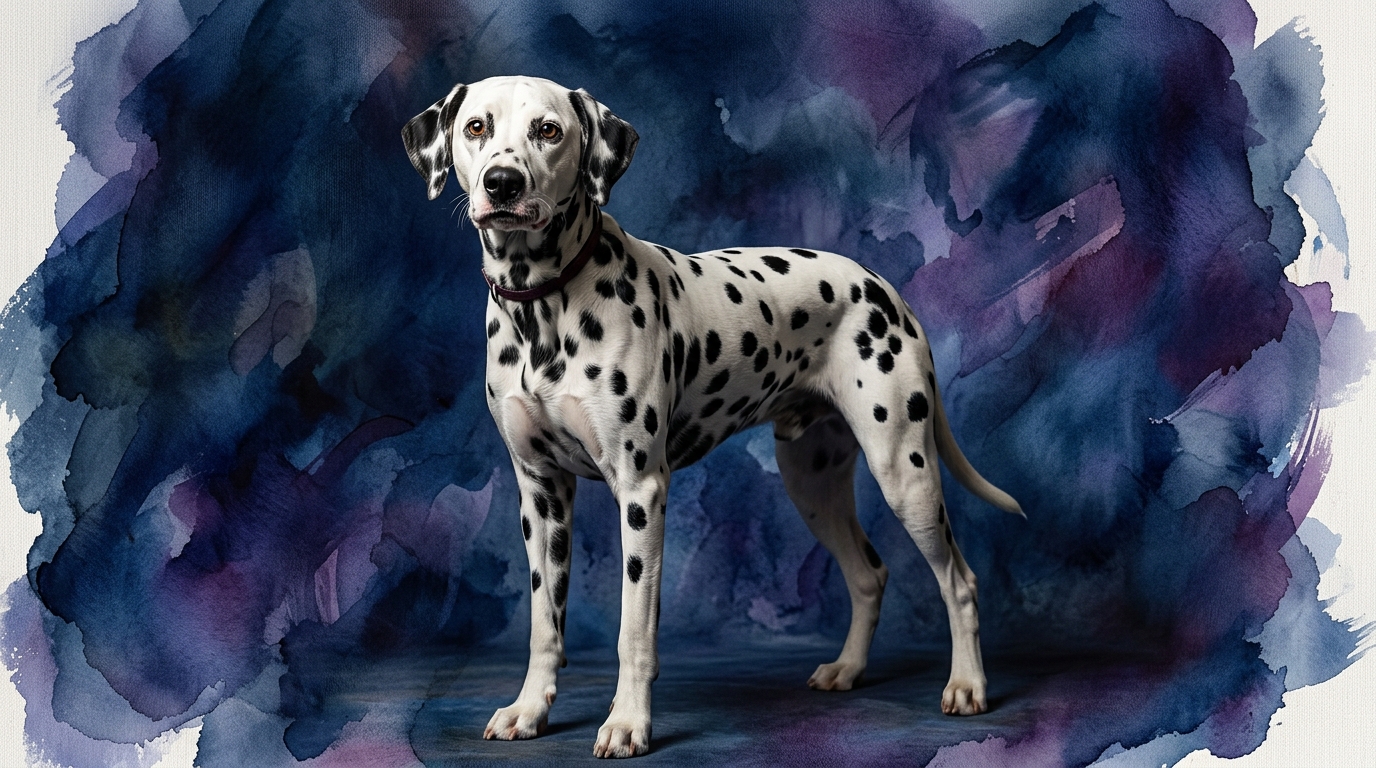
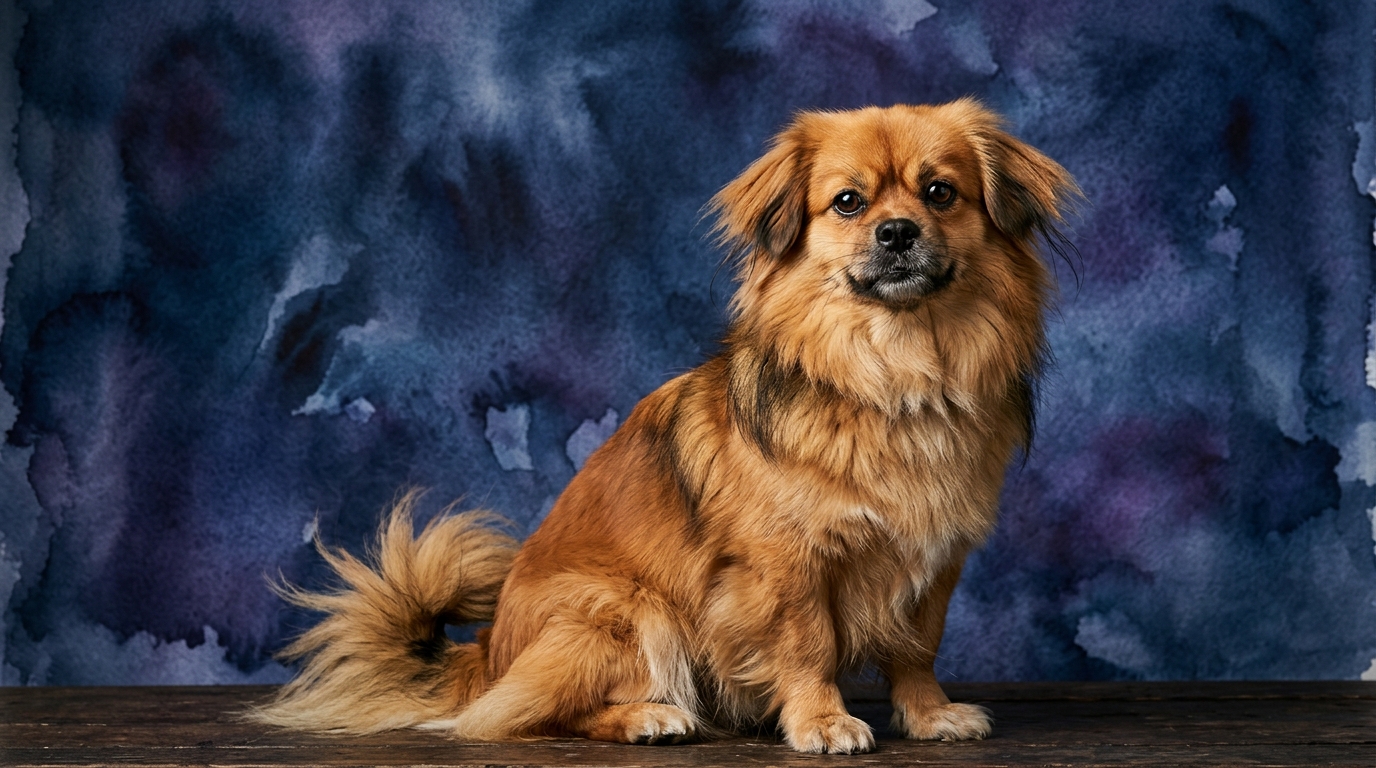
Side-by-Side IQ Profile: Dalmatian vs. Tibetan Spaniel
The Cosmic Pet Pet IQ Lab employs a five-dimensional framework to assess canine intelligence, offering a granular view beyond general perceptions. For the Dalmatian, its profile includes Problem Solving at 3/5, Training Speed at 3/5, Social Intelligence at 4/5, Instinctive Drive at 4/5, and Memory at 4/5. This suggests a dog capable of understanding multi-step tasks with guidance, a moderate learning pace, a strong ability to read human cues, a robust motivation for endurance activities, and excellent long-term recall.
The Tibetan Spaniel presents a slightly different picture, with Problem Solving at 3/5, Training Speed at 3/5, Social Intelligence at 3/5, Instinctive Drive at 3/5, and Memory at 3/5. This consistent scoring indicates a breed that is capable but not prone to complex problem-solving, learns at a moderate pace often on its own terms, possesses good social understanding within its trusted circle, has a moderate motivation primarily for companionship and vigilance, and maintains a solid recall for routines and familiar experiences.
Where the Dalmatian Wins Cognitively
The Dalmatian's cognitive advantages particularly shine in areas demanding nuanced social understanding and sustained engagement. Their superior social intelligence, rated 4/5, means they are often more adept at interpreting human emotions and intentions, fostering a deeper, almost intuitive bond with their families. This manifests as a keen awareness of household dynamics and a sensitivity to their owner's mood, making them remarkably empathetic companions. Furthermore, their instinctive drive, also a 4/5, translates into a greater intrinsic motivation for structured activities and endurance tasks. Historically bred to run alongside carriages, Dalmatians possess an inherent desire for purpose-driven movement and patrolling, which can be channeled into sports like agility or long-distance running. This robust drive, coupled with their 4/5 memory, allows them to retain complex sequences and enjoy repetitive, goal-oriented activities, often excelling where sustained focus and recall are paramount.
Where the Tibetan Spaniel Wins Cognitively
While the Dalmatian might boast higher scores in specific cognitive domains, the Tibetan Spaniel's cognitive profile, with consistent 3/5 ratings across the board, presents a unique set of advantages, particularly for owners seeking a different kind of companionship. Their problem-solving, rated 3/5, often manifests as cleverness within their immediate environment, finding comfortable spots or subtly manipulating situations to their advantage without requiring complex intellectual challenges. This pragmatic approach to problem-solving means they are less likely to create elaborate mischief born from boredom or excess energy. The Tibetan Spaniel's moderate instinctive drive (3/5) is also a cognitive win for many households; lacking the intense endurance drive of a Dalmatian, they are generally content with moderate activity and less prone to bolting or exhibiting strong prey drives. Their social intelligence, while a 3/5, is perfectly attuned to forming strong, devoted bonds with their chosen family, providing loyal companionship without the demanding emotional intensity or widespread social needs of a higher-scoring breed. This balanced cognitive makeup makes them wonderfully adaptable to a home environment where subtle observation and affectionate presence are valued over high-octane intellectual engagement.
Which is Easier to Train and Why
When evaluating ease of training, both the Dalmatian and the Tibetan Spaniel present a moderate challenge, each scoring 3/5 in training speed. However, their underlying cognitive profiles dictate different approaches. Dalmatians, despite their independent streak, benefit from their 4/5 memory and 4/5 instinctive drive. This means once a command or routine is learned, they tend to retain it well, and their inherent desire for purpose and activity can be leveraged through positive reinforcement, making training a game or a job. Their high social intelligence (4/5) also means they are generally keen to please and respond well to clear communication and praise, though their sensitivity requires gentle, consistent methods. In contrast, the Tibetan Spaniel, with a 3/5 in memory and instinctive drive, requires more patience and creative motivation. Often described as having a 'cat-like' independence, they learn at their own pace and are less driven by a desire to perform tasks for their owner. Their training often requires finding what personally motivates them, whether it's a specific treat or a cozy spot, rather than relying on a strong work ethic. While both breeds are trainable, the Dalmatian's superior memory and drive, when properly channeled, can lead to a more responsive and consistently performing companion, whereas training a Tibetan Spaniel often feels more like a negotiation than a directive, demanding greater consistency and understanding of their subtle motivations.
Matching Canine Cognition to Owner Lifestyle
The choice between a Dalmatian and a Tibetan Spaniel hinges significantly on an owner's lifestyle and activity level. The Dalmatian, with its robust 4/5 instinctive drive and historical role as a carriage dog, is unequivocally suited for active owners. These dogs thrive on consistent, vigorous exercise, whether it's long runs, hiking, or participating in dog sports like agility. Their keen memory and social intelligence mean they also benefit greatly from mental stimulation, such as puzzle toys or advanced obedience training, to prevent boredom and destructive behaviors. They are companions for those who enjoy integrating their dog into an active, outdoor-oriented lifestyle. Conversely, the Tibetan Spaniel, characterized by a more moderate 3/5 instinctive drive, is an ideal match for relaxed owners. While they enjoy daily walks and playtime, their exercise needs are considerably lower than a Dalmatian's. They are content to survey their domain from a comfortable perch, preferring companionship and watchful vigilance over intense physical exertion. Their moderate social intelligence makes them affectionate with their family but often reserved with strangers, fitting seamlessly into a quieter home environment where a devoted, observant companion is desired.
The Verdict
Choose a Dalmatian if you lead an active lifestyle, seeking a dog for sports, long excursions, and a partner who thrives on consistent training and deep social interaction.
Opt for a Tibetan Spaniel if you prefer a more relaxed pace, desiring a devoted, watchful companion who finds contentment in moderate activity and offers subtle affection and presence.
🧠 Find Your Pet's IQ Score
Our Pet IQ Lab assessment covers 25+ tests across 5 cognitive dimensions — personalized to your breed.
Take the Full IQ Test →Frequently Asked Questions
Are Dalmatians difficult to train?
Dalmatians have a 3/5 training speed and an independent streak, but their 4/5 memory and instinctive drive mean they respond well to consistent, positive reinforcement. Training success hinges on channeling their energy and motivation effectively.
Do Tibetan Spaniels need a lot of exercise?
Tibetan Spaniels have a moderate 3/5 instinctive drive, meaning they are content with daily walks and indoor play rather than intense physical demands. They are well-suited for owners seeking a less high-energy companion.
How do their social skills differ with strangers?
Dalmatians, with 4/5 social intelligence, are generally more open and adaptable to new people, often seeking interaction. Tibetan Spaniels, at 3/5, tend to be more reserved and wary of strangers, preferring the company of their trusted family.