
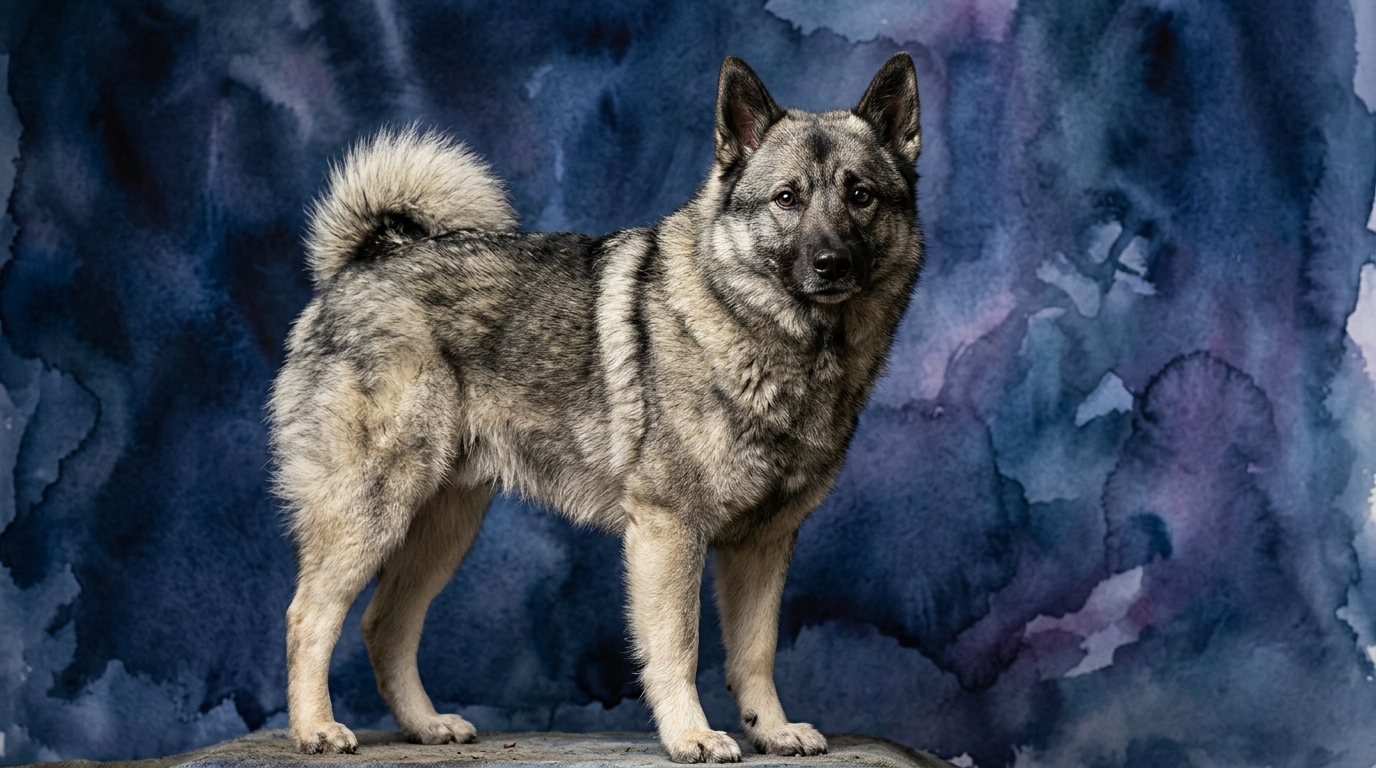
Side-by-Side IQ Profile: Dandie Dinmont Terrier vs. Norwegian Elkhound
The Cosmic Pet Pet IQ Lab provides a comprehensive framework for understanding canine intelligence across five key dimensions. Examining the Dandie Dinmont Terrier and Norwegian Elkhound through this lens reveals how their ancestral roles have shaped their cognitive strengths. The Elkhound, a formidable hunting companion, consistently shows higher scores in several areas, while the Dandie, a specialized vermin hunter, exhibits a distinct, tenacious form of intellect.
In Problem Solving, the Norwegian Elkhound stands out with a 4/5 rating, indicative of a breed capable of strategic thinking and adaptable decision-making, particularly evident in its historical role tracking large game over varied terrain. This involves assessing environmental cues, making complex choices, and adapting tactics to achieve a goal. The Dandie Dinmont Terrier, rated 3/5, demonstrates a more focused, persistent form of problem-solving. Their intellect is geared towards unwavering pursuit and overcoming physical obstacles in confined spaces, reflecting their heritage as vermin hunters who needed to tunnel, corner prey, and navigate intricate underground networks.
Regarding Training Speed, the Elkhound again takes a lead with a 4/5, suggesting a breed that grasps new commands and routines with relative efficiency. This aptitude for learning contributes to its status as a moderately biddable breed, capable of mastering a range of tasks with consistent guidance. The Dandie Dinmont Terrier, at 3/5, learns at a steady pace but often requires more repetition and creative motivation to overcome its inherent terrier independence. Their learning speed is not slow, but rather deliberate, demanding a patient and consistent approach from trainers who understand their unique motivations.
Both breeds share a 3/5 rating in Social Intelligence, suggesting a comparable ability to understand and respond to human emotions and social cues within their established family units. The Elkhound forms deep bonds and can be protective, keenly aware of its family's dynamics and subtle shifts in mood. The Dandie Dinmont, despite its small size, is equally attuned to its human companions, often displaying a sensitive and discerning understanding of household moods and interactions, though they can be reserved with unfamiliar individuals and prefer a close-knit circle.
A shared 3/5 in Instinctive Drive highlights that both breeds are highly motivated by their inherent genetic programming, albeit directed towards different ancestral purposes. The Norwegian Elkhound's drive manifests as a powerful urge to track, scent, and vocalize, reflecting centuries of hunting large game like moose and bear over vast distances. For the Dandie Dinmont Terrier, this drive is expressed through a persistent urge to dig, chase small prey, and explore confined spaces, a direct echo of its badger and otter hunting origins, where tenacity and precise targeting were paramount.
Finally, for Memory, the Norwegian Elkhound's 4/5 rating points to an excellent capacity for retaining information, whether it's the layout of a familiar territory, the scent trail of a quarry, or a sequence of learned commands. This robust memory aids significantly in their problem-solving and training efficiency. The Dandie Dinmont Terrier, with a 3/5, possesses a practical memory sufficient for daily routines and learned behaviors, allowing them to recall specific commands and boundaries. While effective for their needs, it might not be as expansive or quick to solidify as the Elkhound's more comprehensive recall.
Where the Dandie Dinmont Terrier Excels Cognitively
The Dandie Dinmont Terrier's cognitive strengths, while not always reflected in numerically higher scores, lie in the specificity and intensity of its problem-solving and instinctive drive within its niche. Its 3/5 problem-solving, for instance, isn't about broad strategic thinking across vast landscapes, but rather an unparalleled tenacity and focus in confined, complex environments. A Dandie excels at figuring out how to navigate tight spots, outsmart burrowing creatures, or retrieve objects from difficult places, demonstrating a specialized intelligence for persistence and spatial reasoning in a specific context. This unwavering determination, coupled with its instinctive drive (3/5) for digging and pursuit, means that when a Dandie sets its mind to a task, particularly one involving scent work or exploration of hidden spaces, its cognitive resources are singularly deployed, making it remarkably effective in its ancestral role. Their social intelligence (3/5) also shines in intimate family settings, where their nuanced understanding of household dynamics and subtle communication allows them to integrate deeply and respond sensitively to their closest companions.
Where the Norwegian Elkhound Excels Cognitively
The Norwegian Elkhound truly distinguishes itself with its superior scores in Problem Solving (4/5), Training Speed (4/5), and Memory (4/5). Its problem-solving ability is far more expansive and adaptive, allowing it to navigate complex, changing outdoor environments, track elusive game over long distances, and make independent decisions in challenging situations. This strategic thinking isn't just about persistence but about adaptability, foresight, and the ability to process multiple sensory inputs simultaneously. Their higher training speed means they generally pick up new commands and routines more quickly than the Dandie Dinmont, making them responsive learners in structured environments. This efficiency is further bolstered by their excellent memory, enabling them to retain vast amounts of information—from intricate scent patterns to complex command sequences—and apply it effectively over time and distance. This combination of quick learning, robust memory, and strategic problem-solving makes the Elkhound a highly capable companion for varied, challenging activities.
Which is Easier to Train and Why
Based on The Cosmic Pet Pet IQ Lab's ratings, the Norwegian Elkhound, with a Training Speed of 4/5, generally presents an easier training experience compared to the Dandie Dinmont Terrier's 3/5. The Elkhound's higher aptitude for learning and its Coren rank of #36 indicate a greater willingness to respond to commands and a faster grasp of new concepts. This translates into quicker progress in obedience classes and a more straightforward path to mastering complex tasks. However, Elkhounds, being hounds, still possess an independent streak and can be easily distracted by scents, requiring consistent, engaging training methods to maintain focus. The Dandie Dinmont Terrier, while capable of learning, demands more patience and creativity from its trainer. Their terrier stubbornness and independent nature mean they might question commands or become bored with repetitive drills. Training a Dandie often involves finding ways to make learning feel like a game or a problem-solving challenge, leveraging their tenacity rather than fighting it. While both breeds benefit greatly from positive reinforcement, the Elkhound typically offers a more direct and efficient training journey due to its quicker uptake and broader compliance.
Which Suits Active Owners vs. Relaxed Owners
For active owners seeking a canine partner for extensive adventures, the Norwegian Elkhound is often a more fitting choice. Their 4/5 problem-solving and memory, combined with a robust instinctive drive (3/5) geared towards tracking and exploration, mean they thrive on significant mental and physical challenges like hiking, scent work, and endurance activities. They possess the stamina and cognitive tools to engage in prolonged, complex outdoor pursuits, making them excellent companions for those with an energetic lifestyle. Relaxed owners, or those seeking a companion for more contained activities, might find the Dandie Dinmont Terrier a more suitable match. While their instinctive drive (3/5) for digging and chasing is potent, it can often be satisfied with focused playtime in a secure yard or specific indoor games that leverage their tenacity in smaller spaces. Their 3/5 problem-solving manifests more in clever, localized maneuvers rather than broad strategic engagement, making them content with puzzles or short, engaging training sessions within the home environment. Both breeds require mental stimulation, but the scale, duration, and nature of that stimulation differ significantly, influencing their suitability for various owner lifestyles.
The Verdict
Opt for the Dandie Dinmont Terrier if you appreciate a tenacious, independent spirit with a specialized intellect for focused tasks and an intimate understanding of family dynamics, thriving in a home environment where its unique quirks are celebrated.
Select the Norwegian Elkhound if you desire a robust, strategic thinker capable of extensive outdoor adventures and efficient learning, offering a highly engaged and biddable companion for active lifestyles.
🧠 Find Your Pet's IQ Score
Our Pet IQ Lab assessment covers 25+ tests across 5 cognitive dimensions — personalized to your breed.
Take the Full IQ Test →Frequently Asked Questions
Does the Dandie Dinmont Terrier's lower IQ score mean it's less intelligent overall?
Not necessarily; the Dandie's 3/5 scores indicate a specialized, tenacious intelligence perfectly suited for its historical role, focusing on persistence and localized problem-solving rather than broad strategic thinking. Its cognitive profile prioritizes depth in specific areas, which can be just as effective in the right context.
How does the Norwegian Elkhound's Coren rank relate to its Pet IQ Lab scores?
The Elkhound's Coren rank of #36 for working and obedience intelligence aligns well with its 4/5 scores in Problem Solving, Training Speed, and Memory, suggesting a strong capacity for understanding and executing commands efficiently. This historical ranking provides external validation for its aptitude in structured learning environments.
Are both breeds good with children given their social intelligence scores?
Both breeds share a 3/5 social intelligence score, implying they can form strong bonds with family members, including children, when properly socialized and raised. However, their specific temperaments mean supervision is always advised, and their individual personalities will dictate the precise nature of their interactions, with some being more tolerant or reserved than others.