Side-by-Side Cognitive Profiles
The Cosmic Pet Pet IQ Lab categorizes canine intelligence across five crucial dimensions, and interestingly, both the Dandie Dinmont Terrier and the Norwegian Lundehund achieve a consistent 3/5 rating in each. This mid-range score suggests competent, functional intelligence rather than exceptional brilliance, but the *application* of this competence varies dramatically with their breed purpose.
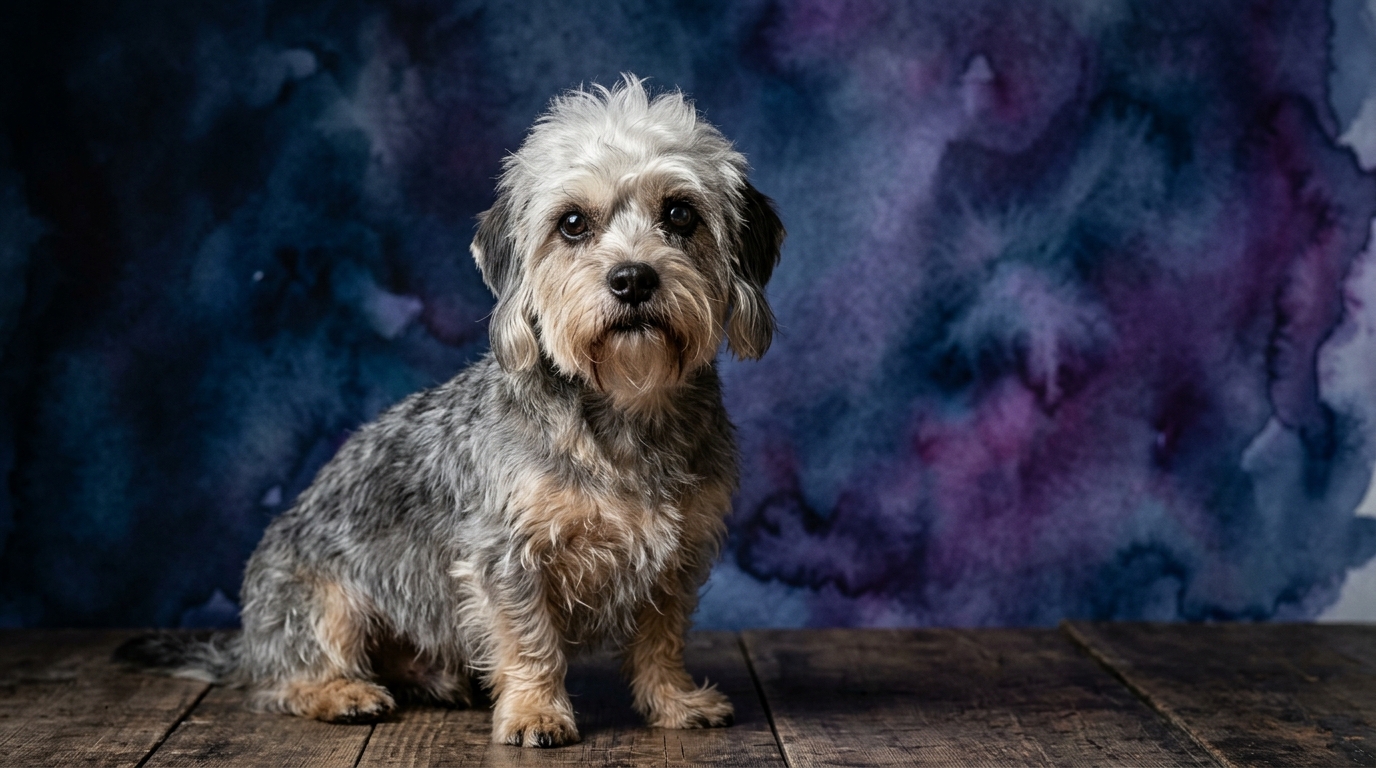
For the **Dandie Dinmont Terrier**, a 3/5 in **Problem Solving** reflects their historical role as a determined hunter of badgers and otters. Their approach to problems involves tenacious focus on a single objective, often requiring physical effort like digging or navigating tight spaces to reach quarry. **Training Speed** at 3/5 indicates they are capable learners but possess a strong independent streak, characteristic of terriers, meaning consistency and motivation are key. Their **Social Intelligence** (3/5) typically extends to a deep bond with their immediate family, often being reserved or aloof with strangers, and they navigate canine interactions with a confident, sometimes assertive, demeanor. An **Instinctive Drive** of 3/5 is clearly rooted in their prey drive, manifesting as a strong inclination to chase, dig, and explore scent trails. Finally, their **Memory** (3/5) is robust for routines, learned commands, and the location of interesting smells or potential hunting grounds.
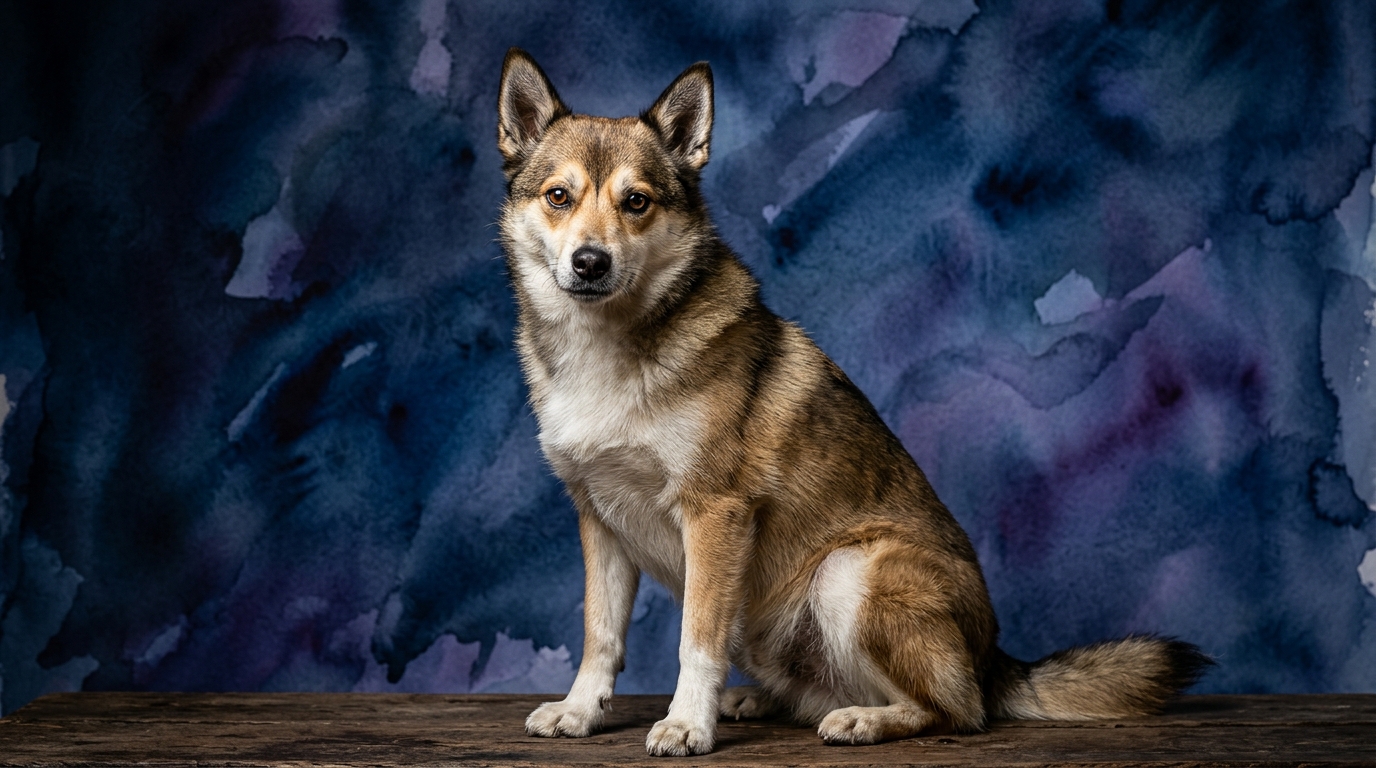
The **Norwegian Lundehund**, too, scores 3/5 across the board, but their cognitive blueprint is molded by their exceptional history as puffin hunters in rugged coastal environments. Their **Problem Solving** (3/5) is uniquely adapted to navigating complex, vertical terrains, involving agile movement, climbing, and squeezing through small crevices to access nests—a highly physical and spatially intelligent form of problem-solving. A 3/5 in **Training Speed** suggests they are intelligent but can be easily distracted by novel stimuli or their exploratory instincts, requiring engaging and patient methods. Their **Social Intelligence** (3/5) is often characterized by a watchful wariness of strangers, coupled with fierce loyalty and affection for their chosen family, sometimes communicating with unique vocalizations. The **Instinctive Drive** (3/5) is geared towards exploration, climbing, and "hunting" in a very specific, physically demanding way, often seen in their desire to investigate every nook and cranny. Their **Memory** (3/5) is excellent for remembering complex routes, the layout of their environment, and intricate physical maneuvers.
Where the Dandie Dinmont Terrier Shines Cognitively
The Dandie Dinmont Terrier's cognitive strengths lie in their unwavering focus and tenacious pursuit of a goal. Their 3/5 problem-solving capacity excels in situations demanding persistence and a singular dedication to a task, particularly when it involves scent work or 'digging in' both literally and figuratively. This breed demonstrates a cognitive resilience, less likely to be deterred by initial failures, instead doubling down on their efforts. Their social intelligence, while not broadly expansive, allows for a profound, singular loyalty to their inner circle, making them highly attuned to the dynamics within their chosen human family. This deep bond fosters a specific understanding of their owners' moods and intentions, leading to a strong, if sometimes stubborn, partnership.
Where the Norwegian Lundehund Excels Cognitively
The Norwegian Lundehund's cognitive prowess is deeply intertwined with their extraordinary physical adaptability and environmental awareness. Their 3/5 problem-solving ability is unparalleled in scenarios demanding agility, spatial reasoning, and creative navigation of complex physical obstacles. They are masters of adapting their bodies to fit challenging spaces, demonstrating a unique physical intelligence. Their instinctive drive, while also a 3/5, is channeled into a profound curiosity and an unquenchable desire to explore and climb, viewing the world as a series of physical puzzles to be solved. This manifests as a keen ability to remember intricate paths and access points, making them adept at mapping out their surroundings mentally and recalling complex sequences of movement.
Which is Easier to Train and Why
When comparing ease of training, both breeds present unique challenges and rewards, each scoring 3/5 in training speed, implying competence but requiring specific approaches. The Dandie Dinmont Terrier, while capable of learning, possesses the classic terrier independence; they are not inherently inclined to blindly obey and will question commands if they don't see the immediate value. Training a Dandie requires consistency, firm yet positive reinforcement, and making the training feel like a game or a collaborative hunt. They respond best when their tenacity and problem-solving skills are engaged, rather than simply expecting rote memorization. Their stubbornness can be a hurdle if not managed with patience and engaging methods.
The Norwegian Lundehund, conversely, can also be a challenge due to their intense curiosity and exploratory drive. While intelligent, their attention can easily be diverted by new smells, sights, or potential climbing opportunities. Their training speed of 3/5 means they grasp concepts, but maintaining their focus requires varied, short, and highly rewarding sessions. They are often described as having a mischievous streak, testing boundaries with a playful intelligence. Their social intelligence means they form strong bonds, which can aid training if the owner leverages this connection, but their independent nature and propensity for 'selective hearing' mean that consistency and positive reinforcement are paramount to success, rather than relying on strict obedience.
Which Suits Active Owners vs. Relaxed Owners
For the **active owner** seeking a companion for adventures, both breeds offer distinct experiences. The Norwegian Lundehund is an ideal match for owners who enjoy hiking, exploring, and engaging in activities that allow for climbing and intricate physical challenges. Their unique physical attributes and innate curiosity make them excellent companions for navigating varied terrains, always eager to investigate the next crevice or elevated perch. They thrive with owners who can provide mental stimulation through exploration and physical challenges that tap into their specialized problem-solving skills, making them excellent partners for agility or barn hunt activities.
The Dandie Dinmont Terrier, while not requiring the same intense physical acrobatics, still suits an active owner who appreciates regular, vigorous walks and engaging playtime, particularly those involving scent work or 'hunting' games. They are tenacious and enjoy having a job to do, even if it's just patrolling the yard for squirrels. However, for the more **relaxed owner**, the Dandie might be a slightly better fit due to their capacity for quiet companionship indoors after their exercise needs are met. They are content to curl up beside their owner, though always ready for action. The Lundehund's constant exploratory drive might prove too demanding for a truly relaxed lifestyle, as their mental and physical needs require consistent engagement to prevent boredom and potential mischief.
The Verdict
Choose the Dandie Dinmont Terrier if you value tenacious loyalty, a determined problem-solver focused on specific tasks, and a companion who thrives on consistent routine and a deep, singular bond, bringing a spirited presence to your home.
Opt for the Norwegian Lundehund if you're an adventurous owner seeking a uniquely agile, curious, and physically intelligent companion eager to explore complex environments and engage in activities that challenge their incredible physical dexterity and spatial reasoning.
🧠 Find Your Pet's IQ Score
Our Pet IQ Lab assessment covers 25+ tests across 5 cognitive dimensions — personalized to your breed.
Take the Full IQ Test →Frequently Asked Questions
Do both breeds have the same level of intelligence?
Based on The Cosmic Pet Pet IQ Lab's scoring, both breeds achieve a 3/5 rating across all five cognitive dimensions. This indicates a competent and functional intelligence, but the *way* their intelligence manifests and their specific cognitive strengths differ significantly due to their distinct historical roles and physical adaptations.
Which breed is better with children or other pets?
Both breeds can be good with children and other pets with proper socialization, but their approaches differ. Dandie Dinmont Terriers are often devoted to their family but can be assertive with other dogs and may have a strong prey drive for smaller non-canine pets. Norwegian Lundehunds form strong family bonds but might be wary of strangers and need careful, early socialization to ensure comfortable interactions with diverse individuals and other animals.
Are there any unique physical traits that influence their intelligence?
Absolutely. The Norwegian Lundehund's unique physical traits, such as six toes and highly flexible joints, directly influence their problem-solving and instinctive drives, enabling them to navigate incredibly difficult terrains and access tight spaces. This physical adaptability is integral to their specialized form of intelligence, allowing them to solve problems through unique bodily manipulation.